Bitcoin Plummets to $85K: $130B Wiped Out in Brutal December 1 Crypto Crash
 LTB
LTB Bitcoin Crashes to $85K: Why the Crypto Market Tanked on December 1
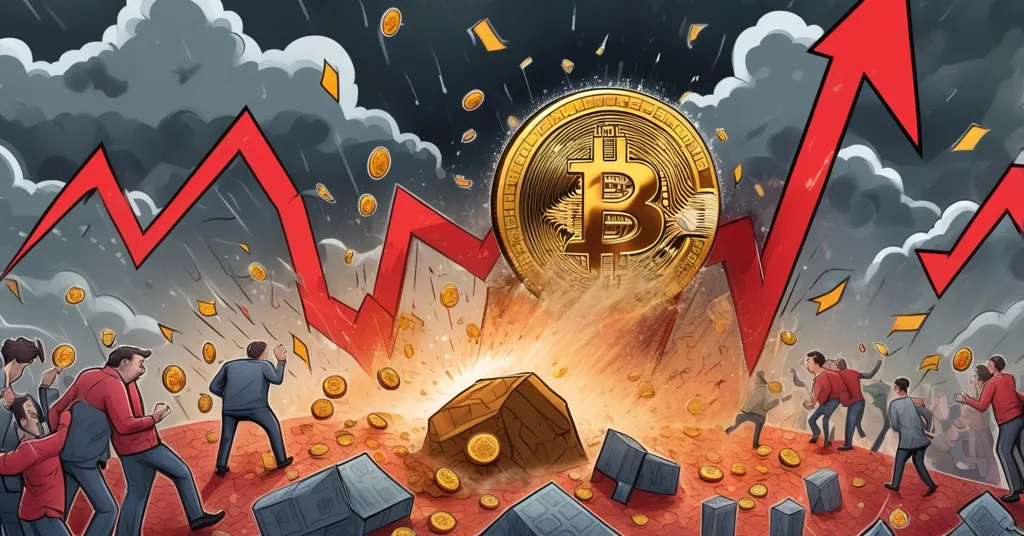
On December 1, 2023, the crypto market took a brutal hit, erasing over $130 billion in value in just two hours. Bitcoin (BTC) plummeted 5.3% to $85,000, while the total market capitalization dropped 5.26% to $2.92 trillion, leaving traders—from wide-eyed newcomers to over-leveraged speculators—staring at a sea of red.
- Market Slaughter: Crypto market cap falls 5.26% to $2.92 trillion.
- Bitcoin Nosedive: BTC drops 5.3% to $85,000, wiping out $130 billion.
- Leverage Carnage: $609 million in positions liquidated in 24 hours.
- Global Shock: Japan’s bond yield spike above 1% triggers carry trade unwinds.
This wasn’t a solo act for Bitcoin. Major altcoins like Ethereum (ETH), Solana (SOL), BNB, and XRP also bled over 5%, proving no corner of the market was safe. So, what sparked this sudden meltdown? We’re diving deep into the chaos—unpacking reckless leverage plays, obscure financial triggers from Japan, and the structural flaws that amplify crypto volatility. This isn’t just another dip; it’s a stark reminder that even the most decentralized systems can’t escape human greed or global money flows. Let’s break it down and see if there’s light at the end of this tunnel—or more pain ahead. For a detailed breakdown, check out this analysis on why the crypto market crashed today as Bitcoin hit $85K.
Leverage Liquidations: A $609 Million Disaster
The raw numbers behind this crash are jaw-dropping. Over $609 million in leveraged positions were obliterated in the last 24 hours, with Bitcoin alone accounting for $185 million of the damage—85% of which were long positions. That means bullish traders, betting hard on a price rally, got financially crushed. In the final hour of the reported period, another $204 million in positions vanished, almost entirely from these overoptimistic longs. As Bitcoin Wealth on X put it with savage precision:
“This isn’t a bear market. It’s a leverage market. $4,000 wicks on zero news? That’s not fundamentals. That’s 100x degens getting margin-called on a Sunday night when only 5% of the order book is awake.”
They’re dead right. Open interest—essentially the total cash tied up in active bets on price movements—dropped by 1.13%, showing traders bailing out en masse. Funding rates, a mechanism in futures markets where longs or shorts pay each other to balance sentiment, were slightly positive before the crash. For the uninitiated, think of funding rates as a small fee to keep the betting game fair; positive rates mean bullish traders are paying bearish ones, often a warning sign of overconfidence. When the market turns, as it did here, those overextended positions get forcibly closed in a liquidation cascade, driving forced sales that tank prices even further.
Why is leverage such a plague in crypto compared to traditional markets? Exchanges like Binance and Bybit lure users with offers of 100x leverage, letting a trader with $1,000 control a $100,000 position. It’s not innovation—it’s a goddamn casino, and when the house wins, retail traders lose their shirts. Until exchanges stop peddling this gambling bait or regulators crack down, these meltdowns will keep happening. This isn’t just a market event; it’s a systemic flaw begging to be addressed.
Japan’s Bond Yield Spike: A Crypto Gut Punch from Afar
Now, let’s pivot to a trigger most traders didn’t see coming. Japan’s 2-year government bond yield surged above 1% for the first time since 2008. Why does a bond rate in Tokyo matter to your Bitcoin wallet? It’s all about carry trades. Investors often borrow yen at dirt-cheap rates—historically near 0%—to fund riskier plays like cryptocurrencies. When yields spike, the yen strengthens, making those loans pricier to maintain. Imagine borrowing at no cost to buy a speculative stock; if the interest jumps, you might dump the stock to avoid bigger losses. That’s what’s happening—investors sold off crypto to cover their positions, flooding the market with sell orders.
With the Bank of Japan hinting at tighter monetary policy, this pressure on risk assets like Bitcoin could persist. And it’s not just Japan—global macro headwinds, from US Federal Reserve rate hikes to inflation fears, loom large. Crypto enthusiasts love to chant “decentralization,” but today shows we’re still chained to traditional finance’s whims. If you thought Bitcoin was an island, it’s time to wake up; it’s more like a boat in a stormy sea of global capital.
Thin Liquidity: Why Sundays Are a Crypto Nightmare
To make matters worse, this crash struck on a Sunday night, a time when crypto markets are notoriously vulnerable. Unlike traditional stock exchanges with set hours, crypto trades 24/7—but volume often plummets during off-peak times like late nights or weekends. With fewer buy orders on the books to absorb sudden sell pressure, price drops spiral out of control, creating sharp “wicks” on charts—temporary plunges that trigger stop-loss orders and fuel more liquidations. It’s a vicious feedback loop, and this flash crash was a prime example. Crypto Patel captured the mayhem on X:
“MARKET SHOCK: Bitcoin has plunged below $90K, hitting lows of $87K in a sudden flash crash. The total crypto market cap has slipped under $3T, wiping out $130B in just 2 hours.”
From a technical standpoint, the total crypto market cap breached a critical Fibonacci swing low at $2.89 trillion—a level traders use to map historical support and resistance based on past price swings. The next major support lies at $2.74 trillion, meaning there’s still room to fall if selling continues. The Relative Strength Index (RSI14), a momentum gauge ranging from 0 to 100, sits at 36.86—not yet in oversold territory (below 30), which suggests the bleeding might not be done. For those new to the game, think of RSI as a speedometer: above 70 means the market’s overheating and likely to cool; below 30, it’s undervalued and might bounce. Right now, we’re stuck in a tense middle ground.
Bitcoin’s Fundamentals vs. Speculative Madness
So, does this crash signal the start of a bear market? Most analysts are screaming no, and I’m inclined to agree. This isn’t about Bitcoin’s core strength—its network security, soaring hash rate (the computational power securing the blockchain), and growing adoption as a decentralized store of value remain unshakeable. From El Salvador’s national Bitcoin treasury to MicroStrategy’s corporate stack, the long-term belief in BTC as hard money persists. This downturn is about speculative madness and external shocks, not a collapse of what makes Bitcoin tick. Coin Bureau summed up the ongoing chaos on X:
“BREAKING: The crypto market just lost another $15 BILLION in the last 1hr.”
As a Bitcoin maximalist at heart, I’ll always argue BTC is the ultimate middle finger to centralized control—scarce, uncensorable, and a beacon for financial freedom. But let’s not be blind fanboys. Altcoins have their place in this revolution. Ethereum’s smart contracts underpin DeFi and stablecoins, handling use cases Bitcoin was never meant to touch. Solana’s lightning-fast transactions drive high-frequency trading and NFT ecosystems. Today’s crash spares no one, proving market dynamics don’t care about your tech’s “revolutionary” label. Leverage and liquidity issues hit everyone, maximalist or not.
Regulatory Shadows: Will This Crash Fuel Oversight?
Beyond the price charts, there’s a bigger ripple to consider: how does this volatility affect crypto’s broader story? Crashes like this often spook potential newcomers, making them question if crypto is just a speculative bubble. More troubling, they hand ammunition to regulators itching to clamp down. In the US, figures like SEC Chair Gary Gensler have already branded crypto a “Wild West.” A $609 million liquidation event could amplify demands for tighter rules, especially targeting exchanges offering insane leverage ratios. On the flip side, this might nudge the industry to self-police—dial back the gambling incentives before bureaucrats do it with a sledgehammer. As advocates for decentralization, we’ve got to grapple with balancing freedom against the chaos of unchecked speculation.
Recovery Prospects: Santa Rally or Deeper Pain?
Historically, December has been a kind month for crypto, often delivering end-of-year rallies fueled by optimism or tax-related moves. But banking on a “Santa Claus rally” without purging the speculative rot in this space is like wishing for snow in the Sahara. Recovery hinges on two things: leverage cooling off to halt liquidation spirals, and spot demand—real buying with actual cash, not borrowed funds—stepping back in to stabilize prices. Yet, with Japan’s yield pressures lingering and technical indicators hinting at more downside, optimism needs a heavy dose of caution.
Looking at past crashes offers some perspective. In March 2020, over $1 billion in liquidations hit during the COVID market panic, but Bitcoin roared back to new highs within months as its fundamentals held strong. Today’s event, while brutal, isn’t as severe in scale (per Coinglass data). The real test is whether spot buyers return or if over-leveraged gamblers keep dragging the market into the gutter. If history’s any guide, resilience isn’t out of reach—but it’s not guaranteed either.
Crypto 101: Why Do Crashes Like This Happen?
For those just dipping their toes into crypto, here’s the quick and dirty: crashes often stem from too much borrowed money (leverage) betting on price surges. When prices slip even slightly, those bets get forcibly closed, triggering a snowball of selling. Toss in low trading volume during off-hours—like a late Sunday night—and external shocks, such as Japan’s bond yield spike, and you’ve got a recipe for disaster. The takeaway? Stick to buying what you can afford to hold long-term, not what you borrow to flip overnight.
Trader’s Corner: Navigating the Post-Crash Landscape
For the seasoned crowd, keep an eye on order book depth—buy-side liquidity is still thin post-crash, meaning another sell wave could spark deeper drops (per Coinglass data). Funding rates have flipped negative, hinting that bearish sentiment now rules the futures market. Watch Bitcoin’s $84,000 level closely; a break below could drag us toward $80,000. If you’re trading, tighten those stop-losses—this market’s a meat grinder until stability returns.
Key Questions and Takeaways
- What caused the Bitcoin crash to $85,000 on December 1, 2023?
A lethal mix of $609 million in leverage liquidations—mostly bullish bets—and Japan’s 2-year bond yield jumping above 1%, forcing investors to unwind carry trades, drove the plunge. - How does thin liquidity worsen crypto price drops?
Low trading volume during off-peak times, like Sunday nights, leaves fewer buyers to counter sell pressure, causing sharp, exaggerated declines and triggering liquidation cascades. - Why does a Japanese bond yield spike impact Bitcoin?
Higher yields boost the yen’s value, making cheap loans costlier for investors who borrow to buy crypto, leading them to sell off holdings to cover positions. - Is this crypto crash the beginning of a bear market?
Unlikely—it’s a leverage-driven mess, not a fundamental collapse. Bitcoin’s security, adoption, and value as hard money remain intact despite the speculative storm. - What’s needed for a crypto recovery this December?
Leverage must drop to stop liquidation spirals, and spot demand—real purchases, not borrowed gambles—needs to return to steady prices and restore confidence. - Could this crash lead to tougher crypto regulations?
Quite possibly—high volatility often fuels regulatory scrutiny, potentially pushing for stricter controls on exchanges offering risky leverage products.
This December 1 crash is a bitter pill for the crypto space. Bitcoin remains the vanguard of financial disruption and personal sovereignty, but even the toughest warriors stumble when surrounded by reckless speculators playing with borrowed fire. The promise of decentralization doesn’t shield us from global finance’s reach or the idiocy of over-leveraged bets. Let’s hope this purge of nonsense clears the path for saner, more sustainable growth. Until then, keep your trades cautious and your skepticism sharp—the month is young, and this rollercoaster’s got plenty of twists left.