Pakistan’s Crypto Defiance: Top 5 Exchanges Thriving Despite National Ban
 LTB
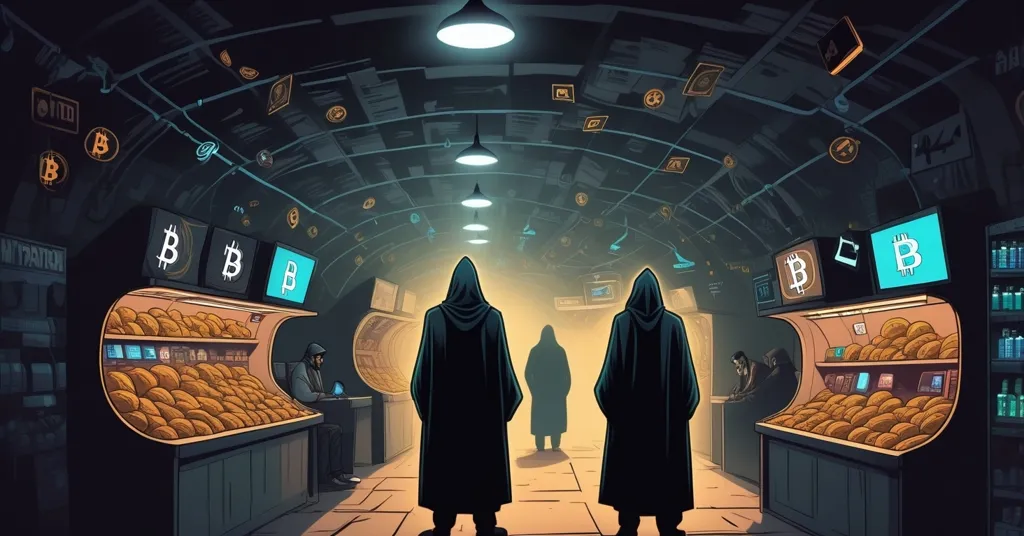
LTB Navigating Pakistan’s Crypto Underworld: Top 5 Exchanges Defying the National Ban
Pakistan’s cryptocurrency landscape is a battleground of defiance and desperation. With the State Bank of Pakistan enforcing a stringent ban on crypto transactions since 2018, reinforced with a brutal “never be legalized” stance in 2023, you’d think digital assets would be dead in the water. Yet, trading volumes have exploded to a staggering $25 billion annually as citizens scramble to shield their wealth from a rupee that’s plummeted 57% against the US dollar. This is the raw, unfiltered story of how Pakistani traders are outmaneuvering authoritarian controls using privacy-focused platforms, and why this underground movement is both a beacon of hope and a risky gamble in the world of decentralized finance.
- Hardline Ban, Soaring Trades: Crypto outlawed since 2018, yet $25 billion in annual trades fueled by rupee’s collapse.
- Privacy is King: Non-custodial, KYC-free exchanges and tools like VPNs enable traders to dodge restrictions.
- Top Platforms: GODEX, Boltz, Infinity Exchanger, Vexl, and SideShift lead the charge for anonymous trading.
Pakistan’s Crypto Crackdown: A Timeline of Control
The saga began in 2018 when the State Bank of Pakistan banned banks and financial institutions from touching cryptocurrencies, citing risks of money laundering and terrorism financing. Fast forward to 2023, and the rhetoric turned even harsher, with authorities doubling down, declaring digital assets would “never be legalized.” But here’s the kicker: this iron-fisted policy hasn’t crushed the crypto spirit. Instead, it’s driven it underground, creating a shadow market that thrives on necessity. The Pakistani rupee has tanked hard, losing 57% of its value against the dollar in recent years, while inflation bites deep—over 30% in 2023 alone. For many, Bitcoin and stablecoins aren’t speculative plays; they’re life rafts in a sinking economy heavily reliant on remittances and plagued by capital controls.
Despite the Bitcoin ban in Pakistan, the sheer scale of trading—$25 billion annually—reveals a population unwilling to bend. Traditional exchanges tied to local banks and requiring identity checks (known as KYC, or Know Your Customer verification) are out of the game, but a vast ecosystem of international, non-custodial platforms remains wide open. These setups don’t hold your funds or demand personal data, acting more like a direct swap tool than a bank. It’s a loophole the size of a crater, and Pakistani traders are diving in headfirst. If you’re looking for reliable platforms to navigate this tricky terrain, check out this guide on the best crypto exchanges for Pakistani traders.
How Traders Dodge the Ban: The Toolkit of Defiance
So, how do you trade crypto when the government’s watching and ISPs are blocking access? Pakistani traders have turned into digital ninjas, wielding a toolkit built for anonymity. Virtual Private Networks (VPNs) like NordVPN or ExpressVPN disguise internet activity, hiding your location from prying eyes by routing traffic through servers in other countries. Then there’s the Tor network, a hidden layer of the internet accessible only via special browsers, offering near-total anonymity by bouncing your connection through multiple encrypted nodes. It’s like wearing a digital invisibility cloak—Big Brother’s got nothing on you.
Beyond tech tricks, peer-to-peer (P2P) trading is a game-changer. This method lets individuals trade directly, often for cash in local markets or through trusted contacts, bypassing any middleman. Combine this with non-custodial exchanges that operate outside Pakistan’s jurisdiction, and you’ve got a system that’s damn hard to shut down. It’s not just rebellion; it’s survival. But let’s not romanticize it—navigating this clandestine space requires caution, as we’ll unpack later.
Top 5 Exchanges for Privacy and Access in Pakistan
For those hunting the best crypto exchanges under Pakistan’s ban, here are five platforms that stand out for their privacy focus and accessibility. Each caters to different needs, from anonymity to Bitcoin-specific tech, ensuring traders have options in this restrictive mess.
GODEX: The Anonymous Swap Giant
Launched in 2018 and based in the privacy-friendly Seychelles, GODEX is a heavyweight for anonymous trading. Supporting over 929 cryptocurrencies, it offers fixed-rate swaps—no nasty surprises from price slippage—and imposes no transaction limits. Best of all, there’s zero KYC, meaning you can trade without handing over your identity. It’s a go-to for Pakistani traders juggling diverse portfolios while staying off the grid.
Boltz: Bitcoin Tech for the Purists
Founded in 2019, Boltz is a niche player tailored for Bitcoin enthusiasts. Its specialty? Layer bridging, which means facilitating transactions across Bitcoin’s secondary networks like the Lightning Network for lightning-fast, low-fee transfers, or the Liquid Network for beefed-up privacy. Using atomic swaps—trustless, direct exchanges between chains without intermediaries—Boltz keeps things decentralized. It’s open-source too, so tech-savvy Bitcoin maximalists in Pakistan can audit the code themselves. If BTC is your hill to die on, this is your platform.
Infinity Exchanger: Vanishing into the Tor Abyss
For those who want to disappear completely, Infinity Exchanger, launched in 2022, operates on the Tor network. This means maximum anonymity—your trades are hidden in a labyrinth of encrypted connections. Supporting Bitcoin, Litecoin, and the ultra-private Monero, it even offers coin mixing, a process that jumbles transaction trails to make tracking near impossible. It’s a fortress of secrecy, perfect for Pakistani traders paranoid about surveillance, though it’s not for the faint-hearted or tech-averse.
Vexl: P2P Trading with a Social Twist
Developed by SatoshiLabs, the creators of Trezor hardware wallets, Vexl reimagines P2P Bitcoin trading. This app connects buyers and sellers through social networks, relying on trust within personal or community circles. With zero fees and an open-source framework, it’s a favorite for cash-based trades in Pakistan—think meeting at a local café to swap BTC for rupees. It’s raw, direct, and embodies the peer-driven ethos of crypto, cutting out any corporate middleman.
SideShift: Versatility Without Strings
Operating since 2018, SideShift supports over 200 digital assets with non-custodial, direct-to-wallet swaps. No KYC, no fuss—just seamless trades integrated with major wallets like Trezor for easy management. For Pakistani traders dabbling beyond Bitcoin, its versatility makes it a solid pick. Whether you’re parking funds in stablecoins or exploring altcoins, SideShift keeps things private and straightforward.
Stablecoins as a Lifeline Amid Rupee Chaos
While Bitcoin often grabs the spotlight, stablecoins like USDT and USDC—tokens pegged to the US dollar—play a starring role in Pakistan’s shadow market. With the rupee’s relentless devaluation, these assets offer a stable harbor, immune to the wild swings of crypto like BTC or the local currency’s collapse. Since fiat on-ramps tied to Pakistani banks are off-limits under the ban, traders access stablecoins via international platforms, using them as a bridge to preserve wealth or settle trades. Data on exact usage is scarce (a transparency gap in itself), but anecdotal buzz suggests they’re a top choice for anyone fearing volatility more than regulatory heat.
Still, not everyone opts for stablecoins. Some traders, wary of centralized issuers like Tether behind USDT, prefer Bitcoin’s decentralized purity despite its price rollercoaster. Others lean on privacy coins like Monero for untraceable transactions, though these could attract even harsher scrutiny if authorities catch wind. It’s a pick-your-poison scenario, reflecting the diverse needs in this underground economy.
Risks in the Shadows: The Dark Side of Defiance
Let’s cut through any rose-tinted haze—Pakistan’s crypto boom isn’t all empowerment and rebellion. The lack of regulation is a breeding ground for scams. Phishing schemes, fake P2P meetups where “buyers” vanish with your cash, and dodgy platforms promising the moon are rife in spaces without oversight. Non-custodial and KYC-free might mean privacy, but it also means no safety net if you’re duped. Traders must be hyper-vigilant, double-checking wallet addresses and vetting contacts like their life depends on it.
Then there’s the looming specter of government crackdowns. While VPNs and Tor keep you hidden today, authorities aren’t clueless. They could escalate with IP bans, wallet tracking, or even physical stings on P2P deals. Legal consequences for getting caught aren’t just theoretical—fines or jail time could hit hard if the state decides to make examples. Whispers of a Pakistan Crypto Council offer a faint hope for future clarity, but right now, the policy is hostile as hell. Plus, regulatory uncertainty keeps mainstream adoption at bay; without fiat gateways, scaling this economy beyond tech-savvy rebels is a pipe dream for now.
The Bigger Picture: A Rebellion Worth Rooting For?
Step back, and Pakistan’s crypto surge isn’t just a local oddity—it’s a microcosm of a global clash between centralized power and financial freedom. The rupee’s nosedive echoes crises in Venezuela or Nigeria, where digital currencies have become lifelines for the disenfranchised. Here, Bitcoin isn’t a speculative toy; it’s hard money for hard times. Stablecoins and altcoins fill gaps BTC doesn’t touch, proving the blockchain ecosystem is a toolbox, not a single hammer. As a Bitcoin maximalist at heart, I’ll always root for BTC as the ultimate disruptor, but I can’t deny Monero’s utility for the paranoid or USDT’s appeal for the risk-averse in a place like this.
Yet, here’s a question to mull over: Is this underground boom a rebellion worth cheering, or a ticking time bomb of unchecked risk? On one hand, it’s a middle finger to oppressive control, embodying Bitcoin’s core ethos of decentralization, privacy, and sovereignty—values we champion fiercely. It could even accelerate global adoption of decentralized tech, forcing financial reform through sheer necessity, aligning with the spirit of effective accelerationism. On the other hand, the scams and potential for harsher crackdowns are real pitfalls. This isn’t about shilling coins or hyping price predictions (we despise that nonsense); it’s about recognizing both the power and the peril in play.
Key Takeaways and Burning Questions
- What’s the current legal status of cryptocurrency in Pakistan?
It’s been banned since 2018, with a reinforced “never be legalized” stance in 2023, though underground trading continues unabated at a massive scale. - Why are Pakistanis flocking to crypto despite the ban?
The rupee’s 57% devaluation against the dollar drives desperation, pushing $25 billion in annual trades as a hedge against economic collapse. - How are traders bypassing government restrictions?
They lean on non-custodial, KYC-free exchanges, VPNs like NordVPN, Tor for anonymity, and P2P platforms for direct, often cash-based trades. - Which platforms are best for Pakistani traders under the ban?
GODEX excels in anonymous swaps, Boltz in Bitcoin tech, Infinity Exchanger in Tor privacy, Vexl in P2P trust, and SideShift in multi-asset versatility. - What are the real risks beyond legal penalties?
Scams like phishing and fake P2P deals thrive without regulation, and future crackdowns with IP bans or wallet tracking could ensnare unwary traders. - Is there any hope for regulatory clarity in Pakistan?
Mixed signals about a Pakistan Crypto Council hint at possible frameworks, but for now, the shadow market remains the only viable arena.
Pakistan’s crypto underworld is a gritty testament to human resilience against financial oppression. It’s messy, fraught with hazards, and sometimes outright sketchy—but it’s also a blazing signal of why decentralized finance matters. Traders here aren’t just dodging a ban; they’re rewriting the rules of money in real time. Whether you’re a Bitcoin purist like me or see value in the broader blockchain toolkit, one thing is clear: this fight for financial sovereignty is a punch to the gut of the old guard. And in a world desperate for disruption, that’s a fight worth watching.