Apple’s AI Shake-Up: Giannandrea Exits as Delays and Competition Hit Hard
 LTB
LTB Apple’s AI Overhaul: Giannandrea Bows Out as Delays and Competition Bite Hard
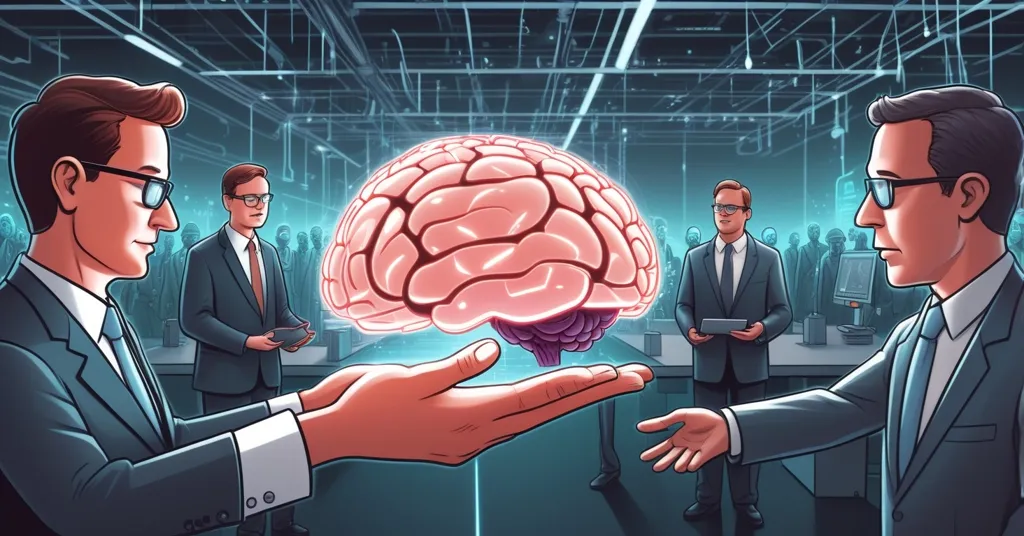
Apple, the tech juggernaut known for reshaping entire industries, is hitting a rough patch in its artificial intelligence endeavors. John Giannandrea, head of AI since 2018, is stepping down after a tenure plagued by project delays and a tepid response to Apple’s AI offerings. Taking the reins is Amar Subramanya, a seasoned veteran from Google’s DeepMind and Microsoft, as Apple scrambles to catch up with the breakneck pace of innovation set by rivals like OpenAI, Google, and Microsoft.
- Leadership Switch: John Giannandrea exits as AI chief, shifting to an advisory role until retiring in spring 2026, with Amar Subramanya stepping in as Vice President of AI.
- Stalled Progress: Siri’s major relaunch delayed to 2026, spotlighting deeper issues in Apple’s AI development.
- Behind the Curve: Apple lags competitors since OpenAI’s ChatGPT redefined AI standards in 2022.
Giannandrea’s Exit: What Went Wrong?
John Giannandrea arrived at Apple with high expectations, carrying a resume polished by years at Google where he drove search and AI advancements. His mission was to cement Apple as a leader in artificial intelligence—a field now critical to tech supremacy. But the results? Underwhelming, to put it mildly. Apple Intelligence, the company’s flagship AI initiative, has been met with shrugs from users and critics alike, lacking the groundbreaking flair Apple built its name on. Siri, the voice-activated assistant baked into iPhones, iPads, and Macs, stands as the most glaring failure. Meant to handle everything from quick reminders to complex queries, Siri’s major overhaul—part of Apple Intelligence—won’t see the light of day until 2026. That’s not just a delay; it’s a neon sign flashing “trouble” in Apple’s AI pipeline.
Organizational chaos hasn’t helped. By March 2025, Apple’s leadership—under CEO Tim Cook—had already stripped Giannandrea of key responsibilities. Siri was reassigned to other executives like Craig Federighi, Senior Vice President of Software Engineering, while a hush-hush robotics project, rumored to explore AI-driven home automation, also slipped from his grasp. These moves scream course correction, and not the subtle kind. Cook publicly thanked Giannandrea for his contributions, but the subtext is loud: Apple needed a shake-up, and fast. For more on this significant transition, check out the detailed report on Giannandrea stepping down.
“In addition to growing his leadership team and AI responsibilities with Amar’s joining, Craig has been instrumental in driving our AI efforts, including overseeing our work to bring a more personalized Siri to users next year,” Cook noted.
He also praised Giannandrea for “the role he played in building and advancing our AI work,” while looking ahead to fresh leadership. Back in August 2025, Cook called AI a “profound” technology, a statement that now reads as both a battle cry and a quiet confession of past missteps.
Apple’s AI Dilemma: Privacy vs. Power
Apple’s approach to AI sets it apart—and not always in a good way. Unlike heavyweights like Microsoft, Google, and Meta, who’ve funneled billions into cloud-based systems—think massive remote servers powering AI tools like ChatGPT—Apple doubles down on on-device processing. Picture this: on-device AI is like cooking at home with whatever’s in your pantry, while cloud AI is ordering from a giant restaurant kitchen stocked with endless ingredients. The catch? Someone might sneak a peek at your order in the cloud. Apple’s method keeps data on your iPhone or Mac, prioritizing user privacy and ecosystem control, a stance that echoes the rebellious ethos of Bitcoin’s middle finger to centralized power. Admirable? Sure. Practical in a cutthroat AI race? That’s debatable.
This privacy obsession limits scalability. Apple spends far less on AI infrastructure than its rivals, and it shows. While competitors churn out advanced systems designed to push machine capabilities—think chatbots that sound human or image generators that rival artists—Apple’s offerings feel like beta tests users didn’t sign up for. Stock performance tells part of the story: Apple’s shares are up 16% in 2025, decent on paper, but they’re getting smoked by other tech giants who’ve bet big on AI. Investors aren’t blind to the gap, and neither are users who’ve taken to forums and social media to roast Siri’s clunky responses compared to Google Assistant or Alexa.
Is Apple’s privacy-first stance just a noble excuse for being too damn slow? It’s a question worth chewing on. In a race where speed and raw computational muscle often trump ideals, Apple risks getting its ass handed to it. And for a company that redefined smartphones, falling behind in AI isn’t just a stumble—it’s a bloody embarrassment.
Subramanya’s Challenge: Lighting a Fire
Enter Amar Subramanya, Apple’s new AI sheriff. With a track record at Google’s DeepMind—where he contributed to game-changers like AlphaFold, a system that cracked protein folding mysteries—and Microsoft, where he served as corporate VP of AI, Subramanya isn’t a lightweight. His mandate is a beast: overhaul Apple’s AI strategy, zeroing in on foundation models (think core AI systems built on mountains of data to adapt and learn across tasks), research, and safety. For those new to the term, AI safety involves ensuring systems don’t go rogue—think biased outputs or privacy leaks—a concern Apple can’t afford to ignore.
But Subramanya’s walking into a pressure cooker. Since OpenAI unleashed ChatGPT in 2022, the AI bar has shot through the stratosphere, and Apple’s been playing catch-up ever since. Their partnership with OpenAI to weave ChatGPT into products like Siri shows they’re willing to borrow external firepower, but it also hints at internal gaps that need urgent patching. Can Subramanya replicate his DeepMind magic at Apple? Or will he get bogged down by the same bureaucratic and technical quicksand that tripped up Giannandrea? Turning this ship around won’t happen overnight, and the tech world doesn’t hand out participation trophies.
User Frustration: The Real Cost of Delays
What does Apple’s AI lag mean for the average iPhone user? If you’ve ever barked at Siri for botching a simple command like “set a timer” while it sputters nonsense, you’re feeling the fallout. Delays in Siri’s relaunch mean clunkier interactions, slower updates, and falling behind Android rivals who’ve got smarter assistants baked into their ecosystems. Developers, too, are stuck in limbo—without cutting-edge AI tools from Apple, building innovative apps becomes a slog. It’s not just tech nerds grumbling; everyday users are venting about features that feel half-baked compared to what Google or Amazon deliver.
Zoom out, and the stakes get clearer. AI isn’t just about a snappier Siri—it’s the backbone of future tech, from personalized experiences to smarter devices. If Apple can’t keep pace, its reputation as the king of consumer innovation takes a hit. And for a company whose brand is built on “it just works,” that’s a bitter pill to swallow.
AI, Privacy, and a Decentralized Parallel
Here’s a thought for those of us obsessed with disruption and decentralization: Apple’s privacy-first AI push mirrors the ethos of Bitcoin and blockchain in a weird, corporate way. Both wave a fist at centralized control—Apple by keeping data on your device, Bitcoin by cutting out middlemen in finance. Could Apple’s approach inspire blockchain-based AI solutions where users own and secure their data on decentralized networks? Imagine a Siri powered not by Apple’s servers, but by a distributed ledger ensuring no one peeks at your queries. It’s speculative, sure, but it’s the kind of crossover that gets disruptors salivating.
Even more intriguing is how AI advancements could ripple into crypto. Smarter AI could turbocharge trading bots, optimize blockchain scalability, or enhance smart contracts on platforms like Ethereum. Apple’s not there yet, but if Subramanya cracks the code, the overlap between AI and decentralized tech could spark some wild innovation. For now, though, Apple’s got to stop tripping over its own feet before it can inspire anyone.
What’s Next for Apple Intelligence?
Apple sits at a crossroads. Subramanya’s arrival offers a flicker of hope, but the road ahead is a gauntlet. Balancing on-device AI with the raw power needed to compete means rethinking strategy from the ground up. Will Apple double down on privacy at the cost of innovation, or will it bend just enough to muscle into the AI big leagues? Investors are watching, users are restless, and competitors are salivating at the chance to widen the gap.
For a company that turned smartphones into cultural icons, lagging in AI feels like a betrayal of its own legacy. Bitcoiners know the grind of building against the odds—patience and grit got decentralized money off the ground. Maybe Apple’s playing a long game too. Or maybe they’re just out of their depth. Either way, Subramanya’s got one hell of a fight on his hands. Let’s see if Apple can pull off a comeback worth rooting for.
Key Takeaways and Burning Questions
- What sparked John Giannandrea’s departure from Apple’s AI helm?
Project delays like Siri’s 2026 relaunch, lackluster feedback on Apple Intelligence, and internal reshuffles fueled frustration, paving the way for his exit. - How does Apple’s AI strategy stack up against Google or Microsoft?
Apple prioritizes on-device processing for privacy, spending less on infrastructure compared to rivals who leverage remote servers for massive scale and speed. - What obstacles await Amar Subramanya as Apple’s new AI leader?
He faces development setbacks, the need to revamp Apple Intelligence, fierce competition, and steering research and safety under a microscope of expectations. - Why does Apple seem stuck behind in AI innovation?
Since ChatGPT’s 2022 launch, Apple’s efforts have underwhelmed, hampered by missed deadlines and lighter investment compared to aggressive peers. - Could Apple’s tie-up with OpenAI shift its AI fortunes?
Embedding ChatGPT in Siri might fast-track improvements, but it also exposes Apple’s reliance on external tech to plug internal innovation holes. - Is there a crypto angle to Apple’s privacy-focused AI push?
Apple’s stance parallels Bitcoin’s anti-centralization vibe, hinting at potential blockchain-AI mashups where users control data on decentralized systems.