US Crypto Enthusiasm Wanes as Risk Aversion Rises, FINRA Study Reveals
 LTB
LTB Crypto Interest Dims Among US Investors as Risk Appetite Fades, FINRA Study Shows
A new study from the FINRA Investor Education Foundation reveals a marked decline in enthusiasm for cryptocurrency among US investors, even as ownership levels hold steady. Amid broader economic uncertainties and past market turbulence, risk tolerance is shrinking, signaling a shift toward caution in a space once synonymous with wild speculation.
- Ownership Steady, Interest Drops: 27% of US investors own crypto in 2024, unchanged since 2021, but only 26% consider buying, down from 33%.
- Younger Crowd Retreats: Participation among under-35s fell from 32% to 26%, with fewer new entrants.
- Risk Aversion Grows: 66% view crypto as extremely risky (up from 58%), while only 8% are willing to take big portfolio risks, down from 12%.
The Post-Boom Hangover: A Cooling Crypto Market
The FINRA survey, covering 2,861 US investors, captures a market still grappling with the fallout from the 2020-2021 cryptocurrency boom. That era was a financial free-for-all—think stimulus checks burning holes in pockets, lockdown boredom, and Bitcoin soaring to a record $69,000. From NFTs to obscure altcoins, everyone seemed to be chasing digital gold. But the party’s over for many. Only 8% of current investors entered the market in the last two years, a steep drop from the 21% who jumped in between 2019 and 2021. The data suggests the Fear of Missing Out (FOMO), once a powerful driver of impulsive investments, has been replaced by a hard-learned fear of losing everything.
High-profile disasters like the FTX collapse in 2022, where billions in user funds vanished overnight, haven’t helped. Neither has the relentless volatility that can wipe out gains in a single tweet. Add to that broader economic headwinds—inflation, stagnant wages, and a housing market out of reach for many—and it’s no shock that the appetite for high-stakes plays like Bitcoin investment trends is waning. Yet, as we’ll explore, not everyone is walking away from digital assets. For deeper insights into this trend, check out the recent FINRA study on declining crypto interest among US investors.
Young Investors Retreat: Caution Over Chaos
Younger investors, often the beating heart of crypto’s retail surge, are stepping back. Participation among those under 35 has dropped from 32% in 2021 to 26% in 2024. The median age of investors who entered during the peak hype years has also risen from 31 to 38, hinting that many Gen Z and millennial traders either got scorched or shifted focus. Financial losses likely play a role, as does a plummeting risk tolerance—only 15% of under-35s are willing to take substantial portfolio risks now, down from 24% three years ago.
Curiously, this demographic isn’t ditching risk entirely. A striking 43% still trade options (compared to just 10% of those 55 and older), a complex strategy involving contracts that bet on asset price movements—often a fast track to losses if misjudged. Another 22% buy on margin, borrowing cash from brokers to amplify investments, which can backfire spectacularly if markets tank. And 29% chase meme stocks—think GameStop or Dogecoin—fueled by internet hype rather than fundamentals. It’s a strange cocktail of caution toward crypto and recklessness elsewhere, perhaps born from economic desperation or a generational itch to roll the dice with whatever’s left in the bank.
Rising Risk Aversion: Cryptocurrency Risk Perception in 2024
The perception of cryptocurrency as a high-stakes gamble is hardening. In 2024, 66% of investors aware of digital assets call them “extremely or very risky,” up from 58% in 2021. Overall willingness to take big financial risks has also shrunk, with just 8% of all investors open to swinging for the fences, down from 12% three years prior. Market scars are likely to blame—crashes, scams, and rug pulls (where developers abandon a project after taking investors’ money) have left a bitter taste. For newcomers, understanding this risk perception is key: unlike traditional assets, crypto often lacks regulatory safety nets, and a single hack or bad decision can erase savings overnight.
“The latest FINRA Foundation research on investors provides rich insights into how market conditions, technology, and generational shifts are changing the profile of investing and reshaping investor behaviors and attitudes,” said Jonathan Sokobin, FINRA Foundation Chair and Chief Economist.
Sokobin’s point hits hard when you consider events like FTX’s implosion or Bitcoin’s gut-wrenching drops from all-time highs. These aren’t just numbers on a chart; they’re real losses for real people. Yet, risk aversion isn’t uniform—some still see crypto as a ticket out of financial stagnation, especially as traditional wealth-building paths like homeownership slip further away.
The Social Media Wildcard: Finfluencers and Misinformation
One major force shaping investor behavior is social media, particularly among the under-35 crowd. A staggering 61% of them turn to “Finfluencers”—self-styled financial gurus on platforms like YouTube—for investment advice, compared to 26% of all investors. YouTube reigns supreme, with 30% of investors overall and 61% of younger ones using it as a primary info source. This shift away from traditional financial advisors to charismatic content creators is a double-edged sword. While it democratizes access to ideas, it also opens the door to unverified hot takes and outright scams.
Picture this: a slick YouTuber hypes a new token as “the next Bitcoin,” promising 100x returns. Thousands invest, only to watch the price crash as insiders dump their holdings—a classic pump-and-dump. Such schemes have burned countless retail players, yet the allure of quick tips from relatable faces persists. This isn’t just a quirky trend; it’s a systemic risk in a space where education often lags behind hype. Our stance is clear: no bullshit, no tolerance for grifters. Community tools to flag bad actors are overdue, as is a healthy skepticism of anyone peddling guaranteed gains.
Fraud Fears and Education Gaps
Concerns over investment fraud are climbing, with 37% of investors worried about scams in 2024, up from 31% in 2021. Still, vulnerability is rampant—half of those surveyed admitted they’d bite on a fake offer of “guaranteed 25% returns.” For the uninitiated, investment fraud in crypto often looks like fake Initial Coin Offerings (ICOs), where projects raise funds by selling tokens with no real product, or Ponzi schemes disguised as yield farming. The lack of regulation in much of the space amplifies these dangers, turning it into a playground for con artists.
“They still struggle with gaps in investing knowledge and risk assessment, which can leave them vulnerable to costly missteps. Investor education efforts remain critically important,” noted Gerri Walsh, FINRA Foundation President.
Walsh nails it—ignorance is the scammer’s best friend. Imagine a 25-year-old who threw their savings into a hyped altcoin in 2021, lost 80%, and now sees crypto as a rigged game. The FINRA data suggests they’re far from alone. Without better resources to navigate this wild west, many will keep getting fleeced, undermining the freedom and privacy that blockchain promises.
A Contradictory Crypto Landscape: Adoption vs. Apathy
Here’s where things get messy. While FINRA paints a picture of cooling interest, other surveys tell a different tale. Over 50 million American adults reportedly own some form of cryptocurrency, suggesting adoption isn’t stalling everywhere. So, what’s driving this disconnect? Economic context offers clues. With homeownership affordability plummeting—median home prices in the US hit $412,000 in 2024 while wages lag—many younger folks see crypto speculation as a last-ditch shot at wealth, risks be damned. Bitcoin, Ethereum, and even meme coins become lottery tickets when the American Dream feels like a scam itself.
Survey methodology might also play a role. FINRA’s focus on active investors could miss casual holders or those outside traditional financial circles. Regardless, this split highlights a fragmented reality: some are burned out on digital assets, while others cling to them as a lifeline. It’s a tension between caution and desperation that defines US crypto ownership in 2024.
Bitcoin Maximalism vs. Altcoin Innovation
As Bitcoin maximalists, we see BTC as king—its unmatched network security, fixed supply of 21 million coins, and growing institutional adoption via ETFs make it a bedrock store of value amid fading retail hype. Unlike countless altcoins that flop or turn out to be scams, Bitcoin’s track record over 15 years offers a rare stability in this chaotic space. Yet, we’re not blind to the broader ecosystem. Platforms like Ethereum fill niches Bitcoin isn’t meant for, powering decentralized finance (DeFi) and smart contracts—automated agreements on the blockchain—that enable everything from lending to NFTs. Solana, too, pushes scalability with faster, cheaper transactions, though often at the cost of decentralization.
Counterpoint: altcoins come with baggage. Many projects are hype-driven, lacking real utility, and scams are rampant—think rug pulls or tokens launched solely to enrich founders. Even Ethereum faces scaling hiccups and high fees during peak usage. Bitcoin doesn’t need to be everything to everyone; it’s the gold standard for a reason. Still, dismissing altcoin innovation outright ignores how they test new ideas that could eventually strengthen the entire crypto sphere. The key is discernment—separating genuine progress from noise.
Regulatory Shadows Loom
With risk aversion on the rise, regulatory implications can’t be ignored. US authorities have already ramped up scrutiny post-FTX, with the SEC and CFTC cracking down on unregistered exchanges and token offerings. A decline in investor enthusiasm could fuel calls for tighter rules, framed as “protecting the public.” This cuts both ways: harsher regulations might curb scams but risk stifling innovation and decentralization—the very ethos of crypto. On the flip side, smarter investor protection laws, paired with education, could rebuild trust without suffocating the space. The balance is tricky, and as advocates of freedom, we must push for frameworks that don’t hand power back to the centralized systems Bitcoin was built to disrupt.
What This Means for Crypto’s Future
The FINRA findings are a wake-up call. Declining interest among US investors signals challenges for mass adoption, especially if distrust festers. Yet, it’s not doom and gloom—sustained ownership at 27% and millions still holding crypto show resilience. The path forward hinges on education to close knowledge gaps and arm users against fraud. Innovation must accelerate, too; projects that solve real problems—like Bitcoin’s role as inflation-resistant money or Ethereum’s DeFi ecosystem—can reignite belief in this tech. Regulation will shape the battlefield, but so will community vigilance. We’re all for effective accelerationism—pushing blockchain forward with urgency—but not by leaving the uninformed as prey in a den of wolves. For the educated, this space remains a goldmine of opportunity.
Key Takeaways and Burning Questions
- Why is crypto interest declining among US investors?
Market crashes, disasters like FTX, and a rising view of crypto as extremely risky (66% in 2024 vs. 58% in 2021) have curbed enthusiasm since the 2021 peak. - Why are young investors leaving cryptocurrency?
Losses, reduced risk tolerance (24% to 15% among under-35s), and shifting economic priorities have cut participation from 32% to 26%. - How does social media impact crypto decisions?
Platforms like YouTube and “Finfluencers” sway 61% of under-35 investors, often trumping traditional advice and exposing them to hype or scams. - What risks stem from poor investor education?
With 50% vulnerable to fake “guaranteed return” offers and scam fears at 37%, ignorance paves the way for devastating losses. - Why do conflicting crypto adoption trends exist?
While FINRA sees fading interest, over 50 million Americans own crypto, likely driven by economic hardship and alternative wealth-building hopes. - What’s next for Bitcoin and blockchain amid caution?
Education, innovation, and balanced regulation are crucial to rebuild trust and drive adoption, ensuring crypto’s promise of freedom isn’t derailed by distrust.
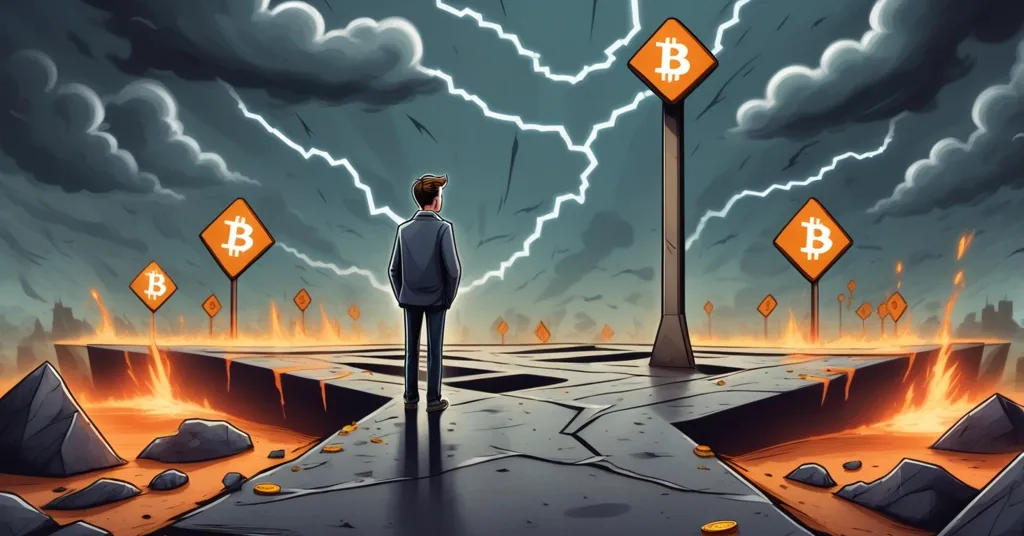
The crypto revolution is at a crossroads. Bitcoin and blockchain technology still embody a radical push for decentralization, privacy, and a middle finger to broken financial systems. But the FINRA study lays bare a harsh truth: without tackling education gaps and fraud head-on, we risk losing the momentum needed for true disruption. Let’s champion progress with clear eyes—celebrating the potential while stomping out the scams. The fight for financial sovereignty isn’t over; it’s just getting started.