US Government Grapples with Soaring Debt and Bond Yields in $324T Global Crisis
 LTB
LTB US Government and Global Powers Face Crushing Debt as Borrowing Costs Soar
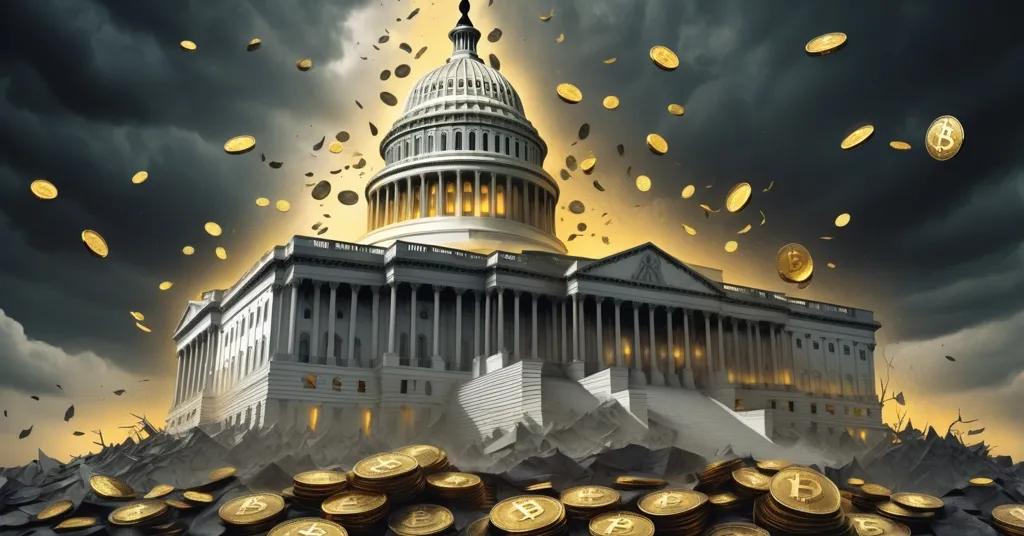
Global debt has hit a staggering $324 trillion in Q1 2025, and governments, especially the United States, are buckling under the weight of skyrocketing borrowing costs. Long-term bond yields are at their highest since 2009, driven by rampant deficits, sticky inflation, and political meddling in central bank policies, leaving policymakers scrambling to avoid a financial disaster.
- Debt Explosion: Global debt reaches $324 trillion, led by China, France, and Germany.
- Yield Surge: Long-term bond yields hit 2009 levels due to inflation and fiscal fears.
- US Struggles: Political moves could add $3.4 trillion to deficits over the next decade.
The Global Debt Quagmire: A $324 Trillion Nightmare
Let’s cut to the chase: the world is drowning in debt. The Institute of International Finance pegs global debt at $324 trillion for the first quarter of 2025, with heavy hitters like China, France, and Germany piling on the biggest chunks. That’s not just a number—it’s a ticking time bomb. Higher debt means higher borrowing costs, especially as long-term bond yields climb to levels not seen in over a decade. For those new to the financial jargon, bond yields are essentially the interest rate governments pay to borrow money over long periods. When yields spike, it’s like your credit card APR jumping from 5% to 15% overnight—suddenly, every dollar borrowed costs a hell of a lot more to repay.
This isn’t just a problem for some far-off bureaucracy. Rising yields hit everyone, from governments struggling to service debt to everyday folks facing pricier mortgages and loans. The risk here is a vicious cycle, often called a “doom loop”—higher borrowing costs slow down the economy, which makes debt even harder to manage, which then jacks up costs further. It’s a financial death spiral, and we’re all strapped in for the ride.
Context matters. Post-2008 and post-pandemic, governments borrowed like there was no tomorrow, thanks to dirt-cheap interest rates. Now, with inflation spiking and central banks tightening the screws, that debt is biting back. Geopolitical messes—think tariffs and trade wars—only make things worse. The old safety nets, like Japan’s historically low yields that once kept global markets stable, are gone. We’re in uncharted waters, and the waves are getting rough.
US Debt Woes: Deficits, Downgrades, and Dangerous Policies
Zooming in on the US, the picture gets uglier. The economy isn’t collapsing—hell, share prices are hitting record highs—but inflation is hotter than expected, pushing long-term yields up as investors demand more return for their risk. Then there’s the fiscal mess. Moody’s Ratings downgraded the US’s last top credit score in May 2025, sounding the alarm on growing debt and deficits, as highlighted in reports about the US government facing mounting pressure with climbing debt. This isn’t just a technicality; it’s a warning that even the world’s biggest economy isn’t the safe bet it used to be for global capital.
Enter President Donald Trump’s “One Big Beautiful Bill Act.” Beautiful? Sure, if you think a potential $3.4 trillion addition to US deficits over the next decade is a work of art. That’s per the Congressional Budget Office, and it’s roughly the size of some countries’ entire GDP. Meanwhile, Trump’s tariffs have pulled in a cool $240 billion through November 2025, but analysts are screaming that it’s peanuts compared to the gaping fiscal hole. It’s like trying to fix a sinking ship with a bucket—good luck with that.
Political meddling adds another layer of chaos. Trump has been hammering Federal Reserve Chair Jerome Powell for not cutting rates fast enough, and with Powell’s term ending in May 2026, whispers are growing that Kevin Hassett, a Trump ally from the White House National Economic Council, might take over. For the unversed, the Fed is the US central bank, tasked with juggling interest rates to keep inflation in check and growth humming. When politicians start pulling strings, it spooks markets—investors hate uncertainty, and they’re already jittery about whether leaders can fix public finances. As one trader sentiment goes:
Long-term notes depend on fixed payments stretching across decades, and the longer that money sits out there, the more can go wrong.
A Fed bending to political will could mean premature rate cuts, easing borrowing costs short-term but potentially unleashing more inflation. It’s a gamble with trillion-dollar stakes.
Historical Warnings: When Markets Bite Back
History doesn’t mess around with lessons. Remember 2022? UK Prime Minister Liz Truss got booted after bond markets threw a tantrum over her unfunded tax cuts. Way back in the 1990s, President Bill Clinton got a similar smackdown from markets to slow debt growth. The message is crystal clear: when yields spike, markets don’t whisper—they roar. Ignore them at your peril.
Today, the risks are just as real. High yields aren’t just a government problem; they jack up costs for households and businesses, grinding economic growth to a halt. There’s even talk of stagflation—a nasty throwback to the 1970s where prices keep climbing, but the economy stalls. Think of it as being stuck in quicksand while someone pours salt in your wounds. Central banks are caught in a bind: keep rates high to fight inflation and risk choking growth, or slash rates to boost economies and watch prices spiral. Good luck picking the lesser evil.
Bitcoin and Crypto: Shelter or Storm in a Debt Crisis?
For those of us in the Bitcoin and crypto camp, this debt disaster is a glaring middle finger to centralized financial systems. Governments printing money and stacking debt like there’s no tomorrow? That’s exactly why Bitcoin exists. With a hard cap of 21 million coins, it’s immune to the fiat money printer going brrr. It’s a hedge against devaluation—when the dollar or euro loses value due to inflation, Bitcoin’s scarcity can, in theory, hold its worth. Look at 2021-2022: as inflation soared, Bitcoin hit all-time highs, with some calling it “digital gold” for a reason.
But let’s not get carried away with the hopium. Bitcoin isn’t a magic fix for systemic economic collapse. When markets go risk-off, as they often do in crises with high yields and tight credit, Bitcoin and other cryptocurrencies can tank right alongside stocks. It’s not always the safe haven maximalists hype it up to be—correlation data from past downturns shows BTC often moves with equities, not against them. Plus, crypto markets have their own baggage: liquidity crunches, exchange hacks, and speculative bubbles. Freedom and privacy are core to the ethos, but they don’t shield us from a global debt storm.
What about altcoins and other blockchains? Ethereum, for instance, powers decentralized finance (DeFi), offering alternative lending and borrowing systems that could sidestep traditional banks drowning in government debt. Stablecoins pegged to assets might act as temporary safe harbors, though they’re not without risks—remember TerraUSD’s collapse in 2022? These innovations fill niches Bitcoin doesn’t, and shouldn’t, touch. BTC is the king of store-of-value, but the broader crypto space is a lab for financial revolution. Still, none of this guarantees immunity if the debt crisis triggers a worldwide panic.
The Bigger Picture: Can Centralized Systems Survive?
Let’s play devil’s advocate for a second. Some traditional economists argue centralized systems can still pull through with clever policy—think debt restructuring, targeted stimulus, or even modern monetary theory, which basically says governments can print money indefinitely without consequences. Sounds like a fairy tale, right? From a Bitcoin-maximalist lens, it’s pure insanity. Fiat systems are built on trust, and when debt hits $324 trillion with no clear payback plan, that trust erodes faster than a sandcastle in a tsunami. Decentralization isn’t just a tech buzzword; it’s a survival mechanism when the old guard fails.
Yet, even as a champion of disruption and effective accelerationism, I’ve gotta admit: centralized systems have deep roots and massive resources. They’ve weathered storms before. The counterpoint here is whether crypto can scale fast enough to be a real alternative if—or when—things collapse. Bitcoin’s network is secure but slow; Ethereum’s DeFi is innovative but complex and prone to exploits. We’re pushing for a future of freedom and privacy, but the road is rocky, and the old system won’t go down without a fight.
The bond market’s screaming a brutal truth: governments can’t borrow forever. Whether it’s through gut-wrenching austerity, pie-in-the-sky policies, or a market-forced reset, something has to break. For now, the US and global powers are juggling debt, deficits, and political games while the shadow of a “doom loop” grows darker. If you thought crypto winters were rough, brace yourself—a global debt storm could make those look like a light breeze. So, here’s the kicker: if governments buckle under this weight, will Bitcoin and decentralized tech truly save us, or just become another speculative plaything in the chaos?
Key Takeaways and Questions
- What’s driving the spike in long-term bond yields?
Investor panic over huge deficits, persistent inflation, and politicians meddling in central bank decisions, particularly in the US, are pushing yields to levels not seen since 2009. - How does $324 trillion in global debt hit governments?
It drives up borrowing costs as yields soar, straining budgets and risking economic slowdowns if debt becomes unmanageable. - What are the economic threats from rising yields?
A potential “doom loop” where higher costs cripple growth and inflate debt further, plus stagflation—rising prices with a stagnant economy. - Why should crypto fans care about political interference in central banks?
It exposes the fragility of traditional finance, strengthening the case for Bitcoin as a decentralized alternative, though crypto isn’t fully safe from market turmoil. - What does history teach us about today’s debt crisis?
Market backlashes, like the ousting of Liz Truss in 2022, prove bond markets can force policy shifts—current leaders better pay attention or face the same fate. - Can Bitcoin and crypto weather a global debt storm?
Bitcoin’s scarcity offers a hedge against fiat devaluation, and altcoins like Ethereum drive DeFi innovation, but they’re not immune to risk-off market crashes or internal flaws.