Coinbase Launches Dogecoin and Shiba Inu Futures: Meme Coin Legitimacy or Risky Gamble?
 LTB
LTB Dogecoin and Shiba Inu Futures on Coinbase: Meme Coin Hype or Risky Bet?
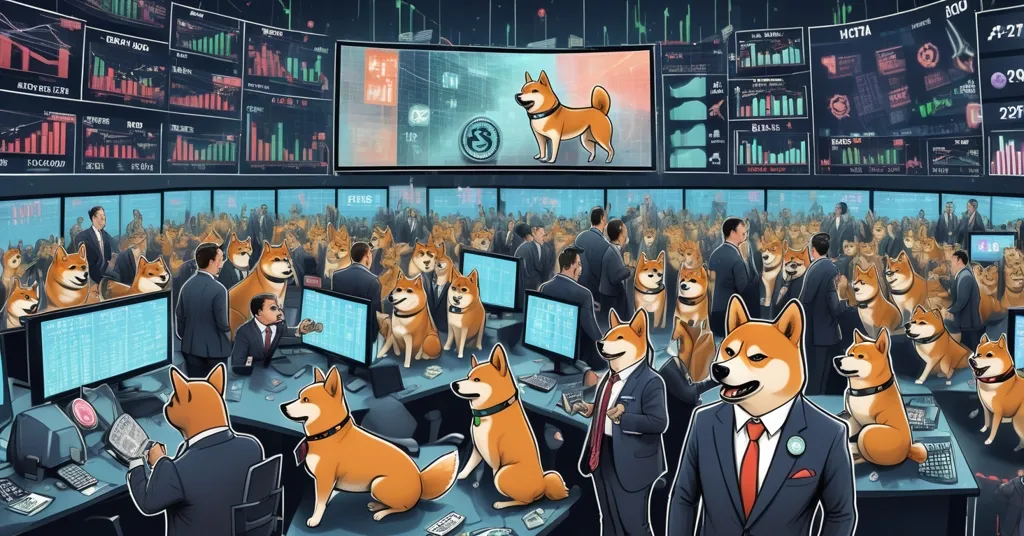
Coinbase, the titan of US cryptocurrency exchanges, has made waves by rolling out perpetual-style futures trading on its Coinbase Derivatives platform, with a surprising twist: meme coins Dogecoin (DOGE) and Shiba Inu (SHIB) are part of the lineup. Joined by heavyweights like Cardano, Chainlink, and Polkadot, these internet-born jests are stepping into a regulated, high-stakes arena. This raises eyebrows and questions alike—does this signal legitimacy for meme coins, or is it a reckless gamble in a bearish market?
- Meme Coins in Focus: DOGE and SHIB are the sole meme assets in Coinbase’s new US perpetual futures offering.
- Bearish Blues: DOGE trades at $0.1256 (down 3.2% in 24 hours) and SHIB at $0.000007523 (down 3%), both at one-year lows.
- Institutional Gateway: Regulated futures could spike visibility and volatility for these assets among US traders.
- High-Risk Play: SHIB’s futures feature a 1,000x leverage multiplier, tempting fate in a volatile space.
What Are Perpetual Futures?
For those new to the crypto trading game, perpetual futures are a type of derivative contract that lets traders bet on an asset’s price movements without an expiration date. Unlike traditional futures, which settle at a fixed time, these contracts—available 24/7 on Coinbase Derivatives—allow positions to be held indefinitely, as long as the trader can cover the margin. Think of it as a nonstop poker game where you can keep raising the stakes, but one bad hand could wipe you out. Accessible to both retail and institutional traders via Futures Commission Merchants (FCMs)—essentially middlemen ensuring regulatory compliance—these products offer leverage, meaning you can control a large position with a small upfront investment. It’s a powerful tool for hedging or speculation, but with great power comes the risk of catastrophic losses, especially with volatile assets like meme coins.
Meme Coins Meet Wall Street
The sight of Dogecoin and Shiba Inu in a regulated derivatives market feels like watching a clown car pull up to a boardroom meeting. DOGE, launched in 2013 as a parody of Bitcoin with a Shiba Inu dog mascot, exploded in 2021, hitting $0.73 thanks to viral hype and Elon Musk’s tweets. SHIB, dubbed the “Dogecoin killer” since its 2020 debut on Ethereum, briefly cracked the top 10 by market cap during the same mania. These assets are the crypto equivalent of a viral internet prank—entertaining to watch, but hardly the foundation for a retirement plan. Yet, Coinbase has placed them alongside serious players like Cardano, a blockchain focused on scalability, and Chainlink, a decentralized oracle network. This isn’t just a product drop; it’s a bizarre cultural mashup that forces us to rethink what “value” means in this space.
Coinbase’s Strategy and Regulatory Context
Why would Coinbase, the largest crypto exchange in the US, bet on meme coins for its derivatives push? The answer likely lies in a mix of market dynamics and competitive strategy. Meme coins, despite their absurdity, drive massive retail interest and trading volume—something Coinbase can’t ignore as it competes with offshore giants like Binance, where DOGE futures have long been a staple. By offering regulated perpetual futures under the oversight of the Commodity Futures Trading Commission (CFTC), Coinbase might also be testing the waters for broader derivatives expansion in a US market hungry for sophisticated tools. This move, detailed in recent reports like Coinbase’s latest product launch featuring Dogecoin and Shiba Inu, comes as the US grapples with crypto regulation, with recent debates over leveraged products highlighting risks of market manipulation and investor harm. Coinbase is walking a tightrope—appealing to traders while navigating a regulatory maze that could shape the future of crypto finance.
Market Realities: DOGE and SHIB Struggles
Let’s cut to the chase: DOGE and SHIB are bleeding value, futures or no futures. Dogecoin sits at a measly $0.1256, down 3.2% over the past 24 hours, a shadow of its 2021 peak. Shiba Inu fares no better at $0.000007523, also down 3%, scraping one-year lows. The pain doesn’t stop at price—SHIB recently saw a net inflow of 1.06 trillion tokens to exchanges, a red flag in crypto terms. When coins flood exchanges, it often means holders are gearing up to sell, pushing prices lower through increased supply. Whale activity, or moves by large holders, tells a similar tale: while SHIB saw a brief spike, overall engagement for both coins remains tepid. With the broader altcoin market in a slump amid macroeconomic headwinds like rising interest rates, these meme tokens are stuck in the mud, lacking the community fervor or utility to claw back.
Risks and Rewards of Leveraged Trading
Now, let’s talk about playing with fire. Shiba Inu’s perpetual futures contract on Coinbase comes with a jaw-dropping 1,000x leverage multiplier. To put that in perspective, with just $1, you can control a $1,000 position—but a mere 0.1% price drop wipes you out through a margin call, where your position is forcibly closed due to insufficient funds. It’s like borrowing a fortune to bet on a coin flip; the upside is astronomical, but so is the risk of liquidation. Dogecoin’s contract details are less extreme in current data, though the principle holds: leveraging meme coins is a tightrope walk over a volcano. For institutional traders, this offers a chance to hedge or amplify gains with precision. For the average retail punter? It’s a financial meat grinder waiting to chew up the overconfident.
Speculative Outlook: Boom or Bust?
Despite the gloom, Coinbase’s clout might just throw a bone to these underdogs. As a leading US exchange, its regulated platform could lure institutional players to DOGE and SHIB, driving trading volume and impacting price discovery—the market process of finding an asset’s fair value through supply and demand, akin to an auction setting a price via bids. Leveraged futures often exaggerate price swings, so expect volatility to spike as traders pile in. On one hand, this could reignite retail hype cycles, especially if social media latches onto futures as the next “moon” narrative. On the other, institutional shorting—betting against price rises—might dominate, crushing values further. Either way, these contracts could turn meme coins into a wilder rollercoaster, with no guarantee of an upward track.
Devil’s Advocate: Just Lipstick on a Pig?
Let’s not kid ourselves—meme coins in futures markets sound like progress, but aren’t we just polishing a turd? DOGE and SHIB lack the fundamentals of Bitcoin’s decentralized store of value or Ethereum’s vast dApp ecosystem. No regulated contract can mask their speculative core, driven by hype rather than utility. Products like SHIB’s 1,000x leverage are a siren song for reckless traders, and mass liquidations could stain the credibility of crypto derivatives broadly, not just Coinbase’s reputation. Yet, there’s a flip side: meme coins fill a chaotic niche Bitcoin doesn’t touch, often onboarding non-technical users with their absurdity. They’re the Wild West of this space, and sometimes, disruption sprouts from chaos. The real tension lies in balancing decentralization’s anarchy with regulated legitimacy—a tightrope crypto hasn’t yet mastered.
Key Takeaways and Questions
- What does Coinbase’s inclusion of Dogecoin and Shiba Inu in perpetual futures signify for meme coins?
It marks a step toward mainstream acceptance, exposing these joke assets to institutional traders in a regulated setting, potentially boosting their market relevance. - How might perpetual futures affect DOGE and SHIB price and volatility?
Higher trading volumes via futures could shape price discovery, likely increasing volatility as leveraged bets amplify even minor market moves. - Why are DOGE and SHIB in a bearish rut despite this launch?
Selling pressure dominates, with SHIB’s massive exchange inflows and low whale activity for DOGE reflecting investor exits amid a weak altcoin market. - Will Coinbase’s move draw more institutional interest to meme coins?
As a top US exchange, Coinbase’s platform may attract institutional players to DOGE and SHIB, offering new tools for exposure and risk management. - What dangers lurk in high-leverage futures like SHIB’s 1,000x multiplier?
Extreme leverage can lead to massive gains or total loss in seconds, a perilous gamble for traders unprepared for meme coin volatility. - How does this fit into the broader US crypto regulatory landscape?
Under CFTC oversight, Coinbase’s futures push navigates a contentious US regulatory environment, testing boundaries for leveraged crypto products.
Stepping back, this Coinbase move is a litmus test for crypto’s maturity. Dogecoin and Shiba Inu aren’t just memes anymore—they’re pawns in a clash between speculative chaos and regulated order. For Bitcoin maximalists, this sideshow might distract from the mission of sound money; for accelerationists, it’s a messy but necessary push against traditional finance. Should we cheer accessibility to wild markets, or demand more substance over gambling? The answer isn’t clear, but one thing is: these pups are playing in the big leagues now, and whether they bite or get bitten remains a gamble only time will resolve.