Taiwan Seizes 210 Bitcoin in Crackdown, Faces Crypto Custody Challenges
 LTB
LTB Taiwan Grabs 210 Bitcoin in Crackdown, Stumbles into Crypto Custody Conundrum
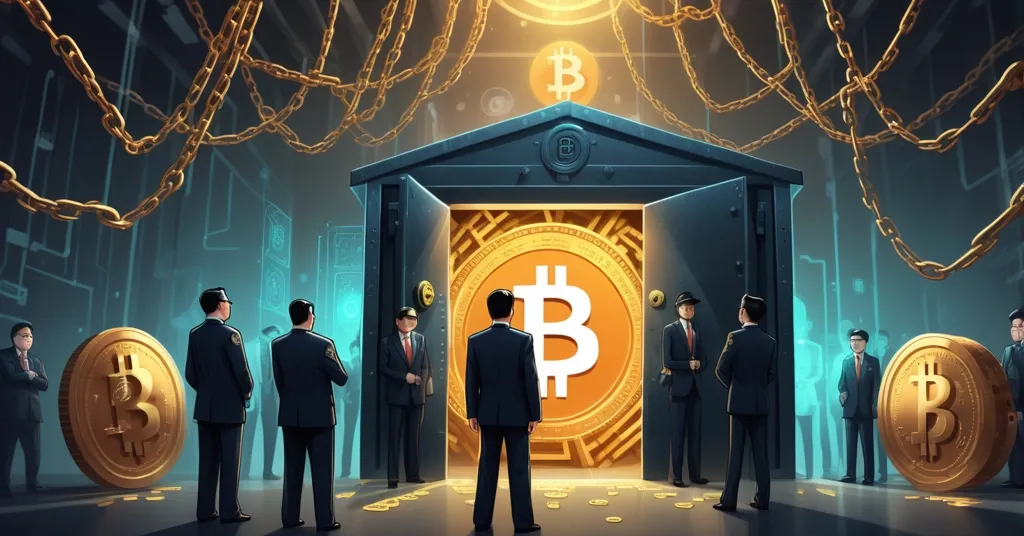
Taiwan has landed itself in the cryptocurrency spotlight after seizing a hefty stash of digital assets, including 210.45 Bitcoin (BTC), worth around $18 million, as part of a sweeping criminal crackdown. Valued at over NT$1.3 billion (roughly $40 million USD), this haul also includes 2,429.97 Ethereum (ETH) and significant amounts of stablecoins like USDT and USDC, exposing both the scale of illicit activity and the messy challenges of managing such volatile, intangible evidence.
- Seized Haul: Taiwan holds 210.45 BTC, 2,429.97 ETH, and major stablecoin reserves from criminal probes.
- Total Worth: Over NT$1.3 billion, with Bitcoin alone valued at approximately $18 million at current rates.
- Legal Limbo: Assets are under judicial custody, not national reserves, awaiting court rulings on their fate.
Breaking Down Taiwan’s Bitcoin Seizure
On October 31, 2025, Taiwan’s government inventoried a jaw-dropping collection of cryptocurrencies confiscated during investigations into fraud, money laundering, and illicit exchange operations. Lawmaker Ko Ju-Chun pressed for transparency, prompting the Ministry of Justice to reveal these holdings, which were made public by December 2025. This isn’t pocket change we’re talking about—the Bitcoin portion alone could buy a fleet of luxury cars, while the total NT$1.3 billion value underscores how deeply crypto has woven itself into both innovation and crime. But before we get carried away with visions of Taiwan “hodling” BTC like a seasoned investor, let’s be clear: these assets are locked in judicial custody, not stashed in some national treasury for a rainy day. For more details on this significant seizure, check out the report on Taiwan’s acquisition of 210 Bitcoin through asset crackdowns.
For those just dipping their toes into the crypto pool, let’s unpack the basics. Bitcoin (BTC) is the granddaddy of cryptocurrencies, a decentralized digital currency running on a peer-to-peer network with no central bank or middleman. It’s a symbol of financial freedom but also a headache due to its pseudonymous nature, which criminals love to exploit. Ethereum (ETH) powers a different blockchain, fueling smart contracts—think automated, tamper-proof agreements—that underpin decentralized apps (dApps) and much of the crypto innovation beyond simple transactions. Stablecoins like USDT (Tether) and USDC (USD Coin) aim to keep a steady value, often pegged to the US dollar, acting as a less jittery bridge between volatile crypto and traditional finance. Taiwan’s seizure isn’t just a grab of digital cash; it’s a snapshot of a borderless, complex financial frontier.
Criminal Underbelly: Why These Assets Were Seized
The cryptocurrencies now under Taiwan’s control were snatched during probes into serious financial crimes. Think Ponzi schemes promising impossible returns, ransomware payments extracted from desperate victims, or darknet markets peddling illegal goods—all lubricated by the anonymity and speed of digital assets. While exact case details remain under wraps, the Ministry of Justice tied these seizures to fraud, money laundering, and shady exchange platforms that flout regulations. Bitcoin’s borderless nature, often a feature for privacy advocates like myself, becomes a bug when scammers use it to funnel dirty money across continents in minutes. Ethereum’s smart contracts, meant for trustless innovation, get hijacked for scam tokens or laundering schemes. Even stablecoins, designed for stability, are often the preferred exit ramp for crooks converting volatile gains into something spendable.
Let’s not sugarcoat it: for all the talk of crypto as the future of money, it’s still a playground for bad actors. Taiwan’s crackdown is a stark reminder that every step toward disrupting the financial status quo drags along a shadow of exploitation. As champions of decentralization, we can’t ignore this rot—calling out scammers and pushing for responsible adoption is as crucial as cheering Bitcoin’s resilience.
Operational Nightmares: Securing Digital Gold
Holding 210.45 BTC and other crypto isn’t like stashing cash in a vault or gold in a bunker. Taiwan’s authorities face a gauntlet of challenges just to keep these assets safe. First, there’s security: these digital holdings are accessed via private keys—think of them as unbreakable passwords to a digital safe. Lose the key, and the assets are gone forever. Store them insecurely, and a hacker halfway across the world could drain $18 million in Bitcoin with a few clicks. Governments often use “cold storage,” keeping keys offline on hardware devices to dodge cyber threats, but even that’s not foolproof if physical security or staff training lags.
Then there’s the legal mess. Maintaining a chain-of-custody—proving in court that the crypto hasn’t been tampered with—isn’t as simple as tagging a bag of evidence. Valuing these assets for judicial decisions is another headache, given Bitcoin’s price can swing thousands of dollars in a day. If a court decides to auction them, as seen in the US with Silk Road seizures, who handles the sale? How do you prevent market manipulation or ensure the proceeds reach victims rather than bloating government coffers? And let’s not forget the cost—hiring blockchain forensic experts or tech consultants doesn’t come cheap. Taiwan’s government, not exactly a bastion of cutting-edge tech prowess, risks a PR disaster if a breach or blunder wipes out millions on their watch.
Global Precedents and Regional Tensions
Taiwan isn’t the first to wrestle with seized crypto, nor will it be the last. The United States has auctioned off billions in Bitcoin from high-profile busts like Silk Road, turning digital contraband into federal funds—though not without hiccups, as early auctions often sold BTC at bargain-basement prices. Germany has liquidated seized crypto from piracy sites, sometimes crashing local markets with sudden sell-offs. Each case exposes the same dilemma: governments are accidental crypto whales, holding assets they barely understand, let alone control.
Zooming into Asia, Taiwan sits at a regulatory crossroads. China, its overbearing neighbor, has slammed the door on crypto with outright bans, citing financial stability and crime risks. Meanwhile, Singapore plays the long game with a regulatory sandbox, fostering blockchain startups under strict oversight, and Japan has embraced exchanges with licensing frameworks that balance innovation and accountability. Taiwan’s stance remains murky—neither fully hostile nor welcoming. This seizure could nudge lawmakers toward clarity, whether that’s tighter controls to curb crime or innovative mechanisms like transparent auctions with victim-first proceeds. The operational headaches alone might force a reckoning on how to handle cryptocurrency evidence in a legal system built for physical assets.
Community Buzz and Misleading Hype
The crypto world didn’t sleep on this news. Bitcoin Magazine dropped a hot take on December 18, 2025, framing Taiwan’s haul as a quasi-endorsement:
BREAKING: The Ministry of Justice has just revealed that Taiwan now holds 210.45 Bitcoin in seized assets. Another nation-state holding Bitcoin. – Bitcoin Magazine (@BitcoinMagazine)
Let’s cut through the hype. This isn’t El Salvador stacking Bitcoin as a treasury asset or a sign of nation-state adoption. It’s a byproduct of law enforcement, not a policy pivot. Social media speculation about “Taiwan going bullish on BTC” is wishful thinking at best, dangerous misinformation at worst. As a Bitcoin maximalist at heart, I’d love to see every government hodling BTC as a hedge against fiat decay, but let’s not delude ourselves—this is a legal holding, not a love letter to decentralization. Still, the irony isn’t lost: even when seized, Bitcoin remains a force no state can ignore.
For altcoin advocates, the inclusion of Ethereum and stablecoins in the seizure validates their utility. ETH’s role in decentralized finance (DeFi) and smart contracts fills niches Bitcoin doesn’t touch, while stablecoins offer a practical on-ramp for real-world use. Yet, from a maximalist lens, Bitcoin’s dominance shines through—its $18 million slice of the haul dwarfs other assets in headline power, proving its cultural and financial weight remains unmatched, even in handcuffs.
Policy Implications: A Tipping Point?
Taiwan’s seizure could light a fire under dormant crypto policy debates. Will lawmakers double down on enforcement, crafting draconian rules to choke illicit use? Or will they see an opportunity to innovate, perhaps streamlining victim compensation or setting global standards for seized asset auctions? The high-profile nature of this NT$1.3 billion haul, exposed by Ko Ju-Chun’s persistence, might push regulatory clarity from a “nice to have” to a “must have.” But don’t hold your breath—governments move at glacial speeds, and Taiwan’s tech infrastructure isn’t primed for agile blockchain solutions. A botched wallet hack or legal misstep could turn this into a cautionary tale rather than a triumph.
There’s also an ethical angle worth chewing on. If these assets are auctioned, who deserves the proceeds? Victims of fraud and theft should top the list, but history shows governments often funnel such funds into general budgets. Is it right to bankroll public services with “dirty” crypto, or does that just perpetuate a cycle of state overreach? For those of us rooting for decentralization and effective accelerationism, these questions strike at the heart of crypto’s tension: freedom versus control, innovation versus exploitation.
What’s Next for Taiwan and Crypto?
The fate of Taiwan’s 210.45 Bitcoin and other digital assets hinges on court rulings. They could be returned to defrauded victims, held indefinitely as evidence, or sold off in a public auction that might make Taiwan an accidental market mover. Beyond the legal outcome, this saga tests the nation’s ability to adapt to a financial paradigm it didn’t design. Success could position Taiwan as a quiet leader in handling government-seized crypto; failure could fuel skepticism about state competence in the digital age.
As advocates for disrupting the status quo, we see every clash between crypto and state power as a step toward inevitability. Bitcoin’s resilience, even when locked in government wallets, proves its staying power. Ethereum and stablecoins remind us that the blockchain ecosystem is broader than any single coin, solving problems BTC never aimed to tackle. Yet, the road to mass adoption is paved with friction—legal battles, policy gaps, and the persistent stink of scams. Taiwan’s conundrum is just one chapter in a larger story of financial revolution, and we’re here to cover every twist, no fluff, no bullshit.
Key Takeaways and Burning Questions
- What happens to Taiwan’s seized 210.45 Bitcoin and other cryptocurrencies?
Court decisions will dictate their fate—options include returning them to victims, keeping them as evidence, or auctioning them off. - Why were these digital assets confiscated?
They were taken during criminal investigations into fraud, money laundering, and illicit exchanges, highlighting crypto’s misuse by bad actors. - What challenges does Taiwan face in managing this crypto haul?
Authorities must secure assets against hacks, maintain legal integrity with chain-of-custody records, value volatile holdings, and navigate ethical disposition choices. - Could this seizure shape Taiwan’s cryptocurrency regulations?
Yes, the public exposure and sheer value might force lawmakers to define clearer policies on asset custody, victim compensation, and broader crypto oversight. - Is Taiwan adopting Bitcoin as a national reserve through this?
No, these assets are under judicial control as evidence or forfeited property, not a strategic embrace of Bitcoin as a sovereign holding.