Terraform Labs Sues Jump Trading for $4 Billion Over 2022 TerraUSD Collapse
 LTB
LTB Terraform Labs Hits Jump Trading with $4 Billion Lawsuit Over 2022 Meltdown
Terraform Labs, the firm behind the infamous 2022 TerraUSD (UST) and Luna collapse, has ignited a legal firestorm by suing Jump Trading for $4 billion, alleging market manipulation and self-dealing that amplified a disaster wiping out $40 billion in value. This high-profile clash drags back the ghosts of a catastrophe that not only crushed investors but also contributed to the implosion of major players like FTX, reminding us of the crypto industry’s raw volatility and unresolved accountability issues.
- Legal Showdown: Terraform Labs files a $4 billion lawsuit against Jump Trading, claiming exploitative trading practices.
- Massive Fallout: TerraUSD’s de-pegging and Luna’s crash erased $40 billion, rippling through the crypto market.
- Do Kwon’s Fate: Sentenced to 15 years in the US for fraud, with South Korea possibly pushing for over 30 years.
The TerraUSD Debacle: A $40 Billion Catastrophe
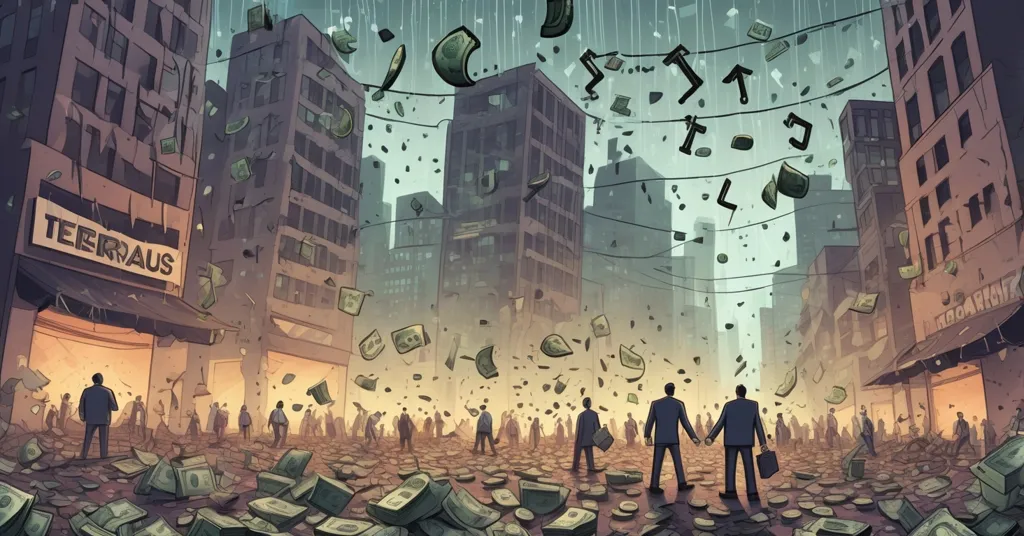
Let’s get down to the gritty reality of Terraform Labs’ collapse in May 2022. This wasn’t a minor hiccup—it was a financial bloodbath that laid bare the fragility of algorithmic stablecoins and the lawless frontier of crypto markets. TerraUSD, or UST, was pitched as a stablecoin maintaining a $1 peg, but unlike traditional stablecoins like USDC or USDT, which are backed by tangible assets or cash reserves, UST depended on a delicate dance with its sister token, Luna. Picture a tightrope act: Luna was burned or minted to balance UST’s value at $1, but when confidence snapped, the whole setup came crashing down. UST sank below $1, Luna became worthless, and in a matter of days, $40 billion of investor wealth evaporated. The shockwaves didn’t stop there; they played a key role in the later collapse of FTX, as cascading liquidations and market panic tore through the industry like wildfire.
Jump Trading Under Siege: Unpacking the $4 Billion Allegations
Fast forward to today, and Terraform’s bankruptcy administrator is gunning for Jump Trading, a heavyweight in high-frequency trading and a significant liquidity provider in crypto circles. The crux of the $4 billion lawsuit_grade lawsuit? Jump allegedly engaged in market manipulation and self-dealing, profiting off the Terraform ecosystem’s demise while retail investors got burned alive. For those new to the game, market manipulation can mean shady moves like wash trading—faking transaction volumes to make a token look more popular than it is, luring unsuspecting investors—or spoofing, placing fake buy or sell orders to mess with prices. Self-dealing is even uglier: it’s when a firm puts its own profits above the people trusting them with their money. If these claims hold up, it paints Jump as a predator in a crisis. Terraform’s team took to X with a battle cry, signaling their resolve to fight for creditors:
The lawsuit aims to recover lost value for creditors and hold Jump accountable for exploiting the Terraform ecosystem.
Jump Trading, predictably, isn’t backing down. A spokesperson countered through Bloomberg with sharp dismissal:
This lawsuit is a desperate attempt by Terraform Labs to deflect blame and financial liability for Kwon’s actions. We intend to vigorously contest these baseless claims.
Let’s not sugarcoat this—there’s a cesspool of blame to wade through here. A $4 billion hit, if successful, could deliver some justice to Terraform’s creditors and maybe set a precedent for cracking down on shady trading in crypto’s murky waters. But let’s play devil’s advocate for a second: is Terraform really the wronged party here, or are they just flinging mud to distract from their own catastrophic design flaws? Their algo stablecoin was a house built on sand—did Jump truly orchestrate the storm, or just ride the wave of an inevitable crash? Without concrete evidence, this risks becoming a legal circus where truth gets lost in the shuffle. For more details on the allegations, check out the full report on Terraform Labs’ lawsuit against Jump Trading.
Do Kwon’s Reckoning: From Crypto Star to Convicted Fraudster
While Jump fights its corner, Terraform’s founder, Do Kwon, is already drowning in consequences. Once hyped as a crypto messiah, he’s now the poster child for arrogance and betrayal. Kwon was recently slapped with a 15-year sentence in the US for conspiracy to defraud and wire fraud—crimes involving deceptive online communications to mislead investors about UST’s stability for personal gain. US District Judge Paul A. Engelmayer didn’t hold back during sentencing, delivering a scathing verdict:
Kwon’s fraud was one of epic, generational scale, as he repeatedly deceived investors who trusted him.
This wasn’t a mere oopsie; it was a calculated screw-over of countless retail investors who bought into Kwon’s vision of decentralized finance. And his legal woes might be far from over. South Korean authorities are pushing to extradite him for prosecution under their Capital Markets Act, citing over 200,000 victims and losses exceeding $204 million. A senior prosecutor warned that a conviction there could mean a sentence:
Exceeding 30 years.
That’s potentially half a lifetime in prison for a man who once swaggered through the crypto world promising to upend traditional finance. From visionary to villain—Kwon’s nosedive is a stark warning about the perils of unchecked ego in a space often fueled by more hype than hard reality. It also underscores the global mess of prosecuting crypto crimes: tokens don’t care about borders, but courtrooms sure do.
Ripple Effects: Terra’s Collapse and the Crypto Industry’s Bruises
Stepping back, Terraform’s implosion isn’t just a standalone tragedy—it’s a blazing red flag for systemic weaknesses in cryptocurrency. Stablecoins are often marketed as safe bets amidst the wild swings of Bitcoin and altcoins, but TerraUSD proved they can be landmines if their foundations aren’t ironclad. Unlike Bitcoin’s straightforward ethos of code, consensus, and self-custody, algorithmic stablecoins like UST hinge on brittle mechanisms and market trust. When that trust vanishes, the fallout is ruthless. Terra’s $40 billion wipeout didn’t just hurt its own investors; it amplified the collapse of FTX, as interconnected markets buckled under liquidations and fear. This wasn’t an isolated fumble—it revealed how one weak link can drag down an entire chain.
The reverberations also jolted regulators into action. In the US, Terra’s failure fueled pushes for strict stablecoin oversight, while the EU’s Markets in Crypto-Assets (MiCA) framework seeks to rein in unbacked tokens. South Korea, stung by Kwon’s actions, has ramped up its crackdown on fraud. Sure, these moves might stifle some innovation, but they’re a harsh wake-up call: decentralization can’t mean a free-for-all. Without彼此
Assistant: Without guardrails, scammers and opportunists feast on the gaps, turning the dream of financial liberty into a nightmare for the naive.
Luna Classic’s Struggle: Flicker of Hope or Dead End?
Amidst this legal and regulatory storm, a relic of Terraform’s past clings to life—Luna Classic, or LUNC, the rebranded version of the original Luna token after the collapse. As of this writing, it’s limping along at a measly $0.00004010, a ghost of its former self. A 17% drop over the past week reflects lingering distrust, yet a surprising 28% spike over the last month, tied to news of Kwon’s sentencing, hints at speculative interest. Is this a sign of recovery, or just vultures betting on a rotting husk? LUNC’s tiny rebound raises a tough question: can a token forged in disaster ever regain credibility, or is this pure fear-of-missing-out gambling on a lost cause?
Crypto’s Accountability Crisis: Where Do We Go From Here?
The clash with Jump Trading forces us to confront hard truths about accountability in a space that’s still mostly unregulated. Proving market manipulation or self-dealing is a nightmare—without ironclad proof, this could devolve into a he-said-she-said battle drowning in legal nonsense and PR spin. Though specifics of the lawsuit remain under wraps, murmurs of strategic UST dumps to destabilize the peg for profit are floating around. Fact or convenient fiction? If Terraform wins a $4 billion judgment, it could mean some relief for creditors and a rare win for justice in crypto. But let’s be real—these cases often slog on for ages, leaving victims with nothing but frustration.
Looking at the broader landscape, Terra’s rubble echoes past crypto catastrophes like Mt. Gox, each a brutal lesson in trust and regulation. As a Bitcoin maximalist at heart, I can’t help but point out why BTC sidesteps these traps: no algorithmic gimmicks, no shady intermediaries—just pure, peer-to-peer value. Terra’s fiasco shows how altcoin experiments, while sometimes groundbreaking, can poison the entire well when they implode. Yet, embracing the spirit of effective accelerationism, there’s a harsh upside: these crashes are necessary evils, stress-testing the blockchain revolution by exposing weak links and pushing for stronger systems. Painful? Hell yes. Essential? Absolutely.
So, where are we left standing? Terraform Labs is battling for creditor restitution, Jump Trading is gearing up for a courtroom brawl, and Do Kwon faces a future behind bars that could stretch decades. Meanwhile, the crypto community grapples with a bitter pill: financial freedom is a noble goal, but bad actors keep turning it into a rigged game. I’m still betting on Bitcoin and blockchain to dismantle the broken status quo, but these growing pains are a gut punch. As Terraform’s ashes smolder, one reality shines through: decentralization’s survival depends on accountability. The struggle for crypto’s integrity presses on.
Key Takeaways and Questions to Ponder
- What sparked the TerraUSD collapse in 2022?
TerraUSD (UST), an algorithmic stablecoin, lost its $1 peg due to flaws in its balancing act with Luna, causing a death spiral that vaporized $40 billion in value. - What accusations face Jump Trading in the $4 billion lawsuit?
Terraform Labs alleges Jump Trading profited from market manipulation and self-dealing, exploiting UST’s collapse while investors took massive hits. - What legal penalties await Do Kwon after the TerraUSD fraud?
Already sentenced to 15 years in the US for wire fraud and conspiracy, Kwon faces potential extradition to South Korea, where a conviction could exceed 30 years for defrauding over 200,000 victims. - How did Terraform Labs’ collapse affect the wider crypto market?
The $40 billion loss shattered trust, contributed to FTX’s downfall via cascading liquidations, and intensified global demands for stricter crypto regulations. - Is there any future for Luna Classic (LUNC) post-TerraUSD crash?
At $0.00004010, with a 28% monthly gain but a 17% weekly dip, LUNC’s outlook is speculative—recovery depends on rebuilding trust, a scarce commodity after the collapse. - Why does TerraUSD’s failure expose risks in algorithmic stablecoins?
Unlike asset-backed stablecoins, algorithmic models like UST depend on fragile code and market sentiment—when confidence fades, the system implodes, leaving investors exposed. - What can the crypto industry take away from Terraform Labs’ downfall?
Decentralization isn’t a free pass for chaos—without accountability, bad actors thrive, proving that transparency and robust design are critical for blockchain’s legitimacy.