Nvidia’s Massive Israel Campus: AI and Blockchain Innovation Hub by 2031
 LTB
LTB Nvidia’s Israel Campus: A Tech Giant’s Power Play for AI and Blockchain Innovation
Nvidia, the semiconductor behemoth behind much of today’s AI and computing breakthroughs, has dropped a bombshell with plans for a massive 10,000-capacity campus in Kiryat Tivon, Israel. With a multi-billion-dollar investment, this hub could redefine technological innovation—potentially impacting artificial intelligence, decentralized systems, and even the cryptocurrency space where Nvidia’s hardware has long been a linchpin.
- Enormous Scale: Campus to accommodate up to 15,000 employees across 22.5 acres and 160,000 sqm of space.
- Timeline: Construction begins in 2027, first occupants expected by 2031.
- Broader Implications: Could make Nvidia Israel’s largest private employer while raising concerns about local infrastructure and geopolitical risks.
Nvidia’s Billion-Dollar Bet on Israel
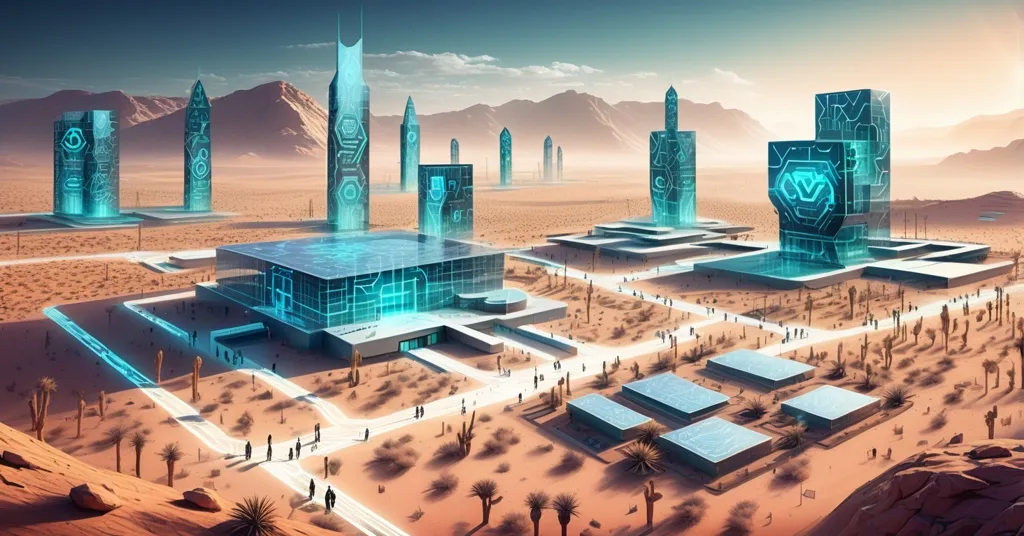
Let’s break down the sheer ambition of this project. Nvidia secured 22.5 acres from the Israel Land Authority, shelling out NIS 90 million for the land and committing to NIS 7.5 million in annual taxes to the local council. The campus, spanning 160,000 square meters, mirrors the futuristic design of their Santa Clara headquarters, featuring parks, visitor centers, cafes, labs, and collaborative spaces. This isn’t just a workplace; it’s a statement. With the potential to house up to 15,000 employees—nearly doubling their current Israeli workforce—Nvidia could claim the title of Israel’s largest private employer if existing offices stay active.
Israel, often hailed as the “Startup Nation,” is a magnet for tech giants due to its unparalleled pool of engineering talent and culture of innovation. Since acquiring Mellanox Technologies in 2020 for $6.9 billion, Nvidia has deepened its ties to the region. CEO Jensen Huang has been vocal about why Israel is central to their strategy, especially as global demand for AI and high-performance computing surges. For more details on their expansive vision, check out the announcement of Nvidia’s plans for a 10,000-capacity campus in Israel.
“Israel is like a home to some of the most brilliant technologists in the world… the location has become a second home for Nvidia,” Huang declared, highlighting the strategic weight of this expansion.
Huang’s vision extends beyond mere headcount. He sees the campus as a catalyst for groundbreaking work, particularly in AI, an area where Nvidia’s dominance is unchallenged.
“The new campus will be a place where teams can collaborate, build, and ignite the fire of artificial intelligence… [it] shows a deep and enduring commitment to their family in Israel and their unique contribution to AI,” he added.
Amit Krieg, Senior VP of Software Engineering at Nvidia, reinforced this, crediting the “extraordinary talent and engineering excellence” of Israeli teams for driving the company’s growth in the region. Working with local entities like the Planning Administration and Israel Electric Corp., Nvidia has set the stage for construction to kick off in 2027, with the first wave of occupants moving in by 2031.
Why Crypto Cares: Nvidia’s Role in Blockchain and Bitcoin Mining
Now, let’s pivot to why this news hits home for the crypto crowd. Nvidia’s GPUs—Graphics Processing Units, specialized hardware initially built for rendering gaming graphics—have become indispensable for high-speed computations. In the crypto world, they’ve been crucial for mining, the process of validating transactions by solving complex mathematical puzzles. Back in Bitcoin’s early days, GPUs were the go-to for miners before ASICs (Application-Specific Integrated Circuits) took over for their efficiency. Today, while Bitcoin mining is largely ASIC territory, Nvidia GPUs still power mining for altcoins like Ethereum Classic and play a vital role in decentralized app development across platforms like Solana.
Beyond mining, Nvidia’s hardware fuels machine learning models that could revolutionize blockchain tech. Think AI-enhanced smart contracts—self-executing agreements coded on networks like Ethereum that automatically execute terms when conditions are met. With AI, these could predict outcomes or automate intricate clauses, pushing decentralized finance (DeFi) to new heights. A campus laser-focused on AI innovation could indirectly turbocharge blockchain scalability—basically, the ability of networks to process more transactions quickly without choking or jacking up fees. For Bitcoin maximalists like myself, the real question is whether Nvidia’s advancements could optimize secondary layers like the Lightning Network for faster, cheaper payments. Could AI accidentally solve some of Bitcoin’s thorniest issues? It’s not far-fetched.
But let’s not get ahead of ourselves. Nvidia’s primary focus is AI, not crypto. With the Ethereum merge in 2022 shifting mining to a less hardware-intensive model, the profitability of GPU mining for major coins has taken a hit. There’s a real risk that Nvidia might deprioritize crypto-specific hardware in favor of AI markets where margins are fatter. Playing devil’s advocate here: could this campus signal a pivot away from the decentralized tech we champion? It’s worth watching whether their R&D tilts too far from the blockchain space.
Israel’s Startup Scene: A Hotbed for Decentralized Innovation?
Israel’s tech ecosystem adds another layer of intrigue. The country is teeming with blockchain startups pushing the boundaries of Web3—the vision of a decentralized internet built on crypto protocols. Companies like StarkWare, which develops scaling solutions using zero-knowledge proofs (a privacy tech also seen in coins like Zcash), are based there. Orbs, another Israeli project, focuses on hybrid blockchain infrastructure. If Nvidia’s campus fosters collaboration with such innovators, we could see breakthroughs—perhaps custom GPUs optimized for privacy computations or AI tools that enhance decentralized apps.
This isn’t just wishful thinking. Nvidia has a history of partnering with cutting-edge firms, and Israel’s compact, hyper-connected startup scene is perfect for such synergies. Even if direct Bitcoin applications remain limited, altcoins and niche protocols could benefit immensely, filling gaps Bitcoin doesn’t aim to address. While I’m all for Bitcoin’s dominance as the ultimate store of value, I can’t ignore how these ecosystems carve out their own relevance. An Nvidia-backed boost to Israel’s blockchain innovators could be a quiet win for the broader decentralized movement.
The Risks: Infrastructure Woes and Geopolitical Gambles
Before we start popping champagne, let’s face the ugly realities. Kiryat Tivon’s infrastructure is nowhere near ready for a workforce of this magnitude. There’s just one railway station, 5 kilometers away. Frankly, that’s a logistical disaster waiting to happen when thousands of employees need to commute daily. Traffic gridlock, overburdened public services, and strained local resources are all on the table. Israel’s urban planning often struggles to match its economic boom, and this project could expose those flaws in glaring fashion. If 15,000 techies can’t get to work without turning the area into a parking lot, Nvidia’s AI better start solving traffic jams too.
Then there’s the geopolitical elephant in the room. Israel sits in a volatile region, with historical conflicts and ongoing tensions that have disrupted businesses before. Tech investments aren’t immune—supply chain hiccups, employee safety concerns, and political instability could delay construction or impact operations. Look at past regional flare-ups; they’ve slowed projects and spooked investors. Nvidia seems unfazed for now, likely banking on diversified global hubs and remote work options as buffers, but it’s a gamble. No amount of engineering brilliance can fully insulate a multi-billion-dollar bet from such unpredictability.
The Big Picture: Economic Boom vs. Real-World Messiness
On the flip side, the economic upside for Israel is staggering. We’re talking thousands of high-paying jobs—potentially 15,000 direct roles plus indirect opportunities for local businesses. Estimates suggest tech hubs like this can boost regional GDP by double-digit percentages over a decade, transforming communities through tax revenue and spillover effects. For Nvidia, it’s access to a proven talent pool that could drive the next wave of AI and, with luck, decentralized tech advancements. This project cements Israel as a global tech powerhouse, rivaling Silicon Valley in innovation density.
Yet, the balance of promise and peril is stark. This campus embodies the messy reality of disruption—pushing boundaries while navigating real-world chaos. For the crypto community, it’s a reminder that the hardware fueling our revolution often comes from giants playing a broader game. As a Bitcoin advocate, I hope Nvidia’s innovations trickle down to strengthen decentralization, even if indirectly. But I’m not blind to the risks of overreaching in uncertain terrain. By 2031, will we see a thriving hub of progress, or a cautionary tale of ambition outpacing practicality? The crypto world—and the tech world at large—is watching closely.
Key Takeaways and Questions
- What’s behind Nvidia’s massive campus in Israel?
A multi-billion-dollar project in Kiryat Tivon to house up to 15,000 employees, aiming to drive AI innovation and potentially impact decentralized tech by 2031. - How does Nvidia connect to cryptocurrency and blockchain?
Their GPUs power altcoin mining like Ethereum Classic and support decentralized app development, with potential AI breakthroughs possibly enhancing blockchain scalability or smart contracts. - What risks threaten this ambitious project?
Severe infrastructure strain in Kiryat Tivon, with limited transport options, and geopolitical tensions in Israel that could disrupt timelines or safety. - Could this campus shape Bitcoin’s future?
While Bitcoin mining now relies on ASICs, Nvidia’s AI advancements could optimize layers like Lightning Network for faster, cheaper transactions, indirectly bolstering Bitcoin’s utility. - Is Nvidia’s AI focus a risk to crypto innovation?
Potentially, as their pivot to AI markets might sideline crypto-specific hardware development, especially post-Ethereum merge when GPU mining profitability dipped. - What’s the economic impact for Israel?
Beyond 15,000 jobs, the campus could significantly boost regional GDP, elevate local businesses, and solidify Israel’s status as a tech innovation hub.