Wang Chun’s 490 BTC Loss and $50M USDT Scam Expose Crypto’s Security Crisis
 LTB
LTB Wang Chun’s Bitcoin Fiasco and the Relentless Surge of Crypto Scams
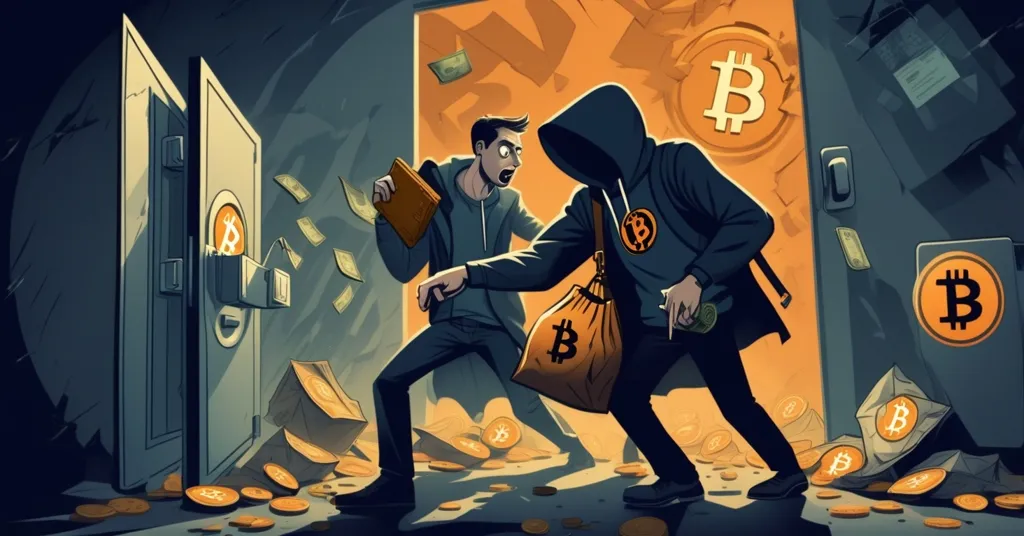
Wang Chun, co-founder of the Bitcoin mining giant F2Pool, pulled off a jaw-dropping stunt last year by sending 500 BTC to a wallet he suspected was hacked, only to lose 490 BTC to a thief who left just 10 BTC behind as a mocking tip. Meanwhile, a devastating phishing scam on December 20 saw a user lose nearly 50 million USDT to an address poisoning attack, exposing the raw underbelly of crypto security failures. These stories are a brutal wake-up call for an industry hell-bent on disruption but often stumbling over its own feet.
- Wang Chun risked 500 BTC in a bizarre test, losing 490 to a hacker who spared 10 BTC.
- A separate victim lost 49,999,950 USDT in an address poisoning scam exploiting wallet UI flaws.
- The Ethereum Community Foundation demands full address displays to curb such fraud.
Wang Chun’s Costly Gamble: A Bitcoin Blunder for the Ages
Let’s unpack Wang Chun’s misadventure first. As a co-founder of F2Pool, one of the largest Bitcoin mining pools—where miners pool computational resources to earn BTC rewards—Wang isn’t some random newbie fumbling in the dark. His position makes this incident all the more baffling. Last year, suspecting a wallet was compromised, he didn’t just poke around with a small test transaction. No, he hurled 500 BTC, worth millions depending on market swings, straight into a potentially hacked address to see if a thief was lurking. Unsurprisingly, one was. The hacker snatched 490 BTC, leaving a measly 10 BTC behind—enough, as Wang sarcastically quipped, for his “bread and butter.” He even dropped the hacker’s address, 14H12PpQNzrS1y1ipjF4mPuVgQEpgfGA79, though there’s no word on whether he’s chasing the funds. For more on this staggering loss, check out the detailed report on Wang Chun’s Bitcoin mishap.
Online reactions range from disbelief to outright mockery. Why risk a fortune on a hunch? Some speculate this might be a polished-up tale to mask an accidental loss, while others see it as pure hubris from an industry insider who should know better. Let’s be real: if Bitcoin OGs are pulling stunts like this, what hope do regular users have? It raises questions about trust—not just in F2Pool, which remains a heavyweight in mining, but in the cavalier attitudes of some crypto elites. Bitcoin’s beauty lies in its simplicity and security as a store of value, yet even its champions can fall into traps of overconfidence. This wasn’t just a personal loss; it’s a glaring reminder that no one’s immune to the chaos of the space—not even those shaping it.
The $50 Million USDT Heist: Address Poisoning Strikes Again
While Wang’s loss was a self-inflicted wound, another victim’s nightmare shows how insidious threats lurk for even cautious users. On December 20, a user lost a staggering 49,999,950 USDT—Tether, a stablecoin pegged to the US dollar and widely used in trading for its price stability—in a phishing scam known as address poisoning. For those unfamiliar, USDT isn’t just another token; it’s a cornerstone of crypto markets, though its centralized nature often draws flak from decentralization purists. Losing nearly $50 million of it isn’t just a financial gut-punch; it’s a personal catastrophe.
Address poisoning works by exploiting a design flaw in how wallet interfaces display addresses. Most wallets shorten these long strings of characters (like 0x123…789) with dots or ellipses for brevity. Scammers create fake addresses mimicking the first and last visible characters of a legitimate one, banking on users not noticing the difference. In this case, the victim copied what they believed was a trusted address from their transaction history, only to send a fortune to a thief. Security researcher Cos, founder of SlowMist, noted the eerie precision of the fake:
“You can see the first 3 characters and last 4 characters are the same.”
The scammer didn’t waste time. They swapped the USDT for Ether, split the haul across multiple wallets, and funneled part of it into Tornado Cash, a privacy tool that mixes transactions to obscure their origins—used by both privacy advocates and criminals alike. Unlike Wang’s shrug-it-off vibe, this victim is fighting back hard. They’ve partnered with law enforcement, filed a criminal case, and sent an on-chain message giving the hacker 48 hours to return 98% of the funds or face intensified legal heat. It’s a gutsy play, but in a world where anonymity reigns, the odds of recovery are slim. This isn’t just a loss; it’s a stark illustration of how scammers weaponize user-friendly design against users themselves.
Systemic Rot: Why Crypto Security Keeps Failing Us
These aren’t random flukes—they’re symptoms of deeper rot in the crypto ecosystem. Wallet interfaces truncating addresses might save a pixel or two, but apparently, that’s worth more than saving your life savings. The Ethereum Community Foundation (ECF) is fed up, calling out this practice as a direct threat to user safety. Their demand is simple yet overdue: stop shortening addresses with dots. Modern screens, from phones to monitors, have room to show full strings, eliminating the guesswork scammers exploit. Their frustration is palpable:
“Wallets and block explorers continue to ship UI choices that actively undermine user safety. This is solvable.”
They’ve got a point. Address poisoning isn’t new— Chainalysis reported millions in losses to phishing scams in 2023 alone, often targeting less tech-savvy users. But as the USDT case shows, even careful folks can get burned when the system itself is rigged against them. Yet, there’s a flip side: full displays might clutter mobile apps or confuse users overwhelmed by 42-character strings. It’s a valid concern, but does it outweigh the risk of million-dollar thefts? Hardly. Wallet providers and block explorers need to step up, because dragging their feet while users bleed funds is inexcusable.
Then there’s Tornado Cash, a lightning rod in both incidents. It’s a bastion of privacy, letting users shield transactions from prying eyes—a core tenet of decentralization we champion. But let’s not sugarcoat it: it’s also a haven for crooks laundering stolen crypto. This duality cuts to the heart of our ethos—freedom and privacy versus accountability. There’s no easy answer, but ignoring the abuse of such tools won’t make the problem vanish. The industry must grapple with balancing user autonomy against enabling crime, or regulators will happily do it for us with a heavy hand.
Bitcoin First, But Altcoins Matter: A Broader Fight
As Bitcoin maximalists, we see BTC as the gold standard—its simplicity as a peer-to-peer currency avoids the complex vulnerabilities of smart contract platforms like Ethereum, where many scams thrive. Wang’s loss, tied directly to BTC, stings because it’s our turf. But let’s not pretend altcoins and other blockchains don’t have a role. Ethereum’s ecosystem, for all its flaws, drives innovation in decentralized finance and pushes security discussions—like the ECF’s UI reform—that benefit the broader space. These platforms fill niches Bitcoin isn’t meant to, and their struggles often expose cracks we can all learn from.
Still, the bigger picture is grim. If industry leaders like Wang Chun are tossing millions into the fire to “test” hackers, and systemic flaws keep costing users fortunes, what are we even building? Crypto promises a middle finger to centralized finance, a future of freedom and self-sovereignty. But that vision crumbles when security is an afterthought. Effective accelerationism—pushing tech forward at breakneck speed—means nothing if we’re just accelerating into a brick wall of hacks and scams. No nonsense: the space needs to innovate on protection as fiercely as it does on disruption, or these horror shows will drown out the progress.
What’s Next? Industry and User Accountability
So where do we go from here? Wallet providers and exchanges must prioritize security over slick design—full address displays are a start, but multi-signature wallets and better verification protocols are on the horizon as stronger shields. Users aren’t off the hook either. The learning curve is steep, but manually checking every character of an address before hitting “send” isn’t optional; it’s survival. Hardware wallets, which keep keys offline, are another non-negotiable for anyone holding serious funds. Beyond that, the community needs to keep pressure on developers and platforms to close these gaps before regulators swoop in with clumsy fixes that strangle innovation.
Wang Chun’s fiasco and the USDT heist aren’t just cautionary tales; they’re indictments of an industry flirting with mainstream adoption while tripping over basic safeguards. We’re all for disrupting the status quo, but not at the cost of handing ammo to skeptics who call crypto a scam-ridden mess. Bitcoin and blockchain tech are the future of money, no question—but only if we stop shooting ourselves in the foot.
Key Takeaways and Burning Questions
- Why did Wang Chun risk 500 BTC in such a reckless test?
He wanted to confirm a wallet was compromised, but the massive amount suggests either overconfidence or an untold motive, highlighting a dangerous disconnect even among industry veterans. - What is address poisoning, and why is it so deadly in crypto?
It’s a scam where fake wallet addresses mimic real ones using truncated displays in wallet interfaces, tricking users into sending funds to thieves, as seen in the $50 million USDT theft. - Can simple UI changes like full address displays stop these scams?
Largely, yes—showing complete addresses cuts ambiguity scammers exploit, though it’s just one step in a larger battle for better security design and user awareness. - Is the crypto industry doing enough to shield users from hackers?
Not remotely. Persistent UI flaws, lack of education, and slow adoption of robust safeguards leave even experienced users exposed to increasingly sophisticated attacks. - What can users do right now to protect their crypto assets?
Double-check every address character manually, use hardware wallets for offline storage, and push for platforms to adopt safer designs like multi-signature options and full address visibility.