Tesla’s Electric Door Failures: Deadly Risks in Tech Disruption Exposed
 LTB
LTB Tesla’s Electric Door Disaster: A Cautionary Tale for Tech Disruption
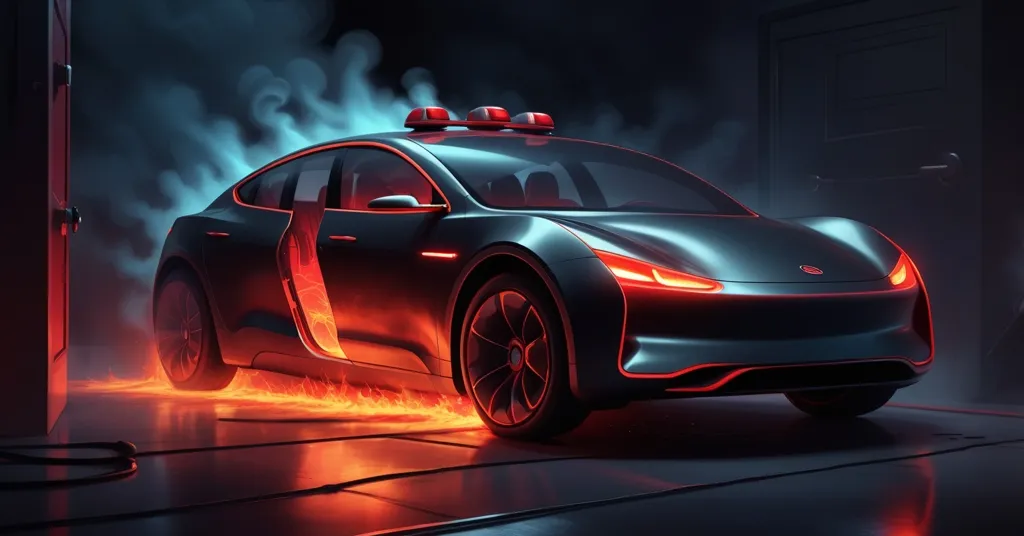
Tesla, the electric vehicle (EV) pioneer, is under fire globally as its futuristic electric door systems—personally pushed by Elon Musk—are linked to deadly safety failures in crashes. Investigations in the U.S., Europe, and China highlight a stark reality: innovation without guardrails can trap people, sometimes literally, with fatal consequences.
- Safety Failures: Electric doors malfunction in collisions, delaying rescues and trapping occupants.
- Tragic Toll: 15 deaths tied to door access issues in U.S. crashes over the past decade.
- Regulatory Heat: U.S., China, and Europe are probing and pushing for design changes.
The Fatal Flaw in Tesla’s Design
At the heart of Tesla’s latest controversy is a design choice that prioritizes sleek aesthetics over basic safety. Unlike traditional cars with mechanical handles you can yank open even after a wreck, Tesla’s electric doors rely on low-voltage batteries—small power units for electronic systems that are far more fragile under stress than a standard car battery. When a collision happens, these batteries often fail due to impact damage or severed connections, rendering the doors inoperable. Unless passengers or first responders can find hidden manual releases—often tucked away in obscure spots under seats or panels—they’re stuck. Imagine being locked in a burning room with no obvious key while smoke chokes the air. That’s the reality for too many Tesla crash victims.
Bloomberg’s investigation paints a grim picture: over the past decade, 15 people died across 12 U.S. crashes where door access issues played a role. Many of these tragedies involved post-collision fires, where every second counts. First responders have been left helpless, unable to pry open doors fast enough as flames spread. One can almost hear the frustration of a firefighter hammering at a locked Tesla, knowing lives are slipping away. These aren’t just numbers; they’re preventable losses that expose a lethal hazard in Tesla’s so-called cutting-edge tech.
Musk’s Minimalist Obsession
Rewind to 2016, when Tesla was racing to launch the Model 3—a sedan meant to transition the company from luxury niche to mass-market dominance. Under intense pressure to slash costs and deliver a stripped-down, futuristic aesthetic, Elon Musk personally insisted on ditching mechanical door handles for electric controls. Engineers sounded the alarm, warning that power failures could turn vehicles into steel coffins, but Musk played the ‘trust me, bro’ card, and those concerns got rekt. It was a classic Silicon Valley move: disrupt now, debug later. Early Model 3s didn’t even have rear manual releases, exploiting a U.S. regulatory loophole at the time. Later versions added them, but the core flaw lingered like a bad bug in beta code. For more on this controversial decision, check out the detailed report on Tesla’s door safety issues tied to Musk’s design choices.
Tesla’s design philosophy borders on cultish minimalism. Lars Moravy, Senior Vice President at Tesla, admitted as much with a candid reflection:
“We always say at Tesla, if you aren’t deleting so much that you have to put something back, you haven’t deleted enough. Well, maybe we deleted too much.”
That’s a damning confession. Minimalism might win design awards, but when it strips away life-saving fail-safes for the sake of a cleaner look or a few saved bucks, it’s not innovation—it’s negligence. And this isn’t a new glitch. Complaints about buggy door sensors trace back to the Model X SUV, with Musk himself noting customer irritation as early as a 2013 earnings call:
“Obviously, it’s quite vexing for a customer.”
Vexing? Understatement of the decade when lives are on the line. Yet, Tesla doubled down, carrying the same electric door tech into the Model Y in 2020 despite mounting evidence of its risks. It’s almost as if they bet style would always trump survival.
Global Regulatory Backlash
The fallout from these failures has sparked a worldwide reckoning. In the U.S., the National Highway Traffic Safety Administration (NHTSA), the agency tasked with ensuring vehicle safety, is deep into an investigation after hundreds of complaints piled up about Tesla doors locking shut in emergencies. Across the ocean, China is zeroing in on flush door handles—those retractable, aerodynamic designs that sit flat against the car for efficiency but are a nightmare to access in a crisis. Beijing is considering outright limits on such features, reflecting a cultural emphasis on practicality over flash in safety matters. Meanwhile, European regulators, often more proactive on consumer protection, are fast-tracking rules specifically for electric door systems, driven by a belief that tech must bend to human needs, not the other way around.
This fragmented regulatory landscape mirrors the patchwork mess we see in crypto, where different regions slap on wildly varying rules for blockchain projects. For Tesla, navigating this could mean region-specific designs or costly retrofits, much like how crypto exchanges juggle compliance across borders. The bigger question is whether Tesla’s global dominance can withstand such scrutiny—or if smaller EV players, less wedded to risky designs, might gain ground. Either way, the message is clear: regulators won’t let disruption slide when it’s a literal death trap.
Tesla’s Half-Hearted Fixes
Under mounting pressure, Tesla is scrambling to patch this gaping hole in its design. They’re testing auto-unlock features that would pop doors open in low-battery scenarios or after detecting a serious crash, though rollout is spotty—some models and build dates have it, others don’t. They’re also collaborating with Chinese regulators on potential adaptations, possibly tweaking flush handles for better accessibility. Design Chief Franz von Holzhausen promised in 2023 to develop hybrid door handles blending electric ease with manual backups for emergencies, while Board Chair Robyn Denholm has reiterated Tesla’s commitment to addressing safety incidents. Sounds good on paper, right?
But let’s not kid ourselves. These fixes feel like Band-Aids on a broken leg. Auto-unlock tech, for instance, still relies on sensors that could fail under crash conditions—hardly a foolproof solution. Consumer feedback, often buried in online forums, suggests skepticism about Tesla’s urgency, with many owners unaware if their car even has the latest safety updates. And historical inaction doesn’t inspire confidence; if door sensor gripes date back to 2013, why are we still here? Tesla’s responses seem more like damage control than a genuine rethink, leaving us wondering if they’re just buying time until the next headline hits.
What’s Next for EV Safety Standards?
Tesla’s debacle isn’t just a company problem—it’s a wake-up call for the entire EV industry. As electric vehicles become mainstream, regulators are likely to impose stricter standards on electronic safety systems, from doors to battery enclosures. The NHTSA probe could set a precedent in the U.S., potentially mandating mechanical backups across all EV models, not just Tesla’s. Europe’s push for electric door rules might inspire global benchmarks, while China’s handle restrictions could force design shifts in the world’s largest EV market. This isn’t unlike the crypto space after major hacks like the 2016 DAO exploit on Ethereum, where massive losses spurred calls for security audits and regulatory frameworks.
For EVs, tighter rules could slow innovation but save lives, a trade-off Tesla’s misstep has made painfully clear. Smaller manufacturers might struggle with compliance costs, while giants like Tesla could face expensive recalls or redesigns. The ripple effect might even push consumer demand toward brands prioritizing safety over tech gimmicks. Much like blockchain projects had to mature post-crisis, the EV sector is at a crossroads: adapt to accountability or risk being left behind.
Lessons for Tech Disruption
Zooming out, Tesla’s electric door saga is a stark reminder of the perils baked into tech’s “move fast and break things” mantra. It echoes the early days of crypto, when unchecked innovation—like the Ethereum DAO in 2016—led to a $50 million hack because security took a backseat to speed. We in the crypto community know this pain all too well: the rush to disrupt can burn users if guardrails aren’t in place. Tesla’s pursuit of minimalist purity, much like Bitcoin maximalists’ dogma, ignored practical needs that traditional systems (or altcoins, in our world) often address better. Disruption is our gospel, but not when it traps people—literally or financially.
This ties directly to effective accelerationism (e/acc), a philosophy we often champion for pushing tech forward at warp speed. But Tesla’s mess shows e/acc’s dark side: when you accelerate without brakes, you crash hard. For blockchain innovators, this is a gut check. DeFi projects rushing untested protocols or wallets skipping security audits are playing the same dangerous game Musk did in 2016. We’re all for smashing the status quo, but if crypto is to empower the masses, we’d better ensure it doesn’t lock them out of safety—figuratively or otherwise. Innovation demands responsibility, whether you’re building EVs or decentralized finance.
Key Questions and Takeaways
- What real danger do Tesla’s electric doors pose in emergencies?
They rely on fragile batteries that fail in crashes, locking occupants inside and blocking rescuers, often leading to deadly delays during fires. - Why prioritize aesthetics over safety in the first place?
Elon Musk’s 2016 push for minimalism and cost-cutting with the Model 3 ignored engineer warnings, aiming for cheaper EVs at a horrific risk. - How is Tesla responding to the backlash and regulatory heat?
They’re testing auto-unlock features and hybrid handles while working with regulators, but inconsistent rollouts raise doubts about urgency. - Does this reflect a deeper flaw in tech-driven innovation?
Yes, it mirrors crypto’s early missteps, showing unchecked disruption like effective accelerationism can backfire without accountability. - How can the tech industry balance speed with safety?
By prioritizing iterative testing and user feedback, much like crypto needs security audits, ensuring innovation doesn’t outpace responsibility.