CZ: Bitcoin Wealth Built in Fear, Not Hype, Says Binance Founder
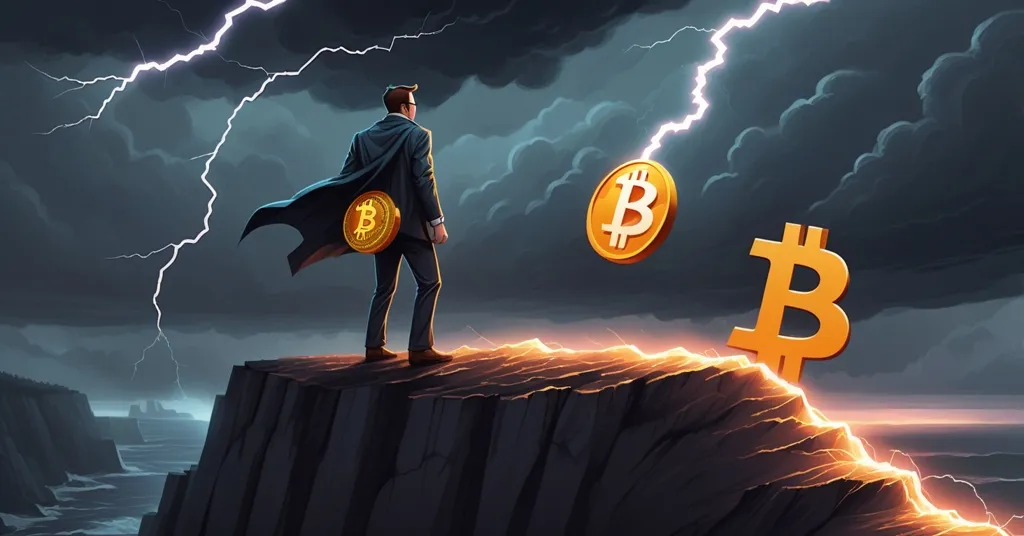
 LTB
LTB CZ: Bitcoin Investors Win by Buying in Fear, Not Chasing Market Highs
Changpeng Zhao, widely known as CZ, the founder of Binance, has once again stirred the crypto pot with a sharp observation: the smartest Bitcoin investors stack their bags during fear, uncertainty, and doubt (FUD), not when the market is soaring at all-time highs (ATH). With Bitcoin sentiment slowly rebounding from a gut-wrenching “Extreme Fear” phase and the total crypto market cap hovering at $3.02 trillion, CZ’s latest musings on X strike at the heart of what makes or breaks investors in this volatile space.
- CZ’s Contrarian Wisdom: True Bitcoin wealth is built in fear, not euphoria.
- Market Mood: Sentiment shifts from “Extreme Fear” to cautious recovery amid a $3.02 trillion market.
- Community Buzz: Talks of a 2026 bull run and echoes of 2018’s bear market spark debate.
The Psychology of FUD: Why Buying Low Feels Like a Punch to the Gut
CZ didn’t mince words in his recent X posts, laying bare a truth that stings as much as it inspires. He pointed out that every time Bitcoin hits an ATH, investors kick themselves, wishing they’d bought in earlier. But here’s the kicker: those who got in early didn’t buy during the hype—they bought when the market was a swamp of despair, drowning in negative headlines and panic. As CZ himself put it on platforms like X, according to insights shared in a recent discussion on investor behavior, (CZ’s perspective on Bitcoin buying trends during FUD):
“When bitcoin was at its ATH, have you ever thought, ‘I wish I bought bitcoins early?’ Guess what, those who bought early did not buy at ATH, they bought when there was fear, uncertainty, and doubt.”
For those new to the game, FUD isn’t just a snappy acronym. It’s the toxic cloud of negativity—think regulatory crackdowns, exchange hacks, or brutal price crashes—that sends Bitcoin’s value tumbling and makes even the toughest holders question their sanity. Buying during FUD is like snapping up a beachfront property right after a hurricane warning: the potential payoff is huge, but the risk feels like a heart attack. X user 1CrypticPoet captured this mental minefield perfectly:
“The price of being early isn’t just capital, it’s the stomach to click buy when the timeline is burning.”
The emotional toll is real. When your portfolio is down 50%, and every crypto Twitter thread is screaming “dead coin,” hitting that buy button feels less like strategy and more like masochism. Yet, CZ argues this is precisely when the big gains are seeded—when fear drives prices to undervalued lows, ripe for the picking by those with diamond hands (a crypto term for unwavering resolve to hold through turmoil).
Market Snapshot: Where Bitcoin Stands Amid the Fear
Timing couldn’t be more critical for CZ’s advice. As of December 24, the total cryptocurrency market capitalization sits at $3.02 trillion, down a modest 1.1%, with a 24-hour trading volume of $98.49 billion, per data from platforms like CoinMarketCap. Bitcoin alone commands nearly $1.73 trillion of that market cap, maintaining its iron grip as the king of crypto. But what do these numbers mean for the average investor? A high market cap reflects deep investor interest, while trading volume shows how actively Bitcoin and other coins are swapping hands—both are pulse checks on the market’s health.
More telling is the sentiment. Bitcoin has only recently started climbing out of “Extreme Fear” territory on fear-greed indices, which act like a mood ring for the market, tracking emotions through metrics like price swings and social media chatter. We’re now in a zone of cautious hope, a shaky middle ground between outright panic and blind optimism. It’s exactly the kind of window CZ is talking about—a moment where fear still lingers, potentially keeping prices suppressed for contrarian buyers to swoop in.
This isn’t a new sermon from CZ. Back in November, he hammered home the classic contrarian playbook: sell when the market’s high on greed, and buy when fear peaks. Easier said than done, of course. Most investors, especially those fresh to crypto, get sucked into the FOMO (fear of missing out) at ATHs, only to dump their holdings in a panic when the crash hits. CZ’s remedy is straightforward but brutal: educate yourself. As he implied in a September post, those who panic-sell often don’t grasp Bitcoin’s underlying tech, the financial systems it disrupts, or the global trends fueling its cycles. Knowledge builds conviction, the kind that lets you HODL (Hold On for Dear Life) when everyone else is bailing.
Community Reactions: Bullish Whispers and Historical Echoes
The crypto crowd on X largely vibes with CZ’s take, tossing in their own hot takes to fuel the fire. Lawrence Lanzilli, for instance, reckons institutions are quietly stacking Bitcoin during this holiday lull—a seasonal dip in trading activity when volumes often slump as traders unplug for the festive season. He’s betting on a monstrous bull run by 2026, urging folks to buy now while the market’s half-asleep. His words cut to the core of CZ’s philosophy:
“Real stacks built in doubt, not euphoria.”
Others draw parallels to past cycles. Many point to the 2018 bear market, a grim holiday stretch of stagnation and despair, which eventually paved the way for the explosive 2020-2021 rally. There’s logic here. Bitcoin’s halving events—occurring roughly every four years, with the latest in April 2024—slash the reward for mining new coins, slowing supply growth. If demand stays steady or spikes, simple economics suggests prices could climb. Post-2020 halving, Bitcoin rocketed over 600% in 18 months. Could the 2024 halving set the stage for a similar surge by 2026? It’s not a guarantee, but the pattern has believers buzzing.
Tokenization insights provider RWAlytics, based in Australia, also chimed in, agreeing with CZ that conviction in crypto is forged in the fires of FUD. But it’s not all rah-rah. Some community skeptics warn that holiday lulls and halving hype don’t always translate to gains—sometimes, they’re just quiet before another storm.
Counterpoints: The Ugly Side of Buying During FUD
Let’s not drink the Kool-Aid without a chaser of reality. While CZ’s strategy resonates with Bitcoin OGs (long-time diehards) and maximalists who see BTC as the ultimate middle finger to centralized finance, critics aren’t buying the simplicity. For starters, Bitcoin’s volatility is a beast. It’s minted millionaires, no doubt, but it’s also obliterated countless over-leveraged dreamers—folks who borrowed big to bet on a rebound, only to get crushed by a deeper crash. Buying during FUD sounds genius until you’re holding the bag through a 70% nosedive with no bottom in sight.
Then there’s the specter of market manipulation. Whales—massive investors with the power to sway prices through huge trades—can turn a dip into a death spiral, trapping smaller players. Black swan events (unexpected, catastrophic shocks) like the 2022 FTX collapse or China’s 2021 mining ban have shown how “buying the dip” can backfire when the entire ecosystem takes a hit. Even Binance’s current CEO, Richard Teng, has had to play calming dad recently, reminding investors that wild swings and brutal cycles are just crypto’s DNA. CZ’s advice might work if you’ve got deep pockets and nerves of steel, but for the average Joe? It’s a gamble that can wipe you out.
Another harsh truth: not all FUD is created equal. Some fear is justified—like when a major exchange implodes or a government drops the regulatory hammer. Blindly buying in those moments isn’t contrarian; it’s reckless. The 2022 Terra-Luna meltdown, where an algorithmic stablecoin imploded and dragged billions down with it, was a FUD moment many never recovered from. So, while CZ’s mantra has merit, it’s not a universal cheat code. Timing the market, even during fear, is a crapshoot for most.
Bitcoin’s Role and Beyond: A Nod to Altcoin Innovation
Stepping back, CZ’s focus on Bitcoin taps into why so many of us are here: a belief in decentralization, financial sovereignty, and sticking it to the old guard of banking and fiat. Bitcoin maximalists, myself included, see BTC as the hardest money ever coded—a store of value that no central bank can inflate away. But let’s not pretend it’s the only game in town. Altcoins and other blockchains like Ethereum fill gaps Bitcoin doesn’t touch. Ethereum’s smart contracts power decentralized apps (dApps) and staking yields, offering plays during bear markets that BTC can’t match. Solana, Polkadot, and others drive innovation, even if they’re often riddled with speculative fluff and outright scams.
Diversity in crypto isn’t just noise—it’s fuel for the revolution. While Bitcoin remains the flagship of freedom, these other protocols test new ground, from faster transactions to complex financial tools. That said, the flood of altcoin shillers and pump-and-dump schemes during FUD periods is a cesspool we can’t ignore. Fake prophets promising $100K Bitcoin or 100x altcoin moonshots are predators, not prophets. We’re here to push real adoption, not peddle pipe dreams. If you’re sniffing around for deals during downturns, stick to fundamentals—tech you understand, teams with credibility, and avoid the hype traps.
Practical Tips: How to Navigate FUD Without Losing Your Shirt
So, how do you actually buy during FUD without getting burned? First, consider dollar-cost averaging (DCA)—spreading your buys over time to smooth out volatility instead of dumping your savings in one go. Set price alerts on exchanges like Binance or Coinbase to catch dips without obsessively refreshing charts. Second, zoom out. Bitcoin’s history is littered with FUD moments—the 2013 Mt. Gox hack, where a major exchange lost 850,000 BTC, tanked prices but eventually led to a rebound. Study those cycles to build your gut for when fear is overblown versus legit.
Third, don’t bet the farm. Only invest what you can afford to lose, because crypto doesn’t care about your rent money. And finally, do your damn homework. Dig into Bitcoin’s whitepaper, understand how halvings throttle supply, and track macro trends like inflation or distrust in fiat that drive adoption. Conviction isn’t blind faith—it’s built on cold, hard facts.
Key Takeaways and Questions for Bitcoin Investors
- What Is CZ’s Bitcoin Investment Strategy During FUD?
Changpeng Zhao, Binance’s founder, pushes buying Bitcoin during fear, uncertainty, and doubt when prices are depressed by negative sentiment, rather than chasing overpriced all-time highs driven by hype. - Why Is Buying Bitcoin During FUD So Damn Hard?
The crushing weight of market panic, fueled by doomscrolling and fear of deeper losses, tests even hardened investors, making the decision to buy feel like a leap into the abyss. - How Does Current Bitcoin Market Sentiment Fit CZ’s Playbook?
With sentiment inching out of “Extreme Fear” into cautious recovery, now could be the undervalued window CZ champions, before full-blown optimism pumps prices back up. - Do Past Bitcoin Cycles Guarantee a 2026 Bull Run?
Patterns like the 2018 bear-to-bull shift suggest a potential 2026 surge, especially post-2024 halving, but volatility and unexpected shocks mean nothing’s set in stone. - Why Is Education Non-Negotiable for Surviving Bitcoin’s Swings?
Grasping Bitcoin’s tech and the broader forces at play builds the steel to hold through FUD, stopping you from panic-selling when the market looks like a graveyard.
CZ’s latest drop of wisdom isn’t just a trading tip—it’s a gut-check for anyone serious about Bitcoin. This space is a battlefield, where wealth, freedom, and disruption are won by those who can stare down fear and act when others flee. Bitcoin and crypto at large are still a wild ride, but if you’re here for the long game—whether it’s financial independence or accelerating a decentralized future—navigating FUD might be your proving ground. Do the work, keep your head, and maybe you’ll look back grinning at the chaos you bought through.