Bitcoin at $87,800: Extreme Fear Grips Market – Breakout or Crash Ahead?
 LTB
LTB Bitcoin Price Stalls at $87,800 Amid Extreme Fear – Breakout or Breakdown on the Horizon?
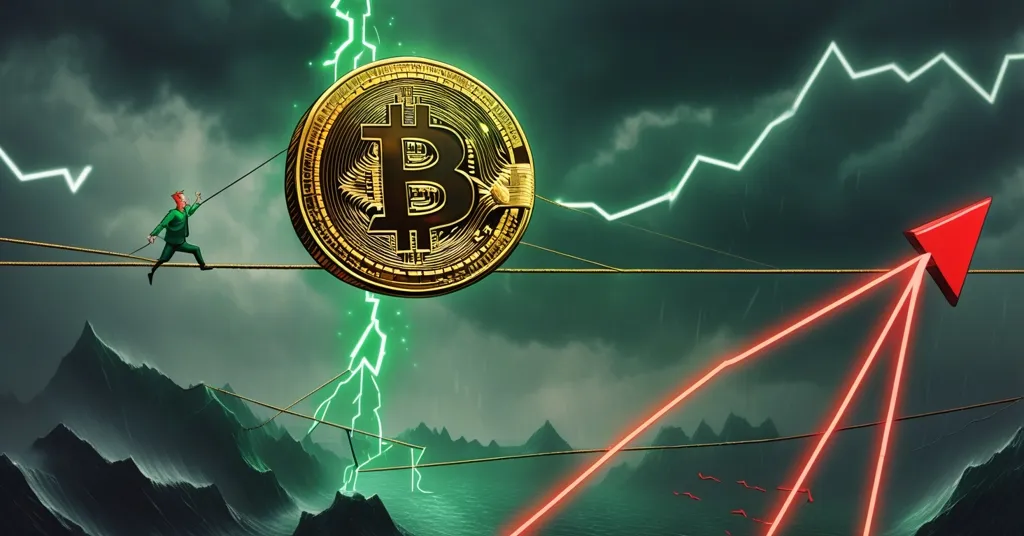
Bitcoin is at a critical juncture, trading at $87,800 while market sentiment is gripped by extreme fear. With a steep 30% drop from its October peak of $126,080, the big question looms: are we witnessing the calm before a bullish breakout, or the prelude to a deeper crash?
- Current Status: Bitcoin hovers at $87,800, showing minor daily gains but significant losses from its all-time high.
- Market Sentiment: The Crypto Fear & Greed Index signals “extreme fear” since mid-December, yet no mass panic selling is evident.
- Price Outlook: Technicals hint at a potential rally to $90,500-$92,500 or a drop to $84,450, depending on key levels.
Bitcoin’s Price Woes: Fear Dominates, But Panic Is Absent
Bitcoin’s current price of $87,800 reflects a market on edge. Trading volume remains substantial at $13.6 billion, backing a market cap of $1.75 trillion, but the 30% decline from its October high has rattled retail investors. The Crypto Fear & Greed Index, a barometer of market emotions that pulls from factors like volatility, momentum, and social media buzz, has been stuck in “extreme fear” for weeks. For those new to this metric, think of it as a mood ring for crypto—scores below 25 suggest investors are terrified, while above 75 signal irrational exuberance. Right now, it’s screaming caution, yet there’s a curious twist: panic selling hasn’t kicked in. Wallets aren’t being liquidated en masse, hinting at either steely resolve among HODLers or sheer denial.
Looking back, this isn’t uncharted territory. Bitcoin has weathered “extreme fear” before—think 2018’s brutal bear market or the 2022 crash post-Terra/Luna debacle. Historically, these periods often precede significant reversals, though timing is anyone’s guess. Could this be a buying opportunity for the bold, or are we just early in a longer downturn? For deeper insights into current market dynamics, check out this analysis on Bitcoin’s price stalling at $87,800. The data suggests patience, not panic, is the name of the game.
Technical Breakdown: Bitcoin’s Tug-of-War Between Bulls and Bears
From a technical perspective, Bitcoin is locked in a descending channel—a pattern where the price trends downward between two parallel lines, often indicating consolidation before a major move. Resistance looms at $94,600, a stubborn ceiling Bitcoin must shatter to spark bullish fireworks. Support holds at $86,300; if it buckles, a slide to $84,450 could be on the cards. The Relative Strength Index (RSI), a tool measuring market momentum, sits at a neutral 50. Picture RSI as a speedometer: below 30 means the market’s slowing down too much (oversold, ripe for a rebound), above 70 means it’s overheating (overbought, due for a pullback). At 50, Bitcoin isn’t giving a clear signal—neither screaming “buy” nor “sell.”
For the seasoned traders among us, volume trends add another layer. Recent on-chain data shows trading activity hasn’t spiked dramatically, suggesting this consolidation isn’t driven by mass capitulation. Funding rates in futures markets are also balanced, lacking the extreme leverage that often precedes violent dumps. A breakout above $88,600 could target $90,500 and even $92,500, but failure to defend $86,300 risks dragging us lower. These levels aren’t just numbers—they’re psychological battlegrounds where trader sentiment can amplify moves. If you’re new to charts, just know this: Bitcoin’s next step hinges on whether buyers or sellers seize control at these pivotal points.
Institutional Support: A Lifeline or a Double-Edged Sword?
Amid the gloom, institutional backing offers a glimmer of hope. Strategy, a heavyweight in crypto investment, holds a staggering 671,268 BTC, worth about $58.6 billion. That’s not pocket change—it’s a resounding endorsement. Their CEO, Phong Le, remains bullish on Bitcoin’s core strengths despite the price slump.
Even with the price down from its highs, Bitcoin’s fundamentals have rarely looked stronger.
Le also highlighted a seismic shift in traditional finance, pointing to banks in the United States and United Arab Emirates exploring ways to integrate Bitcoin—whether through custody services for clients, investment products, or direct exposure.
The interest shown by banks in the US and the UAE is unprecedented, and this will play a much bigger role over the next couple of years.
Beyond Strategy, other giants like BlackRock and Fidelity have been deepening their crypto footprints, with ETF filings and custodial offerings signaling Bitcoin’s maturation into a legitimate asset class. This isn’t just news—it’s a potential game-changer, promising to dampen Bitcoin’s notorious volatility over time as more stable capital flows in.
But let’s pump the brakes on the hype train. Could this institutional wave threaten Bitcoin’s decentralized ethos? Banks aren’t exactly champions of freedom—they thrive on control. If they start hoarding BTC or pushing heavily regulated products, we risk a future where Bitcoin becomes a shiny toy for Wall Street, not a tool for financial sovereignty. Are these whales a lifeline, or the first step toward taming crypto’s untamed frontier? As Bitcoin maximalists, we must champion its role as the backbone of decentralization, not a pawn in centralized portfolios.
Meme Coin Madness: A Risky Distraction from Bitcoin’s Mission
While Bitcoin grapples with serious market dynamics, the speculative underbelly of crypto is buzzing with reckless optimism. Take Maxi Doge, a meme coin that’s raked in over $4.36 million during its presale, with tokens priced at a measly $0.000275. For the uninitiated, meme coins are cryptocurrencies often born from internet humor or viral trends—think Dogecoin or Shiba Inu. They thrive on community hype and social media buzz, not tangible utility like Bitcoin’s scarcity or Ethereum’s smart contracts. Maxi Doge is touting staking rewards and community engagement to lure buyers, a far cry from Bitcoin’s store-of-value narrative.
Let’s cut the crap: most meme coins are a gamble at best, borderline scams at worst. Their value often hinges on fleeting FOMO, not fundamentals, and the space is littered with rug pulls—projects where developers vanish with investor funds after hyping a token. While I respect altcoins carving out niches Bitcoin doesn’t serve, this get-rich-quick circus can tarnish crypto’s credibility, turning off serious investors who see Bitcoin as a financial revolution. If you’re dabbling in Maxi Doge or its ilk, fine—but only with spare change you’re ready to burn. We’re not here to shill; we’re here to keep it real.
Macro and Regulatory Shadows: The Bigger Picture
Bitcoin’s price isn’t just about charts and sentiment—it’s tangled in a web of macroeconomic and regulatory forces. Rising inflation and interest rate hikes in major economies like the US are squeezing risk assets, including crypto. When central banks tighten the screws, investors often flee to safer havens like bonds, leaving Bitcoin exposed. Geopolitical tensions, from US-China trade spats to energy crises in Europe, further cloud the outlook, as Bitcoin’s correlation with tech stocks remains stubbornly high.
On the regulatory front, mixed signals abound. The US continues to waffle between crackdowns on crypto exchanges and hints of clearer frameworks, while the UAE positions itself as a blockchain-friendly hub, potentially fueling the banking interest Phong Le mentioned. Yet, heavy-handed regulation—or worse, outright bans in key markets—could kneecap Bitcoin’s growth. For new investors, this is a reminder: Bitcoin isn’t just a tech play; it’s a bet on a shifting global financial order. Volatility isn’t just price swings—it’s the uncertainty of governments playing catch-up with decentralization.
What’s Next for Bitcoin? Optimism Tempered by Reality
Bitcoin’s current stagnation at $87,800 feels like the quiet before a storm. The lack of panic selling, coupled with institutional muscle, paints a picture of cautious optimism for the long haul. As a Bitcoin maximalist, I’m rooting for its fundamentals—scarcity, security, and censorship resistance—to shine as the bedrock of this financial uprising. Banks and big players joining the fray could stabilize the market, but only if they don’t strangle Bitcoin’s soul in the process.
Meanwhile, speculative distractions like meme coins remind us that crypto’s wild spirit endures, for better or worse. The technicals suggest a breakout or breakdown is imminent, but in true Bitcoin fashion, it’ll likely catch us off guard. For now, patience is key. Whether you’re a newbie or a grizzled OG, remember that Bitcoin’s value isn’t just in its price—it’s in the freedom it promises. Let’s not lose sight of that amid the noise.
Key Questions and Takeaways on Bitcoin and Crypto Trends
- Why is Bitcoin stuck at $87,800 right now?
Market fear, reflected in the Crypto Fear & Greed Index, and a 30% drop from its peak have investors on edge, though stable price action points to consolidation, not collapse. - Does institutional support guarantee Bitcoin’s future success?
It’s a major boost—Strategy’s $58.6 billion stake and bank interest in the US and UAE signal growing acceptance—but risks of centralization could undermine Bitcoin’s decentralized roots. - What’s the likelihood of a Bitcoin price breakout or breakdown?
Technicals show a breakout above $88,600 could target $90,500-$92,500, while a drop below $86,300 might hit $84,450; it’s a coin toss until momentum shifts. - Are meme coins like Maxi Doge worth the hype in a cautious market?
Hardly—they cater to speculative thrill-seekers, but their lack of fundamentals and scam potential make them a risky detour from Bitcoin’s serious mission. - How do macroeconomic factors impact Bitcoin’s price?
Inflation, interest rate hikes, and geopolitical unrest weigh on risk assets like Bitcoin, often driving investors to safer options and amplifying volatility. - Should new investors fear the current market sentiment?
Not entirely—fear can mark buying opportunities if you trust Bitcoin’s long-term value, but only invest what you can afford to hold through wild swings. - What are the risks of institutional Bitcoin adoption?
While it brings stability, banks could push for control, diluting Bitcoin’s ethos of freedom and turning it into a regulated Wall Street asset. - How can investors navigate Bitcoin’s volatility?
Focus on dollar-cost averaging, avoid FOMO-driven trades, and prioritize Bitcoin’s fundamentals over short-term price noise for a saner ride.