Trump’s 2025 SEC Deregulation: Crypto Boom or Risky Bust for Bitcoin Firms?
 LTB
LTB SEC Audit Changes in 2025: How Trump’s Deregulation Impacts Crypto Firms
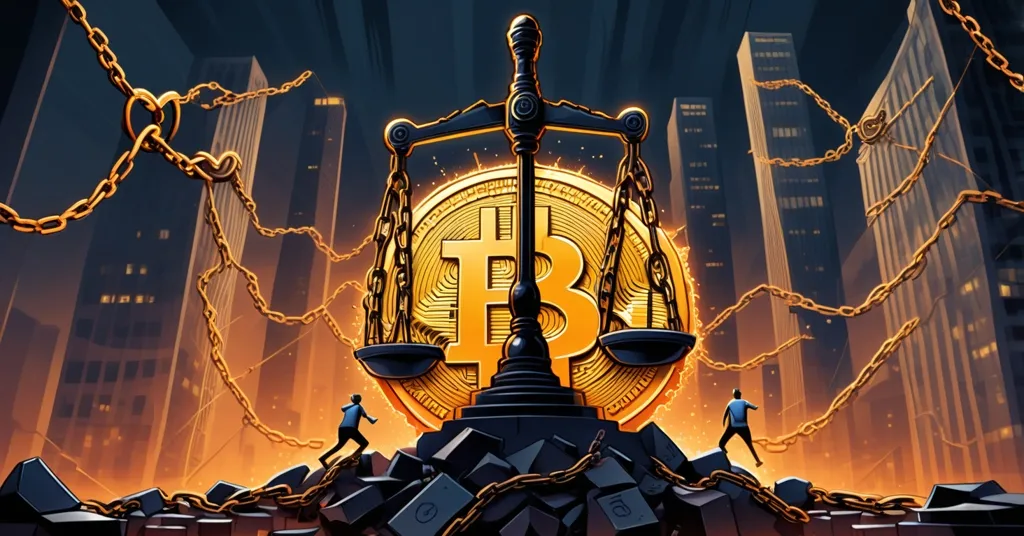
President Donald Trump’s return to office in 2025 has unleashed a regulatory earthquake in the cryptocurrency sector, with the Securities and Exchange Commission (SEC) slashing enforcement actions and the Public Company Accounting Oversight Board (PCAOB) easing audit inspections. This seismic shift promises to reshape the landscape for Bitcoin, altcoins, and blockchain innovation, offering a potential turbocharge to adoption while stirring up serious concerns about unchecked risks for crypto firms holding significant digital assets.
- Massive Rollback: SEC drops or pauses 60% of crypto enforcement cases since January 2025.
- Audit Leniency: PCAOB scales back inspections, impacting crypto firms’ financial scrutiny.
- Political Heat: Critics slam deregulation as favoritism tied to $250M in crypto campaign funds.
SEC’s Deregulatory Wave: A New Dawn for Crypto?
Since Trump’s inauguration in January 2025, the SEC has pivoted sharply from the iron-fisted tactics of the Gary Gensler era, which saw relentless lawsuits against crypto entities for alleged securities violations. Reports confirm the agency has dropped or paused a staggering 60% of its enforcement cases against crypto companies, a move that contrasts starkly with the dozens of actions and hefty fines levied pre-2025. High-profile cases against major exchanges like Coinbase and Kraken were dismissed without penalties, sending a clear signal of leniency to the industry.
On January 21, 2025, the SEC took a step toward clarity by launching a Crypto Task Force under Commissioner Hester Peirce, a long-time advocate for lighter regulation often nicknamed “Crypto Mom.” Her mission? To draft coherent rules for a sector long plagued by regulatory ambiguity. This effort gained momentum with Trump’s executive order on January 24, titled “Strengthening American Leadership in Digital Financial Technology,” which established a Presidential Working Group on Digital Asset Markets to prioritize blockchain over bureaucracy. Adding to this, the SEC’s Crypto Assets and Cyber Unit was revamped in February into the Cyber and Emerging Technologies Unit, bolstered by 30 fraud specialists. Acting SEC Chairman Mark Uyeda described this as a balancing act, stating:
“[The unit will] protect investors and also facilitate innovation.”
Leadership changes have further fueled this pro-crypto turn. In April 2025, Trump appointed Paul Atkins as SEC Chair, a known critic of overregulation. Speaking at the AICPA Conference in December 2025, Atkins didn’t hold back on the prior administration’s disclosure rules, arguing:
“They would have undermined traditional financial accounting standards.”
Meanwhile, the Justice Department dismantled its National Cryptocurrency Enforcement Team in April 2025, redirecting focus away from digital asset crackdowns. For Bitcoin enthusiasts, this feels like a long-overdue unshackling of digital gold from government overreach. Yet, is less oversight the freedom Bitcoin needs, or a Pandora’s box for fraud? History, with debacles like FTX’s collapse in 2022 due to lax controls, whispers caution.
PCAOB Audit Rollback: Risks and Rewards for Crypto Firms
While the SEC grabs headlines, a quieter but equally impactful change is brewing at the PCAOB, the body responsible for overseeing auditors of public companies. Under new chairman William Duhnke, another Trump appointee, the PCAOB has scaled back inspections and enforcement actions. Crypto assets—previously earmarked as a 2025 inspection priority due to their volatility and complex accounting—now face uncertain scrutiny, as detailed in recent reports on SEC’s updated audit standards affecting crypto firms. For those new to the term, the PCAOB acts like a financial watchdog, ensuring public firms’ books (including those with material crypto holdings, meaning digital assets that significantly impact financial statements) aren’t cooked. Think of their audits as a car safety check—skipping them might save time and cash, but you could end up driving a lemon that crashes hard.
Reduced inspections could lighten the compliance burden for crypto firms, slashing costs for startups or exchanges juggling Bitcoin and altcoin transactions on their balance sheets. But here’s the rub: less scrutiny risks sloppy accounting or outright fraud. Without strict audits, who’s checking if a company’s reported crypto reserves are real or just smoke and mirrors? Robert Pawlewicz, an accounting professor at the University of Richmond, cut to the chase on this policy shift, noting:
“The administration doesn’t need to abolish the PCAOB to make it ineffective.”
Pawlewicz’s point stings. The House Financial Services Committee even voted in April 2025 to advance a bill to scrap the PCAOB entirely, though it hasn’t passed into law yet. For a sector already scarred by scams and rug pulls, this rollback could be a double-edged sword—freeing innovation while tempting disaster. We’ve seen enough Tether-sized red flags in crypto’s past to knit a blanket of skepticism.
Legislative Wins: Stablecoins and Market Clarity
Amid the deregulatory storm, some structure has emerged through legislation. The GENIUS Act, signed into law in July 2025, sets a federal framework for stablecoins—digital currencies pegged to assets like the U.S. dollar to avoid wild price swings, often used for fast, cheap transactions in decentralized finance (DeFi). The act mandates reserve backing, monthly audits, and anti-money laundering compliance, ensuring these tokens aren’t empty promises that could collapse and burn users, as nearly happened with early stablecoin controversies. This is a win for trust in a niche Bitcoin doesn’t touch, where stability trumps volatility.
Separately, the Digital Asset Market Clarity Act passed the House with bipartisan support in 2025, though specifics remain thin. These laws signal a nod to innovation beyond Bitcoin, recognizing altcoins and Ethereum-based DeFi protocols as vital cogs in the crypto machine. For smaller projects, lighter SEC oversight paired with structured stablecoin rules could mean faster growth without the constant threat of legal hammers. Still, enforcement of these audits must be ironclad—voluntary promises from issuers like USDC or pre-2022 Tether often proved flimsy when push came to shove.
Political Influence: A $250 Million Shadow?
Not everyone’s cheering this regulatory retreat. Senator Elizabeth Warren has emerged as a fierce critic, demanding an SEC Inspector General investigation in early 2025 over potential improper influence. Her beef? Trump and his inner circle’s financial ties to crypto, amplified by advocacy group Public Citizen’s revelation that nearly $250 million in campaign contributions flowed from industry giants like Coinbase, Ripple, and Andreessen Horowitz during the 2024 election cycle. That’s not pocket change—it’s a war chest, and critics argue it’s bought policy leniency. The timing of SEC case dismissals post-2024 raises eyebrows, especially when major donors like Coinbase walk away unscathed.
Let’s play devil’s advocate for a second. Industry funding isn’t inherently corrupt—crypto firms, like any sector, have a right to back candidates aligned with their vision of innovation and decentralization. But when big money correlates so neatly with dropped lawsuits, it’s hard not to smell favoritism. Warren’s pushback isn’t just grandstanding; it’s a reminder that investor protection can’t be sacrificed for profits. For a community built on disrupting shady financial systems, we must demand transparency from our own champions, not just traditional banks.
Bitcoin vs. Altcoins: Who Gains Most?
For Bitcoin maximalists, Trump’s 2025 policies are a vindication of their “digital gold” thesis. Less SEC meddling means Bitcoin can solidify as a store of value, free from bureaucrats trying to box it into outdated securities laws. It’s a middle finger to the status quo, pure decentralization in action. But altcoins and DeFi advocates—think Ethereum’s smart contracts or Solana’s speed—might argue they’re the real winners. Deregulation opens doors for experimental protocols that Bitcoin, by design, doesn’t tackle, like complex financial apps or micro-transactions. The GENIUS Act’s stablecoin framework, for instance, directly boosts non-Bitcoin ecosystems where stability enables everyday utility.
This aligns with the effective accelerationism (e/acc) mindset we champion—pushing tech forward at breakneck speed to reshape finance. Yet, acceleration without guardrails can crash and burn. Bitcoin purists might scoff at altcoin complexity, but both camps face the same risk: a deregulated Wild West where scammers thrive. Pump-and-dump schemes, fake ICOs, and unverified reserve claims could exploit this vacuum, tainting the whole space. Freedom’s great, but not when it empowers the worst actors.
Global Ripple Effects of U.S. Deregulation
Trump’s policies don’t exist in a vacuum. While the U.S. loosens its grip, the European Union’s Markets in Crypto-Assets (MiCA) framework tightens, aiming for strict consumer protections by late 2024. Asia’s approach remains a mixed bag, with China’s crypto ban clashing with Singapore’s welcoming hubs. U.S. deregulation might attract global firms to American shores, boosting innovation here while potentially pressuring other regions to relax rules to compete. But it could also backfire— if fraud spikes due to lax oversight, international trust in U.S.-based crypto markets might erode, stunting Bitcoin and blockchain adoption worldwide. We’re playing a high-stakes game on a global board.
What’s Next for Crypto in 2025?
Looking ahead, the SEC’s softened stance and PCAOB’s audit retreat might fuel a golden era of blockchain growth—or lay the groundwork for spectacular meltdowns. Will future SEC moves under Atkins lean even lighter, or will political pressure force a course correction? Could reduced inspections embolden bad actors to cook books, echoing FTX’s implosion? For Bitcoin purists, altcoin innovators, and DeFi degens alike, staying sharp is non-negotiable. We’re committed to slicing through the hype, calling out the bullshit, and advocating for a decentralized future that doesn’t trade integrity for speed. Keep your eyes peeled as we track what unfolds in this high-octane ride.
Key Questions and Takeaways for Crypto Enthusiasts
- What does the SEC’s 2025 deregulation mean for Bitcoin and crypto markets?
It’s a potential catalyst for growth, easing legal pressures on exchanges like Coinbase and Kraken, likely boosting Bitcoin’s adoption as a store of value and fueling altcoin innovation. - How do PCAOB audit changes affect crypto firms?
Firms with significant digital assets may face less financial scrutiny, cutting compliance costs but risking poor transparency or fraud without rigorous checks. - Are Trump’s crypto-friendly policies trustworthy given political ties?
Skepticism is justified with $250 million in campaign funds from crypto giants, raising concerns about favoritism over investor protection, though industry advocacy isn’t inherently wrong. - Can the GENIUS Act stabilize crypto’s reputation?
By mandating reserves and audits for stablecoins, it could build trust in these tools, though effectiveness hinges on strict enforcement. - Is deregulation a triumph for decentralization or a looming disaster?
It supports decentralist ideals by curbing state overreach, but without safeguards, it might empower scammers, undermining the freedom crypto stands for. - How does U.S. deregulation impact global crypto markets?
It could draw firms to the U.S. and pressure other regions to loosen rules, but fraud spikes might erode international trust in American crypto hubs.