Pakistan’s Crypto Rise: Can It Lead Globally by 2030 as CZ Predicts?
 LTB
LTB Pakistan’s Crypto Gambit: Can It Become a Global Leader by 2030, as CZ Predicts?
Changpeng Zhao, widely known as CZ, the former CEO of Binance, has made a striking forecast: Pakistan could rise as a global leader in cryptocurrency by 2030. With a population exceeding 200 million—often overlooked in traditional finance—Pakistan is positioning itself to challenge the status quo of money itself, fueled by skyrocketing adoption rates and bold governmental moves.
- CZ’s Bold Claim: Pakistan could lead the crypto world in five years if momentum persists.
- Driving Forces: Young, tech-savvy population, high adoption, and regulatory strides.
- Big Plays: Bitcoin reserves, asset tokenization, and massive energy for mining.
From Zero to Crypto Contender: A Remarkable Leap
Pakistan’s ascent in the cryptocurrency space is nothing short of jaw-dropping. As of 2025, the nation ranks among the top three globally for crypto adoption—a staggering achievement given it began the year without a solid legal framework for digital assets. What’s behind this surge? A youthful, digitally native demographic desperate for financial alternatives, coupled with a government showing unexpected grit in embracing blockchain. This isn’t just a fad; it’s a full-on rebellion against the constraints of legacy finance in an emerging economy.
Historically, Pakistan has grappled with financial exclusion, with millions relying on informal peer-to-peer networks for remittances and savings. Crypto, especially Bitcoin, has become a lifeline for many, offering a way to bypass bloated banking systems and currency devaluation (inflation has hovered above 10% in recent years). The stats speak for themselves: whether it’s trading on Binance or swapping USDT for rupees on local WhatsApp groups, Pakistanis are diving into digital currencies faster than most developed nations. This grassroots movement, paired with top-down policy shifts, sets the stage for something transformative.
Regulatory Leap: Building a Framework for Pakistan Cryptocurrency Regulation
Let’s get into the nuts and bolts. Pakistan has rolled out the Pakistan Virtual Assets Regulatory Authority, a dedicated body tasked with taming the wild west of crypto while fostering growth. This isn’t just bureaucratic posturing—global heavyweights like Binance and HTX have secured No Objection Certificates (NOCs), essentially a regulatory thumbs-up to operate locally. For the uninitiated, an NOC means these exchanges can set up shop without fear of sudden crackdowns, a green light that signals Pakistan is open for crypto business. This move not only legitimizes the industry but also draws international eyes, positioning the country as a serious hub for digital assets.
Still, let’s not pop the champagne just yet. While these steps are promising, the legal framework remains a work in progress. Without airtight consumer protections, a market crash—or a scam exchange pulling a fast one—could shatter public trust overnight. Pakistan’s economic history offers little wiggle room for such missteps, and regulators will need to balance innovation with ironclad safeguards if they want to sustain this momentum.
Infrastructure Push: Bitcoin Mining in Pakistan at Full Throttle
Pakistan isn’t just playing catch-up; it’s swinging for the fences with infrastructure. In May, authorities allocated a whopping 2,000 megawatts of power—enough to light up a small city—for Bitcoin mining and AI data centers. For those new to the game, Bitcoin mining involves powerful computers solving complex math puzzles to validate transactions on the network, earning BTC as a reward. It’s energy-intensive as hell, and Pakistan’s commitment at this scale screams intent: they’re not just mining Bitcoin; they’re mining the future.
But here’s the rub—where’s this energy coming from? Pakistan’s energy mix leans heavily on coal and gas, with renewables like hydro and solar lagging behind. If even half of that 2,000 megawatts comes from dirty sources, the carbon footprint could be catastrophic, painting Pakistan as an environmental pariah at a time when climate accountability matters. Sure, Bitcoin’s potential for financial sovereignty is a cause we champion, but not at the cost of the planet. The government needs to double down on green energy solutions, or this bold gamble could backfire on the global stage.
Financial Innovation: Bitcoin Reserves and Blockchain Tokenization in Pakistan
Beyond mining, Pakistan is making waves with strategic financial plays. The country is building a national Bitcoin reserve, a stash of the world’s leading cryptocurrency akin to hoarding gold as a hedge against economic uncertainty. While exact figures remain under wraps, whispers suggest ambitions to hold thousands of BTC by 2027, echoing El Salvador’s playbook but on a grander scale. Holding Bitcoin isn’t just a financial maneuver—it’s a middle finger to centralized control, a stance of sovereignty we can’t help but applaud.
Then there’s the tokenization push. Pakistan has inked a memorandum of understanding with Binance to explore digitizing $2 billion in government securities and commodity reserves. Tokenization, simply put, turns real-world assets into blockchain-based tokens—think of it as slicing a government bond or a shipment of wheat into tradable digital shares, accessible to investors worldwide with a click. CZ himself pushed this idea hard, urging Pakistan to tokenize its stock market to boost liquidity and lure foreign capital, as highlighted in his recent statements on the country’s potential to lead in crypto global leadership vision by CZ. It’s a brilliant move on paper, potentially revolutionizing how the nation funds itself.
Yet, let’s keep our eyes open. Tying national wealth to volatile assets like Bitcoin or tokenized securities is a high-stakes bet. A sudden market nosedive could wipe out gains faster than you can say “bear market,” and Pakistan’s inflation-riddled economy can’t afford such shocks. Plus, tokenization opens doors to fraud if oversight isn’t watertight—imagine fake tokens for nonexistent assets flooding the market. The promise is immense, but execution will be everything.
Youth Power: Crypto’s Secret Weapon for Pakistani Entrepreneurs
CZ had a pointed message for Pakistan’s youth, who make up a massive chunk of the population. He argued that blockchain offers a low-barrier entry compared to traditional industries.
“If a young person wants to start a bank, it’s pretty limited opportunities […] If they want to build an AI company, they probably don’t have the large data, the large compute, all the chips, so both of those industries require quite a bit of resources to do a startup,”
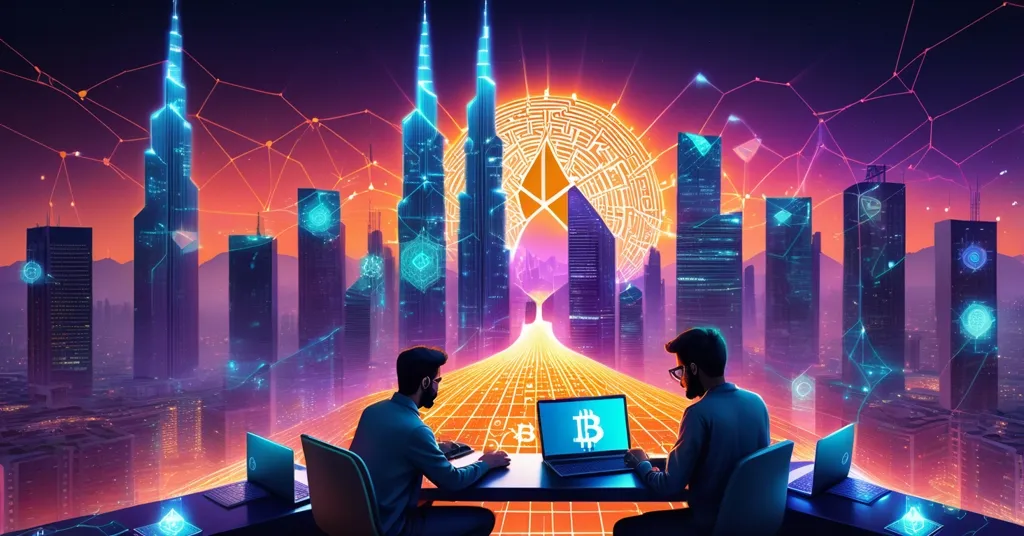
he said during a conversation with Bilal bin Saqib, Chief Executive of the Pakistan Crypto Council. Crypto, by contrast, is virtual and borderless—grab a laptop, write some code, and you’re in the game.
For a nation brimming with tech-hungry talent, this is a game-changer. Unlike banking, which demands capital and connections, or AI, which requires massive data and hardware, crypto levels the playing field. A Pakistani coder could launch a DeFi protocol or an NFT marketplace tomorrow, competing with Silicon Valley from a Karachi bedroom. It’s the kind of disruption we live for—decentralization empowering the underdog. But without education and access to reliable internet, this potential could fizzle. The government must prioritize digital literacy to turn this demographic dividend into a crypto revolution.
Global Vision: A Powerhouse for Crypto and AI
Bilal bin Saqib framed Pakistan’s ambitions even broader.
“They intended to turn the nation into a worldwide powerhouse for crypto and artificial intelligence,”
he noted, highlighting a dual-pronged strategy. Combining AI with blockchain isn’t mere hype—it’s a calculated play. AI could optimize blockchain networks, enhance security for tokenized assets, or even predict market trends for Pakistan’s Bitcoin reserve. Together, they could redefine the country’s economic standing, making it a tech beacon for the Global South.
CZ doubled down on the timeline, stating,
“If we keep moving at this speed in five years, Pakistan will be the crypto leader, one of the crypto leaders in the world.”
If successful, Pakistan’s rise could send ripples globally, inspiring other emerging markets to embrace decentralization. Hell, if they pull this off, they might just render institutions like the IMF irrelevant in regions long shackled by debt traps. Now that’s the kind of acceleration we root for.
Risks on the Horizon: Can Pakistan Stay the Course?
Let’s not kid ourselves—Pakistan’s path to crypto dominance is riddled with landmines. Beyond the incomplete legal framework, there’s the specter of economic and political instability. With a history of double-digit inflation and frequent governance upheavals, building investor confidence is no small feat. A single policy flip-flop could spook foreign capital, undoing years of progress. And while Bitcoin offers financial freedom, tying national reserves to a notoriously volatile asset is a gamble that could implode if markets tank.
Then there’s the social angle. Crypto adoption is soaring, but scams and rug pulls are rampant in unregulated markets. Without robust education campaigns, naive investors could lose everything to fake ICOs or phishing schemes—hardly the adoption story we want. Pakistan must crack down on fraud with the same zeal it’s showing for innovation, or public sentiment could sour fast.
Bitcoin and Beyond: A Balanced Blockchain Ecosystem
As Bitcoin maximalists, we see Pakistan’s BTC reserve as a cornerstone of sovereignty—a way to break free from fiat’s stranglehold. It’s the ultimate store of value, a shield against inflation and centralized meddling. Yet, we’re not blind to the broader blockchain landscape. Ethereum’s smart contracts or Solana’s speed could be the engines behind Pakistan’s tokenized stock market and assets, proving that altcoins have a vital role in this financial uprising. It’s not Bitcoin versus the rest; it’s about wielding the right tools for the job—BTC for independence, other protocols for cutting-edge utility.
Global Ripple Effects: A Blueprint for Emerging Markets?
Pakistan’s crypto experiment isn’t happening in a vacuum. Success here could light a fire under other developing nations, from Nigeria to Bangladesh, showing that blockchain can leapfrog outdated financial systems. Imagine a wave of countries building Bitcoin reserves, tokenizing local assets, and mining at scale—global hash rate distribution could shift dramatically, decentralizing power further. But failure, driven by mismanagement or external shocks, might deter others, reinforcing skepticism about crypto’s viability for nation-states. The stakes couldn’t be higher.
Will Pakistan rewrite the rules of global finance, or buckle under its own ambition? Only time—and a hell of a lot of hash rate—will tell. For now, the world watches as this underdog nation balances audacious innovation with the messy realities of building a digital future.
Key Questions and Takeaways on Pakistan’s Crypto Ascent
- What drives Pakistan’s potential to lead crypto by 2030?
Sky-high adoption, a young tech-savvy population, and initiatives like Bitcoin reserves and asset tokenization make Pakistan a serious contender, as CZ of Binance predicts. - How is Pakistan shaping its cryptocurrency regulatory framework?
The Pakistan Virtual Assets Regulatory Authority and approvals for exchanges like Binance and HTX reflect a push to formalize the industry while encouraging growth. - What are Pakistan’s standout blockchain and crypto initiatives?
Key efforts include a national Bitcoin reserve, a $2 billion tokenization deal with Binance, and 2,000 megawatts of power for Bitcoin mining and AI data centers. - Why does CZ see blockchain as a game-changer for Pakistani youth?
He views crypto as accessible and low-resource compared to banking or AI, empowering young entrepreneurs to innovate globally from Pakistan with just an idea and a laptop. - What challenges could derail Pakistan’s cryptocurrency ambitions?
Incomplete laws, economic volatility, political instability, and environmental risks from mining could hinder progress if not tackled head-on. - Could Pakistan’s crypto rise reshape global financial systems?
A win might inspire other emerging markets to adopt decentralization, potentially challenging traditional institutions and shifting economic power toward blockchain ecosystems.