Xi Jinping’s Tech Push: China’s AI Surge and the Crypto Control Clash
 LTB
LTB Xi Jinping’s New Year Power Play: China’s Tech Surge and the Crypto Conundrum
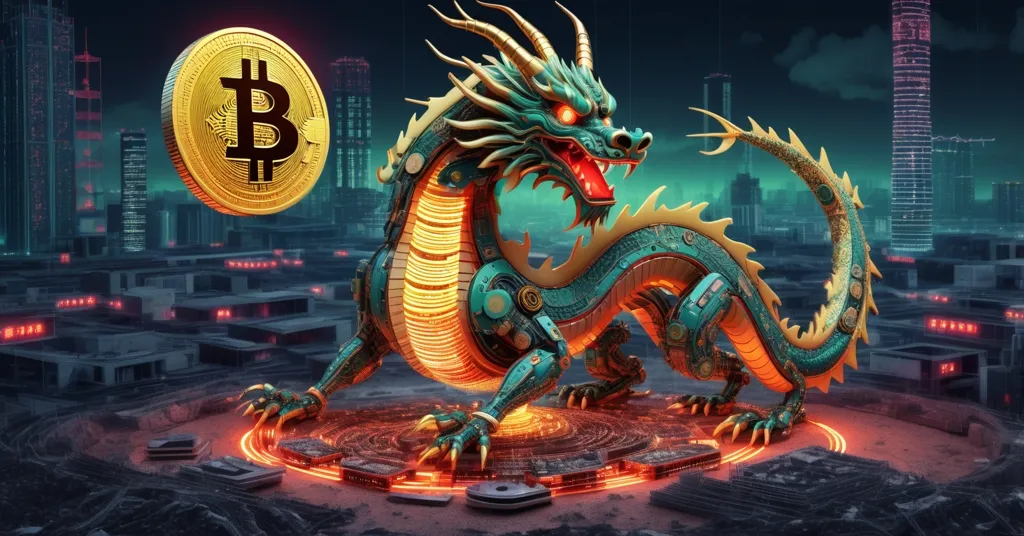
Chinese President Xi Jinping’s New Year’s Eve address to 1.4 billion citizens wasn’t just a speech—it was a declaration of intent. With a focus on AI, robotics, and military muscle, Xi positioned China as an unstoppable force in the global tech race. But for Bitcoin enthusiasts and blockchain advocates, the real question looms: will China’s relentless innovation and state control turbocharge crypto’s underground growth, or choke the life out of decentralization?
- Tech Juggernaut: China’s AI and military advancements, like the Fujian aircraft carrier, defy U.S. sanctions with bold self-reliance.
- Economic Targets: A projected GDP of 140 trillion yuan ($20 trillion) by 2025 underlines China’s ambitions despite domestic struggles.
- Geopolitical Heat: Taiwan-focused military drills and a shaky U.S. truce set a tense stage for tech and trade policies impacting crypto.
- Crypto Clash: State-driven Digital Yuan and ongoing bans pose direct threats to Bitcoin’s ethos of freedom and privacy.
China’s Tech Surge: AI Wins and Hardware Power
Xi Jinping didn’t hold back in touting China’s technological ascent during his New Year’s message. From humanoid robots to military drones, the nation is flexing its innovation muscles hard. A standout symbol of this push is the Fujian aircraft carrier, equipped with an electromagnetic launch system—a cutting-edge technology using magnetic fields to catapult aircraft, rivaling the best of Western naval tech. This isn’t just about sea power; it’s a loud statement that China won’t be boxed in by external pressures.
Perhaps the most striking jab at global competitors came with Xi’s mention of DeepSeek, a Chinese AI startup that rolled out a powerful, budget-friendly AI model in 2025. This wasn’t a small win—it directly thumbed its nose at U.S. chip export bans meant to cripple China’s access to advanced semiconductors. Silicon Valley was caught off guard, expecting these restrictions to slow China down, only to see them spark a fierce drive for self-sufficiency. On top of that, Chinese chipmakers raked in billions through IPOs, funneling funds into domestic tech production. With a record trade surplus exceeding $1 trillion, fueled by dominance in rare earth materials critical for electronics, China’s playing a ruthless game of economic chess.
“China has become one of the world’s fastest-rising economies in terms of innovative capacity,” Xi proclaimed, making it clear this trajectory is deliberate and state-driven.
For the crypto crowd, this tech surge cuts both ways. Much of the world’s Bitcoin mining hardware—specialized equipment essential for securing the network and earning rewards—comes from Chinese giants like Bitmain. If China’s chipmaking boom continues to dodge sanctions, we might see cheaper or more efficient rigs flood the market. But here’s the rub: geopolitical tensions could just as easily disrupt these supply chains, hiking costs for miners worldwide or forcing reliance on untested alternatives. It’s a high-stakes gamble for anyone banking on Bitcoin’s hash rate growth.
Economic Realities: Growth Targets vs. Internal Cracks
Xi painted a rosy picture of China’s economy, projecting a GDP of 140 trillion yuan—roughly $20 trillion—by 2025 as part of the current Five-Year Plan. That’s a staggering figure, cementing China’s status as a global heavyweight. Yet, beneath the surface, the numbers tell a messier story. Factory activity, measured by the Purchasing Managers’ Index (PMI), barely scraped by at 50.1 in December—a hair above 50 indicates growth, but it’s a whisper away from contraction. Consumer spending is sluggish, investment is tanking, and the property sector, once a growth engine, is crumbling.
“Maintain firm confidence and build on our momentum,” Xi urged, acknowledging the hurdles while pivoting to a focus on quality over breakneck expansion.
These domestic struggles have a direct bearing on China’s stance toward cryptocurrency. With economic headwinds biting, capital flight becomes a real concern for the state. Since the 2021 ban on Bitcoin trading and mining, which saw China’s hash rate plummet and redistribute globally, the government has kept a tight leash on decentralized assets. A faltering economy only strengthens the case for stricter controls to prevent citizens from moving money into borderless systems like Bitcoin. Instead, expect a harder push for the Digital Yuan—a state-controlled central bank digital currency (CBDC)—as a “safe” alternative under Beijing’s watchful eye.
Geopolitical Flashpoints: Taiwan and U.S. Tensions
On the world stage, Xi’s rhetoric was unflinching. He doubled down on Taiwan reunification, calling it “unstoppable,” while China conducted its largest-ever military drills around the island. Live-fire exercises, missile tests, and simulated blockades by the People’s Liberation Army weren’t just for show—they were a blunt reminder of China’s readiness to escalate. Meanwhile, a temporary one-year truce with the U.S., agreed upon in South Korea last October, offers a fleeting breather. Donald Trump’s planned visit to China in April 2026 might stabilize trade ties momentarily, but with Washington’s export controls and Wall Street’s wariness still in play, don’t expect a lasting detente.
“Compatriots on both sides of the Taiwan Strait are connected by blood that is thicker than water… reunification is unstoppable,” Xi asserted, leaving zero room for misinterpretation.
These geopolitical moves aren’t just background noise for crypto markets—they’re a potential wrecking ball. If tensions boil over, supply chains for mining hardware could face even harsher disruptions. Most Bitcoin rigs trace their origins to Chinese manufacturing, and a full-blown trade war or sanctions escalation could choke off access, driving prices skyward or stalling network security upgrades. Plus, with China’s focus locked on military might and territorial claims, resources for exploring decentralized tech—or loosening crypto bans—are likely at the bottom of the priority list.
Digital Yuan vs. Bitcoin: State Control Clashes with Freedom
While Xi didn’t mention cryptocurrency outright, China’s trajectory with the Digital Yuan screams trouble for decentralization advocates. Unlike Bitcoin, which operates on a permissionless, trustless network where no single entity calls the shots, the Digital Yuan is a top-down CBDC designed for state oversight. Reports suggest millions of users have already adopted it for payments, with trials expanding across major cities. Its built-in surveillance capabilities—tracking every transaction in real-time—make it a dream for authorities and a nightmare for privacy hawks.
For Bitcoin maximalists, this is the antithesis of what crypto stands for. Bitcoin isn’t just digital cash; it’s a middle finger to centralized power, offering financial sovereignty through math and code. The Digital Yuan, by contrast, is a walled garden where the government holds the only key. As China grapples with economic slowdowns, the incentive to push this CBDC over borderless alternatives grows. Why let citizens escape into Bitcoin when you can lock them into a system where every yuan is accounted for? It’s a stark reminder that the battle for the future of money isn’t just technical—it’s ideological.
Let’s not pretend there’s no silver lining. China’s hardware innovation could, in theory, trickle down to blockchain applications. AI models like DeepSeek’s might optimize smart contracts on platforms like Ethereum or improve on-chain analytics. But don’t get too excited—China’s obsession with control means any such advancements will likely prop up state systems, not open protocols. For every potential boost to crypto tech, there’s a matching risk of it being weaponized against the very freedoms Bitcoin champions.
Internal Purge: Xi’s Iron Grip Tightens
Closer to home, Xi intensified his anti-corruption crusade within the Communist Party and military, with 2025 marking a record year for investigations targeting generals and top officials. This isn’t mere cleanup—it’s a power consolidation move, ensuring no internal dissent derails China’s global ambitions.
“Remove decay and grow new flesh,” Xi described the purge, signaling a brutal reshaping of the nation’s backbone.
For the crypto world, this internal tightening hints at even less room for decentralized ideologies. A leadership obsessed with control isn’t about to embrace systems that thrive on individual liberty. If anything, this purge reinforces the likelihood of sustained or harsher crackdowns on crypto activities, as the state doubles down on loyalty to its own digital currency vision.
Looking Ahead: Crypto’s Tightrope in China’s Shadow
Peering into the future, China’s tech trajectory by 2030 could go a few ways. Will it double down on the Digital Yuan, turning it into a global reserve contender while keeping crypto bans ironclad? Might economic pressures force a subtle thaw, allowing limited blockchain experimentation to spur innovation? Or could AI and hardware breakthroughs indirectly fuel underground crypto adoption despite state resistance? As proponents of effective accelerationism, we’d argue for pushing the tech envelope—let’s see decentralized systems outpace state machinery through sheer ingenuity. But that’s a long shot in a nation where control is king.
Key Questions and Takeaways for Crypto Enthusiasts
- How does China’s tech self-reliance affect Bitcoin mining hardware supply?
China’s domestic chip production, spurred by U.S. sanctions, could disrupt global supply chains for Bitcoin mining rigs, risking higher costs or forcing miners to seek alternatives outside China. - Is China’s Digital Yuan a direct threat to Bitcoin and decentralized crypto?
Absolutely—it’s a state-controlled CBDC with surveillance at its core, clashing with Bitcoin’s privacy and freedom principles while gaining ground as a government-endorsed alternative. - Can China’s AI advancements benefit blockchain innovation?
Theoretically, AI could enhance blockchain analytics or smart contract efficiency, but China’s centralized focus means any gains will likely support state systems, not open networks like Ethereum. - How do China’s economic struggles shape its cryptocurrency policies?
Domestic issues like declining consumer spending may tighten capital controls, reinforcing crypto bans to block capital flight through decentralized assets like Bitcoin. - What do geopolitical tensions mean for the global crypto market?
U.S.-China trade wars and Taiwan-focused conflicts could escalate disruptions in mining hardware supply chains, while diverting China’s attention from decentralized tech exploration.
Xi Jinping’s vision for China is a bulldozer—impressive, aggressive, and hell-bent on reshaping the global order. For Bitcoin and blockchain advocates, it’s a double-edged sword: potential hardware innovations and economic pressures might carve out niche opportunities, but the overarching trend screams state dominance over individual liberty. As China builds its tech empire, one question burns bright for the crypto faithful: can Bitcoin remain a rebel stronghold, or will it get steamrolled by the machinery of centralized power? The fight for financial freedom just got a whole lot messier.