Waymo vs. Baidu: Robotaxi Rivalry Heats Up in London for 2026 Showdown
 LTB
LTB Waymo vs. Baidu: Robotaxi Race Ignites in London for 2026
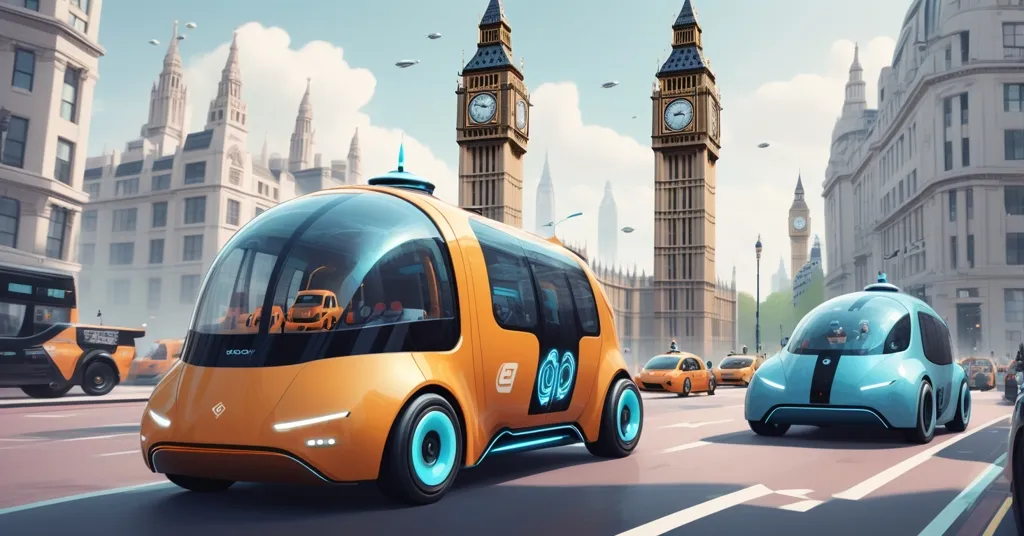
London is gearing up to be the ultimate proving ground for autonomous vehicle tech as Silicon Valley heavyweight Waymo and Beijing’s tech titan Baidu push to roll out rival robotaxi services by 2026. This clash between American and Chinese innovation isn’t just about driverless rides—it’s a high-stakes battle over trust, privacy, and global tech dominance, with echoes of the same disruptive spirit that fuels Bitcoin and blockchain revolutions.
- First Face-Off: London will host the first direct competition between US and Chinese robotaxi tech by 2026.
- Testing in Motion: Waymo’s modified Jaguars are already navigating London, while Baidu’s RT6 models, backed by Lyft and Uber, are set to follow.
- Trust on the Line: Promises of safer roads clash with fears of surveillance and security risks in AI-driven transport.
The Robotaxi Rivals: Waymo vs. Baidu
Waymo, a subsidiary of Alphabet (Google’s parent company), has been a frontrunner in the autonomous vehicle space, delivering nearly 1 million driverless rides weekly across US cities like San Francisco, Los Angeles, and Phoenix, totaling 20 million rides according to company reports. Their testing in London began in December with modified Jaguar vehicles, a bold step to adapt their tech beyond the wide, grid-like streets of America. On the other side, Baidu, China’s leading tech giant, operates the Apollo Go robotaxi service with 17 million rides logged as of November, mostly in Chinese markets. Baidu’s strategy in London hinges on partnerships with ride-hailing giants Lyft and Uber, leveraging their established user bases to deploy RT6 models in the near future. For more on this competitive showdown, check out the latest updates on the Waymo and Baidu rivalry in London.
These alliances give Baidu a potential edge—Lyft and Uber bring operational know-how and customer trust, potentially smoothing the rollout through shared fleets and integrated booking systems. However, Baidu faces geopolitical headwinds that Waymo largely sidesteps. US restrictions on Chinese tech firms have barred companies like Baidu from testing stateside, pushing them to focus on Europe and the Middle East. London, therefore, isn’t just a market—it’s a critical battleground for Baidu to prove its tech can thrive under Western scrutiny, while Waymo aims to solidify its global lead.
London as the Ultimate Testbed
Why London? Beyond its status as a global hub, the city’s urban environment is a nightmare for autonomous systems designed elsewhere. Narrow, winding streets, double-decker buses, and the unpredictable dance of pedestrians at zebra crossings—those black-and-white striped crosswalks unique to the UK—present hurdles that American or Chinese road designs don’t prepare for. Picture a robotaxi politely yielding to a swarm of tourists snapping pics at Westminster while dodging a rogue cyclist. It’s AI with a stiff upper lip, and it’s no small feat.
For the uninitiated, robotaxis are self-driving cars built to ferry passengers without a human behind the wheel. They rely on a mix of LIDAR (a laser-based mapping system), cameras, and machine learning algorithms to “see” and navigate their surroundings. These systems crunch massive amounts of data in real-time—think of them as rolling AI supercomputers processing every pothole and passerby to make split-second decisions. But London’s chaos tests the limits of this tech, demanding adaptability that neither Waymo nor Baidu has fully proven yet.
Adding to the challenge, the UK government opened the doors for commercial testing of self-driving cars this spring, but not without strings. Both companies must navigate a web of oversight from London’s mayor, local boroughs, and Transport for London, securing additional licensing for full commercial operations. Strict data privacy laws, including the UK’s adherence to GDPR (General Data Protection Regulation), mean every byte of data collected by these vehicles will be under a microscope. For Baidu especially, overcoming Western distrust of Chinese tech will be as tough as mastering London’s streets.
Privacy and Security: The Dark Side of Innovation
Let’s cut to the chase: these robotaxis aren’t just vehicles; they’re data-hoovering machines on wheels. Packed with sensors and cameras, they capture everything from road conditions to passenger behavior. Waymo claims this data is used “solely to develop and validate our safety-critical autonomous driving technology.” Lyft’s Executive VP for global growth, Jeremy Bird, backs Baidu’s stance, stating:
“Baidu’s extensive track record would deliver safety, reliability and privacy to millions of Europeans. We’ll make sure data processing and sharing between Lyft and Baidu complies with applicable laws to ensure we create an AV future that thrives in the UK.”
But not everyone’s convinced. Jack Stilgoe, a technology policy expert at University College London, frames the UK’s role with sharp clarity:
“The UK aims to become the place that slowly writes the rules for this technology that isn’t the Wild West of Silicon Valley or the wild east of Beijing.”
Then there’s the stark warning from Alex Ferrara, a tech investor at Bessemer Venture Partners in London, who doesn’t mince words about the risks:
“These cars are essentially mobile AI supercomputers. Under the control of an adversarial government, they could be used for sensitive information gathering—perhaps recording your conversations while in the car, blocking roads and traffic, or could even be used for a kinetic attack.”
Ferrara also admits the potential upside, noting, “Self-driving cars will bring a lot of benefits to society mainly in the form of safety, but we need to recognise that China is already well ahead of us [in the US and Europe].” Still, the idea of hopping into a robotaxi and wondering if your small talk is being beamed to a foreign server—or worse, if a fleet could gridlock central London under malicious control—isn’t far-fetched. It’s a glaring red flag when nation-state rivalries are baked into the hardware.
Lessons from Crypto: Decentralizing Robotaxi Data?
Here’s where the crypto world offers a perspective worth chewing on. Bitcoin and blockchain tech were born from a rejection of centralized control, giving power back to individuals through peer-to-peer systems. Robotaxis, if left unchecked, risk becoming the opposite—tools of centralized surveillance by mega-corporations or governments. Could a decentralized ledger, inspired by Bitcoin, secure your ride data so no single entity owns it? Some innovators think so, proposing blockchain-based encryption or decentralized identity systems to ensure privacy. Imagine logging into a robotaxi with a crypto wallet ID, your data stored on a tamper-proof chain rather than a corporate cloud.
While it’s not a silver bullet—blockchain isn’t immune to hacks or scalability woes—it’s a counterpoint to the current model of “trust us, we’re safe” from Waymo and Baidu. Much like Bitcoin disrupted centralized finance, a decentralized approach to autonomous vehicle data could challenge the status quo of mobility tech. It’s a long shot for now, but it’s a conversation worth having as we barrel toward this driverless future.
Societal Impacts: Boon or Bane?
On the bright side, robotaxis could slash road accidents—human error accounts for roughly 90% of crashes worldwide, per various studies. Fewer wrecks mean safer cities, and cheaper rides could make transport more accessible, especially if fleets scale up. There’s even a potential environmental win if electric robotaxis reduce carbon footprints compared to gas-guzzling cabs. Ferrara’s point on safety resonates here, and both companies are betting big on public goodwill from these benefits.
But flip the coin, and the picture darkens. Traditional taxi drivers—already squeezed by ride-hailing apps—face job displacement as automation creeps in. London’s iconic black cab drivers, with their hard-earned “Knowledge” of the city’s streets, could be sidelined by algorithms. Then there’s the cost question: will robotaxis truly be cheaper for consumers, or will early adoption come with premium pricing? And let’s not ignore local sentiment—some Londoners and advocacy groups grumble about tech giants “invading” their streets, while others worry about safety glitches in a city too dense for beta testing. It’s a tightrope walk between progress and disruption.
Other players add to the mix. London-based startup Wayve is gunning to outmaneuver both giants on home turf, while Tesla’s Full Self-Driving beta and Elon Musk’s robotaxi ambitions loom as future threats. The competitive landscape is crowded, and public trust will be the ultimate currency—something Bitcoiners know all too well from years of fighting mainstream skepticism.
Looking Ahead: Trust or Bust?
As Waymo and Baidu race toward 2026, London stands as more than a market—it’s a litmus test for whether autonomous tech can win over a city famed for its skepticism of shiny promises. Success here could pave the way for global rollouts; a misstep could stall the industry with regulatory backlash or public outrage. The parallels to crypto’s journey are stark: innovation must balance with trust, and centralized control risks undoing the very freedom tech promises. Will robotaxis deliver seamless, safe mobility, or are we speeding toward a surveillance-laden mess? Only millions of test miles—and a watchful public—will decide.
Key Takeaways and Questions
- Why is London central to the Waymo-Baidu robotaxi showdown?
Its complex urban layout and progressive regulations make it a critical proving ground for American and Chinese autonomous tech by 2026. - How do geopolitical tensions fuel this tech race?
US bans on Chinese firms like Baidu drive their focus to Europe, while Waymo capitalizes on fewer political barriers for global expansion. - What are the real privacy risks with robotaxis?
These AI-powered vehicles could harvest personal data or be weaponized for surveillance and disruption if controlled by hostile entities. - How can blockchain tech address robotaxi privacy fears?
Decentralized ledgers could secure ride data, preventing corporations or governments from monopolizing user information, much like Bitcoin challenges centralized finance. - Will London’s streets break or make autonomous tech?
The city’s historic chaos and pedestrian density test the adaptability of systems built for different environments, making success here a defining moment.