Altcoin Alert: 4 Major Token Unlocks in January 2026 Could Spark Volatility
 LTB
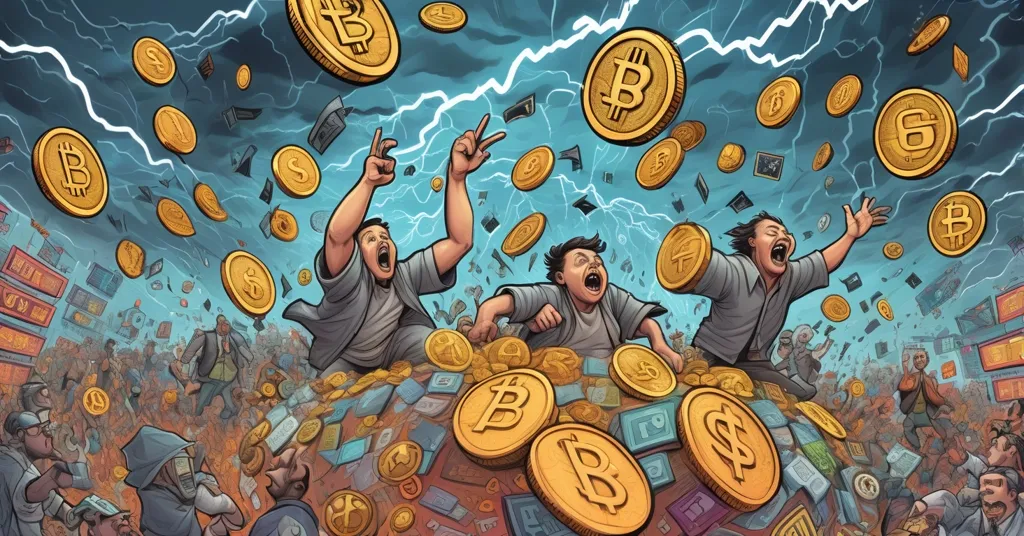
LTB Altcoin Shockwave: 4 Massive Token Unlocks in January 2026 to Watch
January 2026 is gearing up to be a rollercoaster for altcoin holders. Four projects—Ondo Finance ($ONDO), Bitget ($BGB), Plume Network ($PLUME), and Sei Network ($SEI)—are set to unleash significant token supplies into circulation, potentially sparking volatility across markets already bracing for a consolidation phase after 2025’s bull run. Get ready for some turbulence, because new supply in a shaky sentiment environment could mean fireworks—or a fizzle.
- Ondo Finance ($ONDO): 1.94 billion tokens unlock on January 18, valued at $886 million.
- Bitget ($BGB): 140 million tokens unlock on January 26, worth $504 million.
- Plume Network ($PLUME): 1.37 billion tokens release on January 21, valued at $26 million.
- Sei Network ($SEI): 55.56 million tokens hit the market on January 15, worth $7.25 million.
Token unlocks are a necessary evil in the crypto game. They fund innovation, reward teams, and grow ecosystems, but they also flood markets with supply that can crush prices if demand isn’t there to match. With 2026 looking like a cooling-off period—think post-bull run fatigue, tighter liquidity, and possible regulatory grumbles—these events could sting more than they did in last year’s hype-driven climate. We’re not here to predict doom or peddle hopium, just to lay out the hard facts, poke holes in lazy assumptions, and equip you to navigate the mess. Let’s dissect each unlock, weigh the risks and rare upsides, and cut through the noise with no-BS analysis.
Why Token Unlocks Can Hurt—And Why They Don’t Always
Before diving into the specifics, let’s get one thing straight: token unlocks aren’t automatic death sentences for prices. As a sharp observer in the space noted:
Token unlocks aren’t the villain—investor panic and ignorance are.
The real damage often comes from knee-jerk reactions like panic selling or blind holding without a strategy. These unlocks are scheduled releases of previously locked tokens, typically part of a project’s vesting plan to allocate funds to developers, investors, or ecosystem growth. When new tokens hit circulation, supply spikes, and if market sentiment or liquidity is weak, prices can dip—sometimes hard. But history shows bullish markets can absorb huge unlocks with barely a hiccup, while strategic use of tokens (think slow deployment for partnerships) can mute the impact. The trick is preparation over prediction. Watch on-chain data—those public blockchain records tracking where tokens move, like a transparent ledger of digital cash—to spot if big dumps to exchanges are looming. Now, let’s break down the big four set for January 2026.
Breaking Down the January 2026 Unlocks
Ondo Finance ($ONDO) is first in the firing line, with a colossal unlock on January 18, 2026. They’re releasing 1.94 billion $ONDO tokens, worth about $886 million at $0.45 each, which is a staggering 57.23% of the current circulating supply. The split goes like this: roughly 825 million for protocol development, 792 million for ecosystem growth, and 323 million for private sale investors. Ondo, a decentralized finance (DeFi) project aiming to disrupt traditional financial systems by tokenizing assets and enabling peer-to-peer lending, operates on a rare yearly vesting schedule—this is the second of four planned unlocks. In 2025, a similar release happened during a roaring bull market, and the price held firm. But with 2026’s gloomier outlook, a price correction—basically a drop when supply outpaces demand—feels more likely. If these tokens flood exchanges, holders might see red. Yet, here’s a counterpoint: if Ondo uses this supply to fuel major partnerships or innovation, the market might not flinch. History leans bearish in weak sentiment, but don’t count out a surprise.
Next up is Bitget ($BGB), the native token of the Bitget exchange, ranked 7th among exchange tokens by market cap. On January 26, 2026, they’ll unlock 140 million $BGB tokens, valued at $504 million at $3.60 per token, representing 20% of circulating supply. The allocation is 80 million for team incentives and 60 million for branding and promotion. Beyond trading fee discounts and staking perks, $BGB plays a key role in Bitget’s ecosystem growth. What sets this apart is their quarterly token burn mechanism—permanently removing tokens from circulation to curb supply. In September 2025, they torched 220 million $BGB via a Morph Chain partnership, ahead of schedule, which could cushion the blow. As one analyst put it:
If team tokens hit exchanges, expect a sharp but short downside (10–30%). If they’re used slowly for marketing or partnerships, the impact will be muted.
The wildcard is behavior. A quick dump spells pain for holders; strategic use could mean a shrug. Track exchange inflows in late January for hints. Could this unlock actually boost Bitget’s visibility if paired with a big marketing push? It’s a long shot, but not impossible.
Then we’ve got Plume Network ($PLUME), a project in the Real-World Asset (RWA) sector, which tokenizes traditional assets like real estate or commodities on the blockchain—think owning a slice of a property via digital tokens without a middleman. On January 21, 2026, they’re dropping 1.37 billion $PLUME tokens, worth $26 million at a pitiful $0.02 each, or 39.75% of circulating supply. This is a “cliff unlock,” meaning a sudden, massive release rather than a gradual trickle, split between 700 million for investors and 667 million for core contributors. Already down 92% from its peak of $0.2475, and ranking 6th among RWA projects by market cap, Plume is limping into this event. Further downside seems probable, especially in a soft market. If you’re still holding $PLUME, you’ve either got nerves of steel or a taste for punishment—will this unlock be the final straw? On the flip side, RWAs are a growing niche bridging crypto and mainstream finance. A well-timed partnership post-unlock could spark interest, though that’s more wishful thinking than likely.
Finally, there’s Sei Network ($SEI), a Layer 1 blockchain—meaning a base network like Bitcoin or Ethereum that others build on—also focused on RWA. Their unlock on January 15, 2026, is smaller: 55.56 million $SEI tokens, worth $7.25 million at $0.13 each, or just 1.05% of circulating supply. This is a routine monthly cliff unlock, nothing earth-shattering. As noted by a market watcher:
This is a minor unlock. However, it does add supply. It can cause mild near-term volatility.
Sei’s price has shown slight recovery since a broader market dip on October 10, 2025, but don’t expect this small supply bump to move the needle much. Mild downward pressure or short-term wobbles are the worst-case here, unless RWA hype suddenly surges. Compared to the other three, this feels like a footnote—proof not all unlocks are created equal.
Market Context: Why 2026 Feels Different
Stepping back, the broader market backdrop for 2026 adds layers to these unlocks. After 2025’s bull run, we’re likely entering a consolidation phase—think profit-taking, cooling enthusiasm, and possibly harsher macroeconomic conditions like rising interest rates or regulatory scrutiny. In bullish times, as with Ondo’s 2025 unlock, new supply gets gobbled up by eager buyers. In a quieter 2026, demand might not keep pace, amplifying downside risks. Liquidity matters too; altcoins often lack Bitcoin’s deep markets, so even moderate selling can dent prices. Historical cases like Avalanche ($AVAX) unlocks in 2022 showed 20-40% drops in weak sentiment, while Solana ($SOL) weathered similar events better during hype cycles. Context is king.
But let’s play devil’s advocate: not every unlock is a disaster waiting to happen. Some projects use released tokens to fuel growth—think hiring talent, forging partnerships, or scaling tech—that can strengthen their position long-term. Unlocks are often a step toward decentralization, distributing power away from early insiders to broader ecosystems, aligning with our push for effective accelerationism. The catch? Most teams botch this, dumping tokens for quick cash instead of playing the long game. And while Bitcoin maximalists like myself see altcoins as volatile sideshows compared to BTC’s steady store-of-value status, these projects do carve out niches—RWA, exchange utility, DeFi—that Bitcoin doesn’t (and shouldn’t) touch. They’re messy, speculative, but part of the financial revolution we champion. For deeper insights into these upcoming events, check out the detailed breakdown on major altcoin token unlocks in January 2026.
Navigating the January 2026 Challenge
So, how do you handle this storm? First, ditch emotional reactions. As a wise voice in the space put it:
The goal is simple. Remove surprises. When you understand the unlock, price moves stop feeling random.
Monitor on-chain flows for signs of tokens piling into exchanges—a red flag for dumps. If volatility spooks you, consider scaling out of positions before unlock dates. If you’re a long-term believer in a project’s vision, holding through the noise might pay off, assuming the team isn’t just cashing out. Bitcoin remains the safer harbor in turbulent times, but altcoins offer innovation worth watching—if you’ve got the stomach for it. January 2026 will test holders of $ONDO, $BGB, $PLUME, and $SEI, no question. But it’s also a reminder that disruption isn’t tidy. We’re here to push tech forward fast, break the status quo, and build a freer system, even if half these altcoins flop spectacularly along the way.
Key Takeaways and Questions Answered
- What exactly are token unlocks in the crypto space?
Token unlocks are scheduled releases of previously locked tokens into circulation, often tied to a project’s vesting plan for teams, investors, or development. They increase supply, which can impact prices if demand isn’t strong. - Which altcoins have major token unlocks in January 2026?
Four projects are lined up: Ondo Finance ($ONDO) on January 18, Bitget ($BGB) on January 26, Plume Network ($PLUME) on January 21, and Sei Network ($SEI) on January 15. - How do token unlocks impact altcoin prices?
They can trigger short-term volatility or drops (10-30%) if tokens are sold en masse on exchanges. The effect depends on market sentiment, liquidity, and whether tokens are dumped or used strategically. - Why does market sentiment play a big role during unlocks?
In bullish phases like 2025, unlocks like Ondo’s were absorbed easily. In a weaker 2026, low demand could worsen price pressure from new supply. - What can investors do to prepare for these January 2026 unlocks?
Keep tabs on on-chain data for token movements to exchanges, signaling potential sells. Scale out before unlocks if risk-averse, or hold if you trust the project’s long-term potential. - Do mechanisms like token burns help, as with Bitget ($BGB)?
Yes, burns reduce total supply over time, potentially offsetting unlock impacts. Bitget’s early burn of 220 million $BGB in 2025 might ease the sting of their 2026 unlock, if dumps are limited. - Should Bitcoin maximalists care about altcoin unlocks?
While Bitcoin’s stability outshines altcoin drama, these projects fill unique gaps—think RWA or DeFi—that BTC doesn’t address. They’re risky, but their innovation matters in the broader fight for decentralization.
January 2026 isn’t just a date on the calendar—it’s a proving ground for these altcoins and the investors betting on them. Stay sharp, question everything, and don’t let market noise drown out the bigger picture. We’re all in on disrupting centralized systems and accelerating tech that empowers freedom and privacy. But that doesn’t mean swallowing every altcoin story hook, line, and sinker. Do your homework, and let’s keep pushing the boundaries—warts and all.