Stablecoins Could Drain $6.6 Trillion from U.S. Banks, Warn Community Leaders
 LTB
LTB Community Banks Raise Red Flags: Stablecoins Threaten to Drain Trillions from U.S. Deposits
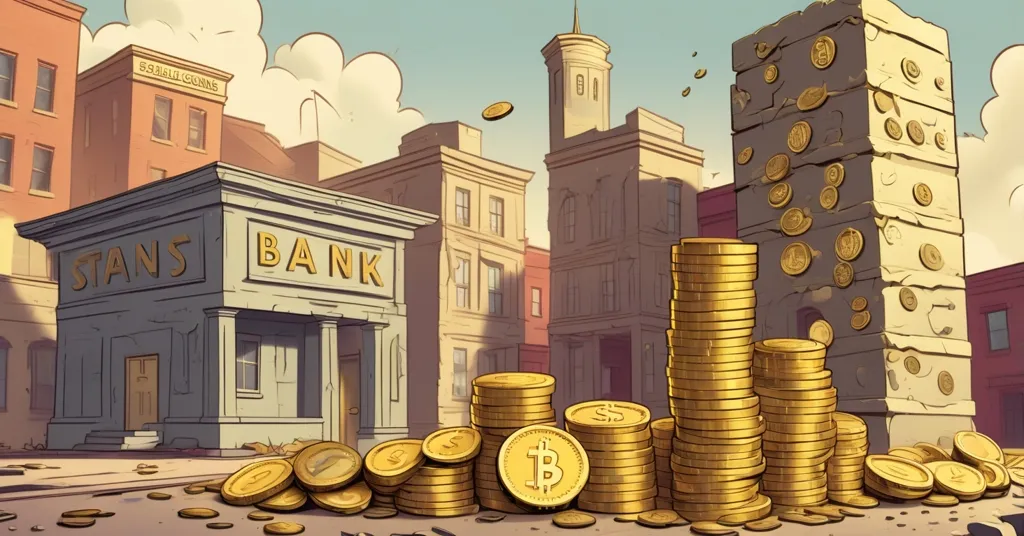
Community banks are sounding the alarm over a looming financial upheaval. In a January 5 letter to U.S. senators, over 100 leaders from the American Bankers Association’s (ABA) Community Bankers Council warned that stablecoins—digital currencies pegged to fiat like the U.S. dollar—could siphon off as much as $6.6 trillion from traditional bank deposits, threatening the foundation of local lending for small businesses, farmers, and homebuyers.
- Trillion-Dollar Risk: Treasury estimates suggest up to $6.6 trillion in bank deposits could shift to stablecoins.
- Sneaky Incentives: Stablecoin issuers use rewards and yield-linked products to lure savings, bypassing direct interest bans.
- Regulatory Shortfalls: The GENIUS Act fails to close loopholes around indirect compensation, per community bankers.
The $6.6 Trillion Threat to Main Street
Stablecoins are often seen as the steady hand in the wild world of cryptocurrency. Unlike Bitcoin with its rollercoaster price swings, stablecoins aim to maintain a consistent value, typically pegged 1:1 to the U.S. dollar, making them a go-to for transactions, remittances, and decentralized finance (DeFi) platforms. DeFi, for the uninitiated, refers to financial services built on blockchain technology, letting users borrow, lend, or trade without traditional middlemen like banks. But behind this veneer of stability lies a potential wrecking ball for community banks, according to the ABA, as detailed in a recent report on stablecoins draining U.S. deposits.
Their concern is rooted in cold, hard numbers. The U.S. Treasury estimates that if stablecoin adoption continues unchecked, $6.6 trillion could migrate from insured bank accounts to these digital alternatives. That’s a staggering sum—enough to dwarf the annual U.S. federal budget. For community banks, which thrive on deposits to fund loans for your local bakery, a farmer’s equipment, or a family’s first home, this could be a direct blow to their survival. Less money in the vault means fewer loans, tighter credit, and a ripple effect that could choke the lifeblood of small-town economies. A mid-sized bank losing just 20% of its deposits could slash small business lending by half, industry projections suggest.
What’s driving this potential exodus? Stablecoin issuers and their crypto exchange partners are playing a sly game. While regulations often ban direct interest payments on stablecoins, they’ve found workarounds through rewards programs and yield-linked products—financial tools tied to stablecoins that promise returns akin to interest on savings accounts, but often with murkier risks. Unlike bank deposits, which are safeguarded by the Federal Deposit Insurance Corporation (FDIC) up to $250,000 per depositor, most stablecoins operate in a regulatory no-man’s-land. If an issuer collapses, your funds could disappear without recourse. Remember TerraUSD in 2022? This algorithmic stablecoin lost its dollar peg due to flawed mechanisms and inadequate reserves, wiping out billions in user funds overnight and sending shockwaves through DeFi markets.
Regulatory Roulette: Is the GENIUS Act Enough?
The recently passed GENIUS Act was meant to tame the stablecoin Wild West by introducing oversight. But community bankers are calling it a regulatory sieve so porous you could drive a Bitcoin mining rig through it. The law bans direct interest payments on stablecoins, a step to prevent them from fully mimicking bank accounts. Yet it leaves gaping loopholes for indirect compensation—those “rewards” and yield schemes offered by affiliates or partners of stablecoin issuers. It’s like banning soda but turning a blind eye to energy drinks.
The ABA is pushing the U.S. Senate to plug these gaps with tougher legislation. They want the GENIUS Act’s ban on interest payments extended to cover stablecoin affiliates and partners, curbing the incentives that lure consumers away from FDIC-protected accounts. Their argument is straightforward: without tighter rules, banks will keep bleeding deposits, and the fallout will hit Main Street hardest. But crafting effective cryptocurrency regulation isn’t simple. Some senators have floated ideas like full reserve requirements—forcing stablecoin issuers to back every digital dollar with real cash or equivalents, akin to proposals in the 2022 Stablecoin TRUST Act. Whether such measures gain traction remains a coin toss in a polarized Congress.
The Other Side: Crypto’s Defense and Big Bank Optimism
Hold on—not every financial player is sweating over stablecoins. Giants like JPMorgan are taking a cooler stance, arguing that digital assets like stablecoins and deposit tokens—digital representations of bank deposits on a blockchain—aren’t necessarily mortal enemies of traditional systems. Their take is that these innovations can complement rather than replace insured deposits, carving out niches in blockchain payments or cross-border settlements. Imagine near-instant international transfers without the hefty fees or delays of legacy banking—stablecoins often deliver that, offering utility even Bitcoin can’t always match with its slower transaction times outside the Lightning Network.
Then there’s the crypto crowd firing back at the ABA’s warnings. Many see this as less about consumer protection and more about old-school banks clutching desperately to relevance. History backs their skepticism: in the late 20th century, money market funds sparked similar panic among bankers, only to become a consumer-friendly staple that forced banks to innovate. PayPal and mobile payment apps like Venmo also rattled cages initially but ultimately pushed financial systems to adapt. Could stablecoins be another wake-up call rather than a death knell? DeFi advocates point to real-world benefits—think remittances in developing countries where stablecoins slash costs compared to Western Union, or instant settlements for businesses tired of waiting days for bank wires.
Stablecoin Mechanics: Promise and Peril
Let’s zoom in on how stablecoins actually work, because the devil’s in the details. Most are designed to hold a steady value through reserves—think USDC, which claims transparency with regular audits of its dollar-backed holdings, or USDT (Tether), which has faced scrutiny over whether it truly maintains a 1:1 reserve as promised. Others, like the ill-fated TerraUSD, relied on algorithms to balance supply and demand, a house of cards that collapsed under stress. These differences matter. Asset-backed stablecoins might offer more security if reserves are legit, but algorithmic ones can spiral into chaos without hard collateral, as Terra’s failure proved.
The perks are undeniable. Stablecoins enable fast, cheap transactions on blockchains, filling gaps Bitcoin doesn’t cover well due to its volatility and slower base-layer speeds. They’re the workhorse of DeFi, letting users earn yields or trade without converting to fiat. But the risks loom large. Beyond reserve doubts, there’s the privacy angle—unlike Bitcoin’s pseudonymous setup, many stablecoin transactions can be traced by issuers or regulators, raising concerns for those valuing financial freedom. And let’s not forget scams: shady yield schemes promising double-digit returns often turn out to be Ponzi traps, preying on the uninformed.
Striking a Balance: Disruption vs. Stability
As a defender of decentralization and a Bitcoin maximalist at heart, I’m torn on stablecoins. They embody the spirit of effective accelerationism—using tech to disrupt sluggish, centralized systems and solve real problems fast. They challenge a banking model that’s often too cozy with power, too slow, and too damn expensive. Stablecoins fill niches BTC shouldn’t have to, like everyday payments or DeFi scaffolding. Heck, as Bitcoin’s Lightning Network scales for faster transactions, stablecoins might even become less necessary long-term. But let’s not drink the Kool-Aid uncritically. The ABA has a point—unregulated stablecoins with dodgy reserves or predatory incentives have burned users before, and a deposit drain could genuinely hurt local economies. If a community bank folds, real people lose access to credit, not just spreadsheets.
The Senate faces a tightrope walk. Overregulate, and you risk smothering a transformative force in blockchain payments. Underregulate, and you invite systemic risks or scams that taint the whole crypto space. My two sats? Push for transparency—mandate audited reserves and clear consumer warnings—without crushing innovation. Stablecoins aren’t HODL material like Bitcoin, but they’ve got utility in spades for now. The future of money hangs in the balance—will stablecoins liberate us or break us? The next legislative move might just tip the scales.
Key Takeaways on Stablecoins and Community Banks
- How do stablecoins threaten U.S. bank deposits?
They could divert up to $6.6 trillion by offering yield incentives and rewards, reducing funds community banks rely on for local loans. - Why do community banks fear stablecoin adoption?
Fewer deposits mean less credit for small businesses, farmers, and homebuyers, potentially crippling local economies. - Is the GENIUS Act addressing stablecoin risks effectively?
Not fully—it bans direct interest but ignores indirect compensation like rewards, leaving banks vulnerable, according to the ABA. - Do all banks view stablecoins as dangerous?
No, major players like JPMorgan see them as complementary, useful for niches like cross-border payments alongside traditional systems. - Could stablecoins be a net positive despite the risks?
Possibly—they offer faster, cheaper transactions for remittances and DeFi, pushing banks to innovate, much like past disruptions did. - What legislative changes does the ABA want?
They’re urging an extension of the GENIUS Act’s interest ban to stablecoin affiliates and partners to block indirect incentives.