Senate Crypto Bill Delayed: Coinbase Opposition Stalls U.S. Regulation Efforts
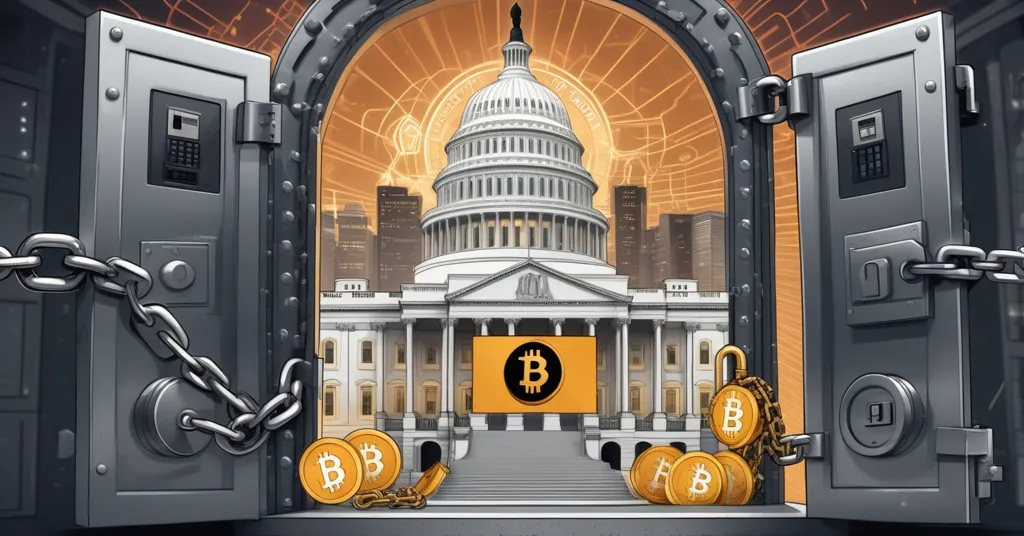
 LTB
LTB Senate Crypto Bill Delay: Coinbase Pushback Halts U.S. Regulation Progress
The U.S. Senate Banking Committee has hit the pause button on a crucial cryptocurrency market structure bill, derailing a markup session after Coinbase, a titan in the crypto exchange space, voiced sharp opposition. This delay, sparked by CEO Brian Armstrong’s public rejection of the draft, exposes the raw tension between innovation-hungry crypto firms and a cautious legislative machine, while traditional banks lob grenades over stablecoin rewards.
- Markup Stalled: Senate Banking Committee postpones crypto bill markup, originally set for a Thursday at 10 am ET, with no rescheduled date.
- Coinbase Rejects Draft: CEO Brian Armstrong pulls support after a 48-hour review, stating the exchange cannot endorse the bill as written.
- Wider Gridlock: Senate Agriculture Committee also delays related crypto discussions to January, deepening regulatory uncertainty.
Coinbase’s Stand: Why the Pushback?
The crypto bill, poised as a potential cornerstone for U.S. crypto regulation, was meant to bring clarity to a chaotic industry. Its core aim is to define whether crypto tokens like Bitcoin or Ethereum qualify as securities, commodities, or something else, and to hand oversight of spot markets—where assets are traded for immediate delivery—to the Commodity Futures Trading Commission (CFTC). For those new to the game, the CFTC typically regulates commodities and derivatives like futures contracts, while the Securities and Exchange Commission (SEC) governs securities such as stocks. The SEC has been a thorn in crypto’s side, often labeling tokens as unregistered securities and cracking down with lawsuits, whereas many argue the CFTC’s framework better suits non-security assets like Bitcoin.
Enter Coinbase, one of the biggest players in the U.S. crypto exchange market, which threw a wrench into the works. After scrutinizing the latest draft over a mere 48 hours, CEO Brian Armstrong delivered a stinging verdict:
“After reviewing the Senate Banking draft text over the last 48hrs, Coinbase unfortunately can’t support the bill as written.”
Armstrong didn’t spill the beans on specific objections, but the message is crystal clear: even industry giants desperate for regulatory clarity won’t back a bill they see as half-baked. Speculation abounds on what triggered this pushback, as detailed in reports about the Senate Committee’s postponement due to Coinbase’s stance. Could it be overly burdensome compliance costs that might strangle smaller exchanges while Coinbase, with its deep pockets, weathers the storm? Or perhaps tax reporting rules that could alienate users by turning platforms into IRS snitches? Coinbase has long advocated for fair rules, but their history—think public spats with the SEC over ambiguous policies—suggests they’re wary of legislation that might favor traditional finance over crypto’s disruptive ethos. Is this a principled stand for innovation, or just Big Crypto flexing muscle for better terms? That’s the million-dollar question.
Stablecoin Showdown: Banks vs. Crypto
One of the bill’s thorniest issues centers on stablecoins, crypto assets pegged to fiat currencies like the U.S. dollar to keep their value steady, unlike the rollercoaster rides of Bitcoin or Ethereum. They’re the calm harbor for traders dodging volatility, but also a lightning rod for controversy. The draft legislation draws a hard line, banning issuers from paying interest just for holding stablecoins, though it permits rewards for actions like payments or loyalty programs. Both the SEC and CFTC would set disclosure rules to ensure transparency—a nod to consumer protection.
Traditional banks, however, are sounding the alarm, leveraging the GENIUS Act—a proposed law that forbids stablecoin issuers from offering interest on payment stablecoins, treating them akin to regulated bank deposits. Their stance? Crypto platforms dangling yield-like incentives, sometimes as high as 5% compared to a measly 0.5% on savings accounts, are playing fast and loose with rules, risking consumer losses while undercutting bank deposits. Imagine parking your cash in a dusty old bank account versus a slick stablecoin app promising juicy returns—banks are sweating, and not just over customer safety. They’re defending their turf against decentralized finance (DeFi), which threatens to siphon away billions in deposits.
But let’s cut through the noise. Banks framing this as a noble crusade for systemic stability are conveniently ignoring their own history of bailouts and scandals. If they can’t compete with stablecoin yields, maybe it’s time to innovate rather than lobby—crypto’s entire mission is to force the old guard to adapt or crumble. On the flip side, DeFi isn’t without sin. The Terra/Luna collapse in 2022, which obliterated $40 billion in value when its stablecoin UST lost its peg, proves unregulated yields can be a house of cards. Balancing stablecoin innovation with guardrails is a tightrope, and this bill’s delay shows no one’s figured out how to walk it yet.
Legislative Limbo: Senate Delays Stack Up
The Senate Banking Committee’s postponement isn’t happening in a vacuum. Chairman Tim Scott, leading the charge, framed the delay as a necessary step after months of bipartisan haggling, drawing input from innovators, investors, and even law enforcement to craft rules that protect consumers, bolster national security, and keep the U.S. as a financial tech leader. Yet, bipartisan talks are a double-edged sword—vital for passing anything in a polarized Congress, but a slog as every senator nitpicks over details to placate their base or donors. A leaked tidbit from negotiations hints at splits over how much leeway crypto firms should get versus banks, with some Dems pushing consumer safeguards and certain GOP members eyeing lighter-touch rules to lure blockchain startups stateside.
Meanwhile, the Senate Agriculture Committee, chaired by John Boozman, has also kicked its crypto markup can down the road to January, citing the need to finalize policy and rally support. This dual delay paints a grim picture for U.S. crypto regulation. The industry’s been stuck in a gray zone for over a decade, ping-ponging between SEC lawsuits—like the ongoing Ripple battle over XRP’s status—and CFTC turf wars. Past attempts at cohesive laws, like the 2021 Infrastructure Bill’s messy broker reporting rules, often sparked more chaos than clarity. For Bitcoin holders, this legislative limbo might reinforce BTC’s narrative as a safe haven beyond government meddling, but it also spooks institutional investors craving predictability. Crypto folks are used to hodling through market dumps—guess we’ll hodl through Senate gridlock too.
Global Race: U.S. Falls Behind
While the U.S. dithers, the rest of the world isn’t waiting. The European Union’s Markets in Crypto-Assets (MiCA) regulation, set to roll out fully by late 2024, offers a unified framework for crypto firms, covering everything from stablecoin reserves to exchange licensing. Countries like Singapore and Switzerland have also carved out crypto-friendly policies, attracting blockchain talent and capital. The U.S., once the epicenter of tech innovation, risks losing its edge as firms like Binance.US face regulatory heat and eye friendlier shores. This isn’t just about pride—it’s about jobs, tax revenue, and shaping the future of money. Every delay in crafting a clear U.S. crypto framework hands the baton to competitors, potentially sidelining American influence in blockchain’s next chapter.
Bitcoin and Beyond: What’s at Stake?
As a champion of decentralization, I’m all in on Bitcoin as the unshakeable core of trustless, censorship-resistant money. BTC’s ethos—cutting out middlemen, defying centralized control—is the blueprint for financial freedom. Yet, I can’t ignore that altcoins and protocols like Ethereum have their own battlegrounds. Ethereum’s smart contracts power DeFi apps that challenge banks in ways Bitcoin shouldn’t or can’t, while stablecoins bridge the gap for the risk-averse dipping toes into this wild west. The Senate’s delay in addressing U.S. crypto regulation could hinder Bitcoin adoption by stalling institutional buy-in—who wants to pour billions into BTC ETFs or custody solutions without legal clarity? Conversely, it might embolden Bitcoin maximalists, proving that no government can tame the beast Satoshi built.
But here’s the rub: without a balanced framework, we’re either crushing innovation under overzealous rules or letting scammers run riot. The crypto space has seen enough rug pulls and Ponzi schemes to fill a horror anthology—think Bitconnect or OneCoin. A delayed bill might be a chance to get it right, assuming politics doesn’t clog the pipeline indefinitely. Effective accelerationism demands we push boundaries fast, but not recklessly. Bitcoin can lead this revolution, with altcoins filling niche gaps, provided lawmakers stop tripping over their own feet.
Key Takeaways and Questions
- Why did the Senate Banking Committee delay the crypto bill markup?
Coinbase’s opposition, led by CEO Brian Armstrong’s rejection of the draft after a 48-hour review, combined with unresolved bipartisan negotiations, forced the postponement. - What are the main goals of the proposed crypto market structure bill?
It aims to classify crypto tokens and assign spot market oversight to the CFTC, while setting strict rules on stablecoin rewards with SEC and CFTC disclosure mandates. - How do traditional banks view stablecoin incentives?
Banks oppose yield-like rewards, citing the GENIUS Act, arguing they dodge banking regulations, threaten consumer safety, and compete unfairly with low-interest deposits. - What does this delay mean for U.S. crypto regulation and Bitcoin’s impact?
It extends uncertainty, leaving firms under inconsistent enforcement while potentially stalling Bitcoin’s mainstream adoption, though it may reinforce BTC’s anti-establishment appeal. - Can this legislative pause benefit the crypto industry?
Possibly, if it leads to a more thoughtful bill balancing innovation and protection; otherwise, it’s just another hurdle in the global race for blockchain dominance.
The path to a solid U.S. crypto framework is a gauntlet of clashing interests—crypto innovators, traditional banks, and politicians all vying for their slice of the future. Coinbase’s pushback and the Senate’s hesitation feel like a gut punch, but they also underscore the stakes: we’re not tinkering with trivial policy, we’re defining the next era of money. As we wait for lawmakers to regroup, the crypto community must keep the pressure on. If money is power, decentralized finance is our shot to redistribute it—let’s not fumble the chance.