Putin Pushes Russia’s Self-Driving Tech: Could Blockchain Play a Role?
 LTB
LTB Russia’s Putin Accelerates Self-Driving Tech Push: A Blockchain Connection?
Russian President Vladimir Putin has issued a bold directive to fast-track the nation’s autonomous transportation sector, urging a leap from cautious experiments to mass adoption. With Russia trailing global tech giants, this move signals a desperate bid for technological sovereignty—and raises intriguing questions about how blockchain and decentralized systems could play a role in this high-stakes race.
- Urgent Pivot: Putin demands swift transition to widespread use of autonomous tech.
- Global Deficit: Russia lags behind leaders with full control over their tech stacks.
- Crypto Angle: Blockchain could secure and decentralize autonomous systems.
Putin’s Tech Gambit: From Laggard to Leader?
At a recent high-stakes meeting, Vladimir Putin laid bare Russia’s position in the global autonomous tech race: they’re scrambling to catch up. He pointed out that nations achieving “technological sovereignty”—building every piece of their systems domestically—have a massive edge. For Russia, this isn’t just about prestige; it’s about survival amidst sanctions and geopolitical isolation. Putin didn’t hold back, pressing officials to abandon the lab-coat experiments and roll out autonomous solutions on a grand scale across industries like logistics, agriculture, and security, as highlighted in a recent statement on Russia’s urgent push for self-driving technology.
“I would like to draw the attention of participants and all the colleagues in the government: there is a need to move quicker from experiments to mass use of autonomous solutions.”
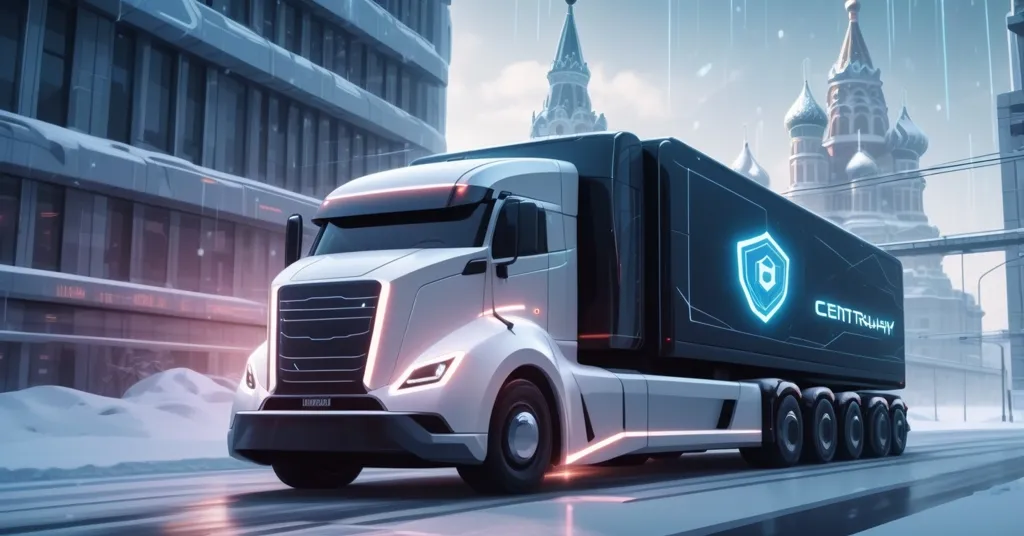
For those new to the space, autonomous transportation means vehicles—think self-driving trucks or robotic farm equipment—that operate without human input. They rely on a cocktail of sensors, cameras, and artificial intelligence (AI) to “see” their surroundings and make split-second decisions, often faster and more reliably than a human could. Russia has dipped its toes in these waters with 95 self-driving trucks already hauling goods on routes like the Central Ring Road in Moscow and the M-11 Neva highway to St. Petersburg. But let’s be real: 95 trucks are a rounding error compared to the sprawling fleets of robotic taxis and delivery bots buzzing through cities in the U.S. and China.
Putin’s not playing for peanuts. He’s targeting a fleet of 920 autonomous trucks by 2028, with plans to scale to thousands by 2030. That’s a hell of a leap, and it’s not just about trucks. Prototypes shown to him spanned multiple sectors—driverless machinery for remote construction in Siberia, AI drones for security, even agricultural bots that could transform Russia’s vast farmlands. Putin was visibly impressed, gushing over the audacity of Russian engineers and how their tech is crafting a tangible shift in the economy.
“It should be said it is impressive! The boldness and variety of designers’ proposals, and how technologies created by them dramatically change life around us, forming the real economy of autonomous systems.”
Economic Overhaul or Pipe Dream?
Why the breakneck pace? Putin sees autonomous tech as a silver bullet for Russia’s economic woes. By replacing low-skilled labor with machines, he aims to slash logistics costs in a country where vast distances and harsh conditions make transport a nightmare. Higher productivity could mean better wages and improved quality of life—if it works. Beyond domestic gains, Putin’s got his eyes on the global prize, claiming there’s massive international demand for Russian systems. He’s banking on “friends” and “partners” (likely BRICS nations or non-Western allies) to buy in, despite the chilling effect of sanctions.
“It is very large, this international market. We are awaited there, I assure you. I simply know that. All our friends, our partners told us that.”
Let’s pump the brakes on the hype train for a second. While Putin’s optimism might rev engines, the road ahead is littered with potholes. Sanctions have historically choked Russia’s access to cutting-edge chips and software, forcing a reliance on domestic alternatives that often lag behind. Scaling from 95 trucks to thousands in under a decade demands not just tech breakthroughs but also massive infrastructure upgrades, regulatory overhauls, and public buy-in. History doesn’t inspire confidence—state-driven tech projects in Russia have a nasty habit of overpromising and underdelivering, often mired in bureaucratic sludge. Is this timeline ambitious or borderline delusional?
Risks in the Fast Lane: A Global Concern
Even Putin isn’t blind to the downsides. He’s sounded cautious notes about the risks of unchecked tech—think hacked autonomous fleets grinding highways to a halt, or mass job displacement sparking social unrest in an already tense labor market. These aren’t just Russian headaches; they’re global. Cybersecurity vulnerabilities in autonomous systems could be catastrophic, akin to a 51% attack on a blockchain network where a bad actor seizes control (for the uninitiated, that’s when someone dominates enough computing power to manipulate a crypto ledger). Then there’s the ethical quagmire: how do you ensure AI decisions prioritize safety over efficiency in a crisis?
Russia’s unique context adds extra spice to the risk stew. With a government known for tight surveillance, public distrust in state-controlled tech could stall adoption. If autonomous systems become tools for monitoring rather than freedom, they’ll clash with the very ethos of disruption and privacy we champion. And let’s not forget sanctions—can Russia even source the hardware needed for mass production without bending to black-market deals or subpar knockoffs?
Blockchain’s Role: Decentralizing the Drive
Here’s where things get juicy for our crowd. Autonomous transportation isn’t just a hardware game—it’s a data game. Every self-driving truck generates terabytes of information, from route logs to sensor inputs, all ripe for tampering or theft. Enter blockchain: a decentralized ledger that could secure this data against hacks, ensuring transparency and trust. Imagine a Russian truck fleet logging every trip on an immutable blockchain—no fudged records, no hidden detours. For crypto OGs, this is table stakes; for newbies, think of blockchain as a digital vault where data, once written, can’t be altered without consensus.
But it’s not just about security. Smart contracts—self-executing agreements coded on platforms like Ethereum—could automate logistics payments, cutting out middlemen and slashing costs. Picture a driverless truck delivering goods, triggering an instant Bitcoin or Ether payment upon arrival, all without a bank’s sticky fingers. This is especially potent for Russia, where sanctions choke traditional finance. Bitcoin, as a borderless store of value, could become a lifeline for tech exports, sidestepping Western payment systems. While I lean Bitcoin maximalist, I’ll tip my hat to Ethereum’s utility here—its programmable contracts fill a niche Bitcoin doesn’t aim to touch.
Still, there’s a glaring contradiction. Russia’s push is pure top-down, state-driven control—a far cry from the decentralized freedom we root for. Can a government obsessed with oversight truly harness blockchain’s liberatory potential, or will it twist it into another surveillance tool? This tension mirrors broader debates in crypto: can centralized powers adopt our tech without gutting its soul? I’m skeptical, but if Russia’s desperation for tech sovereignty cracks open a door for decentralized solutions, it could spark a logistics revolution worth watching.
Global Race: Can Russia Compete?
Zooming out, Russia’s ambitions must be weighed against a brutal global landscape. The U.S. and China aren’t just ahead in autonomous tech—they’re rewriting the rulebook with massive R&D budgets and first-mover advantage. Russia’s plan to export systems and snag market share faces not just tech hurdles but diplomatic ones. Sanctions could kneecap their ability to trade, even with so-called allies. Putin’s confidence in international demand smells a bit like propaganda—without naming specific buyers or contracts, it’s hard to buy the hype. And let’s be blunt: competing on cost and quality against Western or Chinese tech giants with a sanctioned economy is like mining Bitcoin with a rusty shovel.
Yet, there’s a wildcard. If Russia leans into crypto for trade—using Bitcoin or stablecoins to dodge financial barriers—it could carve a niche. Imagine autonomous tech bundled with sanction-proof payment systems, marketed to nations equally wary of Western dominance. It’s a long shot, but in the spirit of effective accelerationism (e/acc), I’m rooting for any tech push that disrupts the status quo, even if it’s messy. The question is whether Russia’s centralized grip will strangle the very innovation it seeks.
Economic Transformation or Centralized Trap?
Stepping back, Putin’s vision ties into a desperate need to diversify Russia’s resource-heavy economy. Autonomous tech, paired with AI and robotics, could be a cornerstone—if it doesn’t implode under its own weight. Entities like Sber, Russia’s banking titan, are already in the mix, crafting AI and humanoid bots (one dubbed Green, because why not?). State efforts to streamline customs and ramp up production aim to make Russian tech cost-competitive, but the gap between rhetoric and reality looms large. Moscow and St. Petersburg are proving grounds, but scaling nationally across a sprawling, rugged country is a logistical beast.
For us in the crypto sphere, the real intrigue lies in whether this sparks broader adoption of decentralized tools. Could Russia’s tech race push Bitcoin as a hedge against financial exclusion? Might Ethereum’s smart contracts redefine global supply chains if autonomous trucks take off? Or are we staring at a state-controlled dystopia where tech reinforces power rather than disrupts it? Putin’s not hitting the brakes, but the road he’s on might not lead where he—or we—hope.
Key Takeaways and Burning Questions
- How far behind is Russia in autonomous technology?
Russia’s trailing badly, with only 95 self-driving trucks compared to vast, advanced fleets in the U.S. and China, revealing a daunting gap in innovation and scale. - What are Russia’s targets for autonomous systems?
Putin aims for 920 autonomous trucks by 2028 and thousands by 2030, focusing on commercial routes near Moscow and St. Petersburg as initial rollout zones. - How could blockchain enhance Russia’s autonomous tech push?
Blockchain can secure data in self-driving systems against cyber threats, while smart contracts on Ethereum could automate logistics, and Bitcoin could enable sanction-resistant trade. - What economic gains does Putin expect, and are they feasible?
He hopes to cut costs, boost productivity, and raise wages by automating labor, but sanctions, infrastructure woes, and overambitious timelines cast serious doubt. - What are the standout risks in this tech acceleration?
Cybersecurity breaches, job losses, and centralized overreach threaten the push—risks blockchain could mitigate if Russia embraces decentralization over state control. - Does Russia’s state-driven approach clash with crypto’s ethos?
Absolutely, as top-down control undermines the freedom and privacy of decentralized tech, raising doubts about whether this can truly disrupt or just fortify the status quo.