Tesla Revives Dojo3 AI Supercomputer: Blockchain Synergy on the Horizon?
 LTB
LTB Tesla’s Dojo3 Revival: AI Powerhouse with a Blockchain Twist?
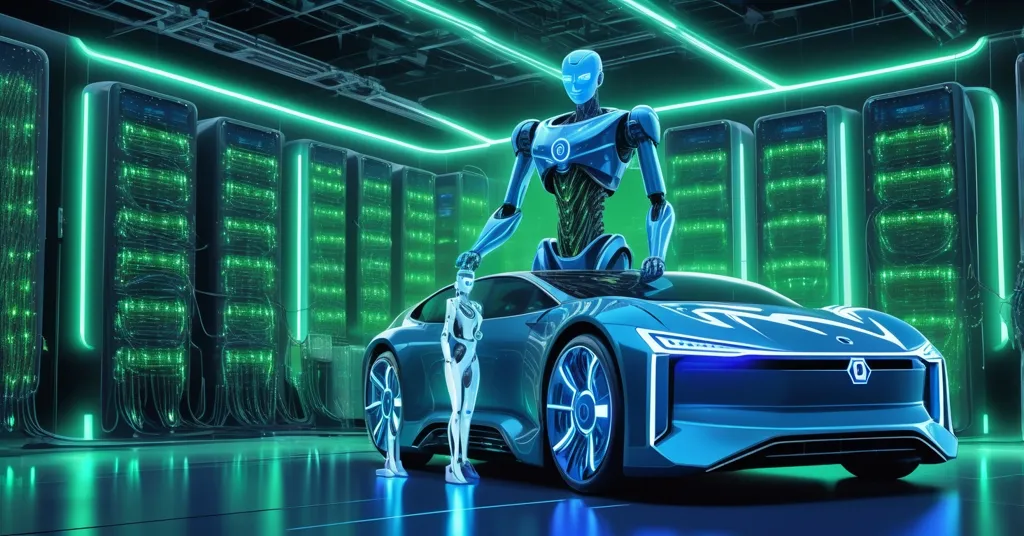
Tesla has reignited its Dojo3 project, a supercomputer beast built to train AI for Autopilot, Full Self-Driving (FSD), and the Optimus robot, after finally stabilizing its AI5 chip design. Elon Musk broke the news with a late-night X post, hyping what could be the highest-volume chips in the world—a claim as audacious as it is uncertain. But could this tech gamble also open doors for blockchain synergies in data security or energy solutions?
- Dojo3 Returns: Tesla restarts its shelved AI supercomputer project after setbacks.
- AI5 Milestone: Stable chip design paves the way for renewed focus.
- Blockchain Potential: Decentralized tech could intersect with AI for privacy and power needs.
Dojo3: Back from the Dead with Big Promises
Tesla’s Dojo3 project revival is no small side hustle—it’s a high-stakes bid to build a supercomputer that can crunch massive datasets for machine learning, powering everything from self-driving cars to humanoid robots. Think of it as the brain behind Tesla’s vision of a fully autonomous future, with the AI5 chip acting as its core processor, much like a souped-up GPU fuels cutting-edge gaming rigs. Musk’s announcement on X was less a press release and more a battle cry for talent.
“Tesla will restart work on Dojo3. If you’re interested in working on what will be the highest volume chips in the world, send a note to [email protected] with 3 bullet points on the toughest technical problems you’ve solved,”
he posted. That’s Musk in a nutshell—part visionary, part headhunter, always pushing the limits of what’s possible. But let’s not pop the champagne just yet. This project has stumbled before, and the road ahead is paved with potholes.
Back in 2025, Tesla slammed the brakes on Dojo after a brutal talent exodus. Key figures like Milan Kovac, who led Optimus engineering, David Lau, VP of software engineering, and Omead Afshar, a trusted Musk aide who left in June of that year, all jumped ship. Couple that with slumping Tesla sales, cutthroat competition in the electric vehicle (EV) market, and political blowback from Musk’s no-filter public rants, and it’s clear why Dojo got sidelined. The project’s revival now hinges on the AI5 chip being “almost done,” as Musk claims, signaling a technical foundation solid enough to rebuild on. But replacing those lost minds isn’t a quick fix—rebuilding a top-tier engineering team can take years, not months, and Tesla’s got no time to waste with competitors breathing down its neck.
AI6 and Samsung: A Strategic Pivot
Beyond AI5, Tesla’s already eyeing the next frontier with the AI6 chip, currently in early development. Unlike its predecessor, this one won’t be a fully in-house job. Tesla signed a staggering $16.5 billion deal with Samsung Electronics last year to manufacture these chips through 2033, marking a shift from its earlier do-it-all-yourself ethos. They’re also setting up a new production hub in Texas, diversifying away from Taiwan Semiconductor Manufacturing Co. (TSMC), their usual supplier. This isn’t just about logistics—it’s a calculated move to dodge geopolitical risks tied to Taiwan’s chip dominance and scale up fast. If you’re wondering why this matters, think of it as Tesla hedging its bets in a world where supply chain disruptions can tank a tech giant overnight.
Musk dropped another intriguing nugget during Tesla’s Q2 2025 earnings call on July 23, hinting at blending Dojo3 with AI6 designs.
“Thinking about Dojo3 and the AI6 inference chip, it seems like intuitively, we want to try to find convergence there, where it’s basically the same chip,”
he said. If Tesla can pull off this unification, it could slash costs and simplify their AI hardware strategy across autonomous driving and robotics. But let’s keep our feet on the ground—merging two cutting-edge designs sounds slick, but the devil’s in the execution, and Tesla’s track record on ambitious timelines isn’t exactly spotless. Remember Full Self-Driving’s endless “next year” promises?
Tesla’s not going all-in on Dojo alone either. Musk has been upfront about a dual approach, leaning on Nvidia’s proven AI tech as a safety net. Back in January 2024, he laid it out plain and simple:
“We’re pursuing the dual path of Nvidia and Dojo. I would think of Dojo as a long shot. It’s a long shot worth taking because the payoff is potentially very high. But it’s not something that is a high probability. It’s not like a sure thing at all.”
In other words, this is a moonshot with a trillion-dollar payout if it hits, but a spectacular faceplant if it misses. Nvidia’s dominance in the AI chip market—holding over 80% of the high-end GPU space per recent estimates—means Tesla’s got a Goliath to outmaneuver while banking on a risky David.
Risks and Reality Checks: Dojo’s Uphill Battle
Let’s cut through the hype with a dose of cold, hard truth. Dojo’s potential has been oversold before. In 2023, Morgan Stanley analysts tossed out a wild prediction that it could add $500 billion to Tesla’s market cap. Spoiler alert: that hasn’t happened, and investor fatigue with AI buzzwords is real. Tesla’s stock has taken hits from missed targets on other fronts like FSD, and Musk’s habit of overpromising—Neuralink, anyone?—mirrors the kind of pie-in-the-sky nonsense we roast in crypto rug pulls. If Dojo3 flops again, Musk might need to mine some Bitcoin just to cover the hype debt.
Then there’s the talent crunch. Losing heavyweights like Kovac and Lau isn’t just a PR hiccup—it’s a gut punch to innovation speed. Industry stats suggest rebuilding elite tech teams can take 18-24 months, and that’s if you’ve got deep pockets and a stellar pitch. Tesla’s got the cash, especially with Musk’s net worth skyrocketing to $780 billion after a $20 billion raise for xAI Holdings (valued at $250 billion) and a $62 billion boost from an X merger in under a year. But money doesn’t buy loyalty or instant expertise. Meanwhile, rivals like Nvidia aren’t sitting idle, and Tesla’s dual-path strategy might dilute focus rather than strengthen it.
External pressures haven’t vanished either. Tesla’s EV sales dips in 2025, coupled with political storms around Musk’s unhinged X posts, create a shaky backdrop. Dojo3 isn’t just a tech challenge; it’s a test of whether Tesla can juggle core business struggles with moonshot dreams. For all the talk of AI revolutionizing mobility, some shareholders might argue Tesla should fix its bread-and-butter EV game first—much like how crypto projects often bite off more than they can chew with overambitious roadmaps.
Blockchain and AI: A Decentralized Dream Worth Exploring?
Now, let’s pivot to something closer to our Bitcoin-beating hearts: could Dojo3’s AI ambitions cross paths with blockchain tech? At first glance, Tesla’s supercomputer push seems miles away from decentralized ledgers, but dig deeper, and there’s a thread to pull. AI training, especially for systems like Autopilot or Optimus, guzzles massive datasets—think petabytes of driving footage or robotic motion captures. In a world where data breaches are as common as bad ICOs, privacy is a glaring weak spot. Blockchain could step in as a tamper-proof vault, ensuring no one messes with the data Tesla’s AI learns from, much like Bitcoin secures transactions on an immutable ledger.
Real-world parallels exist. Companies like IBM have already toyed with blockchain for secure AI data sharing, using distributed ledgers to track data provenance without centralized weak points. For Tesla, adopting something similar could align with the ethos of decentralization and privacy we champion in crypto. From a Bitcoin maximalist lens, proof-of-work’s trustless model offers a blueprint for verifying AI inputs—though I’ll concede altcoins like Ethereum, with smart contracts, might better handle complex data agreements for AI training. Tesla has no public plans for this, mind you, and Musk’s past flirtation with crypto (accepting Bitcoin for Tesla cars in 2021 before backtracking) doesn’t mean he’ll bite. Still, it’s a conversation worth having when Big Tech’s grip on AI centralization feels more dystopian by the day.
Energy’s another angle. Dojo supercomputers are likely power hogs, rivaling the hashrate-equivalent demands of Bitcoin mining rigs. Tesla’s history with renewables—think the SolarCity acquisition—positions it to potentially borrow from mining’s playbook, using stranded energy or green grids to fuel AI training. Bitcoin miners often tap underused power sources to stay profitable; couldn’t Tesla do the same for Dojo? The counterpoint is stark, though—mining can pause during grid strain, while AI training often demands constant juice. It’s not a perfect fit, but with Musk’s knack for wild pivots, don’t rule out some overlap. After all, disruption is his brand, much like crypto’s mission to upend stale financial systems.
Why Crypto Heads Should Pay Attention
Tesla’s Dojo3 saga isn’t just a tech nerd’s fever dream—it’s a microcosm of high-risk, high-reward innovation that echoes crypto’s own rollercoaster. Whether it’s Musk’s relentless push for effective accelerationism or the faint whiff of decentralized solutions for AI’s biggest headaches, there’s overlap with our fight for freedom from centralized chokeholds. Sure, Tesla might never touch blockchain, and Dojo could crash harder than a shitcoin in a bear market. But if it succeeds, the ripple effects on data security and energy models could give us tools to further disrupt the status quo—something Bitcoin and its altcoin cousins thrive on.
For now, we watch. Musk’s got the cash, the clout, and the sheer audacity to make Dojo3 a game-changer. Whether it’s a revolution or another overblown promise, the stakes are sky-high, and the parallels to our decentralized world are too juicy to ignore. Let’s hope Tesla doesn’t fumble this harder than a shady exchange losing private keys.
Key Takeaways and Burning Questions
- What’s behind Tesla’s Dojo3 comeback?
The stabilization of the AI5 chip design and Elon Musk’s renewed belief in crafting high-volume chips for AI training are driving the revival. - How might blockchain tie into Tesla’s AI push?
Blockchain could secure vast AI training datasets with tamper-proof integrity, mirroring Bitcoin’s transaction safeguards, and address privacy concerns in tech. - What risks loom over Dojo3’s success?
Talent shortages, past project failures, Nvidia’s market dominance, and Musk’s history of overpromising stack the odds against Tesla, making this a long shot. - Why is Tesla’s Samsung deal a game-changer?
The $16.5 billion partnership through 2033 boosts Tesla’s scalability for AI6 chips, reduces reliance on single suppliers like TSMC, and mitigates geopolitical risks. - Could Tesla’s energy needs for Dojo mirror Bitcoin mining solutions?
Tesla might leverage renewables or stranded energy for Dojo’s power demands, much like Bitcoin miners do, though AI’s constant energy needs pose unique challenges. - Should crypto enthusiasts care about Tesla’s AI supercomputer?
Yes, indirectly—Dojo3’s challenges with data security and energy could intersect with decentralized tech innovations, offering new ways to champion privacy and disruption.