Lutnick: High Interest Rates Stifle U.S. Growth and Crypto Innovation at Davos
 LTB
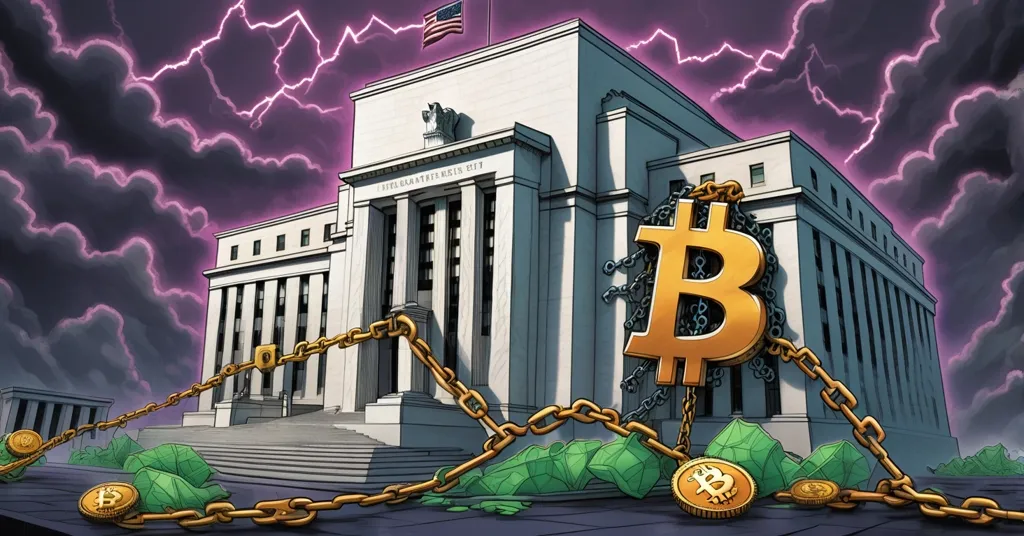
LTB Lutnick Warns High Interest Rates Are Choking U.S. Economic Growth—and Crypto Feels the Heat
At the World Economic Forum in Davos, Switzerland, U.S. Commerce Secretary Howard Lutnick dropped a bombshell of cautious optimism about the American economy, projecting growth could soar past 5% by early 2026 with a $30 trillion base. But there’s a massive hurdle: sky-high interest rates are strangling momentum, jacking up borrowing costs, and putting a squeeze on businesses and consumers alike. For the crypto crowd, this isn’t just a distant macro problem—it’s a direct hit on blockchain innovation and Bitcoin adoption.
- Growth Forecast: Lutnick sees over 5% U.S. economic growth by 2026, possibly 6% if rates drop.
- Rate Roadblock: High interest rates inflate borrowing costs, slowing business and consumer spending.
- Trade Threats: Potential U.S.-EU tariff clashes over Greenland could spark a costly economic spiral.
Lutnick’s vision for the U.S. economy is ambitious, to say the least. With a staggering $30 trillion foundation, he’s betting on growth exceeding 5% in just a couple of years, and if the Federal Reserve eases up on interest rates, he thinks 6% is within reach. That kind of economic surge could be a shot of adrenaline for risk assets like Bitcoin, fueling investor confidence and freeing up capital for blockchain ventures. But right now, the Fed’s rate hikes are acting like a chokehold. These hikes, often used to combat inflation, make loans pricier, meaning businesses—think blockchain startups or crypto mining operations—struggle to fund expansion. For the average person, it’s just as brutal: tighter budgets leave less cash for speculative plays like buying BTC or dabbling in altcoins. In fact, Lutnick has been vocal about how high interest rates are stifling economic progress, a concern that resonates deeply with industries reliant on affordable capital.
Not everyone’s buying Lutnick’s rosy outlook, though. U.S. Treasury Secretary Scott Bessent pegs growth at a more grounded 4-5%, while the International Monetary Fund (IMF) is playing the grumpy accountant, forecasting a measly 2.4% by 2026. For those new to the game, the IMF is a global watchdog that tracks economic trends, often erring on the side of caution. Their lower estimate hints at deeper systemic issues beyond just rates—think lingering inflation or geopolitical instability—that could drag on recovery. For Bitcoin bulls and crypto enthusiasts, this discrepancy matters. A sluggish economy often spooks investors away from volatile assets, and if the IMF is right, we might not see the wave of new money flooding into cryptocurrencies that a booming recovery could bring. Then again, fiat struggles could be the very spark that drives folks to decentralized alternatives. It’s a coin toss, and not the fun kind.
How High Interest Rates Slam Bitcoin and Crypto Markets
Let’s break this down for the crypto space, because high interest rates aren’t just a Wall Street headache—they’re a gut punch to decentralization’s momentum. When borrowing gets expensive, venture capital for blockchain projects dries up faster than a rug-pulled token. Data from PitchBook shows fintech funding, including crypto startups, tanked nearly 30% in 2022 during peak Fed rate hikes. That’s real money not going to the next Ethereum dapp, Bitcoin payment processor, or layer-2 scaling solution. Less capital means slower innovation, half-baked protocols, or delayed launches—hardly the accelerationist dream we’re rooting for. And for Bitcoin itself, while it doesn’t need VC handouts to survive, the ecosystem of wallets, merchants, and adoption tools that make it usable in daily life takes a hit.
Retail investors, the heartbeat of crypto’s grassroots push, are also getting squeezed. High rates mean mortgages, credit card debt, and car loans eat up more income, leaving little for speculative bets on Bitcoin or altcoins. Look at historical trends: as rates climbed in 2022, Google searches for “buy Bitcoin” dropped alongside disposable income metrics. But here’s the other side of the ledger—economic pain can ignite interest in alternatives. During Cyprus’s 2013 banking crisis, Bitcoin’s price spiked 300% in weeks as people fled a crumbling fiat system. Could relentless Fed rate hikes push U.S. consumers to a similar breaking point, seeking digital gold or DeFi yields? Maybe, but only if education and infrastructure keep pace. People don’t just wake up and download MetaMask—they need a damn good reason to trust crypto over stuffing cash under the mattress.
Then there’s Bitcoin mining, the engine keeping the network secure. Mining rigs guzzle electricity, and high interest rates often pair with inflation, nudging energy costs higher. Add in potential supply chain disruptions from global trade spats, and small-scale miners could get priced out. A 2023 CoinMetrics report noted that a 15% energy cost hike can render 40% of older mining rigs unprofitable overnight. Fewer miners mean less hash power securing the network, though Bitcoin’s difficulty adjustment keeps it humming. Still, it’s a stark reminder that even the most decentralized system isn’t immune to macro meddling. Central banks hiking rates to “fix” the economy feels like a doctor prescribing leeches—outdated, painful, and likely screwing over the little guy most.
Trade Tensions with the EU: A Hidden Threat to Blockchain Tech
Beyond rates, Lutnick tossed another grenade into the mix: potential trade friction with the European Union over U.S. tariff proposals tied to Greenland. For context, Greenland is a geopolitical hot potato, packed with untapped natural resources and strategic value, famously eyed by former President Donald Trump for U.S. influence. Tariffs linked to this issue could provoke EU retaliation, and Lutnick isn’t mincing words about the fallout. Here’s his warning:
“If the EU retaliates, this could start a ‘tit-for-tat’ situation, where both sides keep coming up with new tariffs. Once that starts, it’s very difficult to get out because everything that happens afterwards creates an additional reaction, and that adds to costs and builds more mistrust.”
This isn’t just a problem for traditional markets—it’s a sleeper threat to crypto. A tariff war could spike costs for hardware like ASIC miners, most of which are sourced globally, and jack up energy prices that mining operations depend on. Look at the 2018 U.S.-China trade spat: Bitcoin took temporary price hits as market uncertainty flared. Eroded trust and higher costs dampen investor sentiment, pushing capital away from innovative sectors like blockchain. But let’s play devil’s advocate for a second—could a trade war be Bitcoin’s dark horse moment? When fiat currencies and centralized systems start looking like a clown show, a borderless, censorship-resistant store of value starts to shine. The catch is, when grocery bills double, even die-hard HODLers might hesitate to stack sats. Economic chaos cuts both ways.
Lutnick isn’t writing off hope, though. He points to a 2018 U.S.-EU tariff clash over steel and aluminum that was defused through dialogue, suggesting cooler heads could prevail again. For us in the crypto sphere, avoiding a full-blown trade war means stabler markets for blockchain adoption and less pressure on mining economics. But we’re not out of the woods—global policy whims still ripple into our supposedly decentralized world, whether it’s hardware costs or energy market shocks. It’s a messy tangle, and Bitcoin isn’t as untouchable as some maximalists like to preach.
Counterpoint: Economic Pain as Crypto’s Secret Weapon?
Now, let’s chew on a contrarian thought: maybe this economic mess is exactly what decentralization needs. If central banks keep botching things with rate hikes that feel like a middle finger to innovation, and trade wars turn fiat into Monopoly money, Bitcoin’s case as a hedge gets stronger. Historical crises back this up—Venezuela’s hyperinflation saw spikes in platforms like MakerDAO as locals grabbed stablecoins to survive. But don’t pop the champagne just yet. Adoption isn’t a given; economic crunches can just as easily scare folks off risk assets entirely. Plus, with national debt at $35 trillion and inflation still a lurking beast, Lutnick’s 5-6% growth dream might be pure fantasy. If it flops, risk-on sentiment could crater, dragging Bitcoin and altcoins down with it. Centralized screw-ups are our ideological win, sure, but they’re a practical pain in the neck for the here and now.
Key Questions and Takeaways on U.S. Economic Growth and Crypto Impacts
- What’s Howard Lutnick’s outlook for U.S. economic growth?
He predicts over 5% growth by early 2026, potentially 6% with lower interest rates, though the IMF counters with a gloomy 2.4% forecast citing broader economic drags. - How do high interest rates hit Bitcoin and crypto markets?
They raise borrowing costs, slashing venture capital for blockchain startups, curbing retail investor funds for crypto, and hiking energy costs for Bitcoin mining, stalling ecosystem growth. - Why should crypto fans care about U.S.-EU trade tensions over Greenland?
Tariff wars could inflate hardware and energy costs vital for Bitcoin mining, while souring global markets and deterring investment in cryptocurrencies and blockchain tech. - Could economic struggles fuel Bitcoin and DeFi adoption?
Potentially—crises like Cyprus 2013 saw Bitcoin surges as fiat faltered, but tight budgets today might also deter speculative crypto plays without better education and access. - Is there hope to avoid a trade war and its crypto fallout?
Lutnick thinks so, citing the 2018 U.S.-EU tariff resolution through dialogue, which could keep markets stable for blockchain innovation if repeated now. - How might central bank policies shape decentralization’s future?
Persistent rate hikes highlight fiat flaws, possibly driving users to Bitcoin as a hedge, though short-term pain like reduced crypto funding could test even staunch decentralization advocates.
Lutnick’s Davos remarks are a double-edged sword—a call to dream big about U.S. growth while slapping us with the reality of interest rate shackles and trade war risks. For Bitcoin maximalists and crypto innovators, these macro forces aren’t abstract; they dictate the battlefield. Whether it’s stifled funding strangling the next big protocol or fiat failures nudging folks toward decentralization, the stakes couldn’t be higher. If the Fed doesn’t loosen its iron grip soon, we’re in for a grind that’ll test even the most unshakable believers in this financial revolution. Keep your private keys close and your skepticism closer—disruption’s the only sure bet in this game.