Bitcoin Takes Las Vegas: Merchants Embrace Crypto Payments to Cut Costs
 LTB
LTB Bitcoin Payments Hit the Strip: Las Vegas Merchants Bet on Crypto
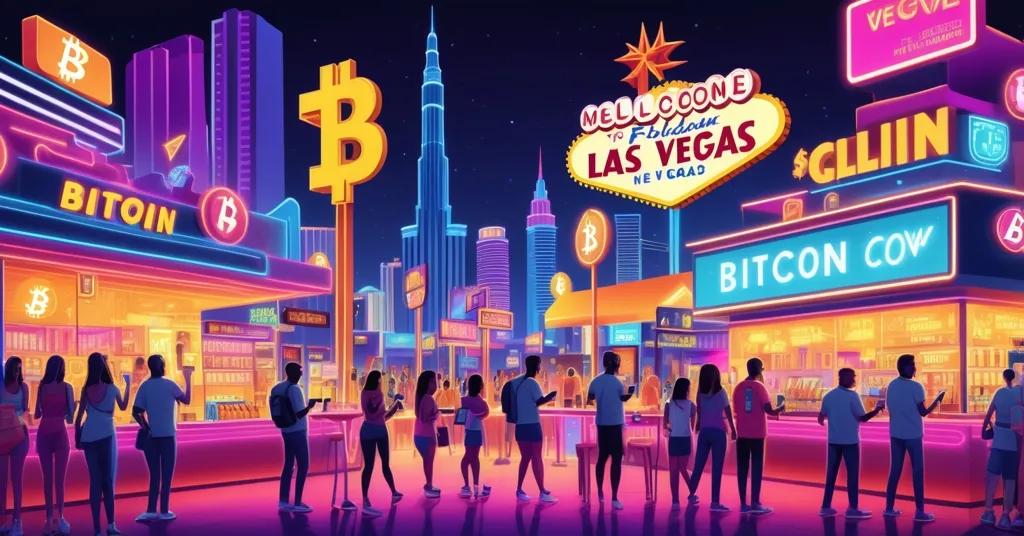
Bitcoin is shedding its image as a speculative toy and stepping into the real world of commerce, right in the glitzy heart of Las Vegas. From hole-in-the-wall juice stands to familiar chains like Steak ’n Shake, merchants in Sin City are accepting Bitcoin for everyday purchases, driven by a hunger to cut credit card fees and lure in a crypto-curious crowd. This isn’t just a publicity stunt—it’s a tangible push for cryptocurrency as a payment method in a city that thrives on bold moves.
- Fee Relief: Bitcoin sidesteps credit card processing costs of 2.5–3.5% per transaction.
- Tech Edge: Lightning Network and Square’s zero-fee initiative make crypto payments practical.
- Risky Play: Merchants weigh Bitcoin’s volatility, with some holding and others cashing out fast.
Why Las Vegas Merchants Are Choosing Bitcoin Payments
Las Vegas is a city of high stakes, and for local businesses, the gamble of accepting Bitcoin is starting to look like a winning bet. Credit card fees, often ranging between 2.5% and 3.5% per sale, are a relentless drain on profits, especially for small shops and cafes operating on tight margins. A $100 tab at a diner could cost the owner $3.50 just to process—money that Bitcoin promises to save. By accepting crypto, merchants are not only trimming overhead but also tapping into a niche market of tech-savvy customers, including tourists eager to experiment in a town synonymous with risk-taking.
Beyond the numbers, there’s a cultural fit. Vegas thrives on novelty—think Elvis impersonators and over-the-top casinos—so accepting Bitcoin via a quick QR code scan at checkout feels like a natural extension of the city’s vibe. As reported by various sources, businesses from Steak ’n Shake to medical practices are jumping in, seeing an uptick in foot traffic from both locals intrigued by digital currency and visitors looking to flex their crypto wallets. For more on this trend, check out Bitcoin’s growing real-world adoption in Las Vegas stores.
“According to FOX5, more businesses across Las Vegas are now accepting Bitcoin payments, from chains like Steak ’n Shake to small shops and medical practices. Merchants said Bitcoin helps attract new customers and cut costs, while Square has enabled about 4 million U.S. merchants…” – Wu Blockchain (@WuBlockchain) via Twitter, January 24, 2026.
Another perk? No more chargeback nightmares. For the uninitiated, chargebacks happen when a customer disputes a credit card payment, often leaving the merchant out of pocket even after delivering goods or services. Bitcoin transactions, once confirmed on the blockchain, are final—no take-backs. This offers a layer of security that’s music to the ears of business owners tired of getting stiffed.
The Tech Powering Bitcoin Payments: Lightning Network and Square
Bitcoin as a payment method sounds great on paper, but historically, it’s been a clunky mess for small, everyday purchases. The main Bitcoin blockchain prioritizes security over speed, meaning transactions can take minutes—or even hours during peak times—to confirm, with fees that make a $5 coffee purchase absurd. Enter the Lightning Network, a fast lane for Bitcoin payments. Think of it as a shortcut that bypasses the slow main highway of the blockchain, handling transactions off-chain for near-instant settlements at a fraction of a cent. A customer scans a QR code at a Vegas cafe, pays with Bitcoin via Lightning, and the merchant sees the funds in seconds. It’s digital cash, plain and simple.
But tech alone isn’t enough—merchants need easy integration. That’s where Square steps in, a payment processing giant that’s made Bitcoin accessible to around 4 million U.S. merchants with a jaw-dropping offer: zero processing fees until 2026. For businesses in Las Vegas, where every dollar counts amid tourist-driven competition, this is a no-brainer. Square’s point-of-sale systems sync with Bitcoin wallets, allowing seamless transactions without the steep learning curve. But let’s not be naive—Square isn’t playing crypto Santa out of pure altruism. This could be a savvy move to lock in merchants early, betting on Bitcoin’s growth to keep them in the ecosystem post-2026 when fees might creep back. Still, for now, it’s a win-win, accelerating adoption at checkout counters across the Strip.
Risks and Realities: Not All Winning Hands
Let’s cut the hype—Bitcoin isn’t your grandma’s debit card, and pretending it’s a flawless payment solution is pure nonsense. Merchants tread warily, fully aware of Bitcoin’s wild price swings. Sell a $10 burger for 0.0001 BTC today, and tomorrow that sliver of crypto could be worth $15 or $5. It’s a volatility crapshoot, and in a city where people already bet on roulette wheels, holding Bitcoin might just feel like the ultimate gamble. To mitigate this, many merchants use services to convert their Bitcoin receipts to cash instantly, locking in profits without the rollercoaster. Others, with a bit of Vegas bravado, stash a portion in BTC, hoping for a jackpot if prices soar.
Then there’s the regulatory gray zone. Crypto transactions could draw scrutiny from the IRS or local authorities, especially if reporting isn’t airtight. Will merchants face headaches over tax compliance or sudden rule changes? It’s a lingering question mark. Consumer hesitance is another hurdle—not everyone’s ready to fumble with a crypto wallet for a quick smoothie, and user error (like sending funds to the wrong address) can sour the experience. Plus, Bitcoin’s energy consumption remains a sticking point. Critics point to data like the Cambridge Bitcoin Electricity Consumption Index, estimating the network uses more power than some small countries. Counterarguments highlight growing renewable energy use in mining, but the stigma persists, especially for eco-conscious customers. These aren’t dealbreakers, but they’re real obstacles on the road to mass adoption.
Vegas as a Crypto Testing Ground
Why Las Vegas, of all places, for Bitcoin’s retail breakthrough? It’s not just random luck. This city is wired for disruption—built on gambling, spectacle, and a willingness to embrace the unconventional. Tourists arrive in a mindset of experimentation, making them more likely to pay with Bitcoin for a milkshake or a souvenir, while merchants see crypto as a way to stand out in a hyper-competitive market. Picture a juice stand owner scanning a tourist’s payment via the Lightning Network—transaction done in seconds, no 3% fee, just pure profit. It’s a small but symbolic chip away at the old financial gatekeepers, aligning with the ethos of decentralization we champion.
Compare this to other crypto hotspots. El Salvador made Bitcoin legal tender, pushing adoption from the top down, while Miami courts crypto businesses with friendly policies. Vegas, though, feels organic—merchant-driven, bottom-up, fueled by raw economic incentives rather than government mandates. Could this model inspire other U.S. cities or global regions? Possibly, but Vegas has a unique edge: a transient, risk-loving customer base that other locales might lack. Every Bitcoin payment here isn’t just a transaction; it’s a tiny rebellion against centralized finance, inching us toward a future where money doesn’t need middlemen.
Key Takeaways on Bitcoin Payments in Las Vegas
- What’s driving Bitcoin adoption among Las Vegas merchants?
The high cost of credit card fees (2.5–3.5% per sale) and the chance to attract crypto-savvy customers, especially tourists, are the main motivators for businesses. - How does the Lightning Network enable Bitcoin for everyday purchases?
It acts as a fast, low-cost shortcut for transactions, processing payments off the main blockchain in seconds, ideal for quick buys like coffee or burgers. - What’s Square’s impact on this crypto trend?
Square empowers 4 million U.S. merchants with zero-fee Bitcoin transactions until 2026, making adoption a financially attractive option for Vegas businesses. - What risks do merchants face when accepting Bitcoin?
Price volatility tops the list, alongside regulatory uncertainty and consumer hesitance, prompting varied strategies like instant cash conversion or holding for potential gains. - Why is Las Vegas a unique hub for Bitcoin payments?
Its culture of risk and novelty, paired with a tourist-heavy economy, makes it a perfect testing ground for crypto payments, distinct from other regions. - Could Vegas’ crypto experiment inspire global adoption?
Potentially, as its merchant-driven model shows practical benefits, though scaling depends on overcoming tech barriers and regulatory challenges elsewhere.
A Gamble Worth Watching
Bitcoin’s foray into Las Vegas retail isn’t a full-blown revolution—yet. It’s a series of small, calculated bets by merchants willing to test the waters, armed with tools like the Lightning Network and Square’s no-fee lifeline. The payoff so far? Lower costs, intrigued customers, and a front-row seat to the future of money. But the house doesn’t always lose, and hurdles like volatility, regulation, and public readiness could still stack the odds against crypto payments becoming the norm.
For now, Vegas is placing smart wagers on Bitcoin, showing the world how decentralized finance can slip into everyday life, one transaction at a time. If these early moves bear fruit, they might just deal a winning hand for broader adoption. Whether this becomes a blueprint or a flashy footnote in crypto history depends on how the game plays out—but we’re watching every roll of the dice.