DeepSnitch AI and 2026 Meme Coin Surge: Viral Hype or Risky Scam?
 LTB
LTB DeepSnitch AI and the 2026 Meme Coin Surge: Real Potential or Pure Hype?
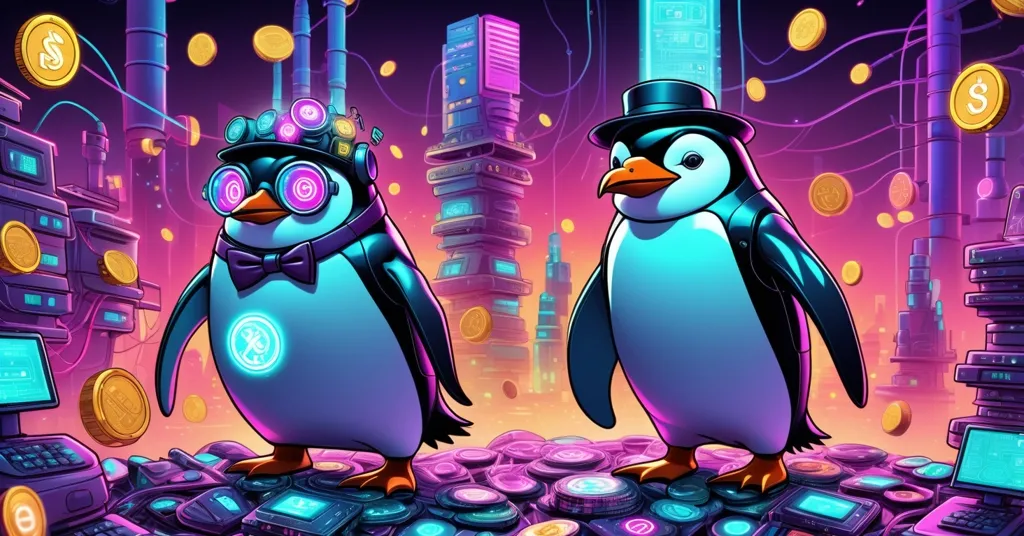
Get ready for another wild ride in the crypto space—meme coins have exploded once again in 2026, ignited by a surreal White House AI-generated image of President Trump posing with a penguin. This viral moment has fueled a sector-wide frenzy, with a project called DeepSnitch AI being touted as the ultimate opportunity to turn a $15,000 investment into $3 million through presale bonuses. But is this the future of decentralized innovation, or just another flashy scam preying on FOMO?
- Meme Coin Boom: A 23% market cap surge from $38 billion to $47 billion in January 2026, sparked by viral internet culture.
- DeepSnitch AI Claims: Priced at $0.03681 in presale, it promises AI security tools alongside meme coin hype, with 300% bonuses.
- Red Flags: Unverified tech claims and aggressive marketing scream caution in a space rife with scams.
The Viral Trigger: Nietzschean Penguin Takes Flight
Nothing captures the chaotic spirit of meme coins quite like a bizarre cultural moment, and 2026 delivered a doozy. An AI-generated image reportedly from the White House, depicting President Trump standing beside a penguin, went viral across social media platforms in January. This quirky visual sparked a meteoric rise for the Nietzschean Penguin token, aptly nicknamed PENGUIN. Priced at just $0.01 initially, it soared to $0.16 in a matter of hours, briefly hitting a staggering $170 million market cap before settling at $78 million. For those new to the game, meme coins are cryptocurrencies that derive value not from technical utility but from internet memes, viral trends, or celebrity shout-outs. Think of them as the internet’s version of a speculative stock, driven by hype and community fervor rather than balance sheets or whitepapers.
This single event wasn’t just a one-off; it catalyzed a broader resurgence in the meme coin sector. Data shows a 23% increase in total market cap, jumping from $38 billion to $47 billion in just one month. It’s a stark reminder of how human psychology and online culture can move markets in ways that defy traditional financial logic. But as history has shown with tokens like Dogecoin and Shiba Inu, what goes up in a frenzy often comes crashing down just as fast, leaving latecomers with empty wallets. So, while the PENGUIN rally is a fascinating case of viral momentum, it’s also a warning: tread lightly in these speculative waters.
DeepSnitch AI: A Meme Coin with Brains or Just a Clever Pitch?
Amid the 2026 meme coin madness, DeepSnitch AI has emerged as the supposed golden child, priced at $0.03681 during its presale phase. Unlike pure meme plays, this project claims to blend viral potential with actual utility through AI-driven security tools—a rare pitch in a space dominated by cute mascots and empty promises. The team behind it markets features like AuditSnitch, which allegedly scans smart contracts for vulnerabilities (think of it as a spell-check for blockchain code); SnitchScan, a tool for tracking whale movements (those big players whose trades can swing prices, like spotting a shark in shallow water); SnitchFeed, for real-time crypto news; and SnitchGPT, which claims to analyze trading data to inform decisions. On paper, these could be game-changers in a market plagued by scams and rug pulls—where shady developers hype a token, collect funds, then vanish, leaving investors with nothing.
The numbers being thrown around are eye-popping. Promoters suggest a $15,000 investment could balloon to $3 million, sweetened by time-limited 300% bonuses for early buyers, as highlighted in discussions around DeepSnitch AI’s potential returns. It’s the kind of promise that fuels FOMO (fear of missing out) and sends newbies scrambling for their wallets. But let’s pump the brakes. There’s zero evidence these tools work as advertised—no third-party audits, no public beta tests, just slick marketing and a website full of buzzwords. In crypto, execution is everything, and promises are worth less than a devalued altcoin.
DeepSnitch AI is 100% the next big crypto to go parabolic because it’s the only opportunity combining viral meme potential with working AI security technology protecting real capital today.
That claim from the project’s promotional material is bold to the point of absurdity. Sure, if the tech is real and adoption follows, DeepSnitch AI could carve a unique niche—redefining meme coins as something more than internet jokes. Imagine a world where speculative tokens also protect your capital with cutting-edge tools. But without proof, this smells like the same old hype cycle we’ve seen a hundred times. Crypto’s graveyard is littered with projects that promised the moon and delivered nothing but dust.
Competing Meme Coins: Maxi Doge and ZADDY COIN Enter the Ring
DeepSnitch AI isn’t the only contender riding the 2026 hype wave. Maxi Doge, sitting at $0.0002801 in presale, has already raised over $4.5 million purely on the back of a bodybuilder Shiba Inu mascot. There’s no tech, no utility—just a gamble on community sentiment and viral branding. It’s the classic meme coin playbook: slap a funny image on a token and pray the internet runs with it. Then there’s ZADDY COIN, priced at $0.000482, which has pulled in over $30,000 by targeting the XRP and Ethereum communities. It promises cross-chain infrastructure, meaning tech that lets assets move between different blockchains like Ethereum and the XRP Ledger—a potentially useful feature if it ever materializes. Paired with some vague “lifestyle” branding, it’s another early-stage bet with more questions than answers.
Both projects are quintessential high-risk plays. Maxi Doge is a pure momentum gamble, while ZADDY COIN’s cross-chain aspirations sound nice but remain unproven at this stage. For newcomers, understand this: presale tokens often launch with big dreams and flashy websites, but many never deliver. The risk of a rug pull or simple failure to execute is sky-high. If you’re tossing money at these, you’re not investing—you’re rolling dice at a carnival booth where the prize might disappear before you even throw.
Lessons from Past Meme Coin Cycles: A Reality Check
The 2026 meme coin surge isn’t uncharted territory. Back in 2021, Shiba Inu turned $1,000 investments into $1 million for a lucky few during the peak of the bull run. Dogecoin, the OG meme coin, created millionaires from sub-penny entries, while Floki skyrocketed 10,000% after a single Elon Musk tweet. These stories fuel the dream of instant riches, but the flip side is brutal. For every winner, countless others bought at the top and watched their portfolios crumble as hype faded. Studies from that era suggest over 70% of meme coin projects ended in rug pulls or total collapse within a year of launch, leaving retail investors burned.
Presales, in particular, are a notorious trap. They often dangle massive returns or bonuses to lure in capital before the token even hits an exchange. Many never make it that far—developers disappear, or the project fizzles with no accountability. The 2021-2022 cycle saw billions lost to such schemes, and there’s little to suggest 2026 will be any different unless investors wise up. If DeepSnitch AI or its competitors follow this pattern, those 300x return fantasies could turn into 100% losses overnight. History doesn’t lie; it’s a harsh teacher we’d better listen to.
Meme Coins in the Crypto Revolution: Niche or Noise?
As Bitcoin maximalists, we at “Let’s Talk, Bitcoin” often view meme coins with a raised eyebrow. Bitcoin is the bedrock of decentralized money—digital gold, censorship-resistant, a middle finger to centralized control. Meme coins, by contrast, are more like carnival games in the crypto fairground. Yet, we can’t dismiss their role entirely. They bring new users into the fold, turning internet jokes into gateway drugs for blockchain adoption. They fill niches Bitcoin doesn’t touch, like viral micro-transactions or community-driven experiments, much like how Ethereum carves out space for smart contracts and DeFi.
That said, the downside is glaring. Meme coins are a breeding ground for scams, exploiting the very freedom and decentralization we champion. The relentless shilling of unproven projects like DeepSnitch AI raises serious concerns about overblown marketing and investor exploitation. We’re all for effective accelerationism—rushing headlong into tech that disrupts the status quo—but not when it sacrifices integrity for quick bucks. Meme coins can be a spark of cultural disruption, but too often, they’re just noise drowning out the signal of real innovation.
What’s Driving the 2026 Meme Coin Mania?
Beyond viral images, broader forces might be fueling this 2026 surge. Economic uncertainty often drives speculative investments as people seek quick gains outside traditional markets—crypto becomes the wild frontier when banks and stocks feel stagnant. Social media’s echo chambers amplify hype faster than ever, turning a quirky penguin pic into a market-moving event overnight. Regulatory landscapes also play a role; if governments haven’t cracked down on meme coin scams by 2026, the lack of oversight could embolden more speculative projects.
But bubbles attract attention, and history suggests regulators often step in when retail investors get burned en masse. Post-2021, several countries floated stricter rules on initial coin offerings (ICOs) and presales after widespread losses. If the 2026 mania spirals, expect similar scrutiny—or worse, knee-jerk bans that could stifle legitimate blockchain projects alongside the junk. The irony? Meme coins thrive on decentralization, yet their excesses might invite the very centralized control we’re fighting against. It’s a tightrope, and the crypto community needs to walk it with eyes wide open.
2026 Meme Coin Craze: Key Questions and Takeaways
- What triggered the meme coin surge in 2026?
A viral White House AI-generated image of President Trump with a penguin propelled the Nietzschean Penguin token from $0.01 to $0.16, driving a 23% sector market cap increase from $38 billion to $47 billion. - Does DeepSnitch AI have real potential, or is it just hype?
Its AI security tools like contract scanning and whale tracking sound innovative, but with no audits or proof of functionality, the promises of 300x returns are highly suspect and likely overblown marketing. - Are meme coins like Maxi Doge and ZADDY COIN safe investments?
Hardly—they’re pure speculative gambles with no proven utility; Maxi Doge relies on branding alone, and ZADDY COIN’s cross-chain plans are untested, making both ripe for failure or scams. - How do meme coins fit into the broader crypto ecosystem?
They onboard new users and inject cultural energy, filling niches Bitcoin doesn’t serve, but their volatility and scam prevalence often undermine the credibility of decentralized finance. - How can investors protect themselves from presale traps?
Do relentless due diligence—check whitepapers, verify team transparency, look for third-party audits, and scour community feedback before even considering a presale; FOMO is your worst enemy in crypto.
The crypto space is a battleground of innovation and deception, where meme coins like Nietzschean Penguin can captivate millions while projects like DeepSnitch AI dangle life-changing gains. But let’s not kid ourselves—hype often outruns reality, and the road to decentralized freedom isn’t paved with empty promises. Whether you’re stacking Bitcoin as a fortress of value or dabbling in speculative tokens for a thrill, skepticism is your sharpest tool. Demand proof, question every slick pitch, and protect your capital. We’re here to build the future of money, not to play slots in a digital casino. So, keep your wits about you, and let’s push this revolution forward—penguins, AI, and all.