AI Data Centers Face Local Backlash Over Energy Use, Threatening Tech Growth
 LTB
LTB AI Data Centers Under Fire: Local Backlash Threatens the Digital Future
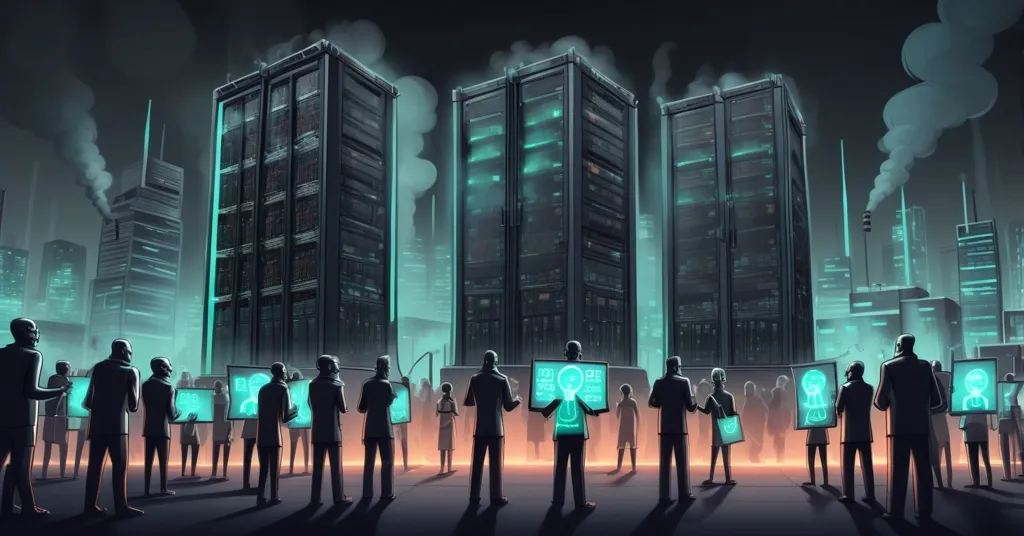
The United States is charging headlong into an AI-driven future, with data centers sprouting up to power this tech revolution. Yet, a stark warning from the Brookings Institution on January 29 reveals a growing roadblock: local communities are pushing back hard against these facilities, citing massive energy consumption, environmental damage, and economic burdens. This clash could stall the infrastructure vital to AI’s growth—and it’s a fight with eerie parallels to battles in the crypto world.
- Community Resistance: Locals in Ohio, Georgia, and beyond oppose data centers over skyrocketing energy costs and pollution.
- Energy Drain: U.S. data centers used 183 terawatt-hours in 2024, enough to power 17 million homes for a year.
- Proposed Fix: Brookings pushes Community Benefit Agreements to bridge the gap between tech giants and affected towns.
Data centers are the beating heart of the digital economy, fueling everything from AI algorithms to cloud computing. Without them, as the Brookings report bluntly states,
“The digital revolution can stop in the absence of a large number of data centers, limiting people’s, communities’, governments’, and corporations’ access to the advantages of digital technologies.”
But while tech titans like Amazon and Nvidia sink billions into expanding this network, and the Trump administration champions projects like the $500 billion Stargate initiative, grassroots opposition is grinding progress to a halt. Let’s unpack this mess, draw some hard lessons from Bitcoin’s own struggles, and figure out if there’s a way forward that doesn’t shaft entire communities. For more on this growing tension, check out the detailed analysis from Brookings on local opposition to AI data centers.
The Staggering Energy Crisis of AI Data Centers
The numbers are jaw-dropping. In 2024, U.S. data centers consumed roughly 183 terawatt-hours (TWh) of electricity, according to Pew Research Center. To put that in perspective, that’s enough juice to power about 17 million average American households for a year—or match the total annual energy use of a country like Pakistan. With around 4,000 data centers in the U.S. alone out of a global tally of 10,700 (per Data Center Map), their footprint is colossal. And that’s before you factor in the immense water usage required to cool these server farms, often in regions already grappling with drought.
No wonder communities are pissed. In states like Ohio, Georgia, Virginia, Arizona, and Indiana, construction of new data centers has hit major delays. Locals point to tangible impacts: energy bills spiking as grids strain under the load, pollution from backup diesel generators, and fears that AI-driven automation will gut jobs. It’s not just anecdotal grumbling—opposition is organized and loud, with protests and town hall showdowns derailing projects. If you think this sounds familiar, you’re right. It’s the same kind of heat Bitcoin miners have faced for years over their energy-guzzling proof-of-work systems—a process where computers burn through power to solve complex puzzles and validate transactions. Both industries are caught in the same trap: groundbreaking tech with a dirty little secret of massive environmental cost.
Resistance Turns Political
This isn’t just a backyard squabble—it’s reshaping politics. In recent elections across New Jersey, Virginia, and Georgia, voter backlash against data centers has become a campaign issue, influencing promises and outcomes. Candidates are being forced to take sides, with some vowing to block new facilities unless strict conditions are met. This “AI techlash”—a wave of public distrust toward unchecked tech expansion—mirrors the skepticism Bitcoin faced in its early days when mining rigs started overloading small-town grids. Hell, in some rural areas, you can’t tell if the locals hate AI servers or crypto miners more, but the resentment is palpable either way.
The irony? The very communities rejecting these projects stand to gain from the digital boom—think better internet, job opportunities, or tax revenue. But when your power bill doubles overnight because a tech giant dropped a server farm next door, those benefits feel like a cruel mirage. Misinformation doesn’t help; some opposition is fueled by exaggerated claims about data centers causing blackouts or sucking aquifers dry. Still, the core concerns—cost, pollution, displacement—are real and can’t be dismissed as mere NIMBYism (Not In My Backyard). Ignoring them risks alienating entire regions at a time when tech adoption needs buy-in, not battle lines.
Big Tech’s Response: Stealth and Spending
From the top, the push for AI infrastructure shows no sign of slowing. The Trump administration kicked off 2025 with the Stargate project, a staggering $500 billion collaboration with OpenAI and Oracle to turbocharge AI capabilities. Private players are all-in too, with Amazon and Nvidia dumping billions into new data centers. But here’s where it gets shady: some companies are dodging scrutiny by going full stealth mode. Applied Digital, once known as Applied Blockchain, is building a 430 MW data center somewhere in the Southern U.S. without even revealing the location. Their CEO justified this to The Register on January 23, saying,
“This is being done to safeguard the little community where it is situated, particularly because [we believe] they are not prepared for ‘national media attention.’”
Nothing screams “trust us” like hiding a half-billion-dollar project from the people it’ll impact most, right?
This evasive crap only fuels distrust. Brookings nails it with their warning:
“If these community concerns are not addressed, data center construction may slow… AI growth may be delayed and AI revenue streams may be curtailed, all of which would limit the benefits of AI that tech companies and government leaders have promised.”
Secrecy isn’t a strategy; it’s a ticking time bomb. Big Tech needs to realize that pulling stunts like this doesn’t just delay projects—it poisons the well for future innovation.
A Fix with Teeth: Community Benefit Agreements
So, how do we stop this trainwreck? Brookings proposes Community Benefit Agreements (CBAs)—legally binding deals between developers and locals to ensure mutual gains. Think of CBAs as a contract with teeth: tech companies get their projects greenlit, while communities secure protections like job creation, energy cost offsets, or environmental safeguards. Cleveland, Ohio, has used CBAs since 2013 for economic projects, with terms scaling based on investment size—a $20 million project might trigger basic commitments, while bigger ventures demand comprehensive plans. Another example is in California, where tech hubs have negotiated CBAs to fund local infrastructure upgrades in exchange for data center approvals, proving these deals can work when both sides negotiate in good faith.
CBAs aren’t a silver bullet, though. They require transparency and enforcement, two things Big Tech isn’t exactly famous for. And there’s the risk of tokenism—offering measly concessions that don’t address real harms. Still, it’s a start. If Bitcoin mining outfits can cut deals with local grids to use surplus renewable energy, as some have in Texas, then AI infrastructure players have no excuse to dodge similar accountability. It’s about reciprocity, not charity.
Lessons from Bitcoin Mining and Blockchain’s Potential
Let’s zoom in on what crypto brings to this fight. Bitcoin mining has long been slammed for its energy appetite, with proof-of-work consuming obscene amounts of power. Yet, the industry has started adapting—miners are shifting to renewables, like hydropower in Canada or solar farms in the U.S., under pressure from both regulators and public outcry. If a decentralized, ragtag bunch of crypto enthusiasts can pivot toward sustainability, why the hell can’t AI giants with billion-dollar budgets do the same?
More than just parallels, there’s untapped synergy between blockchain and AI infrastructure. Decentralized data storage projects like Filecoin or Arweave could offer alternatives to centralized server farms, spreading the load and cutting energy concentration. Tokenized energy markets on platforms like Ethereum could incentivize sustainable computing—imagine AI data centers earning credits for using green power, tradeable on a blockchain. These ideas aren’t sci-fi; they’re already in early stages. As champions of decentralization at Let’s Talk, Bitcoin, we see this as a chance to disrupt the status quo, not just defend it. Bitcoin maximalists might scoff at altcoin experiments, but niches like decentralized storage fill gaps BTC doesn’t touch—and that’s a strength, not a betrayal.
That said, let’s not drink the Kool-Aid. Blockchain-AI integration is no panacea. Scalability issues, regulatory hurdles, and plain old corporate greed could derail these innovations before they gain traction. And Bitcoin mining’s green pivot? It’s often more PR than substance—plenty of miners still run on coal when the numbers pencil out. We’re optimistic, but we’re not naive. The tech world needs to stop slapping Band-Aids on gaping wounds and commit to real systemic change.
Path Forward: Collaboration or Collapse?
The road ahead for AI data centers is a gauntlet. The “AI techlash” isn’t fading anytime soon, and dodgy moves by companies like Applied Digital only stoke the fire. If Big Tech wants to keep the digital revolution chugging, they need to ditch the cloak-and-dagger nonsense and face community concerns head-on. Energy consumption isn’t just a PR problem—it’s an existential one. Solutions like CBAs and renewable energy adoption aren’t optional; they’re non-negotiable. And for us in the crypto crowd, this is a wake-up call too. If we’re serious about effective accelerationism—pushing tech forward fast and fierce—we can’t ignore the collateral damage.
Here’s the bottom line: tech progress without community buy-in is a house of cards. Whether it’s AI servers or Bitcoin rigs, the future hinges on balancing innovation with accountability. Can Big Tech learn from crypto’s hard-fought lessons, or will they keep bulldozing until the backlash buries them? That’s the multi-billion-dollar question.
Key Takeaways and Questions
- Why are communities rejecting AI data centers?
High electricity and water usage, soaring energy costs, pollution, and fears of job loss from AI automation are fueling resistance in states like Ohio and Georgia. - How massive is the energy use of U.S. data centers?
In 2024, they consumed 183 TWh, enough to power 17 million homes annually, rivaling entire nations’ energy budgets and highlighting a major environmental burden. - What are the risks if this opposition persists?
Construction delays could slow AI growth, slash revenue streams, and undermine the economic and societal benefits tech leaders have hyped up. - How can tensions be resolved?
Community Benefit Agreements (CBAs) offer a legally binding way to share gains and offset harms, ensuring developers and locals both come out ahead. - What can crypto contribute to the AI infrastructure debate?
Bitcoin mining’s shift to renewables provides a blueprint for sustainable tech, while blockchain projects like decentralized storage could ease AI’s energy concentration and foster innovation.