J.P. Morgan: Ultra-Rich Families Shun Bitcoin, Pour Billions into AI Investments
 LTB
LTB Rich Families Bet Big on AI While Snubbing Bitcoin, J.P. Morgan Reveals
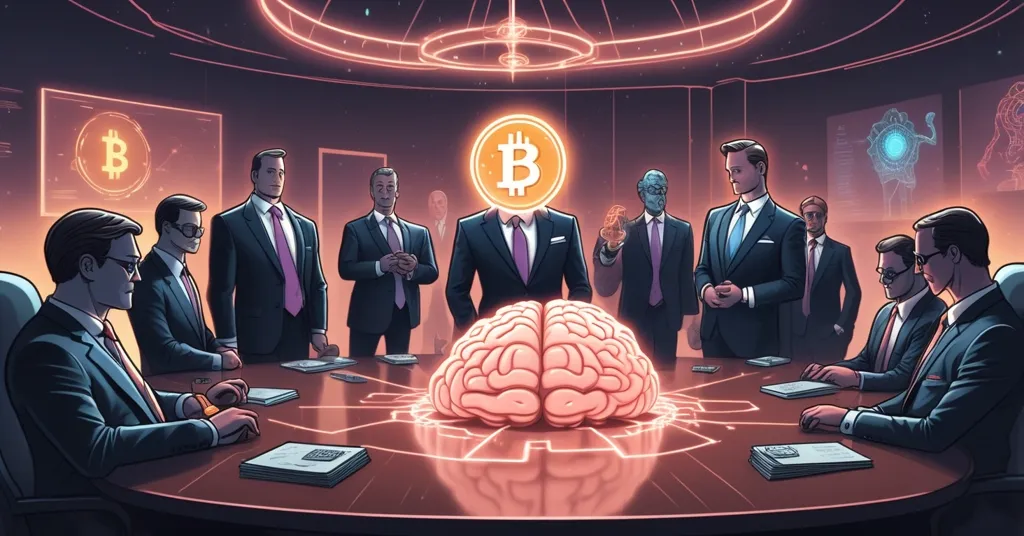
The ultra-wealthy are picking their poison, and it’s not Bitcoin. A new report from J.P. Morgan Private Bank lays bare a stark divide: high-net-worth family offices are flocking to artificial intelligence (AI) as their golden ticket, while cryptocurrencies remain a pariah in their billion-dollar portfolios. Are they missing the decentralized revolution, or just playing it smart in a volatile world?
- Massive Crypto Avoidance: 89% of family offices hold no cryptocurrency, citing regulatory chaos and complexity.
- AI Enthusiasm: 65% prioritize AI as a key investment focus for the future.
- Wealth Snapshot: Survey spans 333 family offices with an average net worth of $1.6 billion.
AI: The Shiny New Toy of the Ultra-Rich
The J.P. Morgan Global Family Office Report, surveying 333 single-family offices each worth an average of $1.6 billion, paints a clear picture of where the world’s richest are parking their cash. A whopping 65% of these families see AI as a cornerstone of their investment strategy over the next few years. We’re talking about transformative tech—think machine learning algorithms revolutionizing healthcare diagnostics, automation streamlining global supply chains, or semiconductors powering the next wave of innovation. The top ten AI companies alone boast a collective valuation of $1.5 trillion, a number that screams opportunity to investors with deep pockets.
Yet, there’s a glaring gap. Over half of these family offices haven’t touched growth equity or venture capital funds that back early-stage AI startups—basically, investments in young, high-potential companies that could be the next big thing. Even more telling, nearly 80% have no stake in AI infrastructure, which includes the nuts and bolts like data centers, energy grids, and cooling systems essential to power these technologies. It’s like buying a Ferrari but forgetting the fuel and tires.
“To fully capture the AI opportunity, investors should look beyond the mega-cap leaders and focus on the enablers driving the supply chain, from semiconductors and power infrastructure to networking and cooling systems,” said Christophe Aba, Deputy Head of Investment and Advice at J.P. Morgan Private Bank.
Aba’s advice cuts deep: don’t just drool over the tech giants; the real money might be in the less sexy enablers of the AI boom. J.P. Morgan even offers four tailored strategies to help families tap into this ecosystem. So why the hesitation? It’s classic billionaire caution—a generational mindset obsessed with wealth preservation over moonshot risks. Their portfolios reflect this too: public stocks make up 38.4% of their assets (often seen as a safer bet with steady, if unspectacular, returns), while alternative investments like private equity, hedge funds, and real estate account for 36.8%. Some push up to 60% into these alternatives to shield against inflation, but speculative plays? Hard pass. Even gold, the ultimate safe haven, is missing from 75% of their holdings, and infrastructure barely registers at 0.7%.
Bitcoin’s Billionaire Cold Shoulder
Now, let’s shift gears to Bitcoin and the broader cryptocurrency space, where the reception from family offices couldn’t be frostier. A staggering 89% hold zero crypto assets, and the few who do allocate less than 1% of their wealth to digital currencies. For the uninitiated, Bitcoin is the original cryptocurrency, a decentralized digital money built on blockchain technology—a secure, transparent ledger that operates without banks or governments. It’s been pitched as an inflation hedge and a way to store value outside creaky traditional systems. Sounds like a billionaire’s dream, right? Wrong.
These families cite regulatory uncertainty as their biggest roadblock. In the U.S., the Securities and Exchange Commission (SEC) is still wrestling with whether most tokens are securities, leaving investors in legal limbo. Europe’s Markets in Crypto-Assets (MiCA) framework is a step forward but still in rollout mode. Then there’s the complexity—understanding wallets, private keys, and decentralized finance (DeFi) isn’t exactly a weekend read. Add in the horror show of crypto history—think the FTX collapse of 2022, where billions vanished overnight, or the Terra-Luna crash that wiped out $60 billion in value—and it’s no wonder they’re steering clear. When even so-called experts can’t predict if Bitcoin will rocket to $100,000 or crater to nothing by next Tuesday, why would legacy wealth take the gamble?
Let’s be real: this avoidance stinks of fear, uncertainty, and doubt (FUD). Bitcoin isn’t just a speculative toy; it’s a middle finger to centralized control. It’s survived worse storms than billionaire cold feet—government bans, market crashes, you name it. But for family offices, the wild west vibe of crypto is a flaming red flag they wouldn’t touch with a ten-foot yacht pole. In fact, a recent survey highlighted by J.P. Morgan insights shows just how much rich families are prioritizing AI over cryptocurrencies in their investment strategies.
AI Hype: Not All Sunshine and Profits
While AI seems like the safer bet compared to crypto’s rollercoaster, let’s play devil’s advocate with some straight talk. Sure, AI offers tangible applications—self-driving cars, predictive analytics, personalized medicine. It’s tech you can see and profit from without waking up to a 30% price drop. But is it the risk-free utopia these families imagine? Hell no. The sector’s ripe for overvaluation, echoing the dot-com bubble of the early 2000s. Companies like NVIDIA are riding stratospheric highs on AI hype—will they crash just as hard when reality bites? Ethical landmines are everywhere too. Think facial recognition fueling mass surveillance, or algorithms displacing millions of jobs. When the bubble pops or your shiny AI startup sparks a privacy nightmare, don’t say we didn’t warn you.
Family offices might be trading one speculative gamble for another, just with better PR. And here’s a kicker for our Bitcoin OGs and newbies alike: if these billionaires are just following the herd into AI, are they also sleeping on the broader revolution of decentralized systems that could upend their dusty wealth structures?
Blockchain and AI: An Unlikely Power Couple?
Here’s a twist worth pondering: AI and blockchain aren’t necessarily rivals. In line with the ethos of effective accelerationism (e/acc)—pushing tech forward at full throttle—could these fields fuel each other? AI’s hunger for vast, secure data could be met by blockchain’s decentralized storage, solving privacy woes with tamper-proof ledgers. Projects like Ocean Protocol are already exploring decentralized data marketplaces for AI training. On the flip side, Bitcoin miners, often slammed for energy use, are pioneering renewable power solutions—could they team up with AI’s ravenous data centers to tackle shared sustainability challenges? If family offices keep ignoring crypto, they might miss this synergy, where decentralized tech becomes the backbone of the AI future they’re so hot on.
Wealth Management Woes: Risk Aversion Reigns
Beyond investment picks, the J.P. Morgan report exposes the messy underbelly of managing obscene wealth. Over 40% of family offices flag generational conflicts as a top headache—think squabbling heirs or clashing visions for the fortune. Turns out, handling billions isn’t just about spreadsheets; it’s about keeping the family group chat from exploding. Many are adopting formal governance structures to dodge drama. Meanwhile, the sheer complexity of diverse assets in a shaky global economy has 80% outsourcing chunks of their wealth to external firms. For those managing over $1 billion, more than a third hand off over half their portfolio. It’s practical, but it screams risk aversion—delegating tough calls rather than diving into frontier tech like blockchain.
Elisa Shevlin Rizzo, Head of the Family Office Advisory Team at J.P. Morgan Private Bank, nails this hypocrisy. She highlights the gap between what family offices claim to want—protection against inflation, seamless generational planning—and their actions, often sticking to stale, traditional strategies that lag behind today’s tech-driven pace. Translation: get with the times, or get steamrolled by disruption.
Can Crypto Stage a Comeback Among the Elite?
So, where does this leave Bitcoin and the crypto revolution? Right now, the ultra-wealthy are voting with their wallets, and digital currencies are losing hard. But don’t write them off yet. As regulatory frameworks tighten—think clearer tax laws, SEC rulings, or government-backed stablecoins—could we see a slow thaw in attitudes? Innovations like the Lightning Network, which speeds up Bitcoin transactions to rival Visa, might also chip away at complexity fears. And if AI’s rise spotlights blockchain’s potential for secure data handling, family offices might finally take notice.
For now, though, caution rules the billionaire roost, even as the future of decentralized finance knocks loudly. My take as a Bitcoin leaner? These families might scoff at crypto today, but history shows the underdog often rewrites the rules. Blockchain doesn’t need their permission to change the game—it’s already doing it, one block at a time.
Key Takeaways and Burning Questions
- Why are wealthy families avoiding Bitcoin and cryptocurrencies?
They’re spooked by a regulatory mess—think SEC battles in the U.S. and patchy global rules—plus the complexity of digital assets and past disasters like FTX. It’s seen as a gamble not worth taking in an already unstable world. - What draws family offices to AI investments over crypto?
AI promises concrete, profitable applications like automation and analytics, with less of the stomach-churning volatility that defines crypto markets. It feels like a safer, more predictable bet. - What’s stopping full commitment to AI among these investors?
Many lack exposure to early-stage AI startups through venture capital or growth funds, and most haven’t invested in critical infrastructure like data centers, reflecting a wait-and-see caution. - Could blockchain and AI intersect to mutual benefit?
Absolutely—blockchain’s secure, decentralized data storage could tackle AI’s privacy issues, while Bitcoin miners’ renewable energy push might power AI’s energy-hungry systems. It’s a synergy worth watching. - Is there hope for Bitcoin adoption among the ultra-wealthy?
Yes, if regulations clarify and tech like the Lightning Network eases usability. But until then, crypto remains a sideshow most billionaires won’t touch, despite its potential to disrupt centralized finance.