Peter Schiff Slams Bitcoin as Bearish Against Gold in 2025: Crypto vs. Metal Showdown
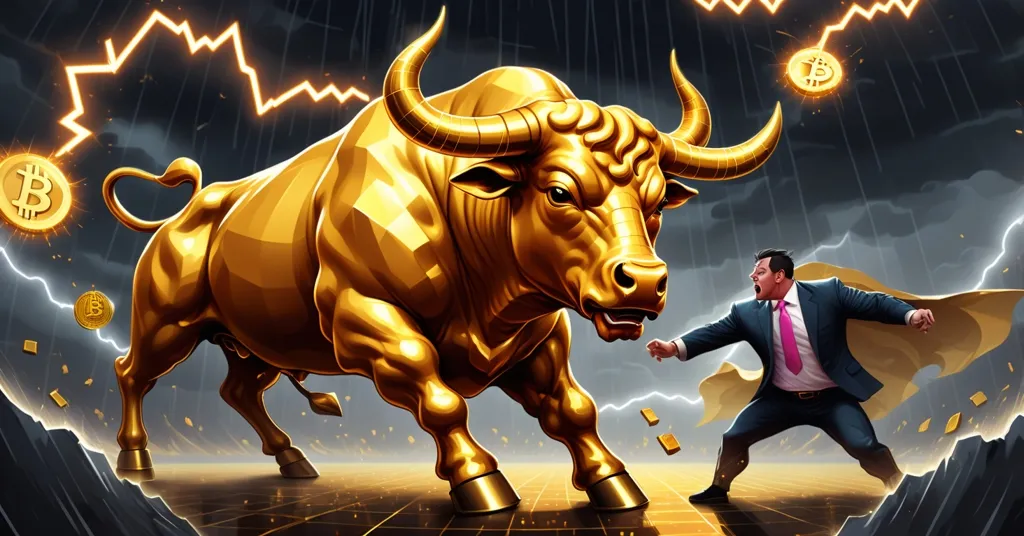
 LTB
LTB Peter Schiff Calls Bitcoin a Long-Term Bear Against Gold in 2025: Decoding the Crypto vs. Precious Metal Clash
Peter Schiff, the gold-loving, Bitcoin-bashing investor, is at it again, proclaiming that Bitcoin is trapped in a long-term bear market when stacked up against gold. With Bitcoin’s price crumbling below $73,000 and gold rocketing past $5,000 in 2025, Schiff’s latest critique fuels the fiery showdown over whether digital or physical assets deserve the title of ultimate store of value. Is this a reality check for crypto enthusiasts, or just more noise from a relic of traditional finance?
- Bitcoin’s Fall: BTC slips below $73,000, down over 20% year-to-date in 2025.
- Gold’s Triumph: Gold exceeds $5,000, up 15% since January and 65% across 2025.
- Schiff’s Verdict: Bitcoin lacks intrinsic value, now worth just 15 ounces of gold.
Schiff’s Relentless Attack on Bitcoin
Never one to shy away from controversy, Peter Schiff has dropped a bombshell for the crypto crowd with his recent statement on Bitcoin’s performance. As of mid-2025, Bitcoin has been battered, losing over 20% of its value since the year kicked off, with its price sinking below $73,000—a painful low for hodlers. Meanwhile, gold is basking in glory, rebounding from a brief dip at $4,650 to soar past $5,000, marking a 15% gain since January and an eye-popping 65% rise over the year. When you frame Bitcoin’s worth in gold terms, as Schiff delights in doing, the numbers sting: one BTC is now equivalent to a mere 15 ounces of the precious metal, a steep tumble from its earlier perch above $76,000. For more on his perspective, check out Peter Schiff’s take on Bitcoin’s long-term bearish trend against gold.
“BTC is in a long-term bear market if priced in gold. It is now worth only 15 ounces of the precious metal after falling below $76,000.” – Peter Schiff
If you’re new to this feud, Schiff is a veteran investor who’s built a career on championing gold as the bedrock of value—a tangible asset with historical gravitas as real money. Bitcoin? He sees it as a speculative mirage, a digital tulip bulb destined to wilt. His latest salvo hits at a moment when market trends seem to play right into his hands, with gold gleaming and Bitcoin bleeding. This isn’t just a casual jab; it’s a calculated challenge to the narrative of “digital gold” that Bitcoin maximalists cling to, especially as investors pivot to safer ground amid global uncertainty.
Why Gold is Dominating Bitcoin in 2025
Let’s cut through the noise and unpack why gold is stealing the spotlight. It’s not just Schiff gloating—there are hard economic realities driving this divergence. A hypothetical January 2026 report from Ark Investment Management, spearheaded by Bitcoin proponent Cathie Wood, points to a critical imbalance: gold’s supply isn’t keeping pace with the explosion of global wealth. This scarcity, combined with nagging inflation fears and whispers of economic downturns in 2025-2026, makes gold a magnet for investors seeking shelter. For the uninitiated, a “safe-haven asset” like gold is something that tends to hold or grow in value when markets get messy, unlike riskier bets that can tank.
Bitcoin operates on a different plane. Its supply is hardcoded to cap at 21 million coins, a rigid limit set by its mysterious creator, Satoshi Nakamoto, and enforced by its decentralized network. This scarcity is often touted as Bitcoin’s ace card, mirroring gold’s limited availability but without the need for pickaxes and mines (though mining Bitcoin’s digital blocks is its own beast). The problem? Bitcoin’s value hinges almost entirely on investor demand. In a “risk-off” climate—where folks ditch speculative plays for stability—demand for BTC dries up, sending its price into a tailspin. Right now, with geopolitical tensions and shaky financial systems spooking markets, gold is the comfy blanket investors are reaching for, while Bitcoin gets tossed aside like yesterday’s news.
Bitcoin’s Past Glory: Insane Gains, Brutal Swings
Before we let Schiff’s smugness cloud the picture, let’s step back for some historical context. Bitcoin has absolutely demolished gold in terms of raw performance over the long haul. From 2011 to 2025, Bitcoin’s average yearly growth—think of it as how much your investment compounds annually—hit a staggering 90%. That’s the kind of return that turned a spare $100 into life-changing wealth for early adopters. Gold, by contrast, plodded along at a humble 6% yearly growth over the same period. Steady? Sure. Sexy? Not even close.
But here’s the rub: volatility. Bitcoin’s price gyrations are enough to make even the steeliest investor sweat. Its ups and downs are about ten times more extreme than gold’s gentle fluctuations. Picture this—you’re soaring to the stars one week, only to crash into the dirt the next. That’s Bitcoin’s wild ride. Gold offers a far less dramatic journey, which is why it appeals to those who value sleep over adrenaline. For every moonshot BTC rally, there’s a gut-punch drop lurking, and 2025’s 20% year-to-date decline is a brutal reminder of that reality.
Investor Mindset: Why Gold Feels Like Home in a Crisis
This volatility taps into something deeper—psychology. When the world feels like it’s teetering on the edge, with recession rumors, trade spats, or geopolitical chaos in the air, investors instinctively gravitate to gold. It’s a centuries-old refuge, a physical asset you can touch (or at least picture in a vault). Bitcoin, for all its revolutionary promise and decentralized swagger, hasn’t won that level of trust yet. Too many still see it as a tech-fueled gamble, tied to bullish markets and speculative fervor. When fear takes over, Bitcoin gets sold off quicker than a knockoff NFT, while gold becomes the default safe bet.
We’ve seen this dance before. Back in 2022, when markets soured, Bitcoin cratered alongside tech stocks, while gold held its ground. The lingering question is whether Bitcoin can ever shed this “risky asset” stigma and stand shoulder-to-shoulder with gold as a crisis hedge. It’s a steep climb, especially with traditional finance gatekeepers like Schiff hammering home gold’s reliability at every turn.
Bitcoin’s Unique Strengths: Freedom Over Stability
Now, don’t think I’m throwing Bitcoin under the bus just because Schiff’s got the momentum. As someone who leans toward Bitcoin maximalism and champions decentralization, I see immense value in BTC that gold can’t replicate. Bitcoin isn’t merely a price ticker—it’s a middle finger to centralized control. Its network ensures no bank or government can freeze your funds or block your transactions, a lifeline for people in oppressive regimes like Venezuela or under heavy surveillance. Gold can’t match that; try sneaking a bar of it past a border checkpoint without sweating bullets.
There’s also the sheer practicality. Transferring Bitcoin to someone across the globe takes minutes, often with minimal fees (barring network congestion). Compare that to shipping gold—you’re stuck with hefty costs, customs red tape, and the risk of it getting “lost” in transit. Bitcoin serves a purpose as borderless, digital cash, perfectly aligning with our push for privacy and disruption of outdated financial systems. Gold, for all its luster, is clunky in a hyper-connected world.
Institutional Adoption: Bitcoin’s Quiet Comeback
Even with 2025’s price carnage, Bitcoin’s story isn’t over. Institutional interest hasn’t evaporated—far from it. Companies like MicroStrategy continue to hoard BTC as a treasury asset, betting on its long-term potential. El Salvador’s bold move to adopt it as legal tender, despite hiccups, signals a shift in how nations view digital money. If spot Bitcoin ETFs have gained traction by 2025, they’re likely funneling traditional capital into crypto without the tech learning curve. Cathie Wood of Ark Invest still touts Bitcoin’s fixed supply as a structural edge, arguing it could outshine gold once investors regain their appetite for risk. Schiff may scoff, but these developments keep Bitcoin in the ring.
Altcoins and the Bigger Picture
While Bitcoin remains my focus as the purest form of hard money, it’s worth glancing at altcoins and other blockchains in this debate. Ethereum, for instance, isn’t gunning to be “digital gold”—it’s more like digital infrastructure, fueling decentralized apps and smart contracts. Its staking mechanism, where you lock up ETH to earn rewards, offers a yield that neither Bitcoin nor gold can match. Do altcoins challenge gold as a safe haven? Unlikely. But they underscore the crypto space’s diversity, filling gaps Bitcoin doesn’t aim to address. I’m not here to shill altcoins, just to acknowledge their role in this financial revolution.
Volatility: Bitcoin’s Blessing and Curse
Let’s double down on Bitcoin’s price swings—they’re a double-edged sword. For speculative traders and risk-takers, these wild fluctuations are the main attraction. Buy at the dip, sell at the peak, and laugh all the way to the bank—or cry when it crashes. But if you’re looking to safeguard wealth during turbulent times, Bitcoin’s 20% drop in 2025 alone feels less like a haven and more like a hazard. Gold isn’t perfect, but its steadier path makes it the default for anyone prioritizing preservation over speculation.
Still, history shows Bitcoin’s volatility often precedes jaw-dropping recoveries. Past bear markets have given way to bull runs that obliterate old highs. Could 2025’s slump be just another setup for a comeback? Maybe, but only if macroeconomic headwinds—like high interest rates or global instability—ease up. Until then, Bitcoin’s rollercoaster nature keeps it a tough sell for the cautious crowd.
Accelerating Change: Bitcoin as a Catalyst
Tying this to our belief in “effective accelerationism”—the push to speed up technological and societal progress—Bitcoin’s current woes don’t dim its transformative potential. By bypassing centralized gatekeepers and enabling direct, peer-to-peer value exchange, it’s paving the way for a future where individuals hold the reins of their finances. Gold can’t claim that kind of impact; it’s a static relic, not a dynamic force. Even if Bitcoin isn’t the safe bet today, its role in disrupting broken systems fuels the acceleration we stand for.
The Road Ahead: A Battle Far From Over
So, where does this leave us in the Bitcoin versus gold saga? At this moment in 2025, Schiff holds the bragging rights, with gold’s meteoric rise backing his bearish take on crypto. But markets are as predictable as a coin flip, and sentiment can pivot overnight. Bitcoin’s track record of phoenix-like resurgences hints that this downturn—whether measured against gold or fiat—might just be a pitstop before another wild ascent. Gold may wear the crown for now, but the war for the future of money rages on. Can Bitcoin win over the skeptics and cement itself as a crisis-proof asset, or will gold’s timeless appeal endure? That’s the trillion-dollar riddle we’re all itching to solve.
Key Questions and Takeaways on Bitcoin vs. Gold in 2025
- What is Peter Schiff’s current slam on Bitcoin compared to gold?
Schiff insists Bitcoin is in a long-term bear market against gold, valued at just 15 ounces after falling below $73,000 in 2025, and claims it lacks the inherent worth of physical metal.
- Why is gold outshining Bitcoin this year?
Gold thrives on supply shortages and a risk-off sentiment driven by economic uncertainty and recession concerns, while Bitcoin flounders as investors avoid speculative risks.
- How do Bitcoin and gold measure up as long-term plays?
Bitcoin’s 90% average yearly growth from 2011-2025 dwarfs gold’s 6%, but its savage volatility contrasts with gold’s dependable, slower gains.
- What sets Bitcoin apart from gold beyond price?
Bitcoin offers decentralization, resistance to censorship, and seamless global transfers, serving as a beacon of financial freedom that gold’s physical nature can’t rival.
- Could Bitcoin ever match gold as a safe-haven asset?
It’s feasible with deeper institutional buy-in and growing trust, but Bitcoin must first prove it can endure economic storms without collapses like 2025’s downturn.
- How does Bitcoin’s volatility shape its reputation?
Its dramatic price swings lure speculators but alienate conservative investors, keeping Bitcoin less trusted than gold during crises until it stabilizes over time.