Bitcoin 2023 Crash: Whales Dump Longs as Retail Bets on Rebound Amid 50% Price Plunge
 LTB
LTB Bitcoin 2023 Crash: Whales Exit Longs as Retail Investors Bet Big on 50% Price Drop
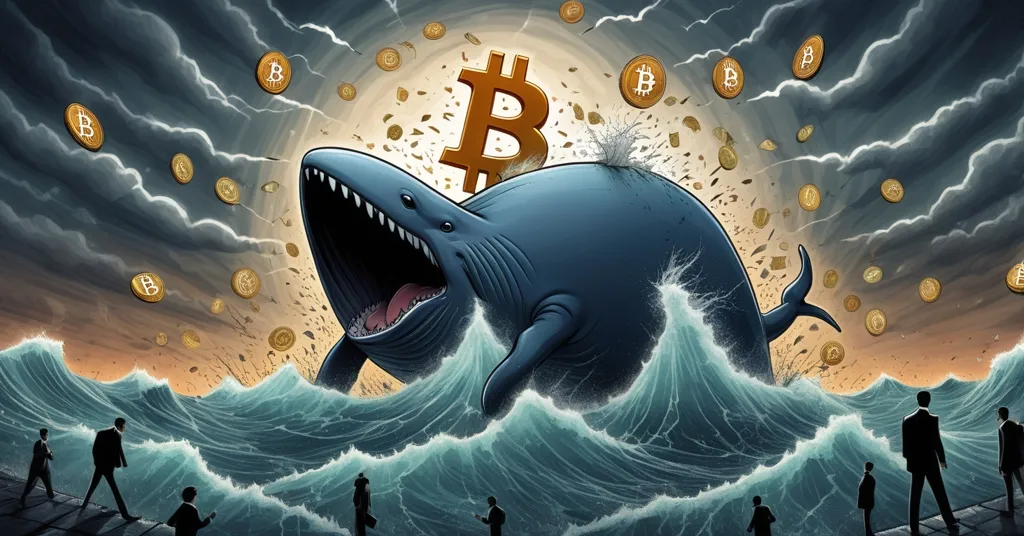
Bitcoin is caught in a vicious storm, with its price slashing nearly 50% from a staggering all-time high of $126,000 to a shaky $73,000. Amid this brutal 2023 market correction, a dramatic role reversal is unfolding: the heavyweights of the market, known as whales, are slamming the door on their bullish bets, while retail investors are diving headfirst into the chaos, banking on a rebound. Let’s dissect this Bitcoin volatility trend and uncover what’s driving this split—and what it signals for the near future.
- Massive Decline: Bitcoin’s price has cratered nearly 50%, dropping from $126,000 to $73,000, marking a savage correction in this cycle.
- Behavioral Split: Whales are closing long positions opened near $75,000, while retail traders ramp up bullish bets.
- Market Signals: Analysts foresee either sideways consolidation or further downside in the short term.
Whale Strategy: Playing It Safe
This isn’t just a dip; it’s a bone-rattling crash that’s testing the mettle of even the most iron-fisted Bitcoin HODLers. Whales—those enigmatic players with massive BTC stacks—are making a calculated retreat. On-chain data suggests they’re closing long positions they opened around the $75,000 level, a move that screams risk management over blind optimism. For the uninitiated, a “long position” is a bet that an asset’s price will climb, often juiced up with leverage on trading platforms. When whales shut these down, they’re either locking in profits from the earlier rally or dodging the potential for deeper losses in this Bitcoin market correction of 2023. These big fish didn’t get rich by chasing moonshots—they play chess while others play checkers.
But why are they stepping back now? Beyond the obvious price collapse, external pressures like rising interest rates or whispers of regulatory crackdowns might be spooking them into a risk-off stance. Whales, often tied to institutional constraints or insider knowledge, aren’t gambling on sentiment; they’re reading the room. Historically, during the 2018 bear market, we saw a similar pattern: whales offloaded holdings as prices tanked, while smaller players bought the dip—only to watch values sink another 30%. History doesn’t always repeat, but it damn sure rhymes. Are we on a parallel path with this Bitcoin role reversal trend?
Retail Risk: Betting on the Bounce
Contrast that with retail investors—the everyday folks with a few satoshis in a wallet or a trading app. They’re acting like they’ve stumbled into a fire sale, increasing their bullish exposure despite the bloodbath. This isn’t just enthusiasm; it’s borderline reckless, fueled by either greed or a stubborn belief that Bitcoin always bounces back. While their fearless bets can get torched in markets like this, let’s not dismiss them entirely. Retail’s raw energy is the heartbeat of Bitcoin’s decentralized ethos—proof that anyone can join the fight against centralized financial overlords, for better or worse.
Still, the odds aren’t in their favor. Retail often jumps in at the wrong time, buying dips that turn into chasms. With whales stepping back, who’s left to prop up the price if sentiment sours further? It’s a high-stakes gamble, and many of these smaller players might be over-leveraged, magnifying their losses if Bitcoin’s price doesn’t snap back soon. The question looms: is this contrarian genius or a textbook setup for pain?
Wallet Anomalies: A Deeper Signal?
Digging deeper into on-chain activity reveals another odd twist in this saga of BTC whale activity versus retail investor strategies. Typically, during price slumps, wallet addresses holding between 0.1 and 100 BTC—think small to mid-tier retail and some institutional players—go into accumulation mode, scooping up discounted coins for the long haul. They buy low, then distribute (sell) when prices spike. It’s a predictable rhythm, a crowd dynamic akin to bargain hunters at a clearance sale. But right now, during this gut-wrenching 50% drop, many of these addresses are flipping the script and shifting to distribution mode. They’re selling into the weakness, which is a glaring red flag against conventional market wisdom.
What’s behind this? It could signal capitulation—holders throwing in the towel after watching their portfolios bleed. Or maybe they sense something uglier on the horizon, a further collapse that the rest of us aren’t pricing in. These mid-tier holders often act as a bellwether for market sentiment, so their actions add another layer of doubt to retail’s bullish frenzy. While whales cool off and retail doubles down, this wallet anomaly hints that the market’s foundation might be shakier than it looks.
Market Structure: Who’s Really in Control?
Are whales the puppet masters of Bitcoin, or are we all just caught in the same chaotic current? A tired trope in crypto circles paints mega-whales—billion-dollar funds or shadowy early adopters—as the sole movers of the market. Sure, their trades can cause ripples, but the reality is messier. The current Bitcoin volatility trend shows coordinated behavior across various holder cohorts, not just isolated whale dumps. Retail, mid-tier holders, and institutional players all feed into the price action, creating a volatile stew of greed, fear, and speculation.
This collective dance matters more than any single fat wallet unloading a few thousand BTC. Market expert Joao Wedson, founder of Alphractal, has been tracking this split using the Bitcoin Whale vs Retail Delta metric—a tool that compares the actions of large holders against smaller players to gauge sentiment and forecast moves. Think of it as a tug-of-war scoreboard, showing who’s pulling harder. Wedson’s analysis, shared on social platforms, suggests that with whales reducing risk while retail piles in, we could be headed for trouble. Two scenarios emerge: Bitcoin might drift sideways for a few days, catching its breath before picking a direction, or it could spiral further if selling pressure snowballs. Neither paints a rosy picture for the “to the moon” crowd.
Market Outlook: What’s Next for BTC?
Let’s cut through the noise and face the raw truth: Bitcoin has clawed back from worse—think 80-90% drops in past cycles—only to hit new peaks. Its decentralized backbone, hard-capped supply of 21 million coins, and slow but steady adoption as a store of value make it a middle finger to traditional finance. But a 50% crash in 2023 isn’t a speed bump; it’s a stark reminder of crypto’s untamed nature. Whales retreating while retail rushes in could spell more pain, especially if the latter is over-leveraged or banking on magic rebounds. And let’s not even entertain the absurd “price predictions” littering social media—pure garbage, like some X account swearing BTC will hit $500K by Christmas with zero data to back it up. Spare me the fantasy; this market doesn’t bow to wishful thinking.
Painful as it is, this crash might be Bitcoin’s rite of passage. By purging speculative excess—think over-leveraged retail or shaky derivative plays—the network emerges leaner, tougher, a real disruptor to centralized systems that buckle under half this pressure. As an advocate for effective accelerationism, I believe pushing tech and adoption at warp speed means embracing friction. We’re feeling every jolt right now, but it’s fuel for the long game. Bitcoin maximalists like myself might argue BTC is the only true king, yet I’ll concede other blockchains like Ethereum play their part. While Bitcoin dominates this drama, Ethereum’s market tells a different tale—whales are holding steady on ETH, perhaps betting on its DeFi ecosystem despite BTC’s turmoil. Different niches, different fights.
Key Takeaways and Burning Questions
- What drives Bitcoin whale selling in 2023?
Whales are closing long positions opened near $75,000 to secure gains or limit losses amid a brutal 50% price drop from $126,000 to $73,000, likely influenced by risk management and external factors like rising rates or regulatory fears. - Why are retail investors so bullish during this crash?
Retail players are increasing bullish exposure, betting on a Bitcoin rebound, driven by either greed or a belief in historical recoveries, despite the high risk of further declines. - What are the short-term possibilities for Bitcoin’s price?
Market analysis points to either a sideways drift for a few days as the market stabilizes or a deeper slide if selling pressure intensifies. - Why are Bitcoin holders distributing during this dip?
Many wallet addresses holding 0.1 to 100 BTC are selling into the price weakness, defying the usual pattern of accumulation during lows, possibly signaling capitulation or pessimism about recovery. - How do global economic trends impact Bitcoin’s current volatility?
Factors like rising interest rates or looming regulatory actions might be pushing whales into defensive plays, while retail investors, less bound by institutional constraints, chase speculative gains. - What shapes Bitcoin’s market dynamics beyond whales?
The market is driven by coordinated actions across holder cohorts—retail, mid-tier, and institutional—not just mega-whales, highlighting that collective sentiment and strategy fuel price swings.
Bitcoin teeters on a knife-edge, and this whale-retail split is just the latest curveball in a saga of relentless ups and downs. Will retail’s gamble strike gold, or are the whales already three steps ahead, watching the chaos unfold? The blockchain holds the answers, but one thing is certain: this market rewards the patient and chews up the reckless. Keep your eyes on the data, not the hype, because every crash is a harsh lesson—and a chance to rebuild stronger. Bitcoin’s mission to redefine money and power is far from over; it’s just getting grittier. And if you’re honest, isn’t that half the thrill?