Bhutan Moves $23M in Bitcoin to Binance: Strategic Sale or Bigger Plan?
 LTB
LTB Bhutan Transfers $23M in Bitcoin to Binance: Strategic Cash-Out or National Play?
Bhutan, the serene Himalayan kingdom rooted in the philosophy of Gross National Happiness, has just sent shockwaves through the crypto sphere by moving 212.31 BTC—valued at over $23 million—to a Binance deposit address. With Bitcoin shattering all-time highs, this bold transfer sparks a burning question: is Bhutan cashing out at the market peak, or is there a deeper national strategy at work?
- Recent Move: 212.31 BTC ($23M) transferred to Binance as Bitcoin hits record highs.
- Recurring Pattern: Follows a $14M transfer last week and $33M in November 2024.
- Staggering Holdings: Bhutan owns 11,711 BTC ($1.2B), about 40% of its GDP.
Bhutan’s Bitcoin Journey: From Quiet Kingdom to Crypto Powerhouse
The Royal Government of Bhutan isn’t just dipping its toes into cryptocurrency; it’s diving in headfirst with a portfolio that would make even seasoned traders blink twice. Blockchain analytics tools like Arkham, which track transactions on public ledgers to uncover patterns and ownership, have flagged Bhutan’s latest move as part of a consistent trend, as reported in a detailed analysis on Bhutan’s recent $23M Bitcoin transfer. Just a week before this transfer, the kingdom shifted 136.99 BTC, worth $14 million, to the same exchange. Rewind to November 2024, and we see an even heftier $33 million deposit as Bitcoin teased the $100,000 mark. These aren’t random wallet shuffles—they hint at a calculated effort, possibly to liquidate assets during price surges and lock in gains.
Bhutan’s Bitcoin stash currently stands at approximately 11,711 BTC, valued at a jaw-dropping $1.2 billion. For a nation with a GDP of roughly $3 billion, that’s nearly 40% of its economic worth tied to a single, wildly volatile digital asset. To put it in perspective, imagine a family sinking almost half their life savings into a high-risk stock that could double overnight—or crash to zero. That’s the gamble Bhutan is playing, managed by Druk Holding & Investments, the state-owned firm overseeing the kingdom’s digital treasury. Beyond Bitcoin, they also hold 656 ETH, worth about $1.8 million, with some Ethereum moved to Binance as early as May. But it’s the Bitcoin transactions, timed with market peaks, that have set tongues wagging in the crypto community.
Sustainable Bitcoin Mining: Bhutan’s Green Advantage
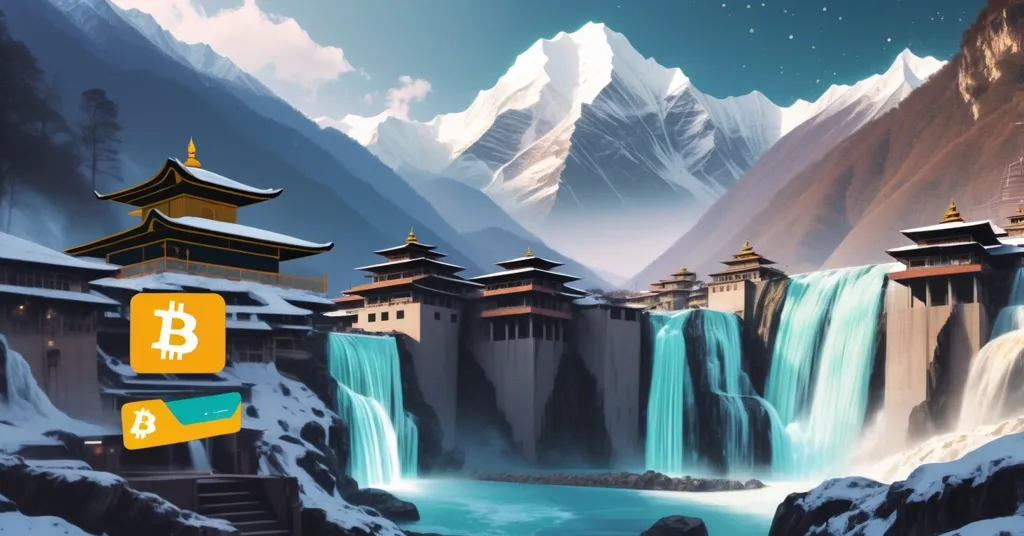
Unlike many nation-states that stack Bitcoin through seizures or legal actions—think the United States or China confiscating BTC from illicit operations—Bhutan has taken a different path. The kingdom reportedly mines much of its Bitcoin directly, tapping into pools like Ant Pool, a major mining network where participants combine computational power to earn rewards. What sets Bhutan apart is its power source: abundant hydroelectric energy. With rivers cascading down the Himalayas, Bhutan fuels its sustainable Bitcoin mining operations with renewable energy, sidestepping the environmental backlash that often dogs the industry. Bitcoin mining, for the uninitiated, involves solving complex mathematical puzzles to validate transactions on the network, a process that typically guzzles electricity. Critics often point to coal-powered mining farms as eco-disasters, but Bhutan’s green approach offers a sharp rebuttal.
This isn’t just a tech flex; it’s a reflection of Bhutan’s national ethos, where sustainability underpins everything from policy to philosophy. Their mining strategy could churn out Bitcoin at a fraction of the environmental cost, potentially with partnerships like Bitdeer, a known player in hydropower mining, though specifics remain under wraps. Estimates suggest Bhutan’s energy costs are among the lowest globally, giving them a competitive edge to “stack sats”—crypto slang for steadily accumulating small amounts of Bitcoin over time. But let’s play devil’s advocate: even green mining isn’t foolproof. Scaling operations could strain local grids or disrupt delicate mountain ecosystems. Sustainability isn’t a guarantee; it’s a tightrope.
Ranking on the Global Stage: A Tiny Titan
According to Bitcoin Treasuries data, Bhutan stands as the sixth-largest known nation-state holder of Bitcoin, trailing behind giants like the United States, China, the United Kingdom, Ukraine, and North Korea. But size doesn’t tell the whole story. While the U.S. holds over 200,000 BTC (worth billions) largely from seizures, Bhutan’s 11,711 BTC represents a far larger slice of its economy. Compare that to El Salvador, which made Bitcoin legal tender in 2021 and holds about 5,800 BTC—significant, but only a fraction of its GDP. Or Iran, mining Bitcoin to dodge sanctions with state-backed operations. Bhutan’s small scale makes its 40% GDP exposure uniquely daring, a testament to how decentralized finance can empower even the tiniest players to bypass traditional financial gatekeepers. This is Bitcoin at its rawest—power to the people, or in this case, a mountain kingdom.
Risks of a Bitcoin-Heavy Economy: A Gut-Punch Waiting?
Let’s cut through the hype with a dose of reality. Tying 40% of national wealth to Bitcoin isn’t just bold—it’s a high-wire act over a financial abyss. Bitcoin’s price swings are brutal; history shows us that much. In 2022, BTC plummeted over 50% in months, slashing its value from $69,000 to under $20,000. If a similar crash hits now, Bhutan’s $1.2 billion holdings could shrink to $600 million overnight—a crippling blow for a $3 billion economy. If Bitcoin tanks, Bhutan might need more than crisp mountain air to cushion the fall. This isn’t the diamond-handed “HODL” mantra Bitcoin maximalists preach; it’s a pragmatic, perhaps wary, play to secure profits while the market’s hot.
The lack of transparency only adds fuel to the fire. Bhutan’s government remains tight-lipped, forcing us to decode their moves through raw blockchain data. Are they selling to fund infrastructure, boost tourism, or advance Gross National Happiness initiatives? Or simply taking chips off the table after a hell of a rally? For a nation often seen as a tranquil outlier, Bhutan is wielding cryptocurrency with a boldness that even Wall Street sharks might envy. If they’re outsmarting the market while most of us are still fumbling with seed phrases—those critical sets of words needed to recover a crypto wallet—they’ve earned a nod of respect.
Altcoins in the Mix: Diversifying Beyond Bitcoin
Bhutan’s portfolio isn’t a Bitcoin monoculture. Their 656 ETH holdings, while small at $1.8 million, signal a willingness to explore other blockchains. Ethereum, unlike Bitcoin, supports smart contracts—self-executing agreements coded on the blockchain—and decentralized finance (DeFi) applications that let users lend, borrow, or trade without middlemen. Bitcoin doesn’t natively offer these features, and as a maximalist-leaning outlet, we’ll admit it shouldn’t try to. Altcoins like Ethereum fill niches, and Bhutan’s diversification might hint at broader blockchain ambitions. Are they eyeing DeFi for economic innovation? Or just hedging against Bitcoin-specific risks? It’s a subtle but telling move for a nation so heavily invested in one asset.
Global Implications: A Blueprint for Nation-State Crypto Adoption?
Bhutan’s actions slot into a growing trend of governments engaging with digital assets, each with their own flavor. El Salvador bets on Bitcoin as currency, facing mixed results with adoption hiccups and price volatility. China hoards BTC from seizures while banning mining domestically. The UAE courts crypto firms with friendly policies to become a blockchain hub. Bhutan, though, carves a quieter but equally audacious path with sustainable mining and strategic transfers. Could their model inspire other small nations with renewable energy surpluses—think Iceland with geothermal power or Paraguay with hydropower—to mine Bitcoin as an economic lever? If sustainable cryptocurrency mining becomes the norm, Bhutan might just flip the script on Bitcoin’s harshest environmental critics.
Yet, the kingdom’s outsized reliance on Bitcoin sets it apart. Most nations treat crypto as a side bet; for Bhutan, it’s a core pillar. That’s both a strength and a vulnerability. If their gamble pays off, they could redefine how countries wield decentralized tech for financial sovereignty. If it flops, it might stand as a cautionary tale for the next bear market. Either way, Bhutan’s tiny footprint belies its heavyweight punch in the crypto ring.
Key Takeaways and Burning Questions
- Why is Bhutan transferring $23M in Bitcoin to Binance at market highs?
The pattern of moving 212.31 BTC ($23M), alongside prior transfers of $14M and $33M near Bitcoin’s $100K peak, suggests they’re capitalizing on record prices to secure gains, possibly for national projects or economic diversification, though no official word confirms this. - How does hydroelectric power fuel Bhutan’s Bitcoin mining strategy?
Bhutan leverages renewable energy from Himalayan rivers to power sustainable Bitcoin mining, likely via pools like Ant Pool, offering a green counter to the industry’s energy-intensive reputation and aligning with their national focus on sustainability. - What economic risks come with holding 40% of GDP in Bitcoin?
With 11,711 BTC worth $1.2B, Bhutan faces massive financial exposure; a 50% crash like 2022’s could halve their holdings to $600M, a devastating hit for a $3B economy, highlighting the peril of such heavy reliance on a volatile asset. - Can Bhutan’s cryptocurrency model inspire other nations in decentralized finance?
Their blend of green mining and strategic Bitcoin transfers could be a roadmap for small nations with renewable energy access, showing how blockchain tech and decentralized finance might bolster economic resilience on a global scale. - What role do altcoins like Ethereum play in Bhutan’s crypto portfolio?
Holding 656 ETH ($1.8M) alongside Bitcoin hints at diversification into blockchains like Ethereum, which support smart contracts and DeFi—features Bitcoin lacks—suggesting a pragmatic approach to exploring broader crypto utilities.
Bhutan’s Bitcoin saga is a gripping case study in how a small nation can wield outsized influence in the decentralized finance arena. They’re not just riding the crypto wave; they’re shaping it with a rare mix of innovation, pragmatism, and sheer guts. Whether they’re cashing out at the top or reshuffling for a grander vision, one truth stands out: Bhutan plays by its own rules. In a space often muddied by scams and empty hype, that maverick spirit is a breath of fresh air—provided they don’t stumble over Bitcoin’s notorious volatility. Keep your eyes peeled on those wallet addresses; this Himalayan heavyweight has more moves up its sleeve.