Elon Musk’s $100 Trillion Tesla Vision: Crypto Parallels and Brutal Realities
 LTB
LTB Elon Musk’s $100 Trillion Tesla Dream: Bold Vision or Dangerous Hype?
Elon Musk has dropped another bombshell, suggesting Tesla could reach a mind-boggling $100 trillion market valuation—a 65-fold surge from its current $1.5 trillion market cap. While Musk admits this would take “a staggeringly enormous amount of work and good luck,” he insists it’s not impossible. For those of us in the Bitcoin and crypto space, this audacious claim sparks both intrigue and skepticism, as we weigh the potential of disruptive tech against the harsh reality of unproven promises.
- Valuation Target: Tesla eyes $100 trillion, a 65x leap from $1.5 trillion.
- Core Pillars: Robotaxis, humanoid robots (Optimus), energy storage, and AI.
- Reality Check: Regulatory walls, underdeveloped tech, and overvaluation risks.
Why Tesla Matters to Crypto Enthusiasts
Tesla’s story resonates deeply with the Bitcoin and blockchain community. Much like Bitcoin challenged centralized financial systems, Tesla under Musk aims to upend traditional industries—automotive, energy, and beyond—with tech-driven disruption. The ethos of decentralization, freedom, and flipping the status quo aligns with our values, even if Tesla itself operates as a centralized entity. Could Musk’s vision for autonomous systems and AI pave the way for synergies with blockchain? Let’s dig into the details while keeping our skeptical hats on, because in tech as in crypto, proof-of-work trumps proof-of-hype every time.
Robotaxi Revolution: Hype or Reality?
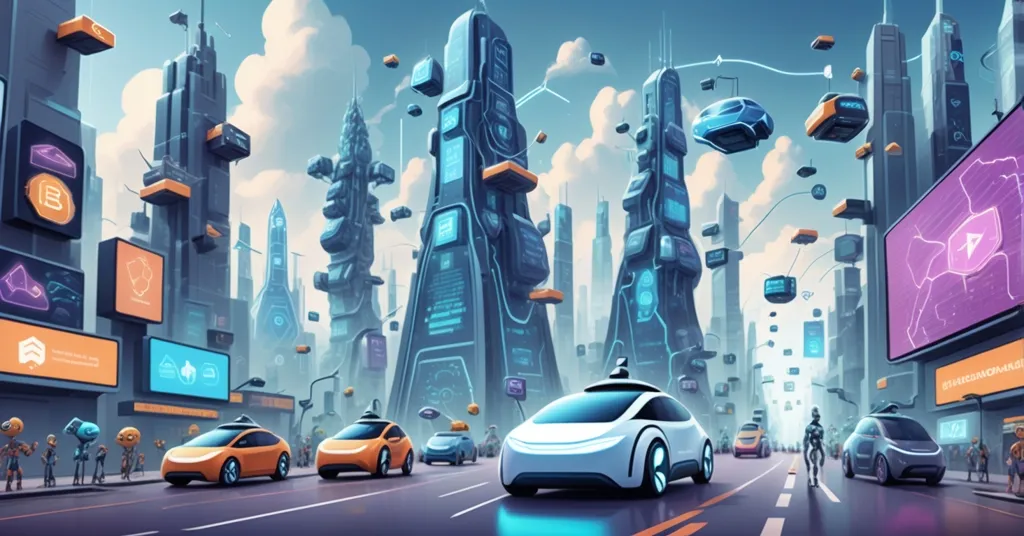
Musk’s betting big on robotaxis as a cornerstone of Tesla’s $100 trillion valuation dream, a vision that has garnered significant attention as noted in recent discussions about Tesla’s ambitious $100 trillion target. Analysts at ARK Invest project this market could hit $10 trillion by 2030, envisioning fleets of autonomous Tesla vehicles zipping through cities, earning passive income for owners through a ride-sharing network. Tesla’s Full Self-Driving (FSD) tech—software designed to let cars navigate with minimal human input—recently shifted to a subscription-only model in January, aiming to lock in recurring revenue. For us in the crypto space, this smells like a potential decentralized play: imagine tokenized ownership of robotaxi fleets, where revenue splits are handled by smart contracts on a blockchain. It’s a tantalizing thought.
But let’s slam on the brakes for a second. California regulators have poured cold water on Musk’s robotaxi claims, particularly around a hyped launch in San Francisco. A September report revealed Tesla hasn’t even applied for permits, and their “autonomous” rides are invite-only stunts with human drivers still at the helm. This isn’t the trustless, peer-to-peer future we crave—it’s a half-assed PR parade with zero substance. Regulatory hurdles aren’t just speed bumps; they’re concrete walls. What if, though? What if a legislative breakthrough or a tech leap cracks this open? A decentralized robotaxi network could mirror Bitcoin’s disruption of finance, cutting out Uber-sized middlemen. Until Tesla shows real autonomy on public roads, we’re stuck in neutral.
Optimus Robots: Sci-Fi or Near Future?
Then there’s Optimus, Tesla’s humanoid robot project, pitched as a $30 billion annual revenue juggernaut with plans to churn out 100,000 units monthly within five years. Morgan Stanley and Citi estimate the broader humanoid robot market at $5-7 trillion, a number that makes even the wildest altcoin pumps look like pocket change. Musk envisions these bots working in factories, homes, maybe even serving your coffee. It’s the kind of sci-fi ambition that gets tech nerds buzzing.
Here’s the brutal truth: Optimus can’t even walk without a babysitter. These robots are trained by mimicking humans, stumble like toddlers, and aren’t deployed in factories despite Musk’s earlier chest-thumping. For a community that demands “show me the code” before buying into a project, this reeks of vaporware. We’ve seen too many crypto scams promise world-changing tech only to vanish with the ICO funds. Tesla needs to deliver functioning bots, not just shiny renders, before we start minting celebratory NFTs. On the flip side, if Optimus does crack the code, could we see blockchain integration for robot task management or ownership? It’s a long shot, but stranger things have happened in tech.
Energy Storage: The Quiet Game-Changer
While robotaxis and robots grab headlines, Tesla’s energy storage business is quietly stacking wins. Last quarter, they deployed 14.2 gigawatt-hours of storage, with 46.7 gigawatt-hours over the past year, through projects like Megapack—massive battery systems for grid-scale energy. This isn’t just about powering homes; it’s about stabilizing renewable energy grids, a critical piece of the sustainability puzzle. For Bitcoin enthusiasts, this hits close to home: think of how miners often chase cheap, green energy sources to keep operations profitable. Tesla’s push here aligns with self-sovereignty, letting communities and individuals reduce reliance on centralized utilities.
Could blockchain play a role? Imagine tokenized energy credits traded on a decentralized ledger, tracking and rewarding storage contributions in real-time. Tesla’s not there yet, but their foothold in this space—already outpacing many competitors—offers a tangible success amid speculative bets. It won’t solo carry them to $100 trillion, but it’s a foundation that doesn’t feel like a mirage. The question remains: can Tesla scale this fast enough to match Musk’s broader vision, or will it stay a niche win?
AI Synergies and Wall Street’s Tug-of-War
Wall Street’s got a love-hate thing with Tesla’s future. Wedbush analyst Dan Ives is all-in, calling 2026 a “monster year” for Tesla thanks to autonomous driving breakthroughs. ARK Invest’s Cathie Wood ups the ante, hyping Tesla’s AI edge through data synergies with Neuralink—Musk’s brain-computer interface venture—and X, his social media platform. Neuralink’s biological data and X’s real-time human chatter could, in theory, turbocharge Tesla’s machine learning, much like decentralized protocols aggregate data for collective gain. It’s a wild, interconnected vision that sparks curiosity.
But not everyone’s buying into the hype train at full throttle. Michael Burry, the investor who predicted the 2008 housing crash, has labeled Tesla “ridiculously overvalued” at its current $1.5 trillion market cap. He’s warned of shareholder dilution—where issuing new shares waters down the value of existing ones, screwing over current investors—due to hefty stock-based compensation. Tesla trades at price-to-earnings multiples that make traditional automakers look like thrift store bargains. For context, their valuation already prices in future wins that don’t exist, echoing the meme coin bubbles we’ve seen burst in crypto. While Ives and Wood see a multi-trillion-dollar future, Burry’s red flag reminds us that hype can outrun reality by miles.
Musk’s Track Record: Visionary or Overpromiser?
Musk’s history of bold claims adds another layer to this $100 trillion puzzle. From the Hyperloop to Neuralink’s slow progress, he’s often painted grand visions that lag in delivery—sometimes by years. Tesla itself faced near-death experiences before dominating electric vehicles, proving Musk can eventually deliver, even if timelines slip. Does this mean the robotaxi and Optimus goals are just a matter of time, or are they pipe dreams too far-fetched even for a serial disruptor? In the Bitcoin world, we’ve watched early skeptics eat their words as BTC soared, but we’ve also seen countless projects flop under the weight of overpromise. Musk’s track record is a coin toss—heads, he’s a genius; tails, he’s a hype man with too much charisma.
On the incentive front, Musk’s got serious skin in the game. Tesla shareholders approved a pay package in November 2024 (corrected from reported future date) potentially worth $1 trillion, tied to explosive growth in AI and robotics. It’s a Bitcoin miner’s reward structure on steroids: hit the targets, reap the jackpot. Yet, when your CEO stands to gain a trillion bucks, you’ve got to wonder—how much of this $100 trillion talk is pure vision versus personal gold rush? We’re all for rewarding innovation, but this setup screams conflict of interest louder than a rug-pull alert on Twitter.
Blockchain Intersections: Could Tesla Go Decentralized?
Let’s speculate for a moment on how Tesla’s tech could mesh with blockchain, a topic near and dear to our hearts. Musk has flirted with Bitcoin before, briefly accepting BTC for Tesla purchases in 2021 before backtracking over energy concerns. What if robotaxi revenue sharing operated on a decentralized ledger, with smart contracts automating payouts to fleet owners? Or if energy storage credits were tokenized, tradable assets on a blockchain like Ethereum? These ideas aren’t on Tesla’s radar—yet—but they bridge Musk’s centralized empire with our decentralized ideals. Of course, Tesla’s top-down control under Musk clashes with true decentralization, raising questions about whether any blockchain play would just be window dressing. Still, as champions of effective accelerationism, we’d love to see tech giants nudged toward trustless systems.
Key Takeaways and Questions on Tesla’s $100 Trillion Vision
- Is Tesla’s $100 Trillion Valuation Goal Realistic?
It’s a moonshot at best, requiring a 65x jump from $1.5 trillion through unproven sectors like robotaxis and humanoid robots, flawless execution, and a sprinkle of luck Musk himself acknowledges as essential. - What’s the Biggest Barrier to Tesla’s Robotaxi Ambitions?
Regulatory roadblocks loom large—California’s pushback shows Tesla lacks permits and still relies on human drivers, far from the autonomous future Musk touts. - Can Optimus Robots Live Up to Tesla’s $30 Billion Hype?
Not anytime soon; these bots can’t walk solo and aren’t factory-ready, making revenue projections feel like fantasy rather than a near-term bet. - How Does Tesla’s Vision Align with Crypto and Blockchain Ethos?
The push for autonomous, disruptive systems mirrors blockchain’s fight against centralized gatekeepers, but Tesla’s structure under Musk’s iron grip raises doubts about genuine decentralization. - Should We Buy Into Wall Street’s Bullish Tesla AI Forecasts?
Proceed with caution—Wedbush and ARK Invest predict explosive growth, but their optimism glosses over technical gaps and legal barriers that could derail timelines.
As we watch Tesla chase this $100 trillion mirage, let’s apply the same critical lens we use for every new blockchain protocol or altcoin pitch. Musk’s own words capture the tightrope he’s balancing:
“Obviously, a staggeringly enormous amount of work and good luck is needed for such an outcome! I’m just saying it isn’t impossible.”
That raw optimism echoes the early days of Bitcoin, when few believed a digital currency could challenge global finance. Yet, we’ve also witnessed enough ICO flops and empty promises to know ambition without execution is just noise. Tesla’s dreams of autonomous systems and AI could lay groundwork for decentralized infrastructure that complements blockchain’s mission of freedom and privacy—but only if Musk bridges the chasm between hype and hard results. Until then, we’ll keep our wallets close and our skepticism closer, because in tech as in crypto, bullshit walks and proof-of-work talks.