Nexperia CEO Suspended: Court Orders Probe in US-China Tech Clash Over Semiconductors
 LTB
LTB Court Upholds Suspension of Nexperia CEO, Orders Six-Month Probe Amid Tech Tug-of-War
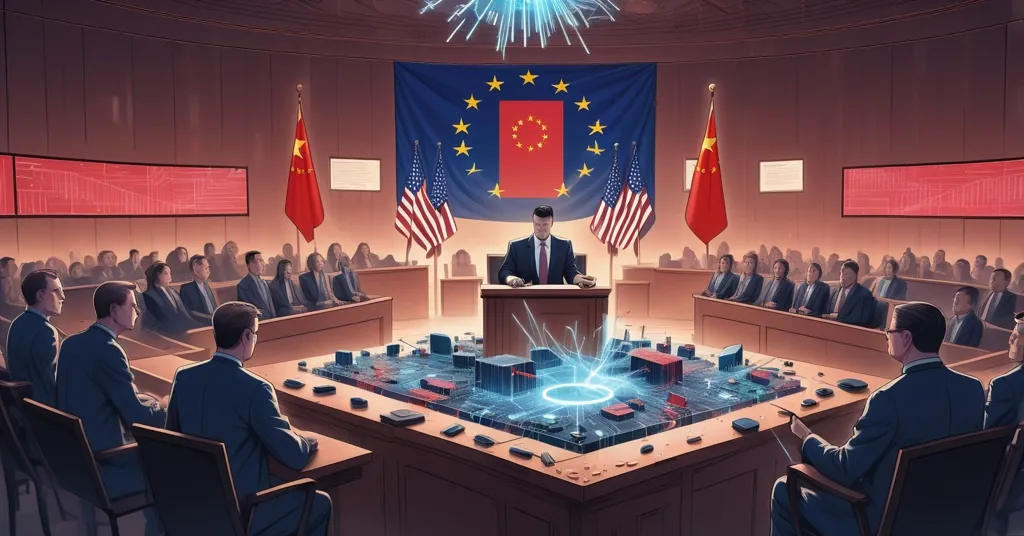
Can Europe safeguard its technological future while caught in a brutal US-China power struggle? The Amsterdam appeals court has just dealt a major setback to China-linked Wingtech, upholding emergency measures to block its control over Nexperia, a Dutch semiconductor giant based in Nijmegen. The court also confirmed the suspension of Nexperia’s Chinese CEO, Zhang Xuezheng, and ordered a six-month investigation into the company’s management practices. This ruling isn’t just a corporate spat—it’s a glaring sign of growing geopolitical tensions over critical tech like semiconductors, with ripple effects that could hit everything from cars to cryptocurrency mining rigs.
- Court Decision: Suspension of CEO Zhang Xuezheng upheld, Wingtech denied control of Nexperia.
- Deep Dive Ordered: Six-month probe into business conduct and conflicts of interest mandated.
- Global Stakes: Dutch and US actions spotlight security fears, fueling Europe’s semiconductor supply crisis.
Nexperia’s Internal Turmoil
Nexperia is no small player. Headquartered in the Netherlands, it’s a cornerstone of Europe’s semiconductor industry, churning out chips that power smartphones, vehicles, and even the specialized hardware behind Bitcoin mining. Think of semiconductors as the brains of modern tech—without them, devices grind to a halt. But Nexperia has been stuck in a nasty feud between its European operations and its parent company, Wingtech, based in China. The Amsterdam appeals court, as detailed in a recent report on the court’s ruling, pulled no punches, stating there are serious doubts about the company’s business practices under Zhang’s leadership.
Finds that there are valid reasons to doubt the sound policy and conduct of business at Nexperia and orders an investigation.
The Enterprise Chamber, a Dutch court focused on corporate disputes, went further, highlighting “indications of negligent conduct involving a conflict of interest.” In plain terms, this suggests mismanagement or decisions that might’ve prioritized personal or foreign interests over the company’s—and Europe’s—well-being.
The drama kicked into high gear back in September when the Dutch government swooped in, seizing temporary control of Nexperia over what it called “security of supply” concerns. This isn’t just jargon—it means ensuring Europe isn’t left high and dry without critical chips during global shortages or geopolitical spats. Zhang’s shares were handed to a trust, and his voting rights were yanked faster than a rug at a magic show. This wasn’t random meddling; it was a desperate bid to protect a sector vital to national stability.
Operational Chaos and Industry Fallout
Inside Nexperia, the rift is causing havoc. Cooperation between its European and Chinese divisions has collapsed, with logistical breakdowns worsening an already dire chip shortage. For instance, Nexperia’s Hamburg plant in Germany halted shipments of silicon wafers to China over unpaid bills, forcing customers to play middleman and handle shipments themselves. The result? Europe’s automotive sector is getting hammered—think production lines at giants like Volkswagen stalling out due to missing components.
But let’s zoom in on the accusations. Nexperia’s legal team didn’t hold back, claiming Wingtech has been actively trying to sabotage the company.
Wingtech was doing everything it can to destabilise the company.
Zhang, on the other hand, pushed back in court, arguing his moves were about fortifying supply chains.
Strengthened production in China to build a resilient supply chain against geopolitical shocks.
Resilient for whom? That’s the rub. While Zhang claims he was buffering against global chaos, European plants are choking on shortages, partly due to decisions made under his watch. Court filings also suggest his team might’ve botched agreements with the Dutch Ministry of Economic Affairs, though the gritty details remain under wraps for now. Trust—between Nexperia’s factions and with government overseers—has flatlined.
Geopolitical Power Plays
Step back, and you’ll see this isn’t just about one company. It’s a snapshot of a larger battle over who controls the tech that runs our world. The Dutch intervention mirrors Europe’s broader push for technological sovereignty, fueled by initiatives like the EU Chips Act, which aims to boost local semiconductor production to 20% of the global supply by 2030. Why? Because relying on foreign chips—especially from regions tied to geopolitical rivals—feels like playing Russian roulette with national security.
The United States isn’t sitting idly by either. Late in 2024, the US Commerce Department slapped Wingtech onto its “entity list”—a digital blacklist that forces US firms to get special licenses before trading with listed companies. As a subsidiary, Nexperia got tangled in the same net by September. This isn’t just paperwork; it’s a deliberate move in the US-China tech war, echoing past showdowns like the Huawei ban. US officials even warned Dutch authorities that keeping Zhang in power could trigger harsher sanctions or listings. Talk about a transatlantic arm-twist.
Ripple Effects on Crypto and Blockchain
Let’s get real: semiconductors aren’t just car parts—they’re the beating heart of cryptocurrency networks. Bitcoin miners depend on ASIC chips, custom-built to secure the blockchain through raw computational power. Altcoins, like Ethereum before its shift to Proof-of-Stake, relied heavily on GPUs, and even now, staking setups and other decentralized systems need solid hardware. When a heavyweight like Nexperia trips, the crypto world feels the tremors.
Chip shortages have burned miners before. In 2021, GPU prices skyrocketed as supply chain snarls collided with soaring demand from gaming, AI, and crypto mining. Small-scale Bitcoin and altcoin miners got priced out or stuck waiting months for gear. If Nexperia’s chaos drags on, we could see a sequel. ASIC production, already a tight market with just a few big players, might slow to a crawl if upstream suppliers like Nexperia falter. Altcoin networks still using GPUs could hurt even worse, given the broader competition for those chips.
Here’s the bigger kicker for us decentralization buffs. Blockchain tech is all about cutting out middlemen, yet the hardware it runs on is still locked in centralized chokeholds—whether by corporations like Nexperia or governments swinging regulatory sledgehammers. Could Europe’s hardline stance on tech sovereignty spark more localized, even decentralized, supply chains that vibe with crypto’s ethos? Or will heavy-handed rules just strangle innovation, leaving miners and node runners tethered to a brittle global system? For Bitcoin maximalists, this might underline the need to keep things lean with ASICs. But for the wider crypto crowd—altcoins filling gaps Bitcoin doesn’t touch—hardware access is a do-or-die issue.
Playing Devil’s Advocate: Risks of Overreach
Let’s flip the script for a moment. Sure, protecting local industries sounds noble, and Zhang’s suspension might be justified if the court’s hints of mismanagement hold water. But what if Europe’s iron grip backfires? Overzealous intervention could spook companies like Nexperia into fleeing to less regulated corners of the globe, potentially gutting the EU’s tech autonomy dreams. And for crypto, tighter controls might delay or derail hardware innovation critical for mining and blockchain infrastructure. There’s a fine line between safeguarding and suffocating—and Europe’s walking it blindfolded.
On the flip side, this crisis could be a wake-up call. Centralized control over something as fundamental as semiconductors screams for alternatives. If anything, it bolsters the case for decentralized supply chains, much like Bitcoin sidesteps central banks. Maybe the real win isn’t in ousting one CEO but in rethinking how we build the tech that powers our future—financial or otherwise.
What’s Next for Nexperia and Beyond?
The six-month investigation will tear into Nexperia’s management, hunting for proof of conflicts or negligence that could jeopardize Europe’s tech security. Outcomes could range from Zhang’s permanent boot to Wingtech divesting entirely, or even stricter Dutch oversight that reshapes how foreign-linked firms operate in the EU. Each scenario carries weight for semiconductor supply chains—and by extension, for blockchain hardware that keeps crypto networks humming.
Nexperia’s fate might just set the tone for how Europe handles foreign influence in strategic sectors. Semiconductors today, decentralized tech tomorrow? If we’re serious about building systems that prioritize resilience and freedom, whether it’s Bitcoin’s unyielding ledger or altcoins carving out new niches, then no player—corporate or governmental—should be above scrutiny. Crises like this aren’t just headaches; they’re chances to push for a world less beholden to single points of failure.
Key Takeaways and Questions on Nexperia’s Tech Crisis
- What sparked the Dutch government’s takeover of Nexperia?
Fears over losing access to critical chips for Europe’s industries and tech security drove the move, with Zhang Xuezheng’s leadership seen as a risk. - Why did the court suspend Zhang Xuezheng?
Suspicions of mismanagement and conflicts of interest raised red flags about Nexperia’s business practices under his tenure. - How does Nexperia’s conflict fuel chip shortages?
Internal breakdowns, like stopped shipments from its Hamburg plant, have tightened supply, hitting sectors like automotive hard. - What’s the US angle in this tech showdown?
By listing Wingtech and Nexperia as restricted entities and urging Zhang’s removal, the US has ramped up pressure on Dutch officials to prioritize security. - How might semiconductor shortages hit Bitcoin mining?
Production delays for ASIC chips could spike costs and limit hardware access, squeezing Bitcoin miners’ profitability and network expansion. - What’s the impact on altcoin ecosystems?
Altcoins needing GPUs for mining or staking hardware could face scarcity, disrupting smaller networks more than Bitcoin’s ASIC-driven setup. - Could this crisis advance decentralized tech?
Possibly—it exposes flaws in centralized supply chains, potentially driving solutions that align with crypto’s push for independence and resilience.