Sam Altman Dismisses AI Water Concerns as Energy Crisis Looms for Crypto and Tech
 LTB
LTB Sam Altman Brushes Off Water Concerns While AI’s Energy Appetite Roars
Sam Altman, the driving force behind OpenAI, recently scoffed at worries over water usage in AI data centers, insisting that modern tech has moved beyond such outdated needs. Yet, as the AI explosion—fueled by innovations like ChatGPT—drives energy consumption to levels rivalling entire nations, the bigger question looms: can this tech juggernaut grow without frying the planet or sending your electricity bill through the roof?
- Water Usage Debate: Altman claims newer AI data centers don’t need water for cooling, dismissing online criticism as baseless.
- Energy Crunch: AI’s power draw in 2023 matched countries like Germany, with many facilities turning to natural gas for off-grid solutions.
- Backlash: Local communities and environmentalists are pushing back hard against data center expansions over resource drain and cost spikes.
Water Woes: Altman’s Claim vs. Looming Reality
During a recent event in India, Sam Altman took a firm stance against the viral narrative swirling on social media about AI data centers guzzling water. He labeled these accusations as “completely untrue,” arguing that cutting-edge facilities have ditched water-based cooling systems. For the uninitiated, cooling is a big deal in data centers—these are massive hubs packed with servers (think thousands of super-powerful computers) that generate intense heat while processing AI models. Traditionally, evaporative cooling, which uses water to dissipate heat, was the go-to method, often consuming millions of gallons daily for a single large center. Altman’s argument, as highlighted in a recent discussion on AI’s environmental impact, rests on newer tech like advanced air-cooling or liquid-based systems that don’t rely on water, a shift that’s been gaining traction in the industry. (Sam Altman addresses water usage concerns)
But hold the applause. While Altman paints a rosy picture, a recent study casts a shadow, projecting that water demand for cooling could still triple over the next 25 years. Why? The sheer scale of AI’s growth means more data centers popping up worldwide, often in hotter regions where cooling needs are even higher due to climate change. Plus, not every facility upgrades to water-free tech overnight—many older centers or budget builds might stick to cheaper, water-heavy methods. So, while the tech may be evolving, the reality on the ground tells a murkier story. It’s a classic case of innovation racing against exponential demand, and the outcome isn’t as clear-cut as Altman suggests.
Energy Beast: AI’s Nation-Sized Hunger
Water might be a side skirmish, but energy is the real war. Since ChatGPT burst onto the scene in late 2022, the AI boom has pushed data center electricity use to jaw-dropping heights. According to the International Monetary Fund, AI facilities in 2023 consumed power on par with entire countries like France or Germany. Let that sink in—that’s the equivalent of the daily energy needs of millions of households. In the U.S. alone, 5,246 data centers are burning through at least 17 gigawatts of power. For perspective, a gigawatt is a massive unit of energy, enough to light up 300,000 to 750,000 homes. That means the U.S. data center network matches the output of 17 large nuclear power plants.
This isn’t just a tech headache; it’s hitting everyday people. On the PJM Interconnection, the largest U.S. electricity grid serving 65 million across 13 states, prices have spiked due to the strain from this relentless demand. If your utility bill has crept up lately, AI’s voracious appetite could be a sneaky culprit. And with projections suggesting AI energy use could double by 2030 if growth continues unchecked, we’re staring at a grid crisis that no amount of server optimization can gloss over.
Off-Grid Gambles: Natural Gas as AI’s Dirty Secret
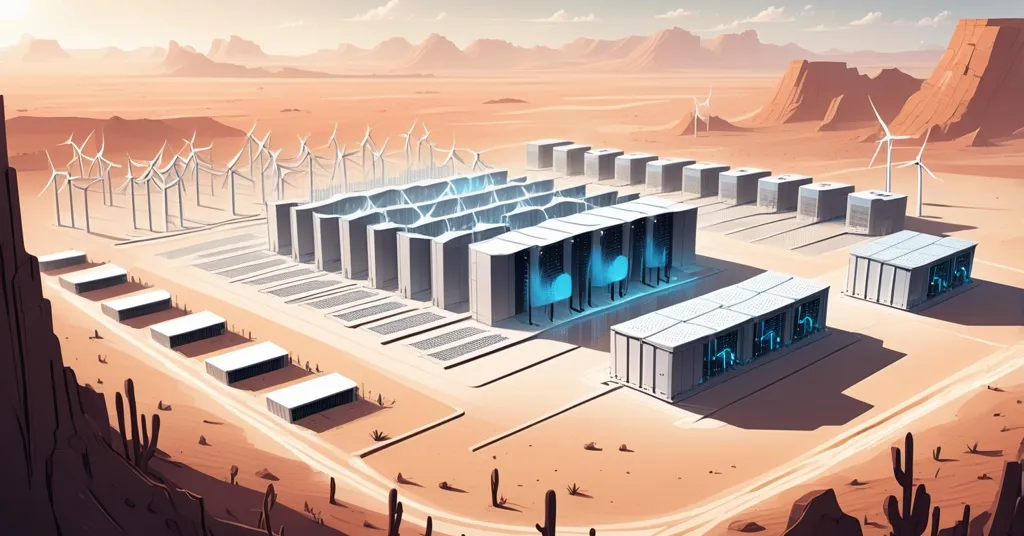
Altman isn’t ignoring the energy elephant in the room. He’s been vocal about the urgent need for a game-changing overhaul to sustainable sources like nuclear, wind, and solar to fuel AI’s expansion. Nuclear, for instance, offers a steady, low-carbon flow of power—unlike solar or wind, which can falter when the sun hides or the breeze dies down. It’s a sensible push, but the tech world isn’t exactly waiting for green energy to catch up. Instead, heavyweights like OpenAI, Meta, Oracle, and even oil giant Chevron are building off-grid data centers at a breakneck pace across the U.S.
Take the GW Ranch in West Texas, an 8,000-acre monster using more power than the city of Chicago. Similar projects are sprouting in Wyoming, New Mexico, Pennsylvania, Utah, Ohio, Tennessee, and West Virginia. These off-grid setups dodge the overburdened public grid, but here’s the kicker: many rely heavily on natural gas. Energy researcher Michael Thomas has tracked 47 such projects, warning that this trend is “catastrophic for climate goals.” He’s not wrong—natural gas might burn cleaner than coal, but it still pumps out carbon dioxide and methane, a greenhouse gas far nastier than CO2 over short timeframes. So much for AI’s eco-friendly halo; right now, it’s often running on fossil fuel fumes.
Why go this route? Cost and speed. Building off-grid with gas is faster and cheaper than waiting for renewable infrastructure or navigating grid delays. It’s a pragmatic shortcut, eerily similar to how early Bitcoin miners flocked to cheap, coal-heavy regions like China before the 2021 crackdown. The parallel is stark: innovation often prioritizes quick wins over long-term sustainability, and the environment takes the hit.
Ground-Level Resistance: Communities and Red Tape Strike Back
The backlash isn’t just academic. Communities near proposed data centers are digging in their heels, and they’ve got plenty of reasons to be ticked off. In Tucson and San Marcos, Texas, locals rejected new facilities over fears of massive resource use—some centers can suck down up to 5 million gallons of water daily—and the risk of electricity price hikes. Picture your quiet town suddenly hosting a power-hungry tech beast that drains local resources dry while offering few jobs or benefits in return. It’s no wonder folks are up in arms.
Regulatory headaches are piling up too. Elon Musk’s xAI data center in Memphis, thrown together with portable gas generators, moved so fast it violated emissions rules, prompting the Environmental Protection Agency to demand proper permits in January. This isn’t an isolated oops—across the U.S., approvals for these projects often happen behind closed doors. In West Virginia, resident Amy Margolies slammed the process as a “speculative gold rush” after officials stripped away local control, leaving communities sidelined as tech giants steamroll in.
Governments are stepping in, though the fixes are a patchwork. The Trump administration, along with several governors, signed a deal in January mandating tech companies fund new power plants, with a $15 billion commitment to expand capacity. It sounds promising, but when off-grid centers keep leaning on gas, it’s hard to see this as a green victory. The tension mirrors past crypto mining battles, where rapid growth clashed with regulation until crackdowns forced change. AI might be on a similar collision course.
Crypto Parallels: Lessons from Bitcoin Mining’s Energy Sins
Let’s zoom out and connect the dots to our core focus: blockchain and Bitcoin. AI’s energy crisis isn’t new to us—Bitcoin mining faced the same heat for years, especially pre-2021 when coal-powered grids in China fueled much of the network. At its peak, Bitcoin’s energy use was also compared to mid-sized nations, drawing fierce criticism for its carbon footprint. Yet, the crypto space adapted, with miners shifting to renewable-heavy regions like Texas, where wind power now supports significant operations. Innovations like the Lightning Network, a layer-2 scaling solution, also slashed energy per transaction by offloading work from the main chain.
AI could learn a thing or two here. Just as Bitcoin miners pivoted under pressure, AI giants might need public and regulatory pushback to prioritize renewables over gas. Blockchain projects like Ethereum, with its shift to proof-of-stake, cut energy use by over 99%—a radical rethink of efficiency. Does AI have equivalent tricks up its sleeve, like energy-lean algorithms or decentralized computing models (think projects like Golem or iExec that crowdsource power)? If not, its scale—far broader than crypto mining with thousands of data centers—might make sustainability a tougher nut to crack.
There’s a deeper overlap too. Both AI and Bitcoin champion decentralization—AI through distributed intelligence, Bitcoin through peer-to-peer money. But both stumble on sustainability, risking public trust if they ignore the hard limits of power grids and planetary health. As advocates of effective accelerationism (e/acc)—a philosophy pushing rapid tech progress with strategic impact—we argue for speed, but not recklessness. Innovation must build, not burn, the future.
Philosophical Fault Lines: Tech vs. Humanity
Beyond nuts and bolts, there’s a cultural clash brewing. At the same event where Altman spoke, Indian tech billionaire Sridhar Vembu dropped a gut punch of a statement:
I do not want to see a world where we equate a piece of technology to a human being.
His words resonate with growing unease about AI’s societal footprint. Much like fears in the crypto space about automation displacing jobs or centralized stablecoins undermining Bitcoin’s ethos, Vembu’s critique taps into dread over dehumanization. If AI—or blockchain, for that matter—starts valuing algorithms over people, what’s the point of disruption? It’s a question that haunts both fields as they scale, reminding us that tech’s promise must align with human good, not override it.
Balancing Innovation with Brutal Reality
AI’s potential is staggering, reshaping industries from healthcare to finance, much like Bitcoin and blockchain are redefining money and trust. But unchecked growth carries a steep price. Altman’s confidence on water usage might have some grounding, but energy is the 800-pound gorilla no one can ignore. And let’s not fool ourselves—tech won’t magically clean up its own mess. Off-grid gas reliance isn’t a stopgap; it’s a cop-out. If we’re serious about a decentralized, free future, whether through AI or crypto, we need hard-nosed solutions, not blind hype.
The path forward isn’t just about nuclear or solar, though they’re critical. It’s about efficiency—AI needs its own Lightning Network moment, a breakthrough that slashes power per computation. It’s about transparency, learning from crypto’s push for renewable mining stats. And it’s about accountability, ensuring communities aren’t steamrolled by tech titans. If we’re accelerating into tomorrow, let’s not slam into a wall of blackouts and burnout. The future of AI, like Bitcoin, depends on getting this balance right.
Key Takeaways and Questions on AI, Energy, and Crypto
- What’s the real deal with water usage in AI data centers?
Sam Altman insists newer facilities skip water for cooling, but studies warn demand could triple in 25 years as more centers emerge in hotter climates. - How does AI’s energy consumption stack up against Bitcoin mining?
AI’s 2023 power use rivals entire nations like Germany, dwarfing Bitcoin’s past peaks, with 5,246 U.S. centers burning 17 gigawatts compared to mining’s more localized footprint. - Are sustainable energy options realistic for AI’s explosive growth?
Altman pushes nuclear, wind, and solar, but their unreliable supply means many off-grid centers still run on natural gas, stalling green progress. - Why are communities rejecting AI data center expansions?
They’re fed up with resource hogging—up to 5 million gallons of water daily per center—and fear electricity price surges, as seen in pushback in Tucson and San Marcos. - What can AI learn from Bitcoin’s energy backlash?
Bitcoin miners shifted to renewables and efficiency solutions like the Lightning Network under pressure; AI needs similar innovation and public accountability to avoid a sustainability crisis. - Can AI and blockchain align with climate goals and decentralization?
Only with ruthless focus on renewables, efficient tech, and community input—both sectors must face their energy sins or risk losing the trust of a planet on edge.