Russia Ends Crypto Mining Ban in Buryatia and Transbaikal: Bitcoin’s Uncertain Future
 LTB
LTB Russia Lifts Crypto Mining Ban in Buryatia and Transbaikal: What’s Next for Bitcoin?
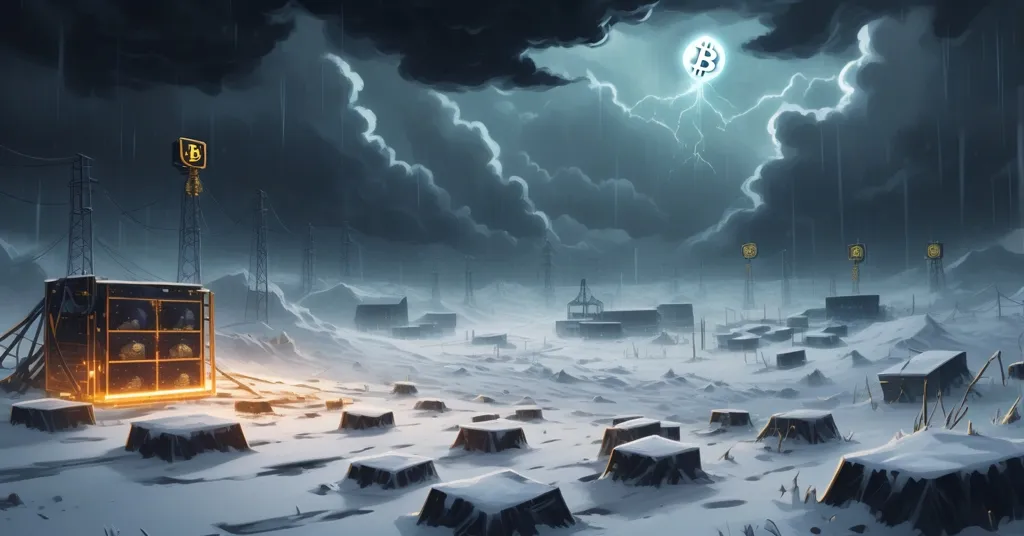
Russia’s cryptocurrency mining landscape is shifting once again as temporary bans in the Republic of Buryatia and Zabaykalsky Krai, two Far Eastern regions near Siberia, are set to expire on March 15. This move offers a momentary breather for miners hit hard by winter energy restrictions, but with regulatory uncertainty, energy grid strain, and corporate scandals like BitRiver’s looming large, the road ahead for Bitcoin and blockchain in Russia looks anything but smooth.
- Ban Expiration: Temporary crypto mining restrictions in Buryatia and Transbaikal, enforced since November 15 due to energy shortages, end on March 15.
- Ongoing Threats: Year-round bans in Siberian regions by 2026 and permanent restrictions elsewhere cast a dark shadow over the industry.
- Industry Woes: BitRiver, Russia’s top mining firm, battles bankruptcy and legal issues, signaling deeper risks for the sector.
Ban Lift in Buryatia and Transbaikal: A Temporary Respite
For miners in Buryatia, a Far Eastern republic, and Zabaykalsky Krai, also known as Transbaikal, the end of the temporary ban is a sigh of relief after months of forced downtime. Since November 15, restrictions covered 19 municipal districts and the capital Ulan-Ude in Buryatia, and 14 districts including Chita in Transbaikal, driven by severe winter energy shortages that prioritized household heating over industrial operations. Crypto mining, for the uninitiated, involves verifying transactions on networks like Bitcoin using powerful computers that consume massive amounts of electricity—a process that’s both computationally intensive and energy-hungry. Russia’s cold climate and historically low power costs, often due to government-subsidized electricity (meaning reduced rates for certain regions or industries), have made it a magnet for miners. But when winter hits, the strain on local grids becomes untenable, leading to these seasonal shutdowns.
The resumption of operations is a small victory, especially considering the sector’s growth. Despite regulatory hurdles, the number of crypto farms across Russia surged by 44% last year, reaching nearly 200,000. This grit highlights the allure of mining in a nation with abundant energy resources, but it also exposes a harsh reality: the geographical concentration of miners in subsidized areas like Siberia and the Far East pushes infrastructure to the brink. Picture a small-scale miner in Ulan-Ude, firing up their rigs again after months of silence, only to wonder if next winter—or a new policy—will shut them down for good. It’s a precarious existence, balancing profit against unpredictability. For more details on the lifting of these restrictions, check out the update on Russia’s mining ban expiration in Buryatia and Transbaikal.
Energy Strains and Wider Bans Across Russia
While Buryatia and Transbaikal miners gear up, the broader Russian crypto mining scene faces a web of challenges. Permanent bans are already in place in 10 territories, including southern parts of Irkutsk Oblast (a neighboring region to Buryatia), several Caucasian republics like Dagestan and Chechnya, and even occupied areas of Eastern Ukraine such as Donetsk and Luhansk, where restrictions hold until March 2031. These bans stem from chronic energy deficits, exacerbated by miners—both legal and illegal—tapping into grids unprepared for such demand. Illegal operations, often siphoning power without permits, have become a particular thorn in the government’s side, prompting crackdowns that sometimes sweep up legitimate players too.
Looking ahead, the future in Buryatia and Transbaikal isn’t guaranteed. Russian media outlet Kommersant reports discussions in Moscow hinting at a potential year-round ban in these Siberian-adjacent regions by 2026. Nikolai Shulginov, head of the Energy Committee at the State Duma, has voiced support for such measures across Siberian territories, according to RIA Novosti. This policy whiplash creates a nightmare for miners planning investments. One minute, you’re back in business; the next, you’re staring down a multi-year prohibition. And let’s play devil’s advocate for a moment—while miners decry these restrictions, there’s a case to be made that in freezing Siberian winters, diverting power to homes over crypto farms isn’t just practical, it’s a moral imperative. Still, the lack of long-term clarity is a gut punch to an industry that thrives on stability.
BitRiver’s Collapse: A Warning for the Industry
While local miners grapple with policy uncertainty, larger players are fighting their own battles. BitRiver, Russia’s largest crypto mining company by revenue and capacity, controlling an estimated 30% of the country’s mining power, is in deep trouble. The Federal Tax Service has filed bankruptcy proceedings against one of its subsidiaries, a 100 MW project in Buryatia sits stalled—delaying not just profits but potential boosts to local economies—and founder Igor Runets was detained in January on allegations of tax evasion, now under house arrest. This isn’t just a corporate soap opera; it’s a seismic warning. If BitRiver, with its massive scale, can’t weather these storms, what hope do smaller outfits have under similar regulatory and financial pressures? Their struggles could even ripple globally, potentially denting Bitcoin’s hashrate—the measure of computational power securing the network—if Russian capacity drops significantly.
BitRiver’s plight ties directly to broader industry risks. Russia’s energy-driven restrictions, combined with legal scrutiny, create an environment where even giants stumble. For Bitcoin enthusiasts, this is a stark reminder that the infrastructure supporting decentralized finance must prioritize resilience—whether through better policy advocacy or tech innovations—to avoid alienating the communities it aims to serve.
Regulation vs. Reality: Can Russia’s Crypto Sector Survive?
Russia took a significant step in 2024 by making crypto mining the first officially legalized and regulated crypto activity in the country, a move framed as legitimizing the sector amid geopolitical sanctions—foreign restrictions impacting its economy due to political conflicts. The new law mandates miners to report earnings and pay taxes up to 20%, alongside strict licensing requirements. On the surface, this nods to blockchain’s potential as an economic driver. Beneath it, though, the framework flounders. Fewer than a third of crypto businesses have registered, a damning sign of either distrust in the state or the sheer burden of compliance. Small operators, already squeezed by energy costs, balk at these steep barriers, while illegal miners continue operating in the shadows until busted.
Energy solutions remain a blind spot. Unlike Kazakhstan, which faced similar grid issues post-China’s 2021 mining ban and pivoted to renewable energy experiments, Russia shows little public push for sustainable mining farms or off-grid innovations. Compare this to China’s outright expulsion of miners, which reshaped global hashrate distribution overnight—Russia’s patchwork approach offers fleeting hope but mirrors the same energy-driven risks. Without infrastructure upgrades or a shift to less power-intensive models like Ethereum’s proof-of-stake (a consensus mechanism that slashes energy use compared to Bitcoin’s proof-of-work), the sector’s growth could grind to a halt. As a Bitcoin advocate, I champion its dominance in decentralized finance, but I can’t ignore that Ethereum’s model sidesteps much of this energy mess—a contrast Bitcoin might need to learn from if mining is to scale responsibly.
Speculatively, tighter bans could push Russian miners to friendlier jurisdictions like parts of Central Asia or South America, further decentralizing Bitcoin’s hashrate. This aligns with the ethos of effective accelerationism—pushing tech forward through adaptability—but it’s a bitter pill if Russia, with its natural advantages, squanders its potential over systemic flaws.
Russia at a Decentralization Crossroads
As Buryatia and Transbaikal reopen to miners, this fleeting win feels like a footnote in a saga of contradictions. Russia stands poised between harnessing blockchain’s revolutionary power and buckling under energy constraints and regulatory chaos. Will it embrace decentralization, freedom, and privacy, or tighten the screws in the name of control? For Bitcoin maximalists, the stakes are personal—this is about whether our vision of borderless, unstoppable money can thrive under state scrutiny or if it’s doomed to be shackled by bureaucratic nonsense. One thing is clear: the fight for crypto’s soul in Russia is just heating up, and it’s going to be a hell of a battle.
Key Takeaways and Questions for Reflection
- What does the ban lift in Buryatia and Transbaikal mean for local miners?
It allows a temporary resumption of operations after winter energy-driven shutdowns, though looming threats of future bans by 2026 keep long-term plans uncertain. - Are there bigger risks to crypto mining in Russia beyond these regions?
Yes, permanent bans in 10 territories until 2031 and potential Siberian-wide restrictions signal a hostile regulatory climate that could cripple the industry. - How do BitRiver’s struggles reflect industry-wide challenges?
With bankruptcy filings, legal battles, and stalled projects, BitRiver’s issues highlight financial and operational instability that could erode trust and investment in Russian mining. - Can Russia balance energy needs with crypto mining growth?
Not without major grid upgrades or a pivot to energy-efficient blockchain models, as current strains continue to fuel restrictive policies over sustainable solutions. - Is legalization enough to stabilize Russia’s crypto sector?
Hardly, as low registration rates, high compliance costs, and rampant illegal mining expose gaps in trust and enforcement within the 2024 framework. - How could Bitcoin mining adapt to Russia’s energy challenges?
By pushing for renewable energy farms, off-grid solutions, or policy reforms that incentivize efficiency, miners could reduce grid strain and build a case for long-term legitimacy.