Justin Sun’s $10M SEC Settlement: Crypto Victory or Political Favoritism?
 LTB
LTB Justin Sun Settles with SEC for $10 Million: Victory or Smoke and Mirrors?
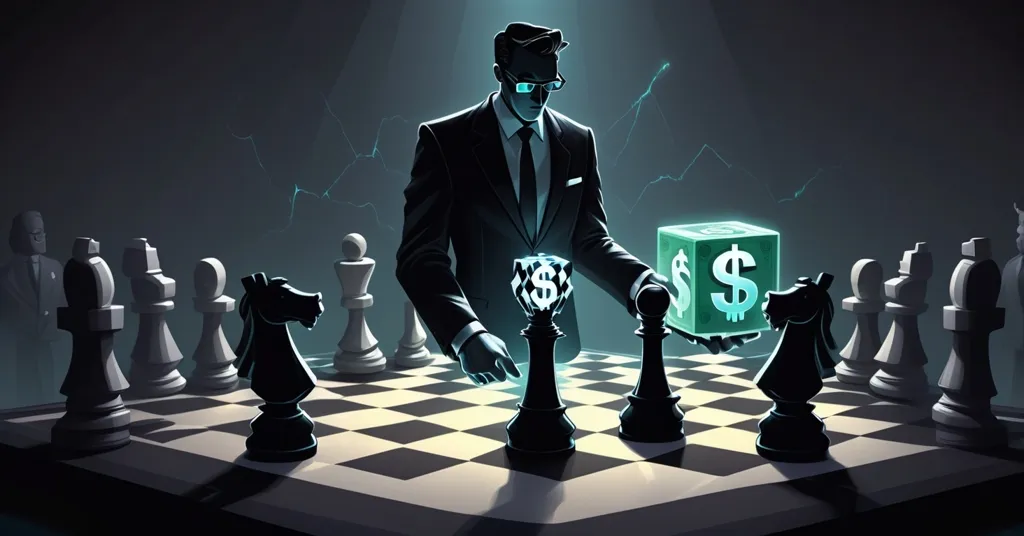
Justin Sun, the polarizing force behind Tron and a crypto industry titan, has just sidestepped a major legal showdown. The U.S. Securities and Exchange Commission (SEC) has dropped all claims against him, the Tron Foundation, and the BitTorrent Foundation following a $10 million settlement, wrapping up a 2023 lawsuit that accused Sun of securities fraud and market manipulation.
- Settlement Deal: Sun and his entities pay $10 million to end SEC claims.
- Fraud Charges: Accused of faking TRON token trades and deceiving investors with paid celebrity hype.
- Political Shadow: Timing ties to reduced SEC crypto enforcement under Trump, sparking influence concerns.
Buckle up for a gritty dive into crypto’s underbelly—where innovation clashes with intrigue, and regulators seem to play whack-a-mole with billionaires. Let’s dissect Justin Sun’s latest escape act and what it means for the decentralized revolution we’re fighting for.
The SEC Allegations: Fraud or Overreach?
The SEC came down like a ton of bricks on Justin Sun in 2023, accusing him of orchestrating a scheme to inflate TRON token prices through sheer deception. Their claim? Sun and his crew executed hundreds of thousands of fake trades—thousands daily for months on end—to create the illusion of high demand. This tactic, known as wash trading, is like selling a painting to yourself under fake names to jack up its perceived value. It’s a sleazy move that tricks investors into jumping on a hype train that’s running on fumes. Per SEC filings from the original complaint, this manipulation allegedly netted Sun and his entities nearly $32 million in profits from token sales between 2018 and 2019.
But that’s not all. The SEC also pointed fingers at Sun for misleading investors with shady marketing. He reportedly paid celebrities like Akon, Jake Paul, Ne-Yo, and Lindsay Lohan to promote TRON tokens without disclosing these were paid gigs. These endorsements, dressed up as genuine support, fueled a false narrative of grassroots excitement. The celebrities later settled with the SEC for a combined $400,000 to clear their names, but the damage to Sun’s credibility was already done. Was Sun just playing the marketing game, or straight-up scamming the little guy? Let’s call a spade a spade—the optics here are downright ugly, even if the truth might lurk in a gray zone.
For newcomers, wash trading and undisclosed endorsements strike at the heart of trust in any market, decentralized or not. Crypto was born to cut through centralized BS, yet tactics like these drag us back to the same old Wall Street swamp. It’s a bitter reminder that not every blockchain project carries Bitcoin’s ethos of transparency and integrity.
Settlement Timing: Politics at Play?
This settlement’s timing screams suspicion, especially against the backdrop of a shifting regulatory landscape. A recent New York Times investigation revealed that over 60% of inherited crypto cases have been softened or outright dismissed since Donald Trump’s return to the White House. Sun’s case, detailed in reports like this one from Cryptopolitan on the SEC dropping claims, was paused mere weeks after Trump’s inauguration, paving the way for this $10 million deal. Pure coincidence? Don’t bet on it.
Sun has woven himself into Trump-related crypto ventures, most notably with a massive $75 million investment in World Liberty Financial, a firm co-founded by Trump and his sons. He’s been spotted rubbing shoulders with the Trump family at exclusive events—a private dinner for buyers of Trump’s memecoin and a Dubai crypto conference alongside Eric Trump. At that Dubai event, Zach Witkoff, co-founder of World Liberty Financial, couldn’t help but gush:
“I just got to thank you for the support, Justin. TRON is just an incredible technology, and we’re lucky to be partners with you.”
If crypto is a rebellion against centralized power, cozying up to political dynasties feels like joining the Empire after swearing allegiance to the Jedi.
Why does this matter? The SEC’s job is to protect investors and keep markets fair, but when decisions seem swayed by who you know or how much you’ve shelled out, it guts trust in the system. Crypto’s core—Bitcoin’s core—is about dismantling corrupt middlemen, not playing their game. While we root for lighter regulation to fuel innovation (a nod to effective accelerationism, or e/acc, our belief in speeding up tech-driven progress to solve societal woes), we can’t stomach favoritism. If deregulation turns into a free-for-all, scams could spike before solid rules take hold.
Tron’s Role: Altcoin Innovator or Centralized Risk?
Let’s zoom out and look at Tron itself, beyond Sun’s baggage. Tron’s blockchain aims to power decentralized content sharing and low-cost transactions—think of it as a YouTube without a central boss, where creators and users interact directly via dirt-cheap payments on the network. Since its launch in 2017, Tron has built a sizable user base, especially in niches like decentralized apps (DApps) for gaming and streaming. Its transaction fees are often pennies compared to Ethereum’s gas costs or even Bitcoin’s at peak times, making it a sandbox for developers experimenting with blockchain ideas.
For us Bitcoin diehards, though, Tron raises red flags. While BTC’s strength lies in its leaderless, battle-tested design, altcoins like Tron often flirt with central figures—Sun being the poster child. No single person can tarnish Bitcoin’s credibility, but when a project’s fate ties to one man’s antics, it risks becoming a pawn in power games. Bitcoin maximalists might scoff at Tron’s compromises, yet its accessibility offers a gateway for millions to grasp blockchain tech, even if it’s far from perfect. Let’s not throw the baby out with the bathwater—Tron fills gaps Bitcoin doesn’t aim to, though at the cost of decentralization risks.
Still, Sun’s shadow looms large. Can a platform thrive when its founder’s reputation is this tainted? And does Tron’s utility justify the centralized baggage? These are open questions as we weigh altcoins’ roles in the broader financial revolution.
Implications for Crypto: Freedom or Cronyism?
This settlement isn’t just about Sun—it’s a snapshot of crypto’s messy dance with regulation and politics. On the bright side, reduced SEC scrutiny could unleash a wave of innovation. Projects like Tron, and even Bitcoin-focused initiatives, might scale faster without the constant threat of legal hammers. Sun’s own optimism about working with the SEC hints at a future where clearer rules could benefit everyone. He stated:
“I will continue to focus on accelerating innovation in the United States and around the world and look forward to working with the SEC to develop guidance and regulations for crypto going forward. The future is bright.”
If genuine, that’s a win for effective accelerationism.
But here’s the flip side: if settlements like this hinge on connections or cash, we’re brewing a two-tiered system. Picture a small DeFi startup slapped with fines while whales like Sun walk free—hardly the level playing field Satoshi envisioned. Compare this to Ripple’s ongoing XRP lawsuit, where the SEC has dug in its heels despite years of pushback. The inconsistency stinks of selective enforcement, undermining trust in how rules are applied. For an industry built on fairness through code, this reeks of old-school cronyism dressed up with blockchain tech.
Trump’s pro-Bitcoin rhetoric and crypto-friendly promises add another layer. While a lighter regulatory touch could turbocharge adoption, it risks opening the floodgates to fraud if oversight vanishes entirely. The balance between freedom and accountability remains a tightrope, and Sun’s case is a glaring reminder of how easily it can tip.
Justin Sun’s Future: Trustworthy Innovator?
Sun is framing this settlement as a clean slate, declaring:
“I am very pleased to confirm that the SEC has moved to dismiss all claims against me, Tron Foundation, and BitTorrent Foundation. Today’s resolution brings closure, but I never stopped building.”
His relentless drive is hard to ignore, and if his push for regulatory collaboration bears fruit, it could help crypto thrive without constant legal battles. That aligns with our e/acc ethos—rapid progress demands bold builders, even flawed ones.
Yet, past behavior often predicts future antics. Sun’s history of alleged deception and political entanglements casts a long shadow over his credibility. Can the crypto community trust a figure so mired in controversy to lead with integrity? Or is he just a well-connected opportunist playing the long game? His actions, not his words, will ultimately tell the tale.
Key Takeaways and Burning Questions
- What drove the SEC to settle with Justin Sun?
A $10 million payment from Sun and his entities closed the case, aligning with a broader SEC pullback on crypto enforcement under Trump’s administration, though the exact reasons beyond the payout remain unclear. - How did Sun allegedly manipulate TRON token prices?
The SEC accused him of running thousands of fake trades daily for months, inflating trading volume and pocketing $32 million in profits from 2018 to 2019 through deceptive market activity. - Do political ties influence SEC crypto enforcement here?
Sun’s $75 million investment in a Trump family crypto venture and public ties to Trump associates suggest favoritism may have swayed the SEC’s leniency in this settlement. - How does this affect crypto regulation and investors?
It signals potential for looser oversight and collaboration, but inconsistent enforcement risks eroding trust and creating uneven rules that could harm smaller players or unsuspecting investors. - What lessons can the crypto community learn from Sun’s saga?
It’s a stark reminder to prioritize integrity over hype—decentralization means nothing if leaders mirror the centralized corruption we’re trying to escape. Scrutiny of projects and their figureheads is non-negotiable.
Crypto promised a world without kings, yet players like Sun keep building thrones. Can we accelerate progress without crowning new overlords? That’s the billion-dollar question. The blockchain doesn’t lie, but human motives sure can. Keep your eyes peeled—this space moves at warp speed, and the next twist is always just a block away.