
Stablecoins: Revolutionizing Climate Insurance for Farmers in Crisis
 LTB
LTB Can Stablecoins Be a Game-Changer for Climate Insurance in Agriculture?
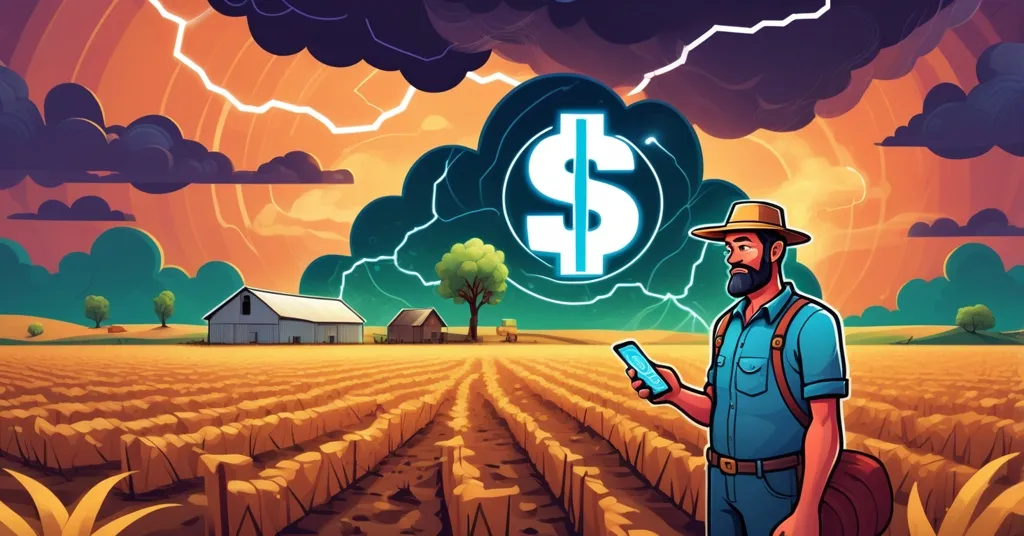
A farmer in rural Kenya watches a relentless drought turn their fields to dust, knowing their family’s livelihood just evaporated. Meanwhile, in Pakistan, floods wash away crops and hope, and in the U.S., wildfires burn through billions in agricultural value. For millions of farmers globally, climate disasters strike fast and hard, but the help they desperately need—insurance payouts or aid—crawls at a snail’s pace, often arriving too late to matter. Could stablecoins and blockchain technology smash through this broken system, delivering relief in seconds rather than months?
- Climate Devastation: Farmers face billions in losses from extreme weather, with slow aid amplifying the pain.
- Stablecoin Promise: Instant, borderless payments could redefine disaster recovery for agricultural communities.
- Blockchain Power: Transparency and automation cut through inefficiencies and restore trust in climate finance.
The Brutal Impact of Climate Disasters on Farmers
Extreme weather is pummeling agriculture with ruthless force. In 2024, U.S. farmers absorbed over $20 billion in losses from wildfires, floods, hurricanes, hail, frost, and tornadoes—a staggering blow to rural economies. North of the border, Canada’s farmers aren’t spared; over half battled drought between 2022 and 2023, while 26% faced flooding, with British Columbia alone reporting nearly $460 million in damages last year. The picture darkens further in developing nations. After Pakistan’s catastrophic 2022 floods, smallholder farmers waited months for aid, missing planting seasons and staring down economic ruin. In places like Kenya and Brazil, limited access to technology leaves farmers even more defenseless against nature’s fury. These numbers aren’t abstract—they represent lives upended and communities pushed to the brink.
Traditional Insurance: A Bureaucratic Nightmare
Let’s call it what it is: traditional insurance for farmers is a goddamn mess. It’s mired in outdated, human-heavy processes that drag claims out for months, sometimes a full year. For a farmer who needs to replant crops, settle debts, or just put food on the table, waiting for some desk jockey to approve a payout isn’t just frustrating—it’s a death knell. When the next season passes with no recovery funds, debt spirals and desperation sets in. And for the unbanked—think 70% of El Salvador’s population, where only 32,000 of 400,000 farmers can access agricultural credit—these systems are a cruel joke. No bank account? Tough luck getting help through conventional channels.
Stablecoins: Instant Relief Across Borders
Here’s where stablecoins enter the fray. These are digital tokens pegged to stable assets like the U.S. dollar, sidestepping the wild volatility of cryptocurrencies like Bitcoin. We’re not talking about speculative “moonshot” nonsense peddled by shillers on social media—the real value of stablecoins lies in practical, life-altering applications. They can transfer value across borders in milliseconds, 24/7, without needing a traditional bank account. A farmer in remote El Salvador or a displaced family in Ukraine can receive funds directly to a digital wallet, no middleman required. The UN Refugee Agency (UNHCR) has already put this to the test, using stablecoins to deliver emergency aid to Ukrainian families, bypassing banking delays that can stretch into weeks. As Ron Tarter, founder and CEO of MNEE, a company pushing for accessible stablecoins, puts it:
If disasters strike in seconds, payouts must move just as fast.
Tarter’s point hits hard. Stablecoins aren’t just a tech gimmick; they’re a potential lifeline for those the current system leaves behind. He adds:
Stablecoins are able to move value across borders in milliseconds, 24/7, with full transparency.
Blockchain: Rebuilding Trust in Climate Finance
Stablecoins operate on blockchain technology, a decentralized, public ledger that records every transaction in a way that’s damn near impossible to tamper with. Imagine a shared notebook that no single person or entity controls—everyone can see the entries, and no one can erase them. This transparency is a dagger to the heart of distrust in disaster aid, where funds often vanish into corrupt pockets. Initiatives like the Lemonade Foundation’s Crypto Climate Coalition are leveraging blockchain to send stablecoin payouts to African farmers, with every cent traceable from donor to recipient. No more guessing if aid was skimmed off by shady intermediaries—a chronic plague in relief efforts. Blockchain ensures the money lands where it’s needed most.
Smart Contracts: Automation Without the Bullshit
Now let’s talk smart contracts, self-executing code on the blockchain that works like a vending machine for funds—meet the conditions, and the payout drops instantly, no human interference needed. Through parametric insurance, which pays out based on predefined triggers like a drought reaching a specific severity rather than waiting for damage assessments, platforms like Arbol are rewriting the rules. A weather station records a threshold being crossed, and within minutes, stablecoin funds hit farmers’ wallets. No adjusters, no paperwork, no endless waiting. What used to take weeks now happens faster than you can doomscroll through X. If you’re curious about the potential of such rapid payouts, check out this insightful opinion piece on climate insurance solutions.
Arbol’s real-world impact is worth digging into. Since 2018, they’ve disbursed over $1 million to farmers in regions like Central America using weather data triggers and stablecoins such as USDC. Farmers have reported recovery times slashed by up to 80%, allowing them to replant sooner and stabilize their income. This isn’t a pipe dream or some VC-funded whitepaper fantasy—it’s a working model that could scale to millions if the right pieces fall into place.
The Ugly Truth: Stablecoins Aren’t a Magic Fix
Before we start throwing confetti over this tech, let’s pump the brakes. Stablecoins carry serious baggage, and pretending otherwise is reckless. The 2022 TerraUSD collapse was a $40 billion disaster, exposing the fragility of algorithmic stablecoins that aren’t fully backed by tangible assets. Even asset-backed stablecoins like USDC aren’t bulletproof—centralized reserves mean they can be frozen or questioned, as seen when Circle halted $100 million in USDC during legal scrutiny. Smart contracts? They’ve been hacked to hell and back. The DAO exploit in 2016 saw $50 million vanish due to a coding flaw, and bugs still haunt poorly audited contracts today.
Then there’s the infrastructure problem. Only about 22% of rural Sub-Saharan Africa has internet access. No connectivity means no crypto payouts, period. Digital literacy is another barrier—teaching a farmer in remote Kenya to use a digital wallet isn’t a weekend workshop. Reliable weather data for parametric triggers can also be spotty in underdeveloped regions. Without offline transaction protocols or community tech hubs, this solution risks being a toy for the connected elite rather than a tool for the vulnerable.
Regulation looms like a dark cloud too. The EU’s Markets in Crypto-Assets (MiCA) framework is trying to box stablecoins into strict compliance, while the U.S. SEC can’t decide if they’re securities, commodities, or the boogeyman. Overzealous or clueless policymakers could choke this tech before it reaches farmers at scale. If we want stablecoin climate insurance to go mainstream, these hurdles need brutal honesty and real solutions, not glossy TED Talk promises.
Bitcoin’s Place in the Puzzle
For us Bitcoin maximalists, stablecoins raise an eyebrow. They’re not the pure, decentralized rebellion that Bitcoin embodies as the ultimate store of value. BTC’s price swings make it impractical for emergency payouts—farmers need stability, not a gamble. Yet, stablecoins fill a gap Bitcoin doesn’t, offering a steady medium for immediate relief while aligning with the broader mission of disrupting centralized banking cartels. Picture this: farmers use stablecoins for fast recovery funds and stash long-term savings in Bitcoin, hedging against inflation and financial oppression. It’s not a betrayal of BTC’s ethos; it’s a pragmatic stack in the fight for freedom.
Looking Ahead: Lifeline or Mirage?
The potential for stablecoins to overhaul climate insurance for farmers is massive, but it’s far from a slam dunk. Bridging the digital divide, securing smart contracts against exploits, and navigating a regulatory minefield are non-negotiable challenges. Success stories like Arbol and UNHCR’s Ukraine efforts show what’s possible—real, measurable impact. But scaling to millions of farmers demands more than tech; it requires grit, ingenuity, and a willingness to confront hard truths. Are we building a genuine lifeline for the unbanked, or just another shiny dependency on tech overlords? That’s the tension we need to wrestle with.
For farmers facing the next drought or flood, a payout in seconds isn’t just clever innovation—it’s raw survival. Stablecoins and blockchain could transform a system that’s been failing the most vulnerable for decades. But let’s not kid ourselves: the path is littered with obstacles. If we can’t solve access gaps and outmaneuver regulatory nonsense, this tech risks being a mirage rather than a revolution. So, are we ready to do the hard work, or will farmers be left waiting again?
Key Questions and Takeaways
- How are climate disasters financially destroying farmers?
They’re racking up billions in losses—$20 billion in the U.S. in 2024 alone—while delayed aid misses critical planting seasons, driving deeper debt and despair. - Why is traditional insurance failing farmers so miserably?
Its slow, bureaucracy-choked processes and reliance on outdated banking drag payouts out for months, abandoning farmers when they need help most. - How can stablecoins support farmers after climate disasters?
They deliver instant, borderless payments to digital wallets, even for the unbanked, cutting through delays and financial exclusion with unmatched speed. - What’s the role of smart contracts in climate insurance?
They automate payouts via parametric insurance using real-time weather data, shrinking processing times from weeks to minutes without human meddling. - Can blockchain restore trust in disaster aid for agriculture?
Yes, its transparent, tamper-proof ledger tracks every transaction, as seen with initiatives like the Crypto Climate Coalition, curbing corruption in fund distribution. - What are the major risks of stablecoins for farmers?
Failures like TerraUSD, smart contract hacks, infrastructure gaps (like low internet in rural areas), and regulatory uncertainty could stall or derail adoption. - How does Bitcoin fit into crypto solutions for farmers?
While stablecoins handle urgent payouts with price stability, Bitcoin offers a long-term savings haven, aligning with decentralization and financial freedom goals.