Bitcoin’s $70K Surge Ignites Holder Clash: Sellers vs. Hodlers in Civil War
 LTB
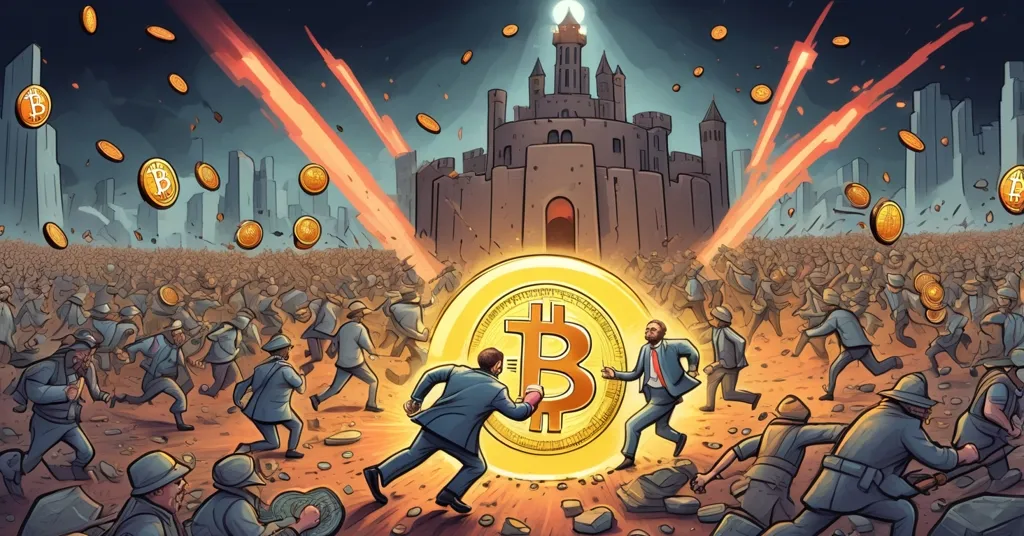
LTB Bitcoin Price Surge Sparks Civil War: Short-Term Sellers vs. Long-Term Holders
Bitcoin’s recent push past $70,000 has split its community down the middle, with short-term sellers scrambling to cash out while long-term holders stand their ground like unwavering sentinels. This clash of strategies reveals not just market dynamics but the very soul of Bitcoin’s ongoing battle between speculation and conviction.
- Short-Term Exodus: Over 27,000 BTC flooded exchanges in 24 hours as sellers lock in profits.
- Long-Term Steadfastness: Holders with over 155 days show minimal activity, signaling bear market-like conditions.
- Market Divide: Contrasting behaviors create uncertainty for Bitcoin’s price trajectory.
Short-Term Sellers: Fear Fuels the Exit
The brief surge above $70,000 proved too tempting for many short-term Bitcoin holders—those who’ve held their coins for less than 155 days. According to data from CryptoQuant, a blockchain analytics platform, over 27,000 BTC in profit was sent to exchanges in just a 24-hour period, marking one of the largest profit-taking events in recent months. For many in this group, the numbers added up nicely: they bought at an average realized price—basically, the price they paid for their Bitcoin—of around $68,000, sometime between a week and a month ago. That spike was their cue to secure gains.
But not all short-term holders are celebrating. Some are at breakeven or even underwater, yet they’re still selling, likely spooked by Bitcoin’s infamous volatility. This knee-jerk reaction highlights the speculative mindset of short-term trading, where every price jump feels like a ‘now or never’ moment to escape before a potential crash. Let’s not sugarcoat it: this get-rich-quick mentality often taints Bitcoin’s deeper mission as a decentralized rebellion against traditional finance. Are these sellers smart for de-risking, or just weak hands funding the next yacht for the true believers? It’s a bitter irony for a system built to challenge wealth inequality. For more insight into this divide, check out this analysis of Bitcoin’s internal conflict between nervous sellers and steadfast holders.
Long-Term Holders: Patience as a Fortress
Contrast that with the long-term holders—often called “diamond hands” for their unshakeable grip—who’ve held Bitcoin for over 155 days through bull runs and harsh downturns. These warriors are entrenched, refusing to budge despite the chaos of short-term skirmishes. A key metric, Coin Value Days Destroyed (CVDD), sits at a low 0.34, a level more akin to bear market bottoms than the frothy tops where CVDD often exceeds 2.0. For context, CVDD measures the economic weight of coins being moved after long periods of dormancy. A high value signals old hands cashing out at peak prices; a low value, like now, means those coins are staying put, often tied to accumulation or stubborn faith in future gains.
This inactivity isn’t just data—it’s a mindset. Long-term holders, many of whom align with Bitcoin maximalist views, see BTC as more than a trade; it’s a bet on financial sovereignty and a middle finger to centralized control. They’re likely waiting for loftier targets, perhaps $80,000 or beyond, or biding their time for deeper dips to stack more sats (short for Satoshis, the smallest unit of Bitcoin—think of it as cents to a dollar, with 1 BTC equaling 100 million sats). Other on-chain indicators, like HODL waves which track the age distribution of Bitcoin held, reinforce this trend: the majority of long-held coins aren’t moving, suggesting a quiet confidence—or at least strategic restraint.
External Pressures Fueling the Divide
This internal tug-of-war isn’t happening in a vacuum. Macroeconomic headwinds are likely stoking short-term seller anxiety. Rising inflation, hawkish central bank policies, and geopolitical uncertainty can make any asset—Bitcoin included—feel like a hot potato. Add to that the ever-looming specter of regulatory crackdowns, with governments worldwide still grappling with how to handle crypto, and it’s no wonder newer investors are quick to hit the sell button. A single headline about a potential ban or tax hike can send shivers down the spine of anyone who hasn’t weathered a full Bitcoin cycle.
Meanwhile, long-term holders might be drawing strength from Bitcoin’s fundamentals, especially with events like the next halving on the horizon, which historically cuts miner rewards in half and often sparks price rallies due to reduced supply growth. Their conviction could also stem from Bitcoin’s deflationary design—a hard cap of 21 million coins ever to exist—making it a potential hedge against fiat currency debasement. These external forces amplify the divide: short-term sellers react to the noise, while long-term hodlers tune it out, betting on the signal of Bitcoin’s enduring value proposition.
Civil War Implications: Bullish or Bearish?
So, what does this split mean for Bitcoin’s price outlook? On one hand, the sheer volume of short-term selling—27,000 BTC isn’t pocket change—could cap any near-term upside. If this exodus snowballs, especially amid broader market jitters, we might see prices test key support levels like $60,000 or lower. History offers parallels: in early 2021, during the rally to $64,000, aggressive short-term profit-taking often preceded sharp corrections, even if long-term holders were still active then. A sustained sell-off now could erode market confidence, dragging even the most stoic hodlers into the red.
Playing devil’s advocate, though, let’s not underestimate the stabilizing force of long-term inactivity. Their refusal to sell might signal a floor, a quiet belief that the current price is undervalued. If anything, shaking out weak hands could pave the way for a cleaner, less speculative rally later. Analyst Darkfrost, sharing insights via CryptoQuant and on X under @Darkfost_Coc, notes this dynamic as pivotal: short-term pressure is real, but the lack of long-term selling might be the calm before a storm of upside. It’s a coin toss—fear could win short battles, but faith might claim the war.
Bitcoin’s Dual Nature: Casino or Creed?
This clash lays bare Bitcoin’s dual identity as both a speculative playground and a revolutionary ideology. For short-term sellers, it’s a casino—high stakes, quick bets, and cashing out at the first sign of jackpot. For long-term holders, it’s a creed, a commitment to decentralization, privacy, and financial freedom outside the grasp of banks and bureaucrats. This tension tests Bitcoin’s maturation as an asset class. Every sell-off by jittery newcomers risks painting it as just another volatile toy for traders, overshadowing its potential as the future of money.
From the lens of effective accelerationism, which champions rapid tech adoption to disrupt the status quo, this divide is a crucible. How fast can Bitcoin go mainstream if half its holders treat it like a lottery ticket? Yet, long-term hodlers bolster network strength by reducing circulating supply on centralized exchanges, reinforcing Bitcoin’s decentralized ethos. Their patience isn’t just personal—it’s political, a quiet vote for a world where power over money isn’t hoarded by the few. Whether that vision wins depends on which side of this civil war gains ground.
Q&A: Decoding Bitcoin’s Holder Divide
- What’s driving the current wave of Bitcoin selling?
Short-term holders, enticed or rattled by Bitcoin’s breach of $70,000, offloaded over 27,000 BTC on exchanges in a 24-hour frenzy to secure profits. - Why aren’t long-term Bitcoin holders selling?
With a CVDD metric at a low 0.34, long-term holders (over 155 days) are likely holding out for higher prices or waiting for dips to accumulate more, showing strategic patience. - Does this split signal a bearish or bullish future for Bitcoin?
It’s unclear—short-term selling might push prices down temporarily, but long-term inactivity could hint at underlying confidence or a stabilizing force for future gains. - What does the CVDD metric reveal about Bitcoin’s market phase?
At 0.34, CVDD mirrors bear market lows, showing minimal selling from long-term holders, unlike market tops where it surges past 2.0 with heavy profit-taking. - Should Bitcoin investors be concerned about this conflict?
It signals short-term volatility risks, but also showcases Bitcoin’s resilience if long-term holders remain unshaken; it’s a mix of caution and conviction to watch closely. - How do external factors play into this divide?
Macroeconomic uncertainty and regulatory fears likely spook short-term sellers, while Bitcoin’s fundamentals and upcoming events like halvings bolster long-term holder resolve.
A Battle Far From Over
As Bitcoin’s internal conflict rages on, the blockchain itself remains the ultimate battleground. Will short-term sellers be proven right for taking their chips off the table, or will long-term holders have the last laugh when Bitcoin soars to heights yet unseen? One thing’s certain: this civil war is a spectacle of human nature—fear versus faith, greed versus grit. Grab your popcorn and keep an eye on holder trends; they might just be the crystal ball for Bitcoin’s next big move.