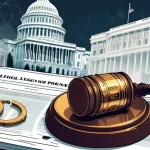
CLARITY Act Stalled: Stablecoin Rewards Spark Banking vs. Crypto Showdown

 LTB
LTB CLARITY Act Deadlock: Stablecoin Regulation Ignites Banking vs. Crypto Clash
The U.S. cryptocurrency landscape is embroiled in a high-stakes showdown as the CLARITY Act, a crucial piece of legislation meant to define the rules for digital assets, remains stalled in Congress. Caught between traditional banking giants and crypto innovators, the debate—fueled by fresh consumer skepticism revealed in an American Bankers Association (ABA) survey—centers on stablecoins and their potential to disrupt or destabilize the financial system.
- Legislative Standoff: The CLARITY Act, aimed at regulating the U.S. crypto market, is paralyzed by conflicts between banks and the crypto sector.
- Stablecoin Tension: Banks fear deposit losses to stablecoin rewards, while crypto supporters see them as key to financial innovation.
- Consumer Doubts: ABA survey finds 90% of Americans don’t own stablecoins, with 42% favoring a rewards ban to safeguard banking.
The CLARITY Act: Defining Crypto’s Place in Finance
The CLARITY Act stands as a potential turning point for cryptocurrency in the United States, promising a regulatory framework to bring order to a sector often stuck in legal limbo. Its purpose is to carve out a clear path for digital assets within the broader financial ecosystem, addressing how they’re issued, traded, and integrated with traditional systems. But despite its importance, the bill is bogged down by a fierce rift between two camps: banks, who see crypto as a threat to their foundations, and blockchain advocates, who view it as the future of money.
Stablecoins are the lightning rod in this storm. For the uninitiated, stablecoins are cryptocurrencies engineered for price stability, typically tied to a fiat currency like the U.S. dollar at a 1:1 ratio. Unlike Bitcoin (BTC), which can swing wildly in value, stablecoins offer a steady digital alternative for transactions, trading, or even savings. They’re the practical workhorse of the crypto world—think of them as digital dollar bills without the volatility. Yet, their rise, especially through platforms offering enticing rewards similar to interest, has sparked a firestorm among traditional financial players.
Banks on Edge: The Threat of Deposit Flight
Traditional banks, especially smaller community institutions that anchor local economies, are raising red flags over what they term “deposit flight.” Here’s the concern in simple terms: if a stablecoin platform dangles a 5% return on holdings while your neighborhood bank offers a measly 0.5% on savings, where’s your money going? For banks, this isn’t a hypothetical—it’s an existential risk. Deposits are the fuel for their lending engine, powering everything from home mortgages to small business loans. If funds drain into crypto ecosystems, their capacity to support communities could erode, with ripple effects hitting the broader economy hardest at the grassroots level.
This anxiety was front and center at a recent ABA summit in Washington, D.C., where industry leaders made their case. ABA President and CEO Rob Nichols laid it out bluntly:
“Consumers are clear: Any fintech or crypto company offering bank-like products should adhere to the same rigorous standards that apply to banks.”
His point is hard to dismiss—equal rules for equal risks. The ghosts of the 2008 financial meltdown still haunt regulators; unchecked innovation can breed systemic disasters. If stablecoin issuers are playing banker, shouldn’t they face the same scrutiny?
Yet, let’s not swallow the banker sob story whole. These institutions have lorded over finance for generations, often with abysmal returns and predatory fees for the average Joe. Now that decentralized finance (DeFi) is shaking their monopoly, they’re scrambling for regulatory armor under the banner of “protecting consumers.” As Bitcoin diehards, we’ve got to call bullshit on this sanctimonious posturing. Still, there’s a nagging counterpoint: a stablecoin implosion—imagine a major player unable to maintain its peg—could send shockwaves beyond crypto, denting trust in the entire movement. Guardrails aren’t always chains; sometimes they’re the only thing keeping us from a cliff dive.
Crypto’s Defense: Rewards Fuel a Financial Revolution
Flip the coin, and you’ve got the crypto camp arguing that stablecoin rewards aren’t a flaw—they’re the point. These incentives, often paid as yield or additional tokens, pull users into a decentralized system that slashes middlemen and empowers individuals. Why settle for a bank’s pathetic interest rates when a stablecoin can deliver better, often with fewer barriers? For the millions worldwide without access to traditional banking, this isn’t just innovation—it’s liberation, resonating with the disruptive spirit of Bitcoin and the push for effective accelerationism (e/acc) we stand behind.
Beyond inclusion, stablecoin rewards put heat on banks to evolve. If they can’t match DeFi’s offerings, maybe it’s time to rethink their stale model instead of whining for protection. This is the kind of market disruption Bitcoin ignited over a decade ago, and while BTC remains the ultimate emblem of decentralization, stablecoins serve a different purpose—everyday utility—that Bitcoin isn’t designed for. Platforms like Ethereum, hosting many stablecoin and DeFi projects, also carve out their own space in this revolution. We’re not here to hype altcoins, but credit where it’s due: these systems fill niches Bitcoin shouldn’t have to, pushing the broader vision of financial freedom forward.
That said, even the staunchest crypto evangelists can’t ignore the risks. The TerraUSD (UST) debacle of 2022, where an algorithmic stablecoin unraveled and torched billions in value, isn’t a distant memory—it’s a raw wound. Other hiccups, like murky reserve audits for some stablecoins, only pile on the skepticism. If rewards draw users to shaky platforms, the fallout could kneecap DeFi’s credibility for years. We’re all for accelerating disruption, but not if it means crashing and burning through sheer recklessness.
Consumer Pulse: Stablecoins Struggle for Trust
If crypto is banking on mass adoption to win this fight, the latest ABA survey delivers a brutal reality check. The data doesn’t lie: 90% of Americans don’t own stablecoins, and 80% have never even dipped a toe in. Only a paltry 17% see themselves engaging with them in the next year. More damning, 42% would support banning stablecoin rewards outright if they threaten bank lending funds. By a whopping 6-to-1 ratio, respondents prioritized cautious regulation to shield traditional finance—particularly community banks—over unfettered crypto expansion, as highlighted in a recent ABA survey on stablecoin concerns.
These figures sting for an industry that often preaches adoption as inevitable. What’s behind the cold shoulder? High-profile flops like TerraUSD play a big role, but so does the broader narrative around crypto as a gamble or scam magnet. For every headline about blockchain’s promise, there’s another about a hack or rug pull. Couple that with jargon—“pegged assets” or “yield farming” sound like gibberish to most—and trust remains elusive. Banks might not be adored, but they’re a known quantity. Stablecoins? They’re still the weird new kid on the block.
This wariness isn’t just a PR problem; it’s a political minefield. Lawmakers, sensitive to public opinion, are torn between safeguarding a familiar system and endorsing an alien one. At the ABA summit, Democratic Senator Angela Alsobrooks captured the bind:
“The compromise that Senator Tillis and I are working on is designed to put guardrails in place. We want to prevent deposit flight while allowing innovation to flourish.”
Teaming with Republican Senator Thom Tillis, she’s hunting for a middle path, but with banks bunkered down and crypto pushing for light-touch rules, a deal feels like a long shot.
Political Power Plays: Can Crypto Momentum Win?
The political arena is where this battle could turn. President Donald Trump’s outspoken support for crypto—a sharp break from past regulatory antagonism—has lit a fire under lawmakers to move before this pro-crypto tide ebbs. Senator Tillis, as a potential Republican swing vote, holds outsized influence. If Democrats stonewall key CLARITY Act provisions, his backing could drive a partisan push. Behind the scenes, heavy lobbying from banking groups and rising crypto political action committees (PACs) adds another twist, with millions funneled to shape the outcome.
The immediate hurdle is a markup hearing in the Senate Banking Committee, a critical stage where senators tweak and debate the bill’s specifics before it advances. For those new to the process, think of it as a legislative workshop—amendments are proposed, arguments flare, and the bill’s fate hangs in the balance. If it survives, it might merge with a version already greenlit by the Senate Agriculture Committee, setting the stage for a full Senate vote. After years of regulatory patchwork, this is crypto’s shot at clarity, though anyone expecting a clean win is dreaming.
Look abroad, and the U.S. seems behind the curve. The European Union’s Markets in Crypto-Assets (MiCA) regulation, slated for 2024, already lays out a detailed playbook for stablecoins and digital assets. It’s not flawless, but it’s leagues ahead of America’s paralysis. Are we ceding ground in the global race for crypto leadership, or is our caution a necessary brake given the stakes? It’s a question that looms large as the CLARITY Act wobbles on the brink.
Zooming Out: Freedom vs. Fragility in Finance
Stepping back, this clash over stablecoins and the CLARITY Act mirrors the larger struggle for financial sovereignty. Stablecoins, for all their warts, represent decentralization’s core pledge—a way to sidestep a creaky, gatekeeper-ridden system. They’re a stepping stone, alongside Bitcoin, toward a world where wealth isn’t beholden to permission. Yet the ABA survey hammers home a hard truth: the public isn’t biting, and banks aren’t irrational to dread a tectonic shift in money flows.
As fierce advocates for Bitcoin and blockchain, we’re itching to fast-track this upheaval. But not if it means spectacular blowups that rewind progress a decade. The CLARITY Act could be the tipping point—either forging a future where crypto meshes with sensible oversight or strangling innovation under heavy-handed control. Frankly, if we’re forced to endure more banker griping about deposit flight while they stonewall change, a rebellious streak in us might cheer for the mess. But the real challenge stares us down: can stablecoins earn the public’s faith before another disaster resets the board? That’s the mountain decentralization must climb to redefine finance for good.
Key Questions and Answers on Stablecoin Regulation and the CLARITY Act
- What’s stalling the CLARITY Act in Congress?
A deep divide between banks, worried stablecoin rewards will siphon off deposits critical for lending, and crypto proponents, who argue these rewards are essential to spur adoption and challenge outdated financial norms. - Why are stablecoin rewards such a divisive issue?
They risk pulling funds from traditional banks, undermining their loan capacity, while offering users lucrative returns that showcase crypto’s power to disrupt—pitting systemic stability against revolutionary potential. - How skeptical are Americans of stablecoins based on recent surveys?
Incredibly skeptical—90% don’t own any, 42% support banning rewards if they harm banks, reflecting distrust rooted in past collapses like TerraUSD and a general unease with crypto’s complexity. - Can political backing shift the tide for crypto legislation?
It’s feasible, with Trump’s pro-crypto rhetoric and Senator Tillis’ potential swing vote adding push, though partisan rifts and intense lobbying from both banking and crypto sides could still thwart a workable deal. - What’s the best hope for crypto in this regulatory fight?
A fair CLARITY Act that sets clear, reasonable guidelines without suffocating innovation, letting stablecoins and other digital assets weave into mainstream finance while upholding decentralization’s fundamental values.