Ex-Ripple CTO David Schwartz Debunks XRP Token Burn Hype Amid $750M Buyback Backlash
 LTB
LTB Does Burning XRP Really Spike Its Price? Ex-Ripple CTO David Schwartz Says Don’t Bet on It
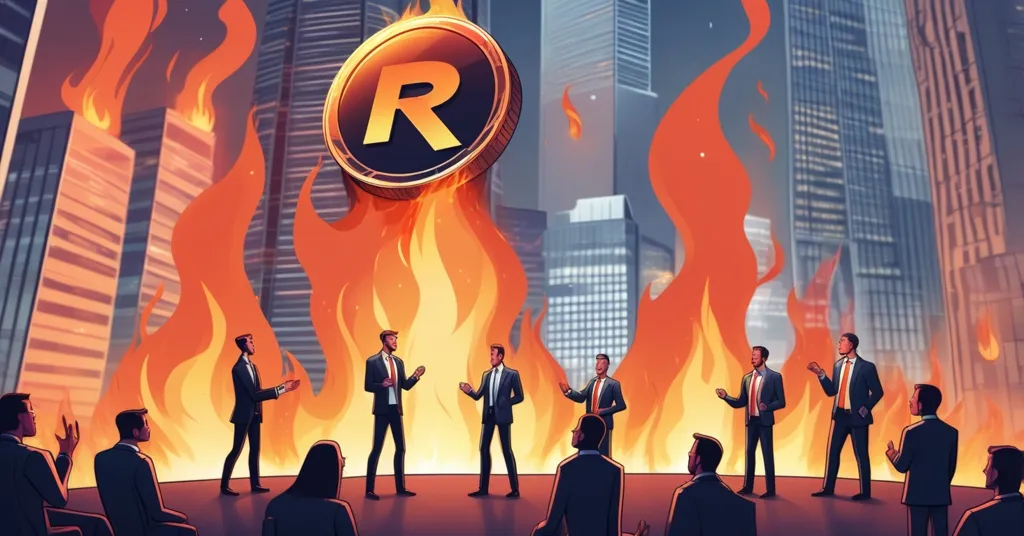
Think torching a bunch of XRP tokens will send its price rocketing to the moon? Ripple’s former Chief Technology Officer, David Schwartz, is here to burst that bubble. In a fiery exchange on X, fueled by backlash over Ripple’s $750 million share buyback, Schwartz dismantled the myth that token burns are a direct path to riches, backing his stance with hard data and a no-nonsense perspective. Let’s unpack this debate and see if burns, buybacks, or Ripple’s shiny new projects hold the key to XRP’s future.
- Core Issue: Do XRP token burns actually drive up market price?
- Main Voice: David Schwartz, ex-Ripple CTO, argues burns don’t spark instant rallies.
- Hot Controversy: Ripple’s $750M share buyback ignites fury among XRP holders.
The Token Burn Myth: A Community Obsession
For years, a vocal chunk of the XRP community has clung to a seemingly straightforward idea: burn tokens, reduce supply, and watch the price soar. It’s basic supply-and-demand economics, right? If you permanently remove tokens from circulation—often by sending them to a “burn address” where they’re locked away forever—scarcity should theoretically boost value, assuming demand holds steady or grows. XRP holders have particularly fixated on Ripple’s massive escrow holdings, roughly 40 billion tokens locked up to prevent market flooding, with 1 billion released monthly (and unused portions re-locked). Many see this as a price-suppressing overhang and argue that destroying some of these escrowed tokens could unleash XRP’s true potential.
But Schwartz, Ripple’s ex-CTO and a key architect of the XRP Ledger, isn’t buying the hype. Responding to criticism on X, he tackled this assumption head-on, arguing that token burns don’t have the direct, immediate price impact fans expect. His take isn’t just a gut feeling—it’s grounded in historical evidence that’s hard to argue with, even if it stings for die-hard XRP bulls hoping for a quick win. For a deeper look into his perspective, check out this insightful discussion on token burns and their impact.
Stellar’s Burn: A Cautionary Tale for XRP
To drive his point home, Schwartz pointed to a dramatic case study from a similar project: Stellar (XLM). On November 4, 2019, the Stellar Development Foundation slashed its token supply by more than half, eliminating 55 billion XLM from a total of 105 billion in circulation. The goal was clear—signal scarcity and boost confidence in the asset’s value. The result? A big fat nothing, at least in the short term. XLM’s price hovered around $0.06 pre-burn and showed no meaningful spike in the immediate aftermath. Schwartz highlighted that any notable uptick didn’t come until months later, between February and March 2020, and even then, it’s debatable whether the burn was the catalyst. Broader market sentiment, adoption trends, and the crypto bull run of late 2020 likely played bigger roles.
This example cuts deep for XRP advocates. If a 50% supply cut couldn’t ignite Stellar’s price, why would burning a portion of XRP’s escrow do the trick? Crypto markets aren’t a simple math equation—sentiment, macroeconomic conditions (like inflation fears driving interest in digital assets), and regulatory clarity often outweigh raw supply tweaks. Burns might make for sexy headlines, but they’re more like a flashy haircut: bold, noticeable, but not guaranteed to make you irresistible overnight.
Ripple’s $750M Share Buyback: Fueling Community Rage
The token burn debate didn’t erupt in a vacuum. It flared up amid fresh frustration over Ripple’s recent $750 million share buyback, a move designed to inflate the company’s valuation to a whopping $50 billion. For context, a share buyback involves a company repurchasing its own stock, often to boost shareholder value or signal confidence in future growth. But for XRP holders, this felt like a punch to the gut. A pseudonymous user on X, ‘XRP Launch,’ called out Ripple’s leadership, asking why the company didn’t instead destroy some of its escrowed XRP to potentially lift the token’s price. The sentiment is raw and widespread—many feel Ripple is prioritizing corporate greed over the interests of the very community that supports its ecosystem.
Let’s break this down. Unlike Bitcoin, where no central entity holds the reins, Ripple controls a significant chunk of XRP, using it to fund operations, forge partnerships, and ensure market liquidity (essentially providing tokens for smooth trading and transactions). The escrow system, set up in 2017 with 55 billion XRP locked away, was meant to reassure investors by limiting sudden supply dumps. Yet, with monthly releases of 1 billion XRP—often partially re-locked if unused—it’s also a constant reminder of Ripple’s grip on the market. Critics argue this centralization creates distrust, with the share buyback only deepening the perception that Ripple cares more about its own balance sheet than XRP’s price. Schwartz’s response, however, suggests that even if Ripple torched billions of tokens, the price needle might not budge as hoped. Ouch.
RLUSD and Real-World Assets: Do They Matter for XRP?
The frustration doesn’t stop at burns or buybacks. Ripple has been aggressively expanding its ecosystem with initiatives like RLUSD, a stablecoin pegged 1:1 to the US dollar, launched in beta in 2023 for decentralized finance (DeFi) and payment use cases on the XRP Ledger (XRPL). They’re also diving into real-world asset (RWA) tokenization, which means converting traditional assets—like real estate, gold, or bonds—into digital tokens on the blockchain, potentially unlocking trillions in market value. Ripple’s pilot projects, such as tokenizing property in 2022, hint at a future where XRPL could bridge traditional finance (TradFi) and crypto.
But here’s the kicker: do these moves actually lift XRP’s value? Another X user, ‘Spade,’ voiced skepticism, questioning whether RLUSD or RWAs add any direct benefit to XRP’s price. Schwartz didn’t push back hard, admitting that while these efforts might enhance the XRP Ledger’s utility—think faster cross-border payments or new DeFi tools—they don’t necessarily translate to immediate gains for XRP holders. Stablecoins like RLUSD often compete with native tokens for liquidity, and many RippleNet transactions (a network for global money transfers by banks) don’t even use XRP, relying on fiat instead. So while Ripple’s vision is ambitious, the direct link to XRP’s market performance remains murky at best.
The Bigger Picture: XRP’s Unique Challenges and Potential
Zooming out, XRP’s story reflects broader tensions in the crypto space between community expectations and corporate strategy. Compare it to Bitcoin, where a hardcoded 21 million supply cap and periodic halvings create a clear scarcity narrative—digital gold, a hedge against inflation, a decentralized middle finger to central banks. XRP, by contrast, is tethered to Ripple, a company with real-world partnerships but also real-world baggage. Bitcoin maximalists might scoff, calling XRP’s centralization a fatal flaw ripe for censorship or legal overreach (just look at the SEC’s grip on Ripple since 2020). And they’ve got a point—Ripple’s control over escrow and strategic moves like buybacks can feel like market manipulation to purists who worship decentralization.
But let’s play devil’s advocate. Ripple’s corporate ties could be a strength in regulated markets, where banks and institutions crave stability and compliance over anarchist ideals. XRP’s niche in cross-border payments—powered by XRPL’s lightning-fast, dirt-cheap transactions—might outshine Bitcoin in specific use cases, even if BTC remains the store-of-value king. Add in RLUSD and RWA tokenization, and you’ve got a platform pushing blockchain into TradFi faster than many purist projects, aligning with the ethos of effective accelerationism (e/acc)—driving progress through tech, flaws and all. The counter? Centralized systems like RLUSD raise privacy and freedom concerns, especially if Ripple bows to regulatory pressure. Every blockchain has trade-offs, and XRP’s path is messier than most.
Regulatory Shadows: The Real Price Driver?
Speaking of regulatory pressure, let’s not ignore the elephant in the room: Ripple’s ongoing battle with the US Securities and Exchange Commission (SEC). Since December 2020, the SEC has argued that XRP is an unregistered security, a lawsuit that’s dragged on with partial wins for Ripple in 2023 but no final resolution yet. This legal cloud hangs heavier over XRP than any burn or buyback ever could. A favorable ruling might unleash investor confidence and spike demand far beyond what a token elimination could achieve. Conversely, a harsh outcome could tank XRP’s credibility for years. Schwartz’s data-driven takedown of burn hype is valuable, but external factors like this lawsuit are likely the true needles to move.
Community sentiment adds another layer. Informal polls on X suggest over 70% of XRP holders resent the share buyback, viewing it as a betrayal. Forums like Reddit are rife with frustration, with some users still clinging to the burn narrative as a silver bullet. Yet, as Schwartz underscores, crypto markets are chaos incarnate—price swings often defy logic, driven by speculative fervor, regulatory headlines, or even a rogue Elon Musk tweet. Hype culture doesn’t help. Beware of XRP shillers promising $10 overnight based on burns or RLUSD hype—most price predictions in this space are just glorified gambling, and we’ve got zero tolerance for that nonsense here.
Key Takeaways and Questions for Crypto Enthusiasts
- Does Burning XRP Tokens Guarantee a Price Surge?
Nope. David Schwartz cites Stellar’s 2019 burn of 55 billion XLM, which saw no instant rally. Market sentiment, adoption, and external forces often overshadow supply cuts. - Why Did Ripple Choose a $750M Share Buyback Over Token Burns?
Critics slam it as prioritizing corporate valuation (now $50B) over XRP holders. Ripple hasn’t explained, leaving the community to fume over perceived neglect. - Will RLUSD Stablecoin or RWA Tokenization Boost XRP’s Value?
Not directly. While Ripple’s USD-pegged stablecoin and real-world asset digitization on XRPL enhance utility, Schwartz and skeptics note they don’t ensure price gains for XRP itself. - How Do Ripple’s Escrow Holdings Impact XRP’s Market?
With 40 billion XRP in escrow and monthly releases, many fear a supply overhang keeps prices down. This central control clashes with Bitcoin’s fixed scarcity, fueling decentralization debates. - Could Regulatory Outcomes Outweigh Burns or Buybacks for XRP?
Hell yes. Ripple’s SEC lawsuit since 2020—over whether XRP is a security—could sway investor trust and price more than any internal move. A ruling might be the real game-changer.
Where Does XRP Go From Here?
So, what’s the verdict for XRP and its battle-weary holders? Schwartz’s cold splash of reality reminds us that token burns, stablecoins, and tokenized assets aren’t magic wands. They’re tools, and their impact hinges on execution, adoption, and a web of variables no one fully controls. Ripple’s vision—bridging TradFi with blockchain via XRPL—could position XRP as a payments powerhouse over time, especially if legal hurdles clear. But short-term price action remains a sore spot, and moves like the share buyback sting as reminders of the corporate-community divide.
For investors, the focus might be better placed elsewhere: track the SEC lawsuit’s progress, monitor Ripple’s institutional partnerships, and weigh XRPL’s real utility gains over gimmicks like burns. Crypto isn’t a get-rich-quick scheme, despite what moonboys on X might peddle. XRP’s future could be bright, but it’s tied to patience and fundamentals, not flashy supply stunts. And for the rest of us observing this saga, it’s a lesson in questioning assumptions. Data over dogma, always. Burn baby burn? Sure, if you must. Just don’t expect fireworks by morning.