U.S. House Hearing on Tokenization: Crypto Regulation at a Pivotal Crossroads in 2023
 LTB
LTB U.S. House Hearing on Tokenization: A Defining Moment for Crypto Regulation in 2023
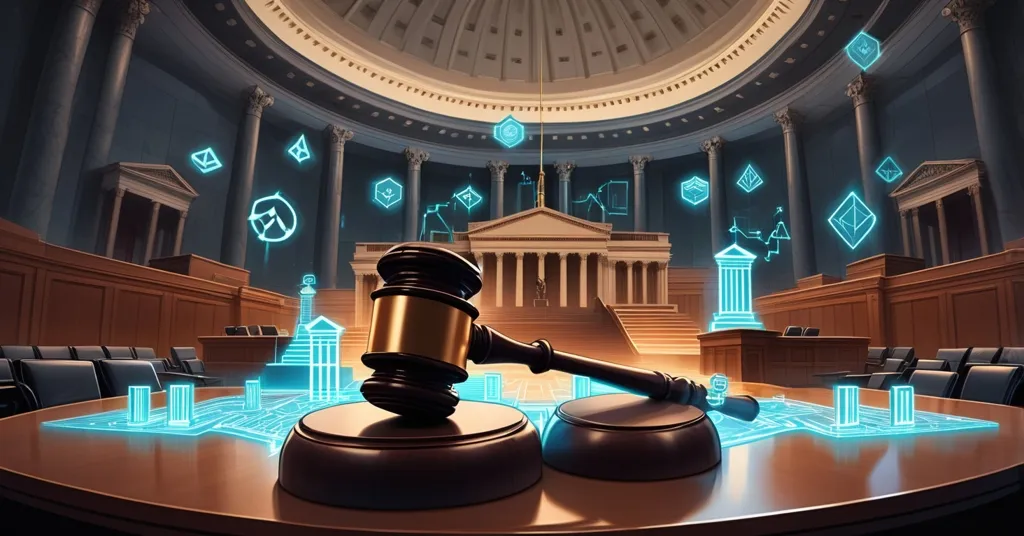
Washington is rolling up its sleeves to tackle the wild frontier of digital assets. The U.S. House of Representatives’ Financial Services Committee has announced a hearing titled “Tokenization & The Future of Securities: Modernizing Our Capital Markets,” aiming to untangle the regulatory mess surrounding cryptocurrencies and tokenized products. With macro-economic turbulence, speculative market antics, and geopolitical storms brewing, this event could mark a critical juncture for blockchain’s journey into the heart of global finance.
- Core Issue: Tokenization’s integration into securities markets and the regulatory path forward.
- High Stakes: New rules could reshape how crypto operates in custody, trading, and compliance.
- Big Picture: Institutional momentum, speculative bubbles, and global risks set the stage for urgency.
Regulatory Battleground: Tokenization Under the Microscope
The upcoming hearing zeroes in on a fundamental puzzle: how do tokenized products slot into the dusty framework of traditional securities markets? If you’re new to the term, tokenization uses blockchain tech to digitize ownership of real-world assets—stocks, bonds, real estate, even artwork—into tradeable tokens. Picture a $1 million penthouse chopped into 1 million digital tokens, each a tiny stake in the property, swappable in seconds on a decentralized network. The promise is huge: slashing settlement times from days to instants, trimming middleman fees, and opening high-value investments to everyday folks. But the pitfalls loom just as large. We’re talking scams preying on uninformed investors, market manipulation via pump-and-dump schemes, and threats to systemic stability—meaning the overall health of the financial system. Could a tokenized asset bubble spark a wider crash if unchecked?
The House Financial Services Committee will grapple with categorizing these digital assets. Are they securities, falling under the SEC’s iron fist? Commodities, overseen by the CFTC? Or a brand-new beast needing fresh laws? Their verdict will ripple across the crypto realm, dictating custody protocols (who safeguards the tokens?), disclosure mandates (what must creators reveal?), trading platform rules (how are exchanges policed?), and broker-dealer liabilities (who’s on the hook if it all blows up?). This isn’t petty paperwork—it’s the blueprint for whether blockchain can anchor modern finance or collapse under legal limbo. History offers a cautionary tale: the SEC’s 2017-2018 crackdown on Initial Coin Offerings (ICOs) branded many as unregistered securities, chilling the market. Will this hearing repeat that hardline stance, or pave a road for innovation? Specifics on witnesses or committee leanings are still under wraps, but past crypto sessions in 2021 showed a blend of wariness and intrigue among lawmakers. For more on the ongoing regulatory debate, check out this detailed report on the U.S. House’s focus on tokenization. Watch this space—Washington’s tone could tip either way.
Playing Devil’s Advocate: Is Regulatory Clarity a Trojan Horse?
Let’s flip the script. While regulatory clarity sounds like a golden ticket—protecting investors, legitimizing crypto—it could backfire spectacularly. Defining tokenized assets as securities might shield the masses, but it risks piling on compliance burdens that only fat-cat corporations can shoulder. Small-scale innovators and scrappy DeFi projects, the real disruptors, could get crushed under legal fees and red tape. Worse, heavy-handed rules might gut blockchain’s core promise: a permissionless, borderless system free from centralized strangleholds. Think about it—do we want a future where only Wall Street titans tokenize assets while indie developers are hit with shutdown orders? As a Bitcoin advocate, I’m wary that regulation could tame decentralization’s feral edge, morphing crypto into another cog in the corporate grinder. Yet, without some boundaries, the space stays a breeding ground for fraud and rug pulls. It’s a brutal balancing act, and Washington holds the tightrope.
Bitcoin as a Financial Fire Alarm: Sensing Liquidity Stress
Stepping back from Capitol Hill, crypto faces a wider tempest of macro-economic forces, and Bitcoin (BTC) might be our early warning siren. BitMEX co-founder Arthur Hayes, a seasoned voice in this arena, recently dubbed Bitcoin a “liquidity smoke alarm.” What’s that mean? BTC often reacts to financial strain—like central banks tightening money supply, making loans scarcer—before old-school metrics like job losses or stock dives flash danger. Its decentralized setup and round-the-clock global trading make it ultra-sensitive to shifts in cash flows and investor nerves. While Wall Street fixates on Fed rate hikes, Bitcoin’s price might already be shouting that a credit squeeze is near. Could it sniff out the next meltdown before the talking heads on TV?
Bitcoin behaves like a ‘liquidity smoke alarm’—an asset that can reflect stress in credit conditions before it becomes obvious in the real economy.
Hayes isn’t blindly optimistic, though. He cautions that if central banks keep clamping down on liquidity—think higher rates, less money printing—Bitcoin could suffer short-term blows as risk assets bleed out. But if policymakers flip to easing, slashing rates and flooding markets with cash, BTC might roar back.
Markets may need to fall before a policy-driven rebound becomes possible—implying BTC could face near-term pressure if liquidity tightens, but potentially regain strength if central banks ultimately pivot back toward easing.
This push-and-pull positions Bitcoin as both a fascinating macro gauge and a jittery investment. For fans, it’s why BTC reigns supreme—its hard-coded scarcity and decentralized backbone offer a rare shield against fiat failures, outshining flimsy altcoins that buckle under stress. But let’s not get drunk on hopium: Bitcoin isn’t untouchable, bound as it is to market mood swings and policy whims. It’s a rebel with a cause, not a magic bullet.
Institutional Tide: Mastercard’s Crypto Gamble
On another front, legacy finance giants are wading deeper into crypto, hinting at a pivot from dismissal to deployment. Mastercard just unveiled a video touting over 100 Bitcoin and crypto partner programs—a gutsy move from a payments titan that once sneered at blockchain. This isn’t empty hype; it shows traditional finance (TradFi) viewing digital assets as a workable layer for payments and settlements, not a rival to crush. For blockchain builders, it’s a green flag to forge fiat-to-crypto bridges. For regular users, it’s a glimpse of normalization—picture settling a bill with BTC through a Mastercard-tied wallet. Even hardcore Bitcoin maximalists, who often grumble about corporate meddling tainting peer-to-peer purity, can’t dismiss the ripple effect. A heavyweight like Mastercard jumping in builds trust and lays tracks for widespread use.
Hold the champagne, though. Partnerships aren’t mass adoption. Many of these ventures could flop if regulatory storms from hearings like this one rage too fiercely. And there’s a lingering itch: does corporate entry threaten to centralize a movement built on defying gatekeepers? If Mastercard becomes a crypto tollbooth, are we just swapping one boss for another? It’s a nagging doubt, even as we cheer the infrastructural gains.
Speculative Chaos: Memecoins Like CHIBI Expose the Wild Edge
Crypto isn’t just about high-stakes policy or corporate plays—it’s also a lawless sandbox of speculation, epitomized by the memecoin mania. Case in point: CHIBI, a Solana-based token that soared 210% in 24 hours, peaking at a $7.8 million market cap before dipping to $7.4 million. For newcomers, memecoins are often near-useless tokens propelled by internet memes, community fervor, and raw gambling impulses over any tangible worth. CHIBI’s surge is like tossing your savings on a coin flip—electrifying until you’re flat broke. These spikes reveal the gamble-heavy underbelly of the market, where low trading volume and whale control (a few big players hoarding supply) can whip prices skyward or crater them overnight.
Bitcoin diehards might scoff at this circus, and honestly, they’ve got a point—memecoins often sidetrack from blockchain’s mission of financial liberty. But let’s face facts: these speculative bursts keep the ecosystem humming with on-chain action, luring in curious rookies who might later pivot to meatier projects. Still, they’re a harsh lesson in separating flash from substance. Solana’s speed and low fees make it a breeding ground for such tokens, filling a niche Bitcoin doesn’t (and shouldn’t) chase. But for every CHIBI jackpot, there’s a dump heap of wrecked tokens and ruined investors. Step lightly in this minefield.
Geopolitical Quakes: Crypto in the Line of Fire
Layering on more heat, global flashpoints are rattling markets—crypto included—in ways we can’t brush off. The Strait of Hormuz, a tight Middle Eastern passage funneling a massive share of global oil and gas, is under scrutiny amid clashes involving Iran. Any blockage here could jolt energy prices, shake forex markets, and fuel a “risk-off” vibe where investors bolt to havens like the U.S. dollar. Bank of America may doubt the greenback’s long-term strength, but in a pinch, it’s still the world’s panic room. Bitcoin gets pitched as a “safe haven” untied to traditional systems, but let’s drop the fairy tales: when oil spikes and the dollar flexes, BTC often tanks with other risk plays. Geopolitical unrest isn’t mere static; it could worsen the liquidity pinches Hayes highlighted, hammering crypto valuations further.
There’s a grittier side too. Bitcoin’s no-borders design has turned it into a workaround for sanctions in nations like Iran and Venezuela, where people use it to skirt currency clamps or trade off-grid. This “shadow” strength of decentralization—empowering the individual while enabling shady flows—might surface in U.S. regulatory crosshairs. Could the tokenization hearing double as a push to clamp down on crypto’s privacy perks? It’s a plausible threat, clashing with our fight for freedom and anonymity. Yet, it also underscores Bitcoin’s raw power: even amid geopolitical mess, it’s a lifeline beyond fiat’s clutch. That’s the disruption we stand for, rules or not.
Crossroads for Crypto: Building Without Breaking
What’s the takeaway amidst this storm? The U.S. House hearing on tokenization could be a linchpin, crafting rules that either rocket crypto into financial primacy or mire it in bureaucratic sludge. Meanwhile, macro squeezes, memecoin frenzies, and worldly upheavals prove this road to legitimacy is a gauntlet, not a glide. Bitcoin stands tall as decentralization’s champion—a defiant jab at centralized power and a banner for financial self-rule. Yet it’s not bulletproof, tied to market tantrums and policy games. Altcoins and chains like Ethereum and Solana stake their claims, from scalable DeFi hubs to meme-driven betting zones, showing there’s space for variety in this uprising. The challenge is steering through without losing the radical spark: shaking the status quo with zero apologies.
As Washington deliberates, Bitcoin flags systemic strain, and speculative sparks fly, the crypto world teeters on a pivot. Will it solidify as a financial pillar, or stay a reckless trial? That’s the trillion-dollar riddle—no fluff, no fakery, just a hard grind for adoption and clout. The future rests on clarity and guts, not rose-tinted dreams. Can we construct without collapse?
Key Questions and Takeaways for Crypto Enthusiasts
- What’s the weight of the 2023 U.S. House hearing on tokenization?
It’s a potential game-changer for crypto regulation, determining how tokenized securities and digital assets mesh with traditional markets, possibly rewriting rules for custody, trading, and compliance. - How might regulatory clarity shift blockchain adoption?
Defining tokens as securities or commodities could cut legal hazards for projects and platforms, speeding mainstream uptake, though harsh laws might strangle smaller innovators. - Why is Bitcoin labeled a ‘liquidity smoke alarm’ for macro markets?
Arthur Hayes argues Bitcoin senses financial stress like credit squeezes before conventional signals, giving a unique peek at systemic risks ahead of Wall Street’s alerts. - What’s the impact of Mastercard’s crypto partnerships?
With over 100 programs, Mastercard’s leap shows legacy finance embracing blockchain, likely fortifying infrastructure and making crypto more routine for daily use. - How do geopolitical issues like the Strait of Hormuz influence crypto?
Disruptions in vital energy routes can drive oil costs and risk aversion, indirectly denting Bitcoin and digital assets via dollar surges and wider market shakes. - What do memecoin spikes like CHIBI say about the crypto space?
They uncover the speculative, high-stakes fringes, pushing investors to split short-lived hype from blockchain’s enduring potential for decentralization. - Could overregulation threaten crypto’s core values?
Tough rules might weigh down small projects with compliance costs, favoring big firms and risking the open, borderless ethos that fuels Bitcoin and blockchain. - How does Bitcoin’s use in sanctioned areas affect regulatory views?
Its role in bypassing fiat controls in places like Iran showcases decentralization’s strength and privacy edge, but also sparks worries over illicit use that could trigger stricter U.S. oversight.