US-Iran Ceasefire Rumors Spark Bitcoin Volatility and Oil Market Shocks
 LTB
LTB US-Iran Ceasefire Rumors Impact Bitcoin Price and Oil Markets: What’s Next?
Rumors of a potential ceasefire between the US and Iran have ignited global financial markets, with oil prices sliding, stocks rallying, and Bitcoin flirting with the $70,000 threshold. However, Iran’s outright denial of any negotiations has injected a heavy dose of uncertainty, proving that geopolitical gamesmanship can jerk markets around as violently as a leveraged crypto trade gone south.
- Ceasefire Whispers: Israeli media suggests a US-brokered one-month truce, while Iran denies any dialogue.
- Market Turmoil: Oil drops, stocks surge, and Bitcoin spikes briefly amid clashing signals of peace or conflict.
- Persistent Uncertainty: Iran’s rigid stance keeps volatility alive across financial and cryptocurrency spaces.
Geopolitical Flashpoint: Unpacking US-Iran Rumors
The spark came from Israeli news outlets reporting that the United States is advocating for a one-month halt in hostilities with Iran, a potential breakthrough in a region long synonymous with tension. Such a move, if legitimate, would be a diplomatic coup for Washington, temporarily dialing down a conflict that’s been a persistent thorn in global economic stability. But Tehran swiftly shut down the speculation, denying any talks are underway. This clash of narratives—unconfirmed reports versus official rejection—has left markets reeling. For those less familiar with the backstory, US-Iran friction spans decades, often hinging on Iran’s nuclear aspirations and regional power plays. Key moments like the 2015 nuclear deal, which aimed to curb Iran’s nuclear program in return for sanctions relief, and the US exit from that pact in 2018, have shaped today’s high-stakes environment.
Iran’s public stonewalling isn’t mere bluster; it’s a strategic power move. As a heavyweight in oil production, Iran knows that perpetuating fears of Middle East instability props up crude prices, which in turn stokes global inflation—a form of economic leverage delivered via public statements. Meanwhile, whispers of backchannel diplomacy persist, with intermediaries reportedly pitching proposals despite the lack of hard evidence. The situation remains murky, and markets, including Bitcoin and cryptocurrencies at large, are caught in the haze of this geopolitical maelstrom. For deeper insights into how these tensions are affecting financial landscapes, check out this analysis on US-Iran ceasefire impacts on oil and Bitcoin markets.
Market Mayhem: Bitcoin and Oil Caught in the Storm
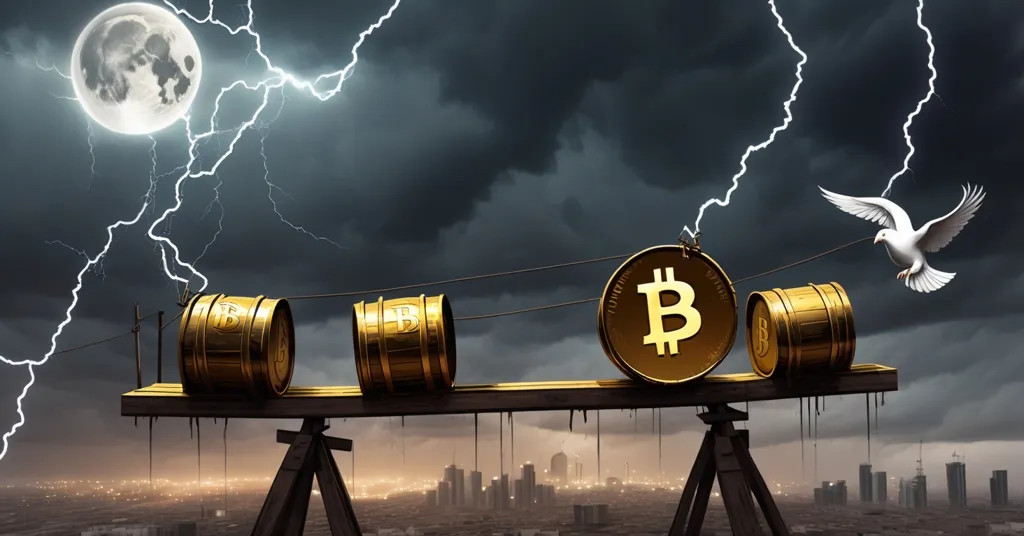
The initial reaction to ceasefire rumors was textbook: stock indices like the Dow and S&P 500 climbed as investors embraced risk, oil prices tanked on prospects of steady supply from the Middle East, and Bitcoin, always a lightning rod for speculative energy, surged toward $70,000 before pulling back. For those new to the space, Bitcoin often functions as a “risk asset”—it tends to rally when investors are optimistic and willing to bet on high-reward opportunities, but it can stumble when fear pushes capital into safer corners like bonds or gold.
Yet Iran’s denial flipped the mood. Traders who jumped on Bitcoin during the peace hype are now jittery as the shadow of prolonged conflict—and the inflation it feeds—darkens the outlook. Rising oil prices don’t just pinch at the pump; they ripple through economies, hiking costs for everything from transport to Bitcoin mining, which guzzles energy. Higher operational expenses can erode miners’ margins, potentially weighing on BTC’s price. On the other hand, some argue that inflation drives folks toward Bitcoin as a shield against fiat currency debasement—when governments print money, diluting its value over time. It’s a brutal push-pull dynamic, and no one can predict which force will dominate while the headlines keep shifting.
Bitcoin’s Peculiar Tango with Geopolitical Upheaval
Unlike traditional assets like stocks or commodities, Bitcoin isn’t tethered to a specific nation or resource, which is why many of us see it as a bastion of financial freedom—a decentralized escape from centralized chaos. Yet, it’s far from insulated against global unrest. Looking back, during the 2020 US strike on Iranian General Qassem Soleimani, Bitcoin spiked as investors sought alternatives amid uncertainty, only to retreat when tensions eased. Even more telling, Iran itself has witnessed surges in Bitcoin adoption under crushing US sanctions, with citizens using it to sidestep financial restrictions—a raw example of decentralization’s real-world impact.
But let’s flip the script for a moment. Are we, as a crypto community, overplaying Bitcoin’s connection to these geopolitical dramas? As Bitcoin maximalists, we often tout its independence from traditional systems, yet every murmur from Tehran sends traders into a tailspin. Maybe true decentralization means shrugging off this noise and zeroing in on on-chain metrics—transaction volumes, hash rates, wallet growth—over unrelated macro events. It’s a spicy perspective, but one worth mulling over as we navigate these choppy waters.
Decentralized Perspectives: Prediction Markets Weigh In
As legacy markets flail amid unconfirmed rumors, decentralized platforms are stepping up with alternative insights. Polymarket, a blockchain-based prediction market, allows users to wager on real-world outcomes, distilling collective speculation into tangible probabilities. Currently, traders on the platform are betting on a US-Iran conflict resolution by June 2026—a distant target, but a signal that some anticipate eventual de-escalation. For those unfamiliar, prediction markets operate via smart contracts, often on networks like Ethereum, harnessing crowd wisdom (or guesswork) in a transparent, decentralized way.
Beyond Polymarket, other blockchain tools are carving out roles in this space. On-chain analytics platforms can track wallet activity surges during crises, hinting at investor sentiment, while decentralized autonomous organizations (DAOs) have even funded humanitarian efforts in conflict zones. These innovations underscore why we advocate for effective accelerationism (e/acc)—rushing forward with tech-driven disruption can often outmaneuver the plodding machinations of nation-states. It’s a glimpse of how crypto’s ethos of freedom and privacy can intersect with global events in ways traditional finance never could.
Navigating the Fog: What Crypto Investors Need to Know
Until Iran’s position on ceasefire talks solidifies, brace for whiplash across all asset classes. Oil prices could lurch up or down with each new soundbite from Tehran, stocks might oscillate on flimsy reports, and Bitcoin will likely keep teasing breakout levels only to falter when reality bites. A confirmed truce could spark a risk-on frenzy, funneling capital into cryptocurrencies as geopolitical fears recede. But don’t get too cozy with that fantasy—markets chasing unverified buzz often get scorched, and banking on Middle East peace is as gamble-heavy as dumping your stack into a no-name altcoin with a cartoon mascot.
Speaking of altcoins, they’re not all shadowing Bitcoin’s path through this mess. Stablecoins like USDT or USDC could attract inflows as temporary shelters during volatility, offering a steadier store of value. Ethereum, meanwhile, might lag if risk appetite fully collapses, given its deep ties to experimental DeFi projects that thrive on optimism. As Bitcoin maximalists, we view BTC as the bedrock of this financial uprising, but we can’t ignore the unique niches other protocols occupy—stablecoins for calm, Ethereum for cutting-edge innovation—that Bitcoin isn’t designed to fill.
For now, the harsh truth is that geopolitics still casts a long, ugly shadow over our decentralized ambitions. Bitcoin may transcend borders, but it’s not impervious to bullets or bluster. Stay vigilant, question every headline, and lean on on-chain data over sensationalist news feeds. We’re here for disruption and liberty, not to be pawns in a diplomatic showdown. Hope for peace, sure—but don’t wager your wallet on it just yet.
Key Questions and Takeaways on Bitcoin and Geopolitical Tensions
- How do US-Iran tensions fuel Bitcoin price volatility?
These tensions create a volatile mix: hints of peace boost risk appetite, pushing Bitcoin up as a speculative asset, while ongoing conflict fuels inflation fears and tight financial conditions, often stifling gains.
- Why does Iran’s ceasefire denial rattle oil and crypto markets?
By rejecting talks, Iran sustains anxiety over Middle East supply disruptions, keeping oil prices high, which drives inflation and creates a hostile backdrop for risk assets like Bitcoin.
- What do decentralized platforms like Polymarket reveal about the US-Iran conflict?
Polymarket aggregates trader bets on real-world events, currently showing sentiment tilting toward conflict resolution by mid-2026, providing a unique, blockchain-powered window into geopolitical expectations.
- How might a confirmed ceasefire influence Bitcoin and cryptocurrency markets?
A verified truce could ease uncertainty, ignite risk-taking, and spur a rally in Bitcoin and other cryptos as investors redirect funds into speculative opportunities.
- What are the pitfalls of markets reacting to unconfirmed US-Iran rumors?
Acting on unverified news risks unsustainable price swings in Bitcoin and oil, potentially leaving investors high and dry if the situation pivots unexpectedly.
- Are we overemphasizing Bitcoin’s tie to geopolitical events?
Quite possibly—while BTC reacts to global unrest, true decentralization might mean prioritizing its core metrics over unrelated macro drama, a nudge to stay grounded amid the hype.