Tether’s Historic Audit with KPMG and PwC: Will It Restore Trust in USDT?
 LTB
LTB Tether’s First-Ever Audit with KPMG and PwC: A Make-or-Break Moment for Stablecoin Trust
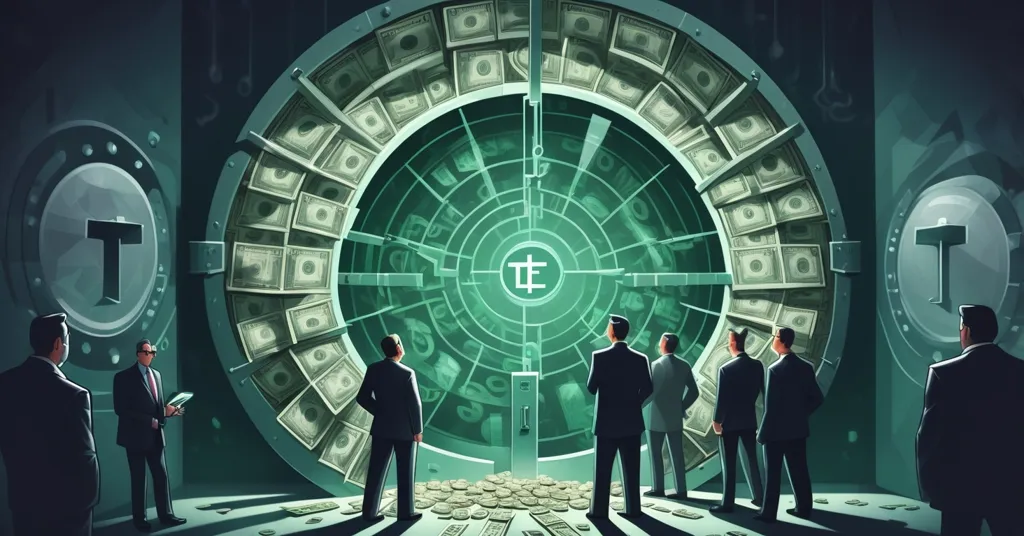
Tether, the undisputed giant of the stablecoin world with its USDT token commanding a $184 billion valuation, has finally committed to a full independent financial audit—its first in a decade of operation. As reported by the Financial Times, the company has tapped Big Four firm KPMG to lead the audit, with PwC assisting in preparing internal systems for this long-awaited scrutiny. With nearly 60% of the stablecoin market under its belt, Tether’s move could redefine trust in a sector plagued by skepticism, especially as it pushes into the U.S. market with a new USD-backed stablecoin, USAT. For more details on this development, check out the report on Tether’s historic audit.
- Historic Audit: Tether engages KPMG for its first full financial audit, with PwC aiding system preparation.
- Market Dominance: USDT holds a $184 billion valuation, representing 60% of the stablecoin market.
- Strategic Expansion: New U.S.-compliant stablecoin USAT launched amid tightening global regulations.
Tether’s Shady Past: Why Trust Has Been Elusive
For the uninitiated, stablecoins like Tether’s USDT are digital currencies designed to hold a steady value, typically pegged to a fiat currency like the U.S. dollar. Think of them as a currency exchange booth in the crypto space—promising to swap your digital token for a dollar on demand, but only if they’ve got the cash in the vault. Since its launch in 2014 (originally as Realcoin), Tether has been the go-to for traders and investors looking to escape the rollercoaster of Bitcoin—currently trading at around $67,700 after a 4% drop over the past week—or Ethereum’s wild swings. Stablecoins are the boring but essential plumbing of decentralized finance (DeFi), enabling trading, remittances, and safe value storage without the heart-stopping volatility of other cryptocurrencies.
Yet, Tether’s reign as the stablecoin king has been overshadowed by a persistent fog of distrust. The core issue? Whether USDT is truly backed 1:1 by U.S. dollars or equivalent assets as Tether claims. This means, in theory, for every USDT in circulation, there should be a dollar (or something just as liquid) sitting in a reserve account. But Tether has historically been cagey about proving this, dodging full audits and fueling endless speculation about whether it’s built on a house of cards. The skepticism isn’t just idle chatter—regulators have taken notice. In 2021, the U.S. Commodity Futures Trading Commission (CFTC) hit Tether with a $41 million fine for misstatements about its reserves, alleging the company didn’t always have the dollars it claimed. Earlier, in 2019, the New York Attorney General’s office accused Tether of using its reserves to cover an $850 million loss at its affiliated exchange, Bitfinex—a scandal that cemented its reputation as a potential ticking time bomb in the crypto ecosystem.
So, after years of sidestepping accountability, why open the books now? Tether CEO Paolo Ardoino offers a noble-sounding rationale:
“Tether’s mission has always been to build trust through action, not promises. Trust is built when institutions are willing to open themselves fully to scrutiny.”
Fair enough, but let’s not drink the Kool-Aid just yet. Hiring Big Four firms like KPMG and PwC looks good on paper, but the devil’s in the details—literally. If KPMG’s audit reveals a flawless reserve sheet, Tether might finally shake off its shady aura, harder to shed than a Bitcoin bear market. But if discrepancies pop up, or if this turns into another half-hearted PR stunt, the fallout could be a catastrophic collapse for Tether and a black eye for the entire stablecoin sector.
The Audit Gamble: What’s Really at Stake?
Let’s break down what a “full independent financial audit” even means, because it’s not just a fancy stamp of approval. An audit of this scale, conducted by a firm like KPMG, typically involves a deep dive into a company’s financials—verifying assets, liabilities, and internal controls. For Tether, this likely means proving that every USDT token in circulation (over 180 billion at last count) is matched by a dollar or a highly liquid equivalent in reserve. This isn’t a casual glance; it’s a forensic examination that could span bank statements, asset holdings, and even third-party custodians. PwC’s role in prepping internal systems suggests Tether might not even be ready for such scrutiny—think of it as cramming for an exam you’ve dodged for a decade. Will KPMG check every last cent, or just take a representative sample? Could Tether classify dubious or illiquid assets as “equivalents” to inflate its reserves? These are the loopholes that could undermine the whole exercise if not addressed head-on.
The stakes couldn’t be higher. A clean audit could be Tether’s key to redemption, silencing critics and proving USDT is a reliable anchor in the turbulent crypto sea. With Bitcoin’s recent dip reflecting a jittery market, stablecoins like USDT remain a critical safe haven for investors—making this audit’s outcome a linchpin for broader market confidence. But if KPMG uncovers gaps, or if Tether resists full disclosure (a tactic it’s perfected over the years), the backlash could trigger mass redemptions of USDT, destabilizing DeFi platforms where it’s a liquidity backbone. We’re talking billions in value potentially evaporating overnight—a scenario no one in crypto wants to see, even if some of us Bitcoin purists grumble about stablecoins’ cozy ties to fiat systems.
Tether’s U.S. Ambitions: Navigating a Regulatory Minefield
Timing-wise, this audit aligns with Tether’s bold push back into the U.S. market—a financial powerhouse it’s largely been sidelined from due to past regulatory heat. Enter USAT, a new USD-backed stablecoin designed to comply with recent U.S. stablecoin regulations rolled out last year. These rules, aimed at protecting investors and ensuring financial stability, demand greater transparency and oversight for stablecoin issuers—something Tether has historically struggled with. Launching USAT is a calculated bet: pair a compliant product with a clean audit, and Tether could win over American investors and regulators who’ve long viewed it with suspicion. Succeed here, and Tether sets a precedent for navigating government oversight globally; fail, and it risks being locked out of the world’s largest financial arena for good.
Stablecoins are under the microscope in the U.S. because they’re a gateway to DeFi—those decentralized platforms that let users trade, lend, and borrow without banks. Regulators worry that an unbacked stablecoin could collapse, sparking a domino effect across crypto markets. For Tether, whose USDT is often the grease keeping DeFi wheels turning, a successful audit and USAT rollout could legitimize its role as a bridge between traditional finance and the blockchain frontier. But let’s play devil’s advocate for a second: does the average DeFi user, who values pseudonymity and freedom from institutional meddling, even care about a KPMG stamp of approval? Or is this just theater for regulators and Wall Street types, while the crypto underground shrugs?
Global Regulations: A Double-Edged Sword for Stablecoins
Tether’s audit drama isn’t unfolding in isolation. Around the world, governments and institutions are clamping down on stablecoins, trying to balance innovation with control. Here’s how key regions are shaping the landscape—and what it means for Tether:
- Hong Kong: In August, Hong Kong rolled out stablecoin legislation, with plans to issue licenses to approved issuers by the end of 2024. This positions the region as a crypto-friendly hub with strict oversight, potentially forcing Tether to restructure operations or face exclusion from a growing Asian market.
- Japan: Japan launched JPY, its first yen-backed stablecoin, marking a step toward localized digital currencies. If successful, it could inspire more nation-backed stablecoins, challenging Tether’s USD-centric dominance in certain markets.
- South Korea: A stablecoin bill is in the works but stalled due to government gridlock. This uncertainty could delay Tether’s expansion plans in the region, though it also buys time to align with eventual rules.
- Europe: A consortium of twelve major European banks is set to launch a euro-based stablecoin by the second half of 2026. This direct shot at USD-pegged stablecoins like USDT could siphon off DeFi liquidity and user adoption in Europe, eroding Tether’s market share if it gains traction.
Regulation cuts both ways. Done right, it can weed out the scammers and fly-by-night operations that give crypto a bad name, lending credibility to legit players like Tether—if it passes muster. Done wrong, heavy-handed laws could choke innovation, pushing projects into shadowy corners of the internet. As advocates of decentralization, we’re wary of bureaucrats meddling in blockchain’s wild west, but stablecoins aren’t pure Bitcoin—they’re tethered (pun intended) to fiat systems and the rules that govern them. Tether navigating this maze could set a blueprint for how crypto interfaces with the old financial guard.
Stablecoins in the Bitcoin Ecosystem: Ally or Necessary Compromise?
From a Bitcoin maximalist lens, stablecoins like USDT are a bit of a paradox. We champion Bitcoin as the ultimate decentralized money—free from central banks, governments, and corporate overreach. Stablecoins, by contrast, are inherently tied to the very fiat systems we aim to disrupt. Yet, we can’t deny their utility. They’re a gateway for mass adoption, letting normies dip their toes into crypto without betting the farm on Bitcoin’s next 10% swing. When BTC drops, as it has recently to $67,700, demand for stablecoins often spikes as a safe harbor—amplifying why Tether’s audit matters. If USDT holds up under scrutiny, it bolsters the infrastructure that draws people toward decentralized finance, even if it’s not the pure, untainted vision of BTC.
Still, let’s not pretend stablecoins are the endgame. They’re a compromise—a stepping stone to a world where Bitcoin or truly decentralized alternatives might not need fiat pegs at all. Tether’s role, flaws and all, is to accelerate that transition. Call it effective accelerationism: push the tech forward, warts included, and let the market sort out the mess. If Tether cleans up its act, it’s a win for adoption; if it implodes, it’s a painful but necessary lesson for the ecosystem to build better.
Stablecoin Alternatives: Is Tether’s Dominance at Risk?
Tether isn’t the only game in town, and its audit comes as competitors circle. USDC, issued by Circle, has long positioned itself as the transparent alternative, undergoing regular audits by reputable firms and publishing monthly reserve reports. While USDC’s market cap (around $56 billion) trails USDT’s, its compliance-first approach has won over institutional players wary of Tether’s baggage. Then there’s DAI, a decentralized stablecoin from MakerDAO, which isn’t backed by fiat at all but by overcollateralized crypto assets like Ethereum. DAI’s algorithmic stability dodges some regulatory pitfalls but introduces its own risks—like liquidation spirals in volatile markets.
These alternatives highlight Tether’s tightrope walk. USDC’s transparency sets a bar Tether must now meet or exceed with this audit. DAI, meanwhile, represents a purer DeFi ethos, though its complexity limits mainstream appeal. Add in the upcoming euro stablecoin from European banks, and Tether faces a multi-front challenge to its 60% market share. A botched audit could accelerate users jumping ship to rivals; a successful one might entrench USDT as the default stablecoin for years to come.
Key Takeaways and Questions to Ponder
- What does Tether’s first audit mean for its credibility in the crypto market?
A flawless audit could bury years of doubt about USDT’s backing, restoring trust; a flawed or opaque result could brand Tether as irredeemable. - How will global stablecoin regulations impact Tether’s operations?
Tighter government oversight in regions like Hong Kong and the U.S. will raise compliance costs but could also legitimize Tether if it adapts successfully. - Why is Tether’s expansion into the U.S. market significant?
The U.S. is a financial heavyweight, and USAT’s launch, paired with a clean audit, could secure Tether a massive foothold if regulatory barriers are cleared. - What challenges might Tether face during the audit process with KPMG and PwC?
Risks include reserve mismatches, inadequate internal systems, or reluctance to fully disclose, any of which could torpedo the process. - How does the European consortium’s euro stablecoin plan affect Tether’s dominance?
A euro-based stablecoin by 2026 could chip away at USDT’s market share in Europe, offering users a non-USD alternative for DeFi and beyond. - How does Tether’s audit impact Bitcoin and DeFi markets?
A successful audit strengthens stablecoin reliability, boosting DeFi liquidity and Bitcoin adoption; a failure could spark panic, undermining confidence across crypto.
Tether stands at a pivotal crossroads. A successful audit with KPMG could mark a new era of legitimacy, reinforcing stablecoins as vital infrastructure for crypto’s growth and disruption of centralized finance. A stumble, however, could unravel years of dominance, shaking not just Tether but the broader DeFi and Bitcoin ecosystems that rely on USDT’s stability. As champions of decentralization and freedom, we’re rooting for blockchain tech to win out—flaws and all—but we won’t hesitate to call out any nonsense if this audit smells like a smokescreen. The stakes are sky-high, and the crypto world is watching. This saga is far from over.