Square Rolls Out Bitcoin Lightning Payments to 4M U.S. Merchants: A Commerce Revolution?
 LTB
LTB Square Unleashes Bitcoin Lightning Network Payments for U.S. Merchants: A Game-Changer?
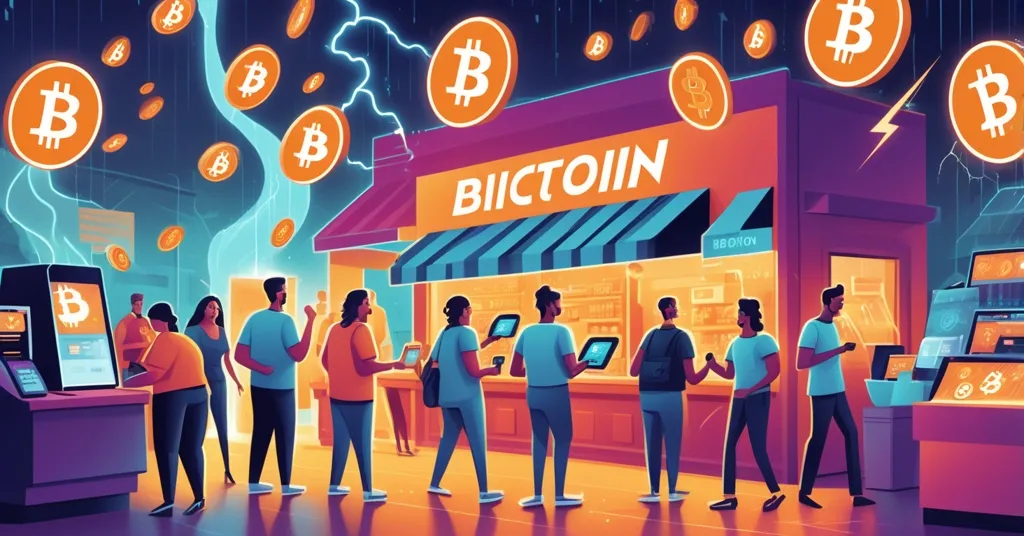
Square, the payment processing heavyweight under Block, Inc., has ignited a potential revolution in U.S. commerce by enabling Bitcoin payments for millions of small businesses as of this week. By harnessing the Bitcoin Lightning Network, this rollout could redefine how Bitcoin is perceived—not just as digital gold, but as everyday money.
- Massive Scale: Targets 4 million U.S. merchants, 78% of Square’s user base.
- Lightning Fast: Uses the Lightning Network for near-instant transactions.
- Zero Cost: Waives processing fees until the end of 2026.
Square’s Bold Move: Bitcoin Payments for Millions
Starting Monday, Square rolled out Bitcoin payment acceptance for small businesses across the United States, and the best part? No extra setup is required. If you’re already a Square merchant, opting in is as simple as flipping a switch. This initiative reaches roughly 4 million eligible merchants—78% of Square’s U.S. user base—making it one of the largest pushes for Bitcoin adoption in commerce to date. From diners in Denver to boutiques in Boston, small businesses now have a direct line to accept Bitcoin without needing a crypto PhD.
But Square isn’t stopping at access. To ease the minds of merchants wary of Bitcoin’s infamous price swings, settlements are defaulted to U.S. dollars. When a customer pays with Bitcoin, Square handles the conversion to fiat almost instantly, ensuring the merchant receives a stable dollar amount without sweating over market dips. While there’s no explicit mention of hidden conversion costs, this setup minimizes volatility risk—a smart move to lure in traditional businesses who’d rather not play crypto roulette with their daily earnings.
Lightning Network 101: Speed and Scalability Unleashed
Central to Square’s rollout is the Bitcoin Lightning Network, a Layer 2 scaling solution that’s been hailed as the key to making Bitcoin practical for everyday use. Think of it as a fast side road bypassing the main Bitcoin highway. The base Bitcoin blockchain, while secure, is notoriously sluggish and expensive during peak traffic—waiting minutes or hours for a transaction to confirm, with fees that can turn a $5 coffee into a $10 joke. The Lightning Network sidesteps this mess by processing transactions off-chain through pre-funded channels between users, only settling the final balance on the main blockchain. The result? Near-instant checkouts that can rival Visa or Mastercard, all while keeping Bitcoin’s decentralized, censorship-resistant core intact.
For a small business using Square, this means a customer paying with Bitcoin at a Brooklyn bodega could see their transaction clear in seconds, just like a credit card swipe. It’s a technological leap that seemed like sci-fi just a few years back, and it’s now live for millions of merchants. But more on the potential hiccups with this system later—let’s first look at why merchants might actually jump on board.
Why Merchants Might Bite: Zero Fees and Fiat Safety
Square’s offer is hard to ignore: zero processing fees for Bitcoin transactions until the end of 2026. That’s over two years of cost-free experimentation for merchants, a feast of incentives that could tempt even the most crypto-averse shop owner. Compare that to the 2-3% fees typically charged for credit card transactions, and it’s clear Square is playing hardball to disrupt the payment status quo. Add to that the fiat settlement safety net, and the barrier to entry for small businesses is practically nonexistent.
Picture this: a small diner in Chicago starts accepting Bitcoin through Square. A tech-savvy customer pays for a $10 meal using Bitcoin via the Lightning Network. The transaction clears in seconds, the diner gets $10 in dollars deposited into their account, and there’s no fee eating into their margin. It’s a win-win—at least on paper. Square’s bet is that once merchants see how seamless this can be, they’ll stick with it even after fees kick in post-2026.
The Roadblocks: Liquidity, Regulation, and Education
Before we start chanting “Bitcoin to the moon,” let’s pump the brakes and eyeball the potholes ahead. The Lightning Network, while brilliant, isn’t flawless. One major snag is liquidity. Those off-chain channels I mentioned? They’re like pre-funded tunnels between users or merchants. If there’s not enough Bitcoin locked in a channel, transactions can stall or fail. It’s akin to a debit card declining because your account’s empty—frustrating for all involved. Companies like ACINQ and Breez are working on solutions to boost channel liquidity, but for now, high-volume merchants or unexpected spikes in Bitcoin payments could hit bottlenecks.
Then there’s the regulatory bear lurking in the shadows. As Bitcoin creeps into mainstream commerce, U.S. agencies like the IRS, SEC, and FinCEN are sharpening their claws. Remember the 2021 infrastructure bill that slapped reporting requirements on crypto transactions? That’s just a taste of what’s coming if Bitcoin payments scale through Square. Merchants might face KYC (Know Your Customer) or AML (Anti-Money Laundering) mandates, turning a simple payment rail into a compliance headache. Square’s likely prepared with backend safeguards, but any whiff of misuse—think tax evasion or illicit transactions—could invite a crackdown that halts this experiment in its tracks.
Finally, let’s talk about the human factor. Most small business owners aren’t crypto natives. They’re busy running shops, not decoding blockchain whitepapers. Even with Square’s user-friendly interface, there’s a learning curve to trusting a decentralized monetary network over the familiar heft of PayPal or Chase. Without robust education and support, adoption could fizzle despite the incentives. Square will need to go beyond zero fees and offer hand-holding for merchants dipping their toes into this brave new world.
Industry Reactions and Big-Picture Implications
The crypto world is abuzz with Square’s move, and industry leaders aren’t holding back their excitement. Miles Suter, Block’s Head of Bitcoin Product, sees this as a pivotal moment for Bitcoin’s journey.
“We’re making it easier for millions of businesses to accept bitcoin. This is how bitcoin as everyday money begins.”
Suter’s words carry weight, especially given Block’s deep commitment to Bitcoin under Jack Dorsey’s vision, which includes initiatives like Spiral (for Bitcoin development) and a forthcoming Bitcoin hardware wallet. This isn’t a PR stunt—it’s part of a broader mission to accelerate decentralized finance.
David Marcus, CEO of Lightspark and ex-president of PayPal, took the optimism to a whole new level with a striking analogy.
“This could be a TCP/IP moment for global financial infrastructure.”
If Marcus is onto something, we’re witnessing the birth of a financial internet, with Bitcoin as its backbone and Square laying the first cables. TCP/IP transformed communication by standardizing how data moves across the globe; if Bitcoin can do the same for money—borderless, permissionless, instant—it’s a paradigm shift. But can it scale to that level without tripping over its own tech or regulatory hurdles? That’s the billion-dollar question.
Bitcoin’s Identity Crisis: Store of Value or Everyday Money?
Zooming out, Square’s Lightning integration forces us to rethink Bitcoin’s purpose. For years, it’s reigned as “digital gold,” a store of value for hodlers banking on long-term gains. Its security and decentralization are unmatched, which is why I lean Bitcoin maximalist—nothing else comes close as a bedrock for financial sovereignty. But as a medium of exchange? That’s been a harder pitch. Altcoins like Ethereum power smart contracts, and stablecoins like USDT handle low-friction transactions. Bitcoin’s clunky base layer never seemed fit for daily use—until now.
Square’s push suggests Bitcoin can be practical money for a $3 latte or a $30 haircut. Yet, I’ll play devil’s advocate here: should it even try? Bitcoin’s strength lies in being a scarce, unmanipulable asset, not a payment gimmick. Chasing Visa-like transaction volumes might dilute its core mission or expose it to risks it wasn’t built for. On the other hand, maybe this is the evolution Satoshi Nakamoto always envisioned—a peer-to-peer cash system finally hitting Main Street. Square’s gamble could redefine Bitcoin’s narrative, or it might strain its identity. Which side are you on?
Competitive Edge: Square vs. the Payment Giants
Square isn’t operating in a vacuum. Other payment processors have flirted with crypto—PayPal lets users buy and sell Bitcoin, though not directly for merchant payments, and Stripe has dabbled in crypto integrations before pulling back. Square’s focus on the Lightning Network gives it a unique edge: speed and cost efficiency that rivals traditional systems while staying true to Bitcoin’s decentralized ethos. But it also exposes Square to risks competitors might dodge, like regulatory backlash or tech glitches specific to Lightning.
If even a fraction of these 4 million merchants adopt Bitcoin payments, the ripple effect could be seismic. Competitors like Stripe or Shopify might feel the heat, forced to integrate Bitcoin or other cryptocurrencies to avoid losing market share. Square’s first-mover advantage—coupled with Block’s pro-Bitcoin legacy—positions it as a frontrunner in this race to redefine payments. This isn’t just adoption; it’s acceleration, a deliberate shove to upend financial norms before legacy systems can catch up.
Key Questions Shaping Bitcoin’s Future
- What does Square’s Bitcoin Lightning Network rollout mean for mainstream cryptocurrency adoption?
It’s a landmark push, exposing up to 4 million U.S. merchants to Bitcoin payments and potentially normalizing crypto in everyday commerce, from coffee shops to corner stores. - How does the Lightning Network enable Bitcoin for small, daily transactions?
By processing payments off-chain through pre-funded channels, it cuts fees to near-zero and speeds up transactions to match credit card systems, making Bitcoin viable for a $3 purchase. - Will small businesses adopt Bitcoin payments with Square’s zero fees until 2026?
The financial incentive is powerful, but success hinges on overcoming education gaps, user-friendly tools from Square, and looming regulatory uncertainties around crypto commerce. - Could Square’s move force competitors to integrate Bitcoin or other cryptocurrencies?
Definitely—Square’s early lead with Lightning Network payments could pressure giants like Stripe or Shopify to adopt crypto solutions or lose ground in a decentralizing market. - What are the biggest challenges facing Bitcoin payments via Square and the Lightning Network?
Liquidity constraints in Lightning channels, regulatory scrutiny from agencies like the IRS or FinCEN, and merchant hesitancy due to crypto’s complexity could slow this revolution. - Is Bitcoin’s Lightning Network rollout a foundational shift for global financial infrastructure?
It’s too soon to call it a ‘TCP/IP moment,’ but if scalability issues are solved and adoption grows, Bitcoin could become a core layer for borderless, permissionless money movement.
Square’s deployment of Bitcoin payments via the Lightning Network is more than a tech upgrade—it’s a defiant stand against centralized payment overlords and a lifeline for small businesses hungry for alternatives. Whether this ignites a full-blown revolution or stumbles under regulatory or technical weight is anyone’s guess. One thing is certain: Bitcoin isn’t just a speculative plaything for hodlers anymore. It’s storming into everyday commerce, and Square has handed it the battering ram. Let’s see how many doors it breaks down.