Iran Imposes $1 Per Barrel Hormuz Oil Toll, Demands Yuan or Stablecoin Payments
 LTB
LTB Iran Slaps $1 Per Barrel Toll on Hormuz Oil Passage, Demands Yuan or Stablecoins
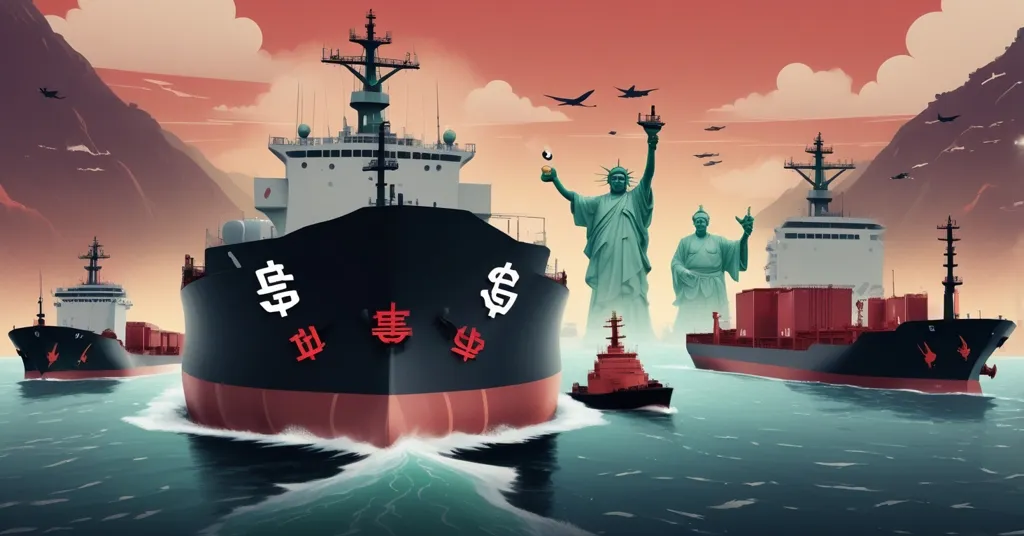
Iran has dropped a geopolitical bombshell by imposing a $1 per barrel toll on oil tankers navigating the Strait of Hormuz, a vital artery for global energy trade. Even more striking, payments must be made in Chinese yuan or stablecoins, sidestepping the U.S. dollar entirely. This bold maneuver, paired with stringent oversight by Iran’s Islamic Revolutionary Guard Corps (IRGC), has sent oil prices soaring and raised eyebrows in the cryptocurrency world.
- New Toll: $1 per barrel for oil tankers passing through the Strait of Hormuz.
- Payment Terms: Only Chinese yuan or stablecoins accepted, no dollars allowed.
- Market Shock: Brent crude prices hit $141.36 per barrel, the highest since 2008.
The Hormuz Toll: A Geopolitical Power Play
The Strait of Hormuz, a narrow waterway between Iran and Oman, is the beating heart of global oil trade, with roughly 20% of the world’s supply—about 21 million barrels daily—flowing through its tight confines. Iran’s decision to levy this toll, as reported in a recent update on the Hormuz oil passage policy, isn’t just about pocket change; it’s a calculated move to flex muscle amidst simmering tensions, particularly with the United States. Controlling 12 nautical miles from its coastline, Iran claims legal authority to inspect vessels and dictate routes, turning a critical trade chokepoint into a strategic lever.
The toll comes with a heavy dose of red tape. The IRGC, through its Hormuzgan Provincial Command, screens every ship for ties to “hostile” nations like the U.S. and Israel, assigning a 1-to-5 ranking that determines fees—friendlier nations get a discount, while adversaries face steeper costs or outright denial. Ships must disclose detailed ownership and cargo data, stick to designated paths, broadcast specific passcodes, and sometimes even temporarily swap their registration flags to comply. IRGC patrol boats escort vessels through the strait, which Iran insists is about safety, but let’s not kid ourselves—it reeks of control dressed up as hospitality. Iran’s Deputy Foreign Minister for Legal and International Affairs, Kazem Gharibabadi, spun it this way:
“Of course, these requirements will not mean restrictions, but rather to facilitate and ensure safe passage and provide better services to ships that pass through this route.”
Sure, and I’ve got a bridge in Brooklyn to sell you. The reality is evident in cases like Pakistan, which, lacking enough flagged vessels, had to negotiate with global commodity traders to sail under its banner just to get through. If every nation with a strategic waterway starts playing this game, global shipping could turn into a chaotic costume party of flag-swapping and fee-dodging. Iran’s partnership with Oman to draft joint transit rules might soften the blow by framing it as regional coordination rather than unilateral bullying, but the jury’s still out on whether this calms nerves or just adds another layer of bureaucracy.
Oil Markets Reel: A $141.36 Wake-Up Call
The market didn’t waste time reacting to Iran’s gambit. Brent crude spot prices skyrocketed to $141.36 per barrel, a peak not seen since the 2008 financial crisis, driven by immediate fears of supply disruptions for deliveries slated over the next 10 to 30 days. We’re talking serious pressure on global economies, especially for oil-hungry nations like India, which imports over 80% of its crude, much of it through Hormuz. U.S. stock indexes took a nosedive at first, though they clawed back some ground after news of Iran-Oman talks hinted at a sliver of stability. Still, if tensions escalate—especially with figures like Donald Trump warning of prolonged conflict with Iran—we’re not just looking at price spikes but potential full-blown supply crises.
Long-term, sustained disruptions or added costs in the Strait could keep oil prices jacked up, fueling inflation from gas pumps to grocery shelves. Supply chains might adapt by rerouting through riskier or pricier paths like the Cape of Good Hope, or by accelerating shifts to alternative energy, but those are slow fixes. For now, the world’s stuck holding its breath, watching this narrow waterway dictate economic fate.
Stablecoins Enter the Geopolitical Arena
Now, let’s zero in on the crypto angle—Iran’s insistence on stablecoin payments is where this story gets juicy for our crowd. For the uninitiated, stablecoins are digital currencies pegged to real-world assets like the U.S. dollar, designed to keep a steady value unlike Bitcoin’s wild rollercoaster. Think of them as blockchain-based IOUs—handy for transactions without the headache of bank intermediaries or government freezes, though not without their own baggage. Popular players like Tether (USDT) and USD Coin (USDC) are likely candidates for Iran’s toll system, given their market dominance, though neither comes without controversy—USDT, for instance, has long faced scrutiny over whether it’s truly backed 1:1 by reserves.
Why stablecoins over Bitcoin? Simple: BTC’s price swings make it a lousy medium for trade. A tanker captain doesn’t want to pay $1 per barrel today only to find it’s worth $1.50 tomorrow—or vice versa. Stablecoins, theoretically, solve that, while their blockchain roots offer a way to dodge traditional financial chokeholds—a godsend for a sanctioned state like Iran. This isn’t Iran’s first flirtation with crypto either; they’ve dabbled in Bitcoin mining to rake in hard currency under the radar. But using stablecoins for something as high-profile as oil tolls? That’s a whole new level of audacity, potentially positioning crypto as a real player in international trade.
Here’s the catch: most stablecoins are centrally issued, meaning they’re not the pure, trustless systems Bitcoin maximalists like myself champion. If Iran’s payments get flagged, hacked, or if a major stablecoin depegs—loses its tie to the dollar—trust in these digital assets could crater. And let’s talk scale: blockchain networks like Ethereum, where many stablecoins live, struggle with high fees and slow speeds under heavy load. A private chain might work better for Iran’s needs, but that defeats the whole decentralization ethos. So while I’m thrilled to see crypto piercing the geopolitical veil, I’m wary—this smells like centralization creep, risking blockchain’s core promise of individual empowerment.
De-Dollarization: A Jab at the Petrodollar
Iran’s push for yuan and stablecoins isn’t just about payment logistics; it’s a middle finger to the U.S. dollar’s stranglehold on global oil trade, known as the petrodollar system. Since the 1970s, most crude has been priced and sold in dollars, cementing American financial dominance. By forcing alternatives, Iran joins a growing chorus—think China and Russia—aiming to chip away at that power. It’s a small jab for now, given Hormuz tolls are a drop in the bucket of global oil transactions, but symbolically? It’s huge. If this gains traction, other nations might pile on, and stablecoins could emerge as a tech-savvy workaround to traditional currency wars.
That said, don’t bet the farm on this toppling the dollar overnight. Stablecoins, even at their best, remain untested at this magnitude, and their ties to the very dollar they’re meant to replace (via pegs) create an ironic dependency. Plus, if the U.S. smells crypto enabling sanctions evasion on this scale, expect a regulatory sledgehammer—potentially throttling DeFi innovation worldwide. As someone who believes Bitcoin is the ultimate middle finger to centralized finance, I see stablecoins filling a niche BTC can’t, but I’m not popping champagne over a tool that might just trade one overlord for another.
The Dark Side: Risks and Regulatory Blowback
Let’s not get too starry-eyed about crypto’s role here. Iran’s experiment could backfire spectacularly, dragging decentralized tech through the mud. If stablecoin transactions linked to the IRGC get exploited—say, through hacks or money laundering schemes—global watchdogs will have a field day. Nations like the U.S. could tighten sanctions further, targeting not just Iran but the crypto infrastructure itself. We’ve seen this movie before: every time blockchain gets tied to shady state antics, the freedom-focused community pays the price with overreaching laws. This isn’t the cypherpunk vision of liberation; it’s a potential lightning rod for crackdowns.
On the flip side, there’s a glimmer of hope if blockchain’s transparency is leveraged right. A public ledger for toll payments and ship records could cut corruption and disputes, ensuring fees aren’t just pocketed by officials. But with the IRGC calling the shots, fat chance of that—centralized control turns a tool of fairness into a weapon of surveillance. So while I’m all for accelerating crypto adoption, I’m not blind to the stench of state agendas perverting its purpose. This could be a step toward financial revolution, or a misstep that hands regulators the perfect excuse to cage digital freedom. Place your bets.
Key Takeaways and Burning Questions
- What does Iran’s stablecoin toll policy mean for cryptocurrency adoption in global trade?
It hints at crypto’s potential to bypass traditional finance, especially for sanctioned states, but risks tainting the space with geopolitical baggage, inviting harsher global oversight. - How could Iran’s Hormuz toll impact blockchain’s role in international payments?
Blockchain could offer transparent tracking of tolls and data, curbing fraud, but under IRGC control, it’s more likely to morph into a state enforcement tool than a decentralized solution. - Can stablecoins truly challenge the U.S. dollar’s grip on oil trade, and where does Bitcoin fit?
Stablecoins pose a symbolic threat to the petrodollar with their borderless stability, but Bitcoin, despite its volatility, remains the purist’s choice for trustless money in any de-dollarization fight. - What economic risks do oil price surges from this toll pose, and could crypto ease the pain?
Spiking costs threaten inflation and supply chain chaos for oil-reliant economies; crypto might offer alternative payment channels, but it’s a gamble unproven at this scale. - Will Iran’s strategy spur other sanctioned nations to adopt cryptocurrency, for better or worse?
Success could ignite a wave of crypto trade experiments, pushing adoption, but failures—hacks or depegging—might trigger a domino effect of regulations, stifling blockchain’s freedom-focused roots.
Iran’s play in the Strait of Hormuz is a high-stakes mashup of geopolitics, energy, and tech that’s impossible to ignore. As a champion of decentralization, I’m intrigued by stablecoins stepping onto the world stage, filling gaps Bitcoin can’t. But I’m not naive—this isn’t about empowering the little guy; it’s a state wielding crypto as a geopolitical chess piece. Whether this sparks a financial uprising or lights a fuse for regulatory backlash, one thing’s clear: blockchain’s future isn’t just code and consensus—it’s raw, messy, and deeply political. The world’s watching this narrow strait, and so are we.