Drift Protocol Hacked: $286M Solana Exploit Tied to North Korean Cybercrime
 LTB
LTB Drift Protocol Hack: $286M Solana Exploit Linked to North Korean Hackers
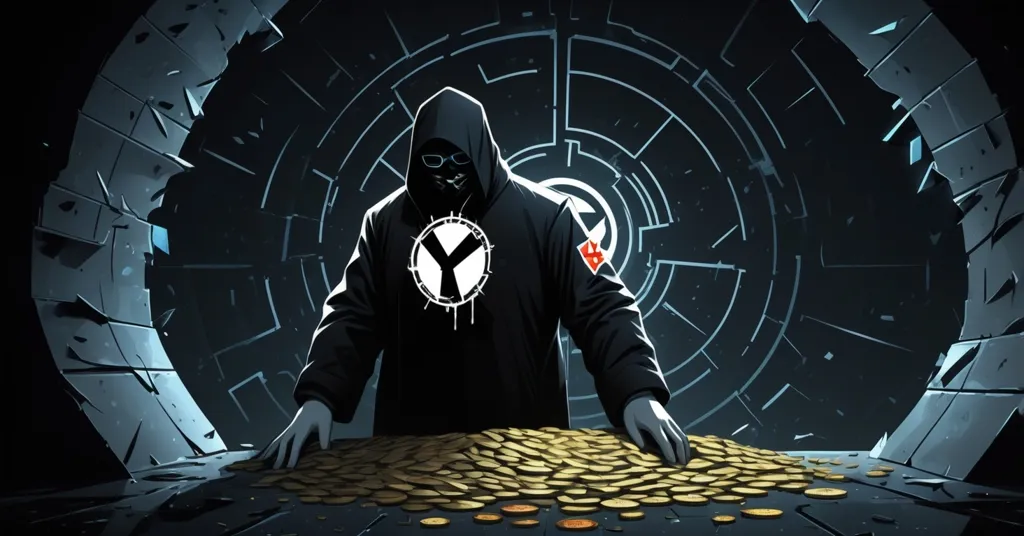
A devastating $286 million exploit has struck Drift Protocol, a prominent decentralized perpetual futures exchange on the Solana blockchain, on April 1, 2026. This breach, one of the largest in crypto history, has obliterated Drift’s total value locked (TVL) and sparked chilling concerns about DeFi security, governance flaws, and the sinister involvement of state-sponsored actors, with blockchain analytics pointing straight to North Korean hackers.
- Exploit Magnitude: $286 million stolen, dwarfing the $235 million WazirX breach.
- Suspected Culprit: North Korean state-sponsored hackers, per Elliptic’s on-chain analysis.
- Damage to Drift: TVL crashed from $550 million to under $250 million in under 20 minutes.
The $286M Heist: How It Unfolded
On April 1, 2026, the crypto community was blindsided by a meticulously orchestrated attack on Drift Protocol, a key player in Solana’s DeFi ecosystem. Specializing in perpetual futures—a type of derivative contract letting traders speculate on asset prices without expiration dates—Drift operates in the heart of decentralized finance (DeFi), a system of blockchain-based financial tools that cuts out traditional middlemen like banks. In a mere 20 minutes, a malicious actor drained nearly 20 vaults, pulling off a single transfer of $41.7 million JLP tokens worth $155 million. Critical vaults such as JLP Delta Neutral, SOL Super Staking, and BTC Super Staking were gutted, slashing Drift’s TVL from a robust $550 million to a battered $250 million. This isn’t just a financial disaster; it’s a screaming alarm about the fragility beneath DeFi’s shiny promise.
The sophistication of this attack is what sets it apart from the usual smash-and-grab hacks. Drift revealed on April 2, 2026, that the attacker exploited a novel vulnerability involving “durable nonces,” a feature in Solana’s design that allows pre-authorized transactions to be executed later for efficiency in smart contracts. Think of it as leaving a signed blank check lying around—if someone nabs it, they can cash it whenever. Here, the attacker turned this feature into a master key, seizing control of Drift’s Security Council administrative powers. Signs of premeditation are undeniable: the attacker’s wallet was set up eight days prior, even receiving a small test transfer from a Drift vault. This was no impulsive hack; it was a cold, calculated assault. For deeper insights into this exploit and its implications, check out this detailed report on the Solana-based Drift Protocol $286 million hack.
“Earlier today, a malicious actor gained unauthorized access to Drift Protocol through a novel attack involving durable nonces, resulting in a rapid takeover of Drift’s Security Council administrative powers. This was a highly sophisticated operation…” – Drift Protocol (via X, April 2, 2026)
Laundering the Loot: A Cross-Chain Shell Game
Post-exploit, the attacker didn’t waste a second covering their tracks with a textbook laundering operation. Stolen tokens were swapped to USDC using Jupiter, a Solana-based DEX aggregator that facilitates token trades. Then, the funds were bridged to Ethereum—a process of moving assets between blockchains to leverage different networks’ features or escape a single ledger’s transparency. Once on Ethereum, the loot was fragmented into ETH and other assets across multiple wallets, a tried-and-true method to obscure the money trail. For newcomers, this kind of cross-chain hopping is a favorite among thieves because it exploits the fragmented nature of blockchain tracking, making recovery a needle-in-a-haystack ordeal.
North Korean Connection: Crypto as Geopolitical Weapon
Here’s where the story takes a dystopian turn. Blockchain analytics firm Elliptic dropped a bombshell, linking the Drift Protocol hack to North Korean state-sponsored hackers, potentially tied to the notorious Lazarus Group. Their investigation highlights on-chain behavior and laundering patterns mirroring past DPRK-attributed attacks, suggesting this could be the 18th such incident, with over $300 million stolen to date. The notion that your DeFi yields might be bankrolling Pyongyang’s weapons programs isn’t sci-fi—it’s a documented reality. State-sponsored actors are drawn to crypto exploits for the pseudonymity and the potential to fund illicit activities with funds that are damn near untraceable once laundered.
North Korea’s fingerprints on crypto crime aren’t new. The Lazarus Group alone has been tied to billions in thefts, from the Ronin Bridge hack in 2022 to countless smaller hits, often funneling proceeds into state coffers for nuclear ambitions, as per reports from firms like Elliptic and Chainalysis. The Drift exploit, outstripping the $235 million WazirX breach and ranking as 2026’s biggest hack so far, trails only the 2022 Wormhole Bridge debacle on Solana for sheer damage. Ledger CTO Charles Guillemet didn’t mince words, framing this as part of a systemic plague where state actors turn code into a geopolitical battering ram against borderless finance.
“Drift Protocol, one of the leading perpetual DEXs on Solana, has been hacked for approximately $213M. This makes it the biggest hack of 2026 so far, and one of the largest ever on the Solana blockchain, right behind the Wormhole Bridge exploit of 2022.” – Charles Guillemet, Ledger CTO (via X, April 2, 2026)
Solana’s Security Woes: Speed Over Safety?
Drift’s immediate response was to halt deposits and withdrawals, clarifying this was no April Fools’ jest. They’ve since partnered with security firms, bridges, and exchanges to mitigate the fallout, though details on fund recovery or user compensation remain murky at best. Solana’s native token, SOL, held at $80 on the daily chart amid the chaos, but the blockchain itself faces renewed flak for its security trade-offs. Known for lightning-fast transactions and low fees, Solana has been a DeFi darling, yet hacks like Wormhole and now Drift fuel the critique that its need for speed keeps writing checks its security can’t cash.
As a Bitcoin maximalist at heart, it’s hard not to smirk at altchains like Solana tripping over their own ambition. Bitcoin’s slower, deliberate design prioritizes security over flashy throughput, and you don’t see nine-figure exploits on its base layer. But let’s not get smug—Bitcoin isn’t immune to custodial screw-ups or layer-2 mishaps. More importantly, Solana’s innovations fill gaps Bitcoin doesn’t touch, offering cheap, rapid transactions for complex instruments like perpetual futures. Without these experiments, the crypto ecosystem would stagnate. Still, when half a protocol’s value vanishes in minutes, it’s a brutal reminder that DeFi’s “trustless” ethos hinges on code and admin keys that are anything but bulletproof.
DeFi Vulnerabilities: A Systemic Reckoning
Zooming out, the Drift Protocol hack isn’t just a Solana problem—it’s a DeFi problem. How do we scale decentralized systems without turning them into blinking neon targets for attackers, whether they’re lone wolves or state-backed cyber squads? Compared to Ethereum, which has its own hack history but benefits from a more mature security auditing culture, or Binance Smart Chain, with centralized guardrails, Solana’s ecosystem feels like the Wild West on steroids. Each exploit chips away at institutional trust, potentially stalling mainstream adoption. Developer sentiment on platforms like X shows growing frustration, and TVL trends post-hack could signal a flight to “safer” chains if confidence isn’t restored.
Let’s be blunt: DeFi protocols like Drift can’t keep playing whack-a-mole with security flaws while users eat the losses. Multisig wallet designs—where multiple parties must approve transactions—and admin key management need a complete rethink. Past hacks have shown that a single compromised key can unravel everything. Emerging solutions like formal verification of smart contracts, which mathematically prove code behaves as intended, could be a game-changer. Insurance mechanisms for users also deserve more focus, though Drift hasn’t hinted at compensation yet, leaving affected parties in limbo. The harsh truth of DeFi is that self-custody and due diligence are your only armor when things go south.
Lessons for Crypto: Innovation Through Crisis
Tying this back to the ethos of decentralization and financial freedom, exploits like Drift’s challenge the very soul of trustless systems. If a single flaw can wipe out hundreds of millions, how “decentralized” are we really? Yet, aligning with the spirit of effective accelerationism, crises like this can ignite faster, better innovation. The crypto space has a knack for turning punches into progress—think of how Ethereum’s DAO hack birthed stronger governance models. Solana and DeFi at large could emerge tougher if they treat this as a war cry to overhaul security, not just a PR nightmare to weather.
For users, the message is stark: the road to financial sovereignty via crypto is littered with landmines. Drift’s community is reeling, with scattered X posts lamenting lost savings and broken trust in Solana’s promise. While no specific recovery fund has been confirmed, the broader implication is clear—crypto’s freedom comes with a price, often paid in sleepless nights and empty wallets. The question lingers: is DeFi’s vision worth the gamble when state actors like North Korea weaponize its weaknesses? Only time, and tighter code, will tell.
Key Questions and Takeaways on the Drift Protocol Exploit
- What triggered the catastrophic Drift Protocol hack on Solana?
A highly coordinated attacker exploited Solana’s durable nonces—a feature for pre-authorizing transactions—to hijack Drift’s Security Council admin powers, draining $286 million from nearly 20 vaults in under 20 minutes. - How devastating was the financial toll of this exploit?
The $286 million theft is the largest crypto hack of 2026, cutting Drift’s total value locked from $550 million to under $250 million, surpassing even the $235 million WazirX breach. - Are North Korean hackers truly behind this Solana exploit?
Elliptic’s analysis ties the attack to North Korean state-sponsored groups, possibly the Lazarus Group, based on familiar laundering tactics, potentially marking the 18th incident funding illicit regimes with over $300 million stolen. - How did the attacker obscure the stolen crypto funds?
The thief converted tokens to USDC via Jupiter, bridged them to Ethereum, and dispersed them into ETH and other assets across wallets, leveraging cross-chain tactics to dodge on-chain trackers. - What does this reveal about DeFi security and Solana’s reputation?
It lays bare critical flaws in DeFi governance and admin key protection, further denting Solana’s credibility after past hacks like Wormhole, and risking slower adoption without urgent security upgrades. - Can crypto withstand state-sponsored threats like this?
Though a gut punch, the Drift hack could catalyze breakthroughs in multisig designs and audits, fortifying the industry against sophisticated foes—rogue coders or state cyber armies—if the community rises to the challenge.