Bitcoin Transactions Hit Record 615K in 2024, But Fees Remain Low—What’s Behind the Surge?
 LTB
LTB Bitcoin Transactions Smash 2024 Records, Yet Fees Stay Dirt Cheap—What’s the Catch?
Bitcoin’s network is seeing a level of action we haven’t witnessed in years, with transaction counts soaring to 615,000—the highest since November 2024. But in a head-scratching twist, the fees miners are collecting remain stubbornly low, begging the question: who’s really driving this frenzy, and why isn’t it costing more?
- Transaction Surge: Bitcoin hits 615,000 transactions, a peak not seen since November 2024.
- Network Comeback: CryptoQuant’s Bitcoin Network Activity Index overtakes its 365-day moving average in Q2 2026.
- Fee Anomaly: Miner fees stay low despite the transaction boom, a trend dragging on since late 2024.
Transaction Boom: Breaking Down the Numbers
Data from on-chain analytics firm CryptoQuant, shared in a recent thread on X, paints a vivid picture of Bitcoin’s blockchain roaring back to life. After a dismal stretch of declining activity from late 2024 into early 2025, the network has staged a dramatic recovery with transaction numbers reaching their highest since 2024. Their Bitcoin Network Activity Index—a metric gauging overall engagement on the blockchain—surged past its 365-day moving average in the second quarter of 2026. For those less familiar, this moving average smooths out day-to-day noise to reveal longer-term trends. Breaking above it signals that Bitcoin is busier than it’s been in over a year, hinting at renewed interest or at least renewed movement of funds. But here’s the rub: with this much activity, you’d expect miners to be cashing in on hefty fees as users scramble to get transactions processed. Instead, the total fees collected are stuck in the gutter, a weird trend that’s lingered since the end of 2024.
Low Fees: Unraveling the Mystery
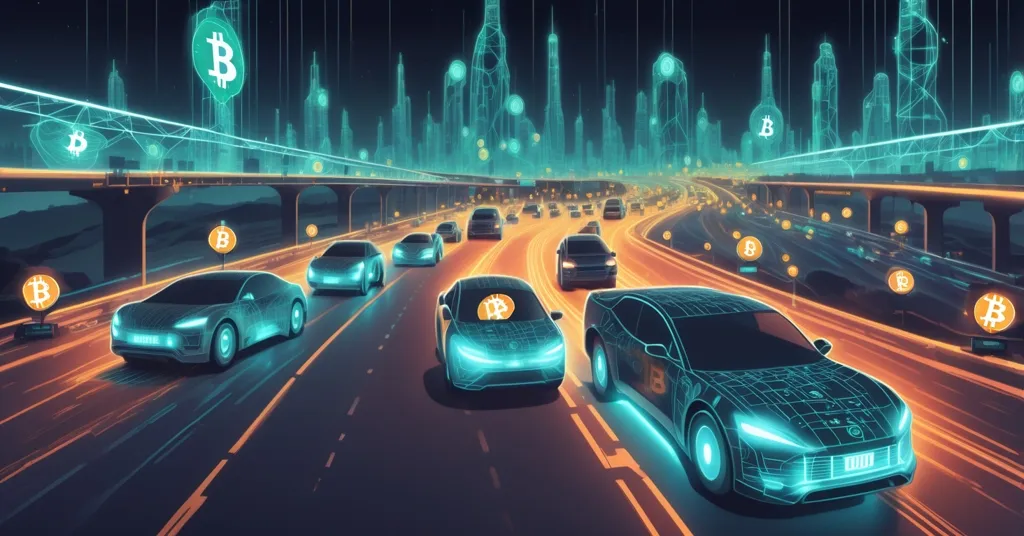
Why the disconnect between sky-high transactions and rock-bottom fees? Bitcoin’s fee structure operates on supply and demand. Picture a crowded highway: when too many cars (transactions) clog the lanes (block space), drivers (users) shell out more (higher fees) to cut the line. But when the road’s wide open, as it seems now, there’s no rush, and fees stay cheap. This lack of congestion or competition suggests the current surge isn’t fueled by urgent retail demand—think everyday folks buying BTC for a quick flip or using it for payments. Instead, the low-cost environment appears to be a golden ticket for big players. Exchanges, custodians, and large holders (aka “whales”) are likely exploiting this window to handle operational grunt work. We’re talking about tasks like UTXO management—consolidating or splitting unspent transaction outputs, which are essentially the leftover “change” from prior Bitcoin transactions to streamline their holdings—or reshuffling wallets for privacy or strategic positioning. These moves don’t scream organic growth or mass adoption; they’re more like digital spring cleaning, done on the cheap while the network’s quiet.
For the uninitiated, UTXOs are a core concept in Bitcoin’s design. Every transaction creates outputs that can be spent later, and managing them efficiently matters for privacy and cost. When fees are low, big entities can reorganize their stacks without bleeding cash—a bit like a billionaire haggling over pennies, except it’s millions in BTC being shuffled around.
Price Action: A Separate Story?
Adding another layer to this puzzle, Bitcoin’s price teased the $70,000 mark on Monday, a psychological threshold that often stirs excitement or fear of missing out among traders, before slipping back to $69,000. Historically, price pumps tied to retail mania come with network gridlock and spiking fees as everyone rushes to buy or sell. Here, the muted fee response suggests this transaction boom and the price wiggle might not be directly linked. Market sentiment, macroeconomic winds, or other external forces could be steering the price, while on-chain activity tells a story of institutional housekeeping rather than speculative fever. Frankly, don’t fall for the hype around $70K—it’s a number, not a prophecy, and the data doesn’t scream retail-driven rally. Let’s keep our heads on straight and focus on what’s actually happening under the hood.
Miners and the Fee Dilemma: A Double-Edged Sword
Let’s zoom in on why fees matter so much to Bitcoin’s ecosystem. Miners, the backbone of the network, validate transactions and secure the blockchain by solving complex puzzles. They’re rewarded in two ways: newly minted Bitcoin (the block reward) and transaction fees paid by users. The block reward, which halves roughly every four years to cap Bitcoin’s supply at 21 million, took a cut in 2024. That means fees are becoming a bigger slice of miners’ income pie. Persistently low fees, as we’re seeing now, could spell trouble for smaller mining outfits already squeezed by rising energy costs and post-halving economics. If fewer miners stick around, network security might take a hit—a risk worth watching if centralization creeps in with only big pools surviving. On the flip side, dirt-cheap fees are a godsend for users, whether you’re a regular Joe sending value or a whale moving millions. It’s a brutal trade-off: accessibility for users versus sustainability for miners. Right now, the scales tip toward the former, but for how long?
Looking at broader data trends, hash rate (the total computing power securing Bitcoin) and mining difficulty adjustments could offer clues. If low fees start driving miners offline, we might see dips in hash rate, though recent data isn’t conclusive yet. This uncertainty is a stark reminder that Bitcoin’s resilience isn’t guaranteed—it’s a machine that needs fuel, and fees are part of that equation.
Alternative Theories: Beyond Whales and Housekeeping
While institutional maneuvers seem the likely culprit for this transaction spike, let’s not rule out other possibilities. Could Bitcoin’s Ordinals protocol—essentially NFTs etched onto the blockchain via inscriptions—be playing a role? These have spiked activity in the past without always jacking up fees due to their unique structure. Or might we be seeing increased use of Bitcoin sidechains or wrapped BTC for stablecoin transactions, which pad transaction counts without the urgency that drives fee competition? Another angle: Ethereum’s lower gas fees and Layer-2 scaling solutions could be siphoning off retail activity, leaving Bitcoin’s network to handle more operational or niche use cases. These theories don’t negate the whale narrative but add nuance—Bitcoin’s utility is evolving, and not all activity points to the same story of adoption or speculation.
Historically, transaction surges like the 2021 bull run came with fee spikes as retail flooded in. Today’s pattern feels different, more calculated. Post-halving periods often see fee volatility too, but 2024’s aftermath seems to favor operational efficiency over user frenzy. Without more data from sources like Glassnode or Dune Analytics to cross-check CryptoQuant’s findings, we’re left speculating—but that’s half the fun in this space, isn’t it?
Big Picture: Bitcoin’s Evolving Role
Stepping back, this odd dance of high transactions and low fees underscores Bitcoin’s dual identity as both a transactional network and a store of value. Are we watching a network becoming a sandbox for institutional chess moves while retail waits on the sidelines? Or is this the quiet before a storm of genuine adoption? Low fees might signal accessibility, a win for Bitcoin’s mission to disrupt traditional finance, but they also pose risks if miner incentives erode. Compare this to altcoins like Ethereum, which often see fee spikes tied to DeFi or NFT booms—Bitcoin’s niche as digital gold might mean its activity patterns don’t always mirror the broader crypto frenzy, and that’s not necessarily a flaw. It’s a reminder that Bitcoin doesn’t need to be everything to everyone; other protocols can fill gaps while BTC holds the fort as a decentralized, censorship-resistant asset.
As a Bitcoin maximalist at heart, I’ll cheer for its dominance, but I’m not blind to the ecosystem’s diversity. This surge, whether driven by whales or weird new use cases, proves the network’s alive and adaptable. Yet let’s not sugarcoat it—low fees won’t keep miners fed forever, and ignoring that is just reckless optimism. Bitcoin’s future hinges on balancing user empowerment with network security, and right now, we’re walking a tightrope.
Key Questions and Takeaways on Bitcoin’s Transaction Surge
- What’s fueling Bitcoin’s transaction count hitting 615,000?
Likely not retail users but large entities like exchanges and whales, capitalizing on low fees for operational tasks such as UTXO consolidation and wallet reshuffling. - Why are Bitcoin fees so low despite massive network activity?
There’s no congestion or competition on the network, meaning users aren’t bidding higher fees to prioritize transactions, pointing to a lack of urgent retail demand. - What does the Bitcoin Network Activity Index recovery in Q2 2026 signify?
Surpassing its 365-day average marks a strong rebound in blockchain engagement after a slump through late 2024 and early 2025, showing renewed activity. - Could low fees jeopardize Bitcoin miners post-2024 halving?
Absolutely—with block rewards slashed, sustained low fees might push smaller miners out, risking centralization and potentially weakening network security. - Is Bitcoin’s price swing around $70,000 tied to this on-chain boom?
Probably not; the absence of fee spikes suggests activity isn’t speculative or retail-driven, so price shifts may reflect broader market dynamics instead.
Bitcoin’s network is flexing serious muscle with transaction volumes unseen in over a year, yet the bargain-basement fees tell us not all activity is what it seems. Whether this is whales playing Monopoly with BTC or a sign of stranger undercurrents, one thing’s clear: the blockchain isn’t gathering dust. For newcomers, this means Bitcoin remains a cheap, powerful tool to move value—for now. For the OGs, it’s a moment to ponder where this fits in the long arc of adoption and security. Keep watching the data; the real twists in this space often lurk where you least expect them.