Toncoin Surges, XRP Falls, Bittensor Wavers Amid Geopolitical and Regulatory Crypto Shocks
 LTB
LTB Crypto Market Snapshot: Toncoin Soars, XRP Stumbles, and Bittensor Teeters Amid Global Tensions and Regulatory Stakes
Chaos and opportunity collided in the cryptocurrency market on April 12, with Toncoin (TON) leading an explosive rally, XRP facing persistent headwinds, and Bittensor (TAO) delivering a lukewarm performance. Beyond the price charts, geopolitical flashpoints and looming regulatory shifts add layers of uncertainty to an already volatile landscape. This crypto market trends 2023 update unpacks the raw data, the broader context, and the critical questions for Bitcoin enthusiasts and altcoin traders alike.
- Toncoin (TON): Up 5.6% to $1.42, fueled by a staggering 135% volume surge.
- XRP: Down 1.27% to $1.33 despite a 12.3% volume increase, signaling selling pressure.
- Bittensor (TAO): A modest 1.33% gain to $266.25, undercut by a 40% volume drop.
Market Movers: Diving Into the Price Action
Toncoin’s Breakout Potential
Toncoin, a project with a relatively modest $3.53 billion market cap, grabbed headlines with a 5.6% price jump to $1.42 over a 24-hour span. What’s turning heads isn’t just the price—it’s the jaw-dropping 135% surge in trading volume. For those new to the space, trading volume represents the total amount of a cryptocurrency exchanged in a given period. Think of it as the crowd size at a market: the louder the buzz, the more action is happening. This kind of volume often signals strong buyer interest and momentum, suggesting TON could push past its resistance zone of $1.48–$1.50 if the energy holds. If it slips, support at $1.34–$1.36 might cushion the fall.
Why does this matter? Toncoin’s roots trace back to Telegram, the messaging giant, which initially backed the project before regulatory pressures forced a pivot to a community-driven model. Since rebranding and restructuring, TON has gained traction for its fast, scalable blockchain, aiming to handle mass adoption. Historically, it’s had volatile swings, but this volume-backed rally hints at something more substantial than a fleeting pump. Still, a word of caution: crypto history is littered with pump-and-dump corpses. A 135% volume spike screams momentum, but if it looks too good to be true, it probably is—don’t let FOMO cloud your judgment. For deeper insights into recent price movements of TON and other coins, check out this detailed market analysis.
XRP’s Regulatory Woes and Selling Pressure
XRP, tied to Ripple and boasting an $81.72 billion market cap, slid 1.27% to $1.33 despite a 12.3% uptick in trading volume. At first glance, higher volume might seem positive, but paired with a price drop, it’s a red flag for active selling. Traders appear to be offloading their holdings, possibly rattled by broader market sentiment or specific pressures. XRP sits near a critical support level of $1.28–$1.30, a price floor where buying historically kicks in. Think of it as a safety net—if it holds, a bounce to resistance at $1.38 could be on the cards. If it breaks, expect a steeper dive.
Context is everything with XRP. Its ongoing legal battle with the U.S. Securities and Exchange Commission (SEC) over whether it’s a security has dragged on since late 2020, casting a shadow over its price stability. Recent rulings have offered partial wins for Ripple, but uncertainty lingers, spooking investors. Beyond the courtroom, XRP’s use case as a cross-border payment solution remains compelling, with partnerships like those with financial institutions keeping it relevant. Yet, with selling pressure mounting, it’s a stark reminder that even major players aren’t immune to crypto’s brutal swings. Will regulatory clarity ever arrive, or is XRP doomed to be a punching bag for policymakers?
Bittensor’s Shaky Gains and Decentralized AI Ambitions
Bittensor (TAO), a niche player with a $2.88 billion market cap, edged up 1.33% to $266.25. Sounds like a win until you see the nearly 40% drop in trading volume, a glaring sign of weak conviction. Price gains without volume are like a house of cards—easily toppled by the slightest breeze. TAO’s market dominance is a tiny 0.12%, so it’s hardly shaking the industry, but traders should watch support at $240–$245 and resistance at $280–$285 for clues on its next move.
For the unfamiliar, Bittensor isn’t your typical cryptocurrency. It’s a blockchain protocol focused on decentralizing artificial intelligence (AI), rewarding nodes for contributing machine learning models. Imagine a network where developers and data scientists pool AI resources, bypassing centralized tech giants, and get paid in TAO for their efforts. It’s a bold experiment, aligning with crypto’s ethos of disrupting the status quo and pushing tech boundaries—what we champion as effective accelerationism. Potential use cases include decentralized AI for apps, research, or even predictive markets, but risks like scalability issues or slow adoption loom large.
Why should you care? Projects like Bittensor represent the bleeding edge of blockchain innovation, merging AI with decentralization. But with volume drying up, this modest rally lacks legs. Historically, TAO has struggled to maintain momentum without consistent buzz or partnerships—will it carve a lasting niche, or fade into obscurity? For now, it’s a speculative bet in a crowded altcoin field.
Global Impact: Geopolitical Curveballs Hit Crypto
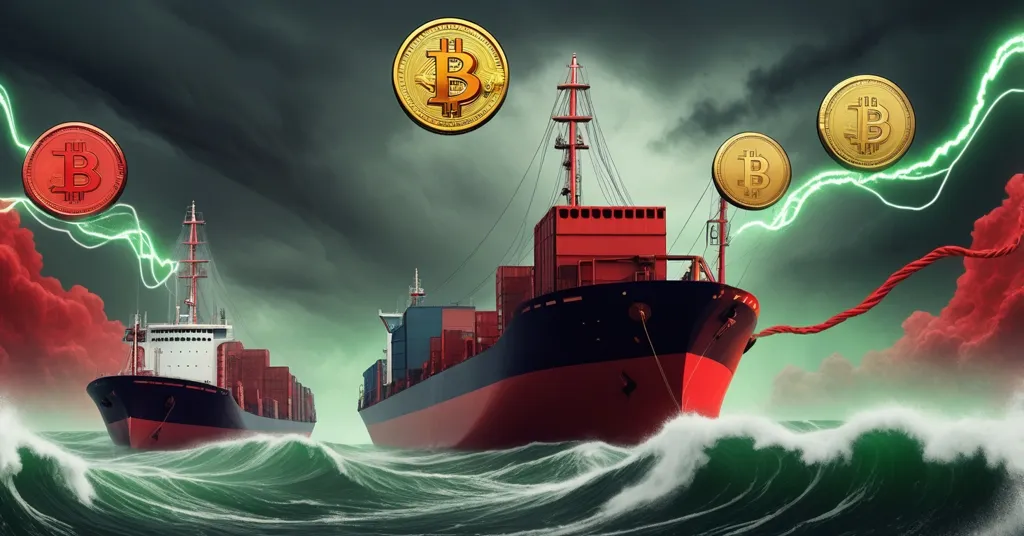
While Toncoin and others battle it out on the charts, global geopolitical moves are adding fuel to crypto’s unpredictable fire. Reports have emerged that Iran is demanding crypto tolls—roughly $1 per barrel—from oil tankers navigating the Strait of Hormuz, a critical chokepoint for 20% of the world’s oil supply. This isn’t a minor quirk; it’s a potential flashpoint with far-reaching implications. The Islamic Revolutionary Guard Corps (IRGC), which reportedly controls about 50% of Iran’s crypto ecosystem, is deeply embedded in this scheme.
Blockchain analytics firm Chainalysis has sounded the alarm, warning that crypto payments to Iran or the IRGC could be classified as “material support” under U.S. law. Thanks to the transparent nature of blockchain, every transaction is traceable—a fact hammered home by social media commentator Crypto Patel, who noted:
“Crypto ≠ invisibility cloak. Every TX lives on-chain forever.”
For everyday traders, this blockchain sanctions risk could translate to sudden price swings or even locked funds on exchanges if U.S. regulators, like the Office of Foreign Assets Control (OFAC), designate wallet addresses or freeze assets. Historical precedents, such as sanctions on Venezuela’s crypto experiments with Petro, show how quickly markets can react to geopolitical crackdowns. Bitcoin’s censorship resistance shines in scenarios like this, but altcoins with centralized touchpoints might face harsher fallout. This isn’t just a distant headline—it’s a reminder that crypto operates in a messy, interconnected world.
Policy Watch: Regulatory Headwinds and the CLARITY Act
Closer to home, regulatory tensions are brewing in the U.S. with Senator Cynthia Lummis championing the CLARITY Act, a bill aimed at setting clear rules for stablecoins—cryptocurrencies pegged to assets like the dollar to reduce volatility. Lummis isn’t holding back, declaring:
“Now or never.”
Her urgency reflects a growing consensus that stablecoins, often used as liquidity tools or safe havens in crypto trading, could be an Achilles’ heel if left unchecked—or a golden ticket if regulated smartly. The CLARITY Act could stabilize markets by defining boundaries, potentially boosting mainstream trust and weeding out scammers. Compared to the EU’s recent MiCA framework, which imposes strict disclosure rules on stablecoin issuers, the U.S. proposal might take a similar hardline stance.
But there’s a flip side. Could overly strict rules push innovation offshore, leaving U.S. markets trailing? Heavy-handed regulation might choke growth, especially for altcoins reliant on stablecoin ecosystems, while Bitcoin purists will likely grumble about creeping centralization. Still, a clear framework could lure hesitant institutional money, a trade-off worth debating. Will lawmakers draw a firm line in the sand, or just bury innovation under red tape? We’re betting on a coin toss, but the outcome could reshape crypto’s trajectory.
Bitcoin’s Shadow: Why It Still Matters
Bitcoin itself isn’t in today’s price snapshot, but its ethos looms large over these altcoin tales and external pressures. Toncoin’s surge and XRP’s struggles highlight the volatility inherent in smaller or legally entangled projects, reinforcing Bitcoin’s argument as the ultimate decentralized store of value. With a network secured by miners worldwide and no central authority to target, BTC stands as a bulwark against the kind of regulatory or geopolitical risks now surfacing.
Iran’s crypto toll demands and the threat of sanctions enforcement underscore Bitcoin’s censorship resistance—a core reason many of us lean toward maximalism. While altcoins like XRP or stablecoins face scrutiny for potential misuse, Bitcoin’s design makes it harder to choke or control, even if transactions are traceable. Regulatory moves like the CLARITY Act might tighten the noose on centralized crypto models, but they also spotlight why Bitcoin’s permissionless nature is non-negotiable. Altcoins fill critical niches—fast payments, AI innovation—but when the world gets messy, BTC remains the North Star of freedom and privacy. Its dominance isn’t just market cap; it’s principle.
Critical Takeaways: Key Questions Answered
- What’s fueling Toncoin’s (TON) 5.6% price surge?
A massive 135% trading volume spike points to strong buyer interest in this crypto market trends 2023 standout, driving momentum that could breach resistance at $1.48–$1.50 if sustained. - Why is XRP declining despite increased trading activity?
A 1.27% drop to $1.33 alongside a 12.3% volume rise suggests active selling, likely tied to market fears or ongoing regulatory woes in this altcoin price analysis. - Can Bittensor (TAO) sustain its modest gain?
With a 1.33% uptick to $266.25 but a 40% volume decline, weak conviction hints at a potential reversal unless fresh buyers bolster this innovative decentralized AI project. - How might Iran’s crypto toll demands impact market sentiment?
Charging $1 per barrel in crypto at the Strait of Hormuz, with IRGC ties, raises blockchain sanctions risk, potentially triggering price volatility or frozen funds if U.S. regulators intervene. - What’s at stake with the CLARITY Act in crypto regulation news?
Senator Lummis’s push for stablecoin rules could bring stability and trust to markets or stifle innovation, shaping how altcoins and Bitcoin navigate future dynamics in the U.S.
Navigating the crypto jungle demands a sharp eye and a skeptical mind. Toncoin’s rally might lure you in, but history warns of fleeting hype. XRP’s woes and Bittensor’s wobble are stark reminders of volatility’s bite, while geopolitical sparks and regulatory shadows could ignite broader chaos. Bitcoin stands as the unshakeable pillar of decentralization, yet altcoins carve vital paths—sometimes brilliant, often messy. As momentum builds and oversight looms, ask yourself: Is crypto’s future unstoppable innovation, or a showdown with inevitable control? Think hard, trade smart, and never buy the moonshot promises peddled by shills. We’re forging the future of finance, one wild step at a time.