Senate Advances Stablecoin Regulation with Clarity Act Yield Deal
 LTB
LTB Stablecoin Yield Deal Locked In: Senate Pushes Crypto Regulation Closer to Reality
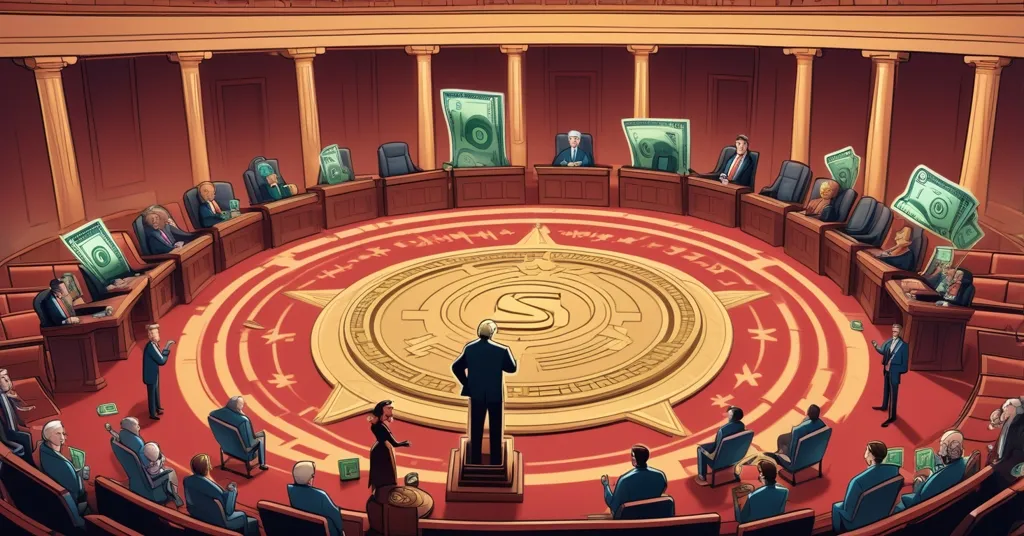
A seismic shift is underway in the U.S. crypto regulatory arena: a bipartisan agreement on stablecoin yields has propelled the Digital Asset Market Clarity Act toward a pivotal Senate markup. This could be the moment stablecoins—digital assets tied to fiat like the dollar—finally get a foothold in mainstream finance, though the path is still littered with landmines.
- Bipartisan compromise on stablecoin yields secured, advancing the Clarity Act.
- White House adviser Patrick Witt expresses hope for the deal’s staying power.
- Banking pushback, DeFi rules, and ethics concerns remain major hurdles.
Stablecoin Yields: Why Banks Are Freaking Out
Stablecoins are the unsung heroes of the crypto world, acting as a digital version of cash you’d use at a store, but instead of paper, they live on a blockchain—a secure, decentralized digital ledger that no single entity controls. Pegged 1:1 to currencies like the U.S. dollar, coins like Tether (USDT) and USD Coin (USDC) handle billions in daily transactions, powering everything from trading on exchanges to instant cross-border payments without the soul-crushing fees or delays of traditional banks. But here’s the rub: when stablecoins start offering yields—think interest-like returns on your holdings—banks get nervous. Real nervous.
Why? Because those yields could suck money straight out of traditional savings accounts. Imagine parking your cash in a stablecoin yielding 5% annually while your bank offers a pathetic 0.5%. That’s a deposit drain waiting to happen, leaving banks with less money to lend out, which is basically their lifeblood. The banking sector, through heavyweights like the American Bankers Association (ABA), has been sounding the alarm, arguing that stablecoins could destabilize the financial system if left unchecked. A recent White House economists’ report tried to downplay these fears, suggesting stablecoins cater mostly to a niche crypto crowd rather than the everyday saver. The ABA scoffed at this, calling it wishful thinking disconnected from the reality of mass adoption. They’ve got a point—if stablecoin platforms scale up with slick marketing, your average Joe might ditch his bank account faster than you can say “blockchain.”
On the flip side, crypto advocates argue banks are just crying wolf. Stablecoins could force these legacy giants to innovate—offer better rates, cut fees, or finally enter the 21st century. Competition benefits consumers, after all. But let’s not be naive; a sudden shift of billions in deposits could spark chaos if not managed carefully. This tension is at the heart of the Digital Asset Market Clarity Act, a U.S. Senate bill aiming to set clear rules for stablecoins and other digital assets, balancing their disruptive potential with the need to keep the financial house from burning down.
Crypto Regulation Breakthrough in U.S. Senate
The journey to regulatory clarity for crypto in the U.S. has been a slog. Stablecoins, in particular, have dodged bullets for years—think Tether’s 2021 settlement with the New York Attorney General over shaky reserve transparency, a wake-up call that still left the industry in a gray zone. Now, the Clarity Act represents a chance to draw firm lines, and a major milestone has been hit. Patrick Witt, executive director of the President’s Council of Advisors for Digital Assets, confirmed on CoinDesk TV that a bipartisan deal on stablecoin yields is in place, a critical step before tackling other legislative knots, as detailed in a recent update on the stablecoin yield agreement.
“We’re hopeful that the compromise that has been reached will be durable and will hold,” Witt said, signaling cautious optimism about the path ahead.
Witt didn’t sugarcoat the divide in the banking world. Some institutions see stablecoins as a chance to modernize; others view them as a dagger to their bottom line. “They’re grappling with it. These are all important issues to their members. And, you know, some of them are going to view stablecoins more positively. Some are going to be a little bit more threatened by them,” he noted. It’s a polite way of saying the ABA and its allies are still ready to throw punches to protect their turf. But the fact that a compromise on yields—a “must-have” in Witt’s words—has been secured shows that even in the polarized swamp of Washington, crypto might just be a begrudging unifier.
Beyond Yields: DeFi and Ethics on the Chopping Block
While the yield deal is a win, it’s only one piece of a much messier puzzle. The Clarity Act negotiations are also wrestling with decentralized finance (DeFi), often called the Wild West of crypto. DeFi is like a digital financial system with no banks—users lend, borrow, or trade directly through automated blockchain programs called smart contracts, cutting out middlemen entirely. It’s a beautiful idea, promising financial access to the unbanked and slashing costs, but it’s also a playground for bad actors. Major hacks, like the 2022 Ronin Bridge exploit that saw over $600 million vanish, highlight how DeFi’s pseudonymous nature can enable money laundering and fraud. Crafting rules to curb these risks without killing the innovation is like trying to tame a tornado.
Then there’s the ethics angle. Democrats are pushing clauses to prevent senior government officials from personally profiting off the crypto industry, a clear nod to concerns about conflicts of interest. The worry is real—imagine policymakers holding massive crypto bags or shaping laws for personal gain in a space known for speculative booms. This provision indirectly points to figures like Donald Trump, though it applies broadly to any high-ranking official. It’s a necessary guardrail, but ripe for political gamesmanship in an industry already swimming with bad faith.
Witt remains pragmatic, noting that many of these sticking points once felt impossible to resolve. “All of these issues felt intractable and unsolvable at one point in time. So the fact that we’ve been able to close out a lot of them gives me confidence that we can close out these other ones, too,” he said. It’s a rare breath of sanity in a debate often hijacked by hype or fearmongering.
Globally, the U.S. isn’t alone in this fight. The European Union’s Markets in Crypto-Assets (MiCA) framework already imposes strict reserve requirements on stablecoins, setting a precedent for tight control. Will the U.S. follow a similar heavy-handed path, or carve out a freer lane for innovation? That’s a question hanging over these talks.
What’s Next for the Clarity Act?
The road to law isn’t a sprint; it’s a marathon with spiked hurdles. The Clarity Act now heads to a markup hearing in the Senate Banking Committee, where senators will debate and tweak the bill’s language—a make-or-break moment before it can reach a full Senate floor vote. If it passes there, it’s on to the House, and eventually the president’s desk. That’s a gauntlet, especially with banking lobbies still snarling and secondary issues like DeFi rules unresolved. Don’t bet the farm on a quick resolution, but this yield compromise marks real progress.
Our Take: Freedom vs. Fetters
Here at Let’s Talk, Bitcoin, we’re cheering for any step that brings clarity to the crypto space, especially for stablecoins, which fill niches Bitcoin doesn’t—like everyday transactions or as a gateway for the curious. Regulatory frameworks could legitimize these tools, proving decentralized systems can coexist with legacy finance. But let’s not get carried away with the parade. Bitcoin remains the undisputed king—uncensorable, sovereign, and free from the whims of yield-chasing or bureaucratic overreach. Stablecoins, and even platforms like Ethereum with their smart contract wizardry, have their place, but they’re no substitute for BTC’s raw, disruptive ethos.
Our worry? The banking sector’s whining—reeking of self-preservation—could twist this bill into a straitjacket rather than a safety net. The ABA’s gripes are half valid, half dinosaur panic; disruptive tech always spooks the old guard. Worse, these ethics clauses, while needed, could turn into political weapons instead of shields. And let’s not forget the scammers lurking in regulatory gray zones. Beware of shady platforms hawking sky-high stablecoin yields—your funds could disappear faster than a politician’s promise. Adoption is our goal, but not at the cost of gullibility.
On the Bitcoin front, clarity for stablecoins might indirectly boost BTC’s legitimacy by normalizing crypto broadly. But there’s a flip side: if focus shifts to stablecoins as the “safe” crypto, Bitcoin’s narrative as sound money could get drowned out. We’re also keeping an eye on whether overregulation diverts energy from Bitcoin’s core mission of financial freedom. The devil’s in the details, and in D.C., those details often come with chains.
Key Takeaways and Questions
- What is the Digital Asset Market Clarity Act, and why does it matter for stablecoins?
It’s a U.S. Senate bill to establish clear rules for digital assets, especially stablecoins, potentially legitimizing them as financial tools while addressing risks to traditional banking systems. - Why are stablecoin yields a major issue for banks?
Banks fear yields will pull deposits from savings accounts, reducing funds available for lending, a concern that persists despite White House reports downplaying the threat. - How does the White House view stablecoin risks to traditional finance?
White House economists argue stablecoins pose less danger to bank deposits than critics claim, a stance the American Bankers Association calls overly optimistic. - What other regulatory challenges are tied to the Clarity Act?
Negotiations cover illicit finance protections for DeFi to fight fraud and money laundering, plus ethics rules to prevent senior officials from profiting personally from crypto. - How could stablecoin regulation impact Bitcoin’s dominance?
It might boost crypto’s overall legitimacy, indirectly aiding Bitcoin, but could also shift focus to “safer” stablecoins, potentially sidelining BTC’s narrative as sound money. - What are the next steps for the Clarity Act to become law?
It faces a markup hearing in the Senate Banking Committee for amendments, followed by a full Senate vote, House approval, and presidential sign-off.
This push for stablecoin regulation mirrors the broader crypto battle: freedom and innovation pitted against control and stability. We’re rooting for a framework that doesn’t choke the decentralized spirit—Bitcoin’s mission to upend the status quo must endure, even as stablecoins carve their niche. But we’ll stay vigilant; Washington’s solutions often breed new problems, and the fight for financial sovereignty is far from won.