$2.5B Bitcoin Buy Amid US-Iran Tensions: Safe Haven or Market Manipulation?
 LTB
LTB $2.5B Bitcoin Purchase During US-Iran Tensions: Hedge or Market Signal?
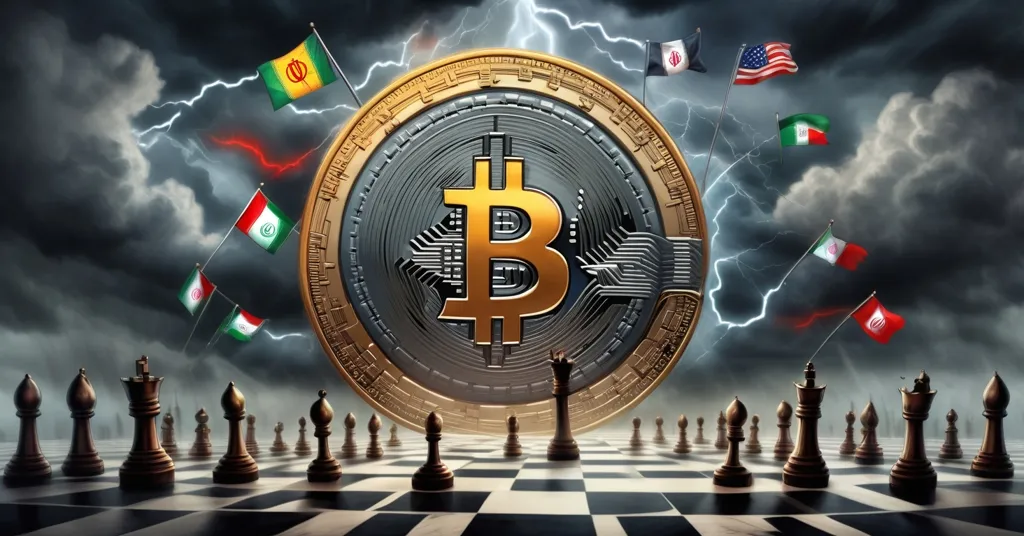
A jaw-dropping purchase of 34,164 Bitcoin, worth roughly $2.5 billion, has just rocked the crypto world, timed perfectly with escalating tensions between the United States and Iran. This massive acquisition by an undisclosed entity—or “strategy,” as reports call it—has tongues wagging about Bitcoin’s growing role as a safe haven amid geopolitical chaos and what this could mean for the market.
- Historic Buy: 34,164 BTC acquired for $2.5 billion.
- Geopolitical Timing: Purchase aligns with rising US-Iran conflict.
- Mystery Buyer: Identity and intent of the “strategy” remain unknown.
- Market Ripple: Potential to influence Bitcoin’s price and investor sentiment.
Unpacking the Geopolitical Backdrop
The timing of this colossal Bitcoin buy couldn’t be more striking. US-Iran relations have been a tinderbox for years, with recent flare-ups—think tightened sanctions and military saber-rattling in late 2023—adding fuel to the fire. Iran’s economy, battered by restrictions on global banking systems like SWIFT, struggles under the weight of devaluation and inflation of the rial, its fiat currency. Meanwhile, the US grapples with its own economic pressures, from persistent inflation to political gridlock. For those new to this space, fiat currencies are government-issued money, often vulnerable to devaluation during crises, unlike Bitcoin, which operates on a decentralized blockchain network free from central bank control. This makes Bitcoin a potential lifeboat for preserving wealth or moving capital beyond the reach of traditional financial oversight.
Geopolitical unrest has historically driven interest in assets outside government grasp. During the US-China trade war and the Russia-Ukraine conflict, Bitcoin often saw price spikes as investors fled fiat volatility. With US-Iran tensions simmering, this backdrop of uncertainty is precisely why Bitcoin’s appeal as a borderless, permissionless asset shines. But it’s no panacea—its wild price swings and accessibility challenges, especially in conflict zones with restricted internet, can make it a risky bet for the average person or entity under duress.
Details of the $2.5 Billion Purchase
Let’s break down the numbers. At an estimated market price of about $73,000 per Bitcoin in late 2023, this purchase of 34,164 BTC translates to a staggering $2.5 billion. With Bitcoin’s total supply capped at 21 million coins—roughly 19.5 million of which are already mined—this buy represents over 0.17% of all Bitcoin that will ever exist. To put that in perspective for newcomers, imagine snapping up a huge slice of a limited-edition collectible; such scarcity can drive value up if demand follows. Large transactions like this often create upward pressure on Bitcoin’s price, as other investors might see it as a vote of confidence. On-chain data trackers like Whale Alert often flag such moves, and while exact wallet details remain murky, a buy of this magnitude could signal institutional or even state-level involvement, as noted in reports of a massive Bitcoin acquisition worth $2.5B amid geopolitical tensions.
Historically, massive Bitcoin purchases have stirred the market. When MicroStrategy, a US-based firm, began stockpiling Bitcoin in 2020, its buys—totaling over $3 billion to date—helped fuel bullish sentiment during uncertain times. If this latest acquisition mirrors that trend, we could see a price bump. But crypto’s volatility is ruthless. A whale—a term for a major investor with deep pockets—could just as easily dump their stash later, tanking the market. We’re not peddling hopium here; the reality is that while this buy could spark a rally, it’s no guarantee of moon-bound prices.
Who’s Behind the Buy?
The million-dollar question (or rather, the 2.5-billion-dollar one) is who made this move. The vague label of “strategy” suggests it could be an investment fund, a corporate treasury, or something far more intriguing—like a state-backed entity. Could it be a US hedge fund shielding assets from potential economic fallout tied to Middle East conflict? Or might it be an actor linked to Iran, using Bitcoin to sidestep crippling sanctions? Iran has dabbled in crypto before, with reports of state-sanctioned mining operations—where energy-intensive hardware validates transactions and creates new Bitcoin—potentially as a way to generate revenue despite financial isolation. For the uninitiated, mining isn’t just about making Bitcoin; it’s a way to harness local resources like cheap electricity to participate in a global, decentralized economy.
If a nation-state is indeed the buyer, this could mark a pivotal moment. Countries like El Salvador have already embraced Bitcoin as legal tender, viewing it as a strategic reserve against fiat woes. A similar play by a sanctioned nation would underscore Bitcoin’s role not just as a speculative asset, but as a geopolitical tool. Frankly, we can’t rule out wilder possibilities either—perhaps it’s a consortium of wealthy individuals or a shadowy group with ulterior motives. Transparency in crypto is often a pipe dream, and that opacity cuts both ways: it fuels innovation and freedom, but also opens the door to manipulation or worse.
Market Impact: Boom or Bust?
A transaction of this size isn’t just a headline—it’s a potential market catalyst. Large buys often signal confidence, drawing in retail and institutional investors alike. On-chain analysis from platforms like Glassnode shows that when significant Bitcoin volumes move off exchanges into private wallets, it can indicate accumulation—a bullish sign. But let’s not kid ourselves. Crypto history is littered with pump-and-dump schemes where whales inflate prices with big buys, only to cash out at the peak, leaving smaller players holding the bag. The 2017 ICO craze and countless altcoin rugs pulls are stark reminders of this game.
Playing devil’s advocate, this could be less about strategy and more about spectacle. Is this a calculated hedge, or just a publicity stunt to sway sentiment? And what if the buyer has short-term plans to offload? A sudden sell-off of 34,164 BTC could crash prices overnight, especially in a market as sentiment-driven as crypto. We’re not here to predict price targets—those are usually nonsense anyway—but to highlight the raw unpredictability. If you’re betting on this buy to send Bitcoin to six figures, tread carefully. The market doesn’t owe anyone a happy ending.
Bitcoin’s Role in Global Crises
Zooming out, this purchase feeds into Bitcoin’s narrative as “digital gold”—a store of value akin to gold’s historical role during economic crises. Unlike fiat, which governments can print into oblivion, Bitcoin’s fixed 21 million cap offers a hedge against inflation and devaluation. That’s especially relevant in regions like Iran, where sanctions choke access to dollars, or even in the US, where inflation has eroded purchasing power. But Bitcoin isn’t a perfect analog to gold. Its price can plummet 30% in a week, and using it during a crisis—say, to buy essentials—requires infrastructure that’s often absent in war-torn or censored areas.
Still, the appeal is undeniable. Bitcoin’s borderless, permissionless nature lets anyone with a wallet and internet connection participate in a global financial system. For the oppressed or sanctioned, that’s revolutionary. Yet, there’s a dark side we can’t ignore. Bad actors—be they criminals or rogue states—can exploit that same anonymity for illicit ends. It’s the trade-off of decentralization: freedom for all means freedom for the worst of us too. As advocates for financial sovereignty, we cheer Bitcoin’s potential to disrupt oppressive systems, but we’re not blind to the mess it can invite.
Regulatory Risks and the Bigger Picture
This buy also puts crypto square in the regulatory crosshairs. Governments loathe capital flows they can’t track, especially during geopolitical strife. The US has ramped up anti-money laundering (AML) policies in recent years, with agencies like FinCEN scrutinizing crypto transactions. Internationally, frameworks like the FATF’s “Travel Rule” demand exchanges share user data for large transfers. A $2.5 billion Bitcoin move—especially if tied to a sanctioned entity—could trigger crackdowns, from tighter KYC rules to outright bans in jittery jurisdictions.
On the flip side, such pressure often accelerates adoption in unexpected ways. When traditional systems fail or overreach, people turn to alternatives. Look at how Russia’s ruble collapse in 2022 spiked crypto usage despite government hostility. This purchase, risky or not, embodies the spirit of effective accelerationism—pushing decentralized tech forward even if it means chaos in the short term. Bitcoin isn’t just challenging banks; it’s forcing a reckoning with how power and money intersect on a global stage.
As Bitcoin maximalists, we’d argue it’s uniquely positioned for this role. Its first-mover status, unmatched security, and network effect make it the go-to asset in crises over altcoins. That said, we can’t dismiss other blockchains—Ethereum’s smart contracts, for instance, could offer state actors or corporations complex financial tools beyond Bitcoin’s scope. Each protocol fills a niche in this revolution, even if Bitcoin remains king of the hill.
Key Takeaways and Questions for the Crypto Community
- Why Was $2.5B in Bitcoin Bought During US-Iran Tensions?
Likely as a hedge against geopolitical instability or sanctions, with Bitcoin serving as a decentralized store of value outside traditional financial systems. - Who Might Be Behind This 34,164 BTC Acquisition?
Possibilities range from a US hedge fund diversifying assets to an Iranian entity evading sanctions, or even a corporate treasury—speculation abounds due to lack of clarity. - How Do US-Iran Tensions Affect Bitcoin’s Value and Adoption?
Such conflicts often boost demand for Bitcoin as a safe haven, potentially driving price and interest, as seen in past global crises. - Could This Purchase Impact Bitcoin’s Market Dynamics?
Definitely—a buy this large can signal confidence and push prices up, though crypto’s volatility means a sudden sell-off could flip the script. - Is Bitcoin Becoming a Mainstream Asset for Global Uncertainty?
This event strengthens Bitcoin’s “digital gold” narrative, but usability issues and regulatory risks still hinder its path to widespread crisis utility.
This $2.5 billion Bitcoin buy is a glaring reminder of why decentralization matters. It’s not just about upending outdated financial systems—it’s about crafting resilience in a world prone to chaos. Yet, for every leap toward freedom, pitfalls loom: market games, regulatory hammers, and the sheer unpredictability of this space. One thing is clear—Bitcoin isn’t a mere toy for speculators anymore. It’s a geopolitical player, and moves like this demand our attention. Keep your eyes peeled in the coming weeks as this story unfolds, because the board is set for some critical plays.