120+ Crypto Groups Urge Senate to Advance CLARITY Act Amid Bank Lobbying Standoff
 LTB
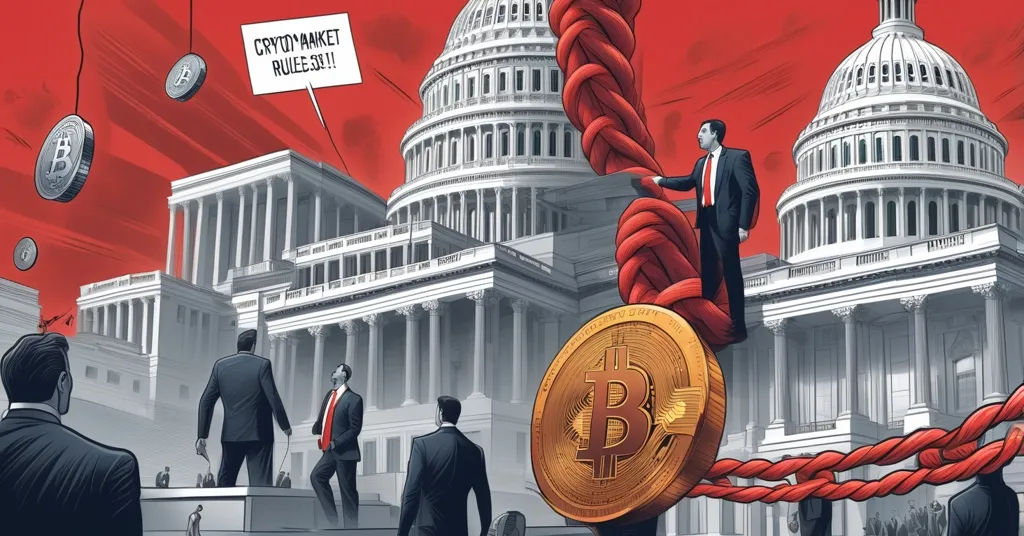
LTB More than 120 crypto organizations are pressing the Senate Banking Committee to move the CLARITY Act now, warning that delay will keep driving crypto jobs, capital, and development out of the United States. The bill has already cleared the House, but in Washington’s finest tradition, getting something important done has turned into a hostage situation involving lobbying, turf wars, and an election-year clock.
- 120+ crypto groups want an immediate markup of the CLARITY Act
- Bank lobbying and political deadlock are slowing progress
- The industry says the U.S. risks losing its shot at global crypto regulatory leadership
The emergency letter was sent on April 23 and led by the Crypto Council for Innovation and the Blockchain Association. It calls on the Senate Banking Committee to schedule an immediate markup of the CLARITY Act — the process where lawmakers review, debate, and amend a bill before voting it forward. In plain English: stop sitting on it and let the thing get discussed instead of gathering dust like a forgotten relic in a Capitol Hill filing cabinet.
The CLARITY Act is a crypto market structure bill. That means it is meant to answer one of the most basic questions in U.S. digital asset policy: who regulates what? Supporters say that clarity is long overdue because the current system has been a mess of enforcement actions, conflicting guidance, and bureaucratic turf wars. The bill aims to separate responsibilities between the SEC and the CFTC, two agencies that often seem to approach crypto like rival referees arguing over which sport they’re even watching.
For the industry, this is not some abstract policy debate. It affects whether builders can launch products without living under constant legal uncertainty, whether exchanges know which rules apply, and whether developers can keep building in the U.S. without feeling like they’re one subpoena away from packing up and moving overseas.
What the CLARITY Act Would Change
The bill is intended to do several things that crypto firms have been demanding for years:
- clarify the split between SEC and CFTC oversight
- protect non-custodial software developers — builders who create tools without holding users’ funds
- simplify disclosure rules
- avoid a messy state-by-state patchwork of conflicting rules
That last point matters more than some people realize. A state-by-state patchwork sounds manageable until you remember what happens when 50 different authorities all decide they’re entitled to reinvent the wheel. For startups, that can mean endless legal bills, delayed launches, and a business climate where only the biggest incumbents can afford to play.
The industry’s argument is straightforward: if the U.S. wants to lead in digital asset regulation, it needs a workable federal framework. Otherwise, builders will keep choosing friendlier jurisdictions that offer clearer rules, faster approvals, and less regulatory theater. Capital is loyal to opportunity, not flag pins.
The coalition says the stakes are bigger than one bill. One of the letter’s strongest warnings is that continued delay could push “investment, jobs, and development offshore.” That is not empty drama. Crypto teams can relocate. Protocol contributors can work remotely from anywhere. Exchanges can shift operations. If the U.S. drags its feet long enough, the innovation doesn’t vanish — it just stops being American-led.
“the current deadlock continues to push the global standard-setting role away from Washington and toward other jurisdictions.”
That warning lines up with comments from Anil Oncu, CEO of Bitpace, who cautioned that the stalemate could shift standard-setting power away from Washington and toward other jurisdictions. In other words, if Congress keeps fumbling, other countries will happily write the rules for a sector the U.S. once had a real chance to shape.
Why the Senate Is Stuck
The biggest obstacle appears to be a familiar one: bank lobbying. The April markup effort was reportedly derailed over stablecoin yield provisions. The North Carolina Bankers Association pushed members to pressure Senator Thom Tillis, showing just how quickly legacy finance mobilizes when it senses its deposit base might get a little competition.
Stablecoin yield refers to the ability to earn a return on stablecoins, which are digital tokens designed to track assets like the U.S. dollar. To users, yield is attractive because it gives their idle capital something to do besides sit there. To banks, it can look like a direct threat to deposits. That is the real fight underneath the rhetoric: who gets to hold customer money, and who gets to earn from it?
The banking industry argues this is about prudence and consumer safety. Fair enough — not every crypto innovation is a breakthrough, and not every promised return is a good idea. But it is also impossible to ignore the self-interest here. Banks are not exactly neutral referees when the match involves their own margins.
The White House Council of Economic Advisers added fuel to that argument with a 21-page analysis saying that banning stablecoin yield would raise bank lending by only 0.02% while costing consumers about $800 million in welfare. That is a brutal tradeoff for the banks’ position: a microscopic lending bump for traditional finance, and a meaningful cost for consumers. If that’s the grand public-interest case, it’s wearing clown shoes.
Still, the policy dispute is not entirely fake. Stablecoins, lending, and consumer protections are real issues, and lawmakers have every reason to ask how yield products should be treated. The problem is that Congress too often lets legitimate policy concerns get swallowed by lobbying campaigns and procedural stalling. The result is not careful regulation. It’s paralysis with better branding.
Why the Industry Is Panicking
The coalition backing the letter is sounding the alarm because the legislative window is closing fast. Senator Bernie Moreno said missing the May window could shelve the bill indefinitely, while Senator Cynthia Lummis called this the industry’s “last chance.” That is not casual language. It sounds like lawmakers who know how quickly crypto legislation can get buried once the political calendar starts chewing up attention.
There is a reason that fear is widespread. The bill still has a long climb ahead even if the Senate Banking Committee moves. It needs to:
- clear the Senate Banking Committee
- win a full Senate vote with 60 votes
- be reconciled with the Agriculture Committee version
- be matched with the House version
- receive presidential approval
That is a gauntlet under the best of circumstances. Add the midterm election cycle, and the odds get worse fast. Legislative time is like liquidity: everyone notices it most when it is gone.
There is also growing recognition inside the industry that unity matters. Brad Garlinghouse, Ripple’s CEO, has been bullish on the bill’s prospects, while Brian Armstrong and Coinbase now support the revised version after earlier opposition. That shift matters. A fragmented industry makes it easier for lawmakers to ignore the whole mess. A more aligned front gives the bill a better shot, even if nobody gets everything they wanted.
For Bitcoin users, there is an important nuance here. Bitcoin itself does not need special pleading to survive — it already has the strongest decentralization and monetary proposition in crypto. But broader market structure rules still matter because they affect exchanges, custody providers, open-source developers, and the rails people use to access BTC and other assets. Bad policy around the edges can still make life harder for everyone.
Why Non-Custodial Developers Matter
One of the more important but less flashy parts of the CLARITY Act debate is the treatment of non-custodial software developers. These are builders who create tools without taking control of users’ funds. That distinction matters because treating open-source developers like financial intermediaries would be a spectacularly stupid way to regulate software.
Decentralized systems depend on people being able to write code without being dragged into the same category as custodial institutions. If lawmakers can’t separate software development from custody and brokerage activity, they risk kneecapping the very people building the infrastructure that makes crypto more resilient, private, and censorship-resistant.
That issue also connects to the larger fight over decentralization. If regulators are too aggressive, they can push innovation into closed, permissioned systems that are easier to control but worse for user freedom. If they are too lax, scams and bad actors flourish. The challenge is real. But pretending the answer is to keep everything in legal limbo is just lazy governance.
The Bigger Stakes
The complaint from more than 120 crypto organizations is not just that the bill is stalled. It is that the U.S. is wasting a chance to set the global standard for crypto regulation. And that concern is not fantasy. Startups do move. Exchanges do adapt to foreign rules. Protocol teams do choose jurisdictions based on legal clarity. Once that capital and talent leave, it does not come back because a senator suddenly discovers urgency in year four of a policy nap.
That said, some caution is warranted. Clear rules are not automatically good rules. A badly written market structure bill could still entrench incumbents, create loopholes, or overprotect centralized players while squeezing open networks. Regulation can help crypto grow responsibly — or it can calcify a system that was supposed to remain open. The difference is in the details, and details are exactly where Washington tends to lose its lunch money.
The coalition wants lawmakers to act before the window closes. Chairman Tim Scott has not yet scheduled the markup, leaving the bill in limbo. Supporters say that delay risks pushing the current deadlock beyond the point where the Senate can move quickly enough to matter.
“if the bill does not reach the full Senate floor by May, digital asset legislation may not advance before the midterm election cycle closes the window.”
That quote captures the urgency pretty well. In the crypto sector, the frustration is not just about politics. It is about wasted time. Every month of delay gives other jurisdictions more room to pull ahead, while U.S.-based builders spend another month wondering whether the country actually wants their business.
For all the noise, the underlying issue is simple: the U.S. either writes a sane framework for digital asset legislation, or it keeps outsourcing the future to bureaucratic drift and bank lobbying. One path gives the country a chance to lead. The other guarantees more confusion, more offshore migration, and more of the same legal improvisation that has already burned years of industry momentum.
Key Questions and Takeaways
What is the CLARITY Act?
It is a proposed U.S. crypto market structure bill designed to clarify which regulators oversee which parts of the digital asset industry, especially the SEC and CFTC.
Why are more than 120 crypto companies demanding action?
They believe delay will push investment, jobs, and development offshore, while also weakening the U.S. position as a global leader in crypto regulation.
What is “markup” in Congress?
Markup is the committee process where lawmakers review a bill, propose changes, debate it, and vote on whether to advance it.
Why is bank lobbying slowing the bill?
Banks are pushing back against stablecoin yield provisions because they see them as competition for deposits and financial control.
What does the SEC and CFTC split mean?
It refers to dividing crypto oversight between the Securities and Exchange Commission and the Commodity Futures Trading Commission so companies know which rules apply.
Why do non-custodial developers care?
Because they build software without holding user funds, and they want to avoid being treated like banks or brokers just for writing code.
Why does the May deadline matter?
Supporters say missing that window could kill the bill’s momentum before the midterm election cycle closes off legislative time.
Is the CLARITY Act guaranteed to pass?
No. It still faces committee action, a Senate vote, reconciliation between versions, and final approval before it could become law.
What happens if Congress does nothing?
Regulatory confusion continues, the U.S. risks losing talent and investment, and more crypto activity shifts to friendlier jurisdictions abroad.